


14
2022-10
In order to strengthen the professional construction of law firms, enhance lawyers' ability to represent and defend criminal cases, and promote inter-departmental exchanges and cooperation, Zhongcheng Qingtai (Jinan) Law Firm held the second phase of the Moot Court Master Exhibition Competition on October 14, 2022. The event kicked off in the law firm's mock court and was held in a combination of online and offline. The lawyers restored a real and vivid criminal trial for everyone from the multiple levels of criminal defense expression, opinion output, and prosecution and defense games. This mock court selects criminal cases adapted from real cases, and the suspected charge is "crime of endangering public security by dangerous means", which is led by the criminal business department with the highest degree of specialization. Lawyer Meng Fanhu, a criminal expert in our institute, served as the presiding judge of the mock court, senior criminal lawyers Li Jun and Cai Benjie served as judges of the mock court, forming a collegial panel, and lawyer Zhang Wenhong served as the clerk of the mock court. Senior criminal lawyers Jia Xincui, Wang Junjie, Li Kun and Cui Shouxu served as prosecutors and defenders of the mock court respectively, while lawyer Qin Xingda served as defendants and actors. The entire trial procedure was carried out in strict accordance with the provisions of the Criminal Procedure Law. At the stage of court investigation and debate, the public prosecutor interrogated the defendant's subjective intention and objective behavior according to law, while the two defenders also saw tricks and tricks. Through accurate questioning, the defense views were detailed, appropriate and focused. It fully reflects the legal professionalism, logical thinking ability and on-the-spot adaptability of both the prosecution and the defense. After the trial, lawyer Meng Fanhu, who served as the presiding judge of the case, made wonderful comments on the mock court, and carefully analyzed the defense ideas, strategies and specific views of the case. At the same time, lawyer Meng also pointed out that in the process of handling criminal cases, we should strengthen the retrieval of judicial precedents and expert opinions, pay attention to the standardization of the form and content of legal documents, so as to carry out refined defense, and encourage young lawyers to listen to real criminal cases in addition to mock courts and learn practical experience.
2022-10-14

13
2022-10
Foreword On June 21, 2022, the the People's Republic of China Civil Enforcement Law (Draft) (hereinafter referred to as the "Draft") was submitted to the Standing Committee of the National People's Congress for deliberation for the first time. On June 24, the draft was further open to the public for comments. The draft not only comprehensively sorts out the current implementation norms to make them more systematic, but also modifies the problems existing in the current norms and re-formulates new regulations on the problems that cannot be solved by the current norms. some of these provisions help banks better realize their creditor's rights. Contents and Interpretation of 2. Draft 1. Solving negative enforcement problems with enforcement objections "Draft" original text: Article 32 If the parties and interested parties believe that the people's court should perform the enforcement act but have not implemented it, they may submit a written application to the enforcement court to request the enforcement act before the end of the enforcement procedure. The people's court shall examine and handle the application within seven days after receiving the application for enforcement. If the reason is established, the execution shall begin; If the reason is not established, the applicant shall be notified in writing. After the people's court receives the application for enforcement, if the situation is urgent, it shall examine and deal with it within 48 hours; if the reason is established, it shall immediately start enforcement. If the applicant is not satisfied with the people's court's failure to review and handle the matter within the time limit or the notice made in accordance with the second paragraph of this article, he may file a written objection in accordance with the provisions of Article 84 of this law. Article 34 Where a people's court violates the provisions of this Law and causes losses to citizens, legal persons or unincorporated organizations, it shall pay compensation according to law. Interpretation: Solving the problem of negative enforcement through the enforcement objection system is one of the highlights of this "Draft. In addition, Article 174 of the "Draft" stipulates that "the people's court shall, after receiving the execution payment for the specific execution target, issue it to the applicant for execution in a timely manner", and Article 10 of the "Provisions of the Supreme People's Court on the Administration of Execution of Cash and Property" "The execution personnel shall, within 30 days from the date of receiving the notice of receipt of the execution payment from the financial department, complete the accounting of the execution funds, the settlement of the execution expenses, the notification of the applicant to receive and the distribution of the execution funds." The provisions of the law shall bear the corresponding legal consequences if the enforcement judge intentionally delays the execution, resulting in the reduction of compensation to the bankruptcy property. 2, clear lawyer investigation order system. The original text of the draft: Article 52 if the people's court is unable to inquire about a certain property information through the network information platform, and the applicant for enforcement cannot objectively obtain it by himself through entrusting a lawyer, he may entrust a lawyer to apply to the people's court for an investigation order. If, after examination, the people's court deems it really necessary, it may grant an investigation order to it. The investigation order is issued by the head of the executing agency. The investigation order shall contain the name of the lawyer, the number of the practice certificate, the practice institution, the name or name of the party, the case number, the specific investigation matters and the validity period. Where a lawyer conducts an investigation with an investigation order, the organization or individual concerned shall provide assistance. Refusal to assist, in accordance with the provisions of Article 75 of this Law bear the corresponding responsibility. If a lawyer abuses the investigation order by conducting an investigation beyond the scope of the investigation order, using the investigation order or the evidence obtained in a way contrary to public order and good customs, the people's court shall order it to return it, and may punish it with reference to the provisions of Article 62 of this law. Interpretation: Finding the debtor's property is one of the most important tasks of creditors in enforcement proceedings. Lawyers subjectively want to find more property of the debtor, but objectively do not have the power to check; the court has the power to check, but the court objectively does not have enough staff and time to check the contradictory situation. Regarding the lawyer investigation order, the current regulations do not stipulate that the higher people's courts in some areas have issued relevant judicial policies. There are currently two problems: First, there are no relevant regulations in individual areas, and creditors cannot apply for a lawyer's investigation order in these places. Second, in areas with relevant regulations, although creditors can apply for a lawyer's investigation order by entrusting a lawyer, due to the low level of effectiveness of the relevant regulations, the cooperation of the relevant departments is not too high, and the lawyer's investigation order cannot be fully effective. Article 52 of the draft stipulates the lawyer's investigation order in the form of law. At the same time, article 72 of the draft also specifically provides for penalties for organizations and individuals who fail to perform their obligations of assistance. 3. Modification of the property reporting system "Draft" original text: Article 46 If the people's court orders the person subject to execution to report property, it shall issue a property reporting order. Upon receipt of the property reporting order, the person subject to execution shall report in person on the specified date. If it is really difficult to report on the same day, it may apply to the people's court to change the date. Article 49 The people's court shall establish a database of the property reported by the person subjected to execution to register and store the contents of the report. With the permission of the people's court, the person applying for enforcement may inquire about the property and relevant information of the person subject to enforcement through the database. Interpretation: Banks should respond to this change and enrich the content of the non-performing loan management ledger in a timely manner. One is to use the deterrent power of the people's court to force the debtor to "show up" and make a good reminder. When the people's court notifies the debtor to report the property, it often notifies the creditor at the same time. On the other hand, the bank, as the enforcement applicant, can apply for the use of the property information that the person subject to execution has reported. 4, the provisions of the search for people to find the public security organs in the assistance obligations. Article 61 If the people's court decides to summon by arrest, it may notify the public security organ to assist in finding and controlling the detained person. Article 64 If a people's court decides to detain, it may notify the public security organ to assist in locating and controlling the detainee. Article 138 A people's court may notify relevant organizations to assist in locating or controlling motor vehicles. If the relevant organization discovers a motor vehicle when implementing road traffic safety management and other acts, it shall promptly notify the people's court and assist the people's court in controlling it in an appropriate manner. Interpretation: The enforcement measures of the court's enforcement agencies are very limited. In the investigation of people (summoning, detention) and searching for things (searching for motor vehicles), the enforcement agencies often need the assistance of the public security organs. Article 15, paragraph 2, and Article 16 of the current "Property Investigation Regulations" stipulate the obligation of public security to assist (the "relevant units" in the law should mainly refer to the public security organs), but the operation effect of the relevant provisions in practice is not ideal. In this regard, article 61, paragraph 3, article 64, paragraph 3, and article 138 of the draft stipulate the obligation of public security to assist in the form of law. In addition, Article 75 of the draft also stipulates the legal consequences of the public security organ's failure to perform the obligation of assistance. 5, modify the conditions for the transfer of the execution case to bankruptcy. Original text of the draft: Article 82 in the execution of monetary claims, if the person subject to execution meets the circumstances specified in Article 80 of this Law and the circumstances of debt liquidation stipulated in the bankruptcy law, the people's court shall rule to terminate the execution procedure and transfer the relevant materials of the execution case to the people's court of the place where the person subject to execution is located. The people's court of the place where the person subject to enforcement is located shall review it within 30 days from the date of receiving the relevant materials of the enforcement case, and shall generally rule to accept the bankruptcy application; if it is not accepted under special circumstances, it shall return the relevant case materials to the enforcement court and explain the reasons in writing. Interpretation: Articles 511 and 512 of the Judicial Interpretation of the Civil Procedure Law stipulate that when the person subject to execution has bankruptcy, if one of the persons applying for execution or the person subject to execution agrees, the execution court shall transfer the relevant materials of the execution case to the people's court of the place where the person subject to execution is located, and it shall decide whether to declare the person subject to execution bankrupt. Obviously, in the current norms, the bankruptcy proceedings of the executed person are initiated on the application of the parties. In response, the draft revised it to start in accordance with the authority of the court. Specifically, Article 82 of the draft stipulates that if the person subject to execution has bankruptcy, the court shall transfer the relevant materials of the execution case to the people's court where the person subject to execution is located, and the court shall generally decide to accept the bankruptcy application. Such a modification may help to solve the problem of unfair payment of creditors, but at the same time, it may also excessively infringe the right of the parties to dispose of them. Whether the Civil Enforcement Act will eventually be amended may need further argumentation. 6, the scope of the executive staff and the distribution of power issues. The original text of the draft: Article 10 the executive body of the people's court shall be composed of judges, executors, judicial police and other personnel. Judges are responsible for handling all types of enforcement cases. The executive officer is responsible for handling enforcement cases, except for major matters that should be handled by judges in accordance with the law, such as detention decisions and fine decisions. The judicial police, under the command of judges and executors, participate in the implementation of the implementation. Persons handling enforcement cases shall not participate in the examination of relevant enforcement objections, reconsideration, outsider objections and other cases. The appointment, removal and management of the executive shall be carried out in accordance with the relevant provisions of the State. Interpretation: This article breaks down the rumors that the reform of my country's enforcement system may follow the example of the United States and other Western countries to separate the enforcement agency from the court. The enforcement power still belongs to one of the internal departments of the court, but the post of "executive officer" is added. The executive does not have the status of a judge and can only engage in the act of execution. 7, the implementation of the basis is not clear dispute correction issues. The original text of the draft: Article 14 shall be based on a clear subject of rights and obligations and the content of payment. If the basis of enforcement is not clear about the subject of rights and obligations or the content of payment, the enforcement court may require the making organ or institution to clarify by way of explanation, correction of ruling, supplementary judgment, etc. If it cannot be made clear through the above-mentioned means, the parties may apply for enforcement after obtaining a new basis for enforcement through litigation, arbitration, etc. Interpretation: This provision has clear practical guiding significance, that is, in practice, because the meaning of various effective legal documents is unclear and the enforceability is poor, the enforcement judge cannot directly enforce the legal documents, and it is often in a dilemma. Therefore, the applicant and the person subject to execution cannot reach an agreement on the completion of the execution, which causes the case to be delayed for a long time. At this time, the court may require the issuing institution to explain, correct or make up for it by means of supplementary judgment, which can be understood as in order to improve the efficiency of enforcement. 8. Issues relating to the amount of fines and the duration of detention The original text of the "Draft": Article 63 The amount of fines imposed on individuals shall be less than RMB 100,000; the amount of fines imposed on organizations shall be RMB 50,000 to RMB 1 million. The term of detention shall be not more than fifteen days. Interpretation: it is worth noting that for malicious evasion of execution, the draft increases the maximum fine limit. In view of the situation that the person subject to execution refuses to report property and continuously refuses to perform irreplaceable acts, he can be detained for many times, with a cumulative total of no more than six months, which has reached the minimum period of six months in prison. 9. Issues related to re-seizure and transfer of disposal rights The original text of the draft: article 110 real estate that has been sealed up may be sealed up again. The people's court that seals up first may, in accordance with the law, take measures such as price change and compulsory management of the seized real estate. The people's court that is sealed up later shall, after the seizure, promptly inform the person applying for enforcement that it may apply for distribution to the people's court that is the first to seal up or other people's court that has the power to dispose of it. If the people's court that was first seized fails to initiate the procedure of determining the reference price of the real estate within three months after the seizure, the people's court that was later seized may consult with the people's court that was first seized to transfer the right of disposal. Interpretation: this provision has a strong guiding significance in the judicial disposal of property, and provides an important basis for avoiding the abuse of the right of first seal. In order to accurately understand the provision, we can compare the reply of the Supreme people's Court on issues related to the first seizure of the court and the priority creditor's rights enforcement court to dispose of the sealed-up property. The first article of the reply is clear: "in the process of execution, the court that first seals up, detains or freezes (hereinafter referred to as" seizure ") shall be responsible for disposing of the seized property. However, if the creditor's rights that have entered the execution procedures of other courts have a superior security right and priority (the creditor's rights are hereinafter referred to as priority creditor's rights) to the sealed-up property, and the first sealed-up court has not issued an auction announcement or entered into the sale procedure for the sealed-up property, the priority creditor's rights enforcement court may request that the sealed-up property be transferred for execution." However, the reply is only aimed at cases of waiting for seizure with priority of compensation, and does not provide for the transfer of ordinary creditor's rights. In order to prevent abuse of the right of first seal, the Draft stipulates that ordinary waiting for seizure shall be transferred for disposal, and the "negative standby time" of the first seal shall be changed from 60 days to three months.
2022-10-13
13
2022-10
1. Introduction The transfer of equity is a civil legal act in which the shareholders of a company transfer their shareholders' rights and interests to others in accordance with the law, so that others can obtain equity. So, can shareholders transfer their shares to others without compensation? China's Company Law does not explicitly prohibit the transfer of shares without compensation, but in the State-owned Assets Law, it is stipulated that the transfer price of state-owned assets shall be based on the price assessed in accordance with the law, approved by the institution performing the duties of the contributor or reported by the institution performing the duties of the contributor to the people's government at the corresponding level for approval. Thus, in principle, shareholders have the right to set their own prices, but not all free equity transfers are legal and valid for reasons such as the peculiarities of certain entities. The system of free transfer of equity is one of the most successful manifestations of the modern corporate system, but excessive freedom also means that there may be higher risks. In the early stage of entrepreneurship, some shareholders often transfer their equity to others at the price of "zero yuan" or "one yuan", most of which are aimed at reducing the cost of equity transfer. However, with the continuous improvement of China's tax system and the increasing intelligence of tax big data, this behavior will undoubtedly lead to more legal risks and tax risks. In judicial cases, shareholders' free disposal of equity may also be recognized as equity gifts. Some views believe that equity gifts are a special form of equity transfer like equity inheritance. In practice, disputes caused by shareholders' transfer of equity with "zero yuan" or "one yuan" are also diverse and complicated. This paper will briefly analyze the legal and tax risks of shareholders' free transfer of equity. 2. relevant laws and regulations (I) Company Law Article 71: Shareholders of a limited liability company may transfer all or part of their shares to each other. The transfer of equity by a shareholder to a person other than a shareholder shall be subject to the consent of more than half of the other shareholders. Shareholders shall notify other shareholders in writing of their equity transfer to seek consent. If other shareholders fail to reply within 30 days from the date of receiving the written notice, they shall be deemed to have agreed to the transfer. If more than half of the other shareholders do not agree to the transfer, the shareholders who do not agree shall purchase the transferred shares; if they do not, they shall be deemed to have agreed to the transfer. The other shareholders shall have the preemptive right to purchase the shares transferred with the consent of the shareholders under the same conditions. If two or more shareholders claim to exercise the right of first refusal, they shall negotiate to determine their respective purchase ratios; if they fail to negotiate, they shall exercise the right of first refusal in accordance with their respective proportions of capital contribution at the time of transfer. Where the articles of association provide otherwise for the transfer of shares, such provisions shall prevail. Article 137 The shares held by shareholders may be transferred in accordance with the law. (II) Civil Code Article 539 stipulates that if the debtor transfers property at an obviously unreasonable low price, assigns another person's property at an obviously unreasonable high price or provides security for another person's debts, which affects the realization of the creditor's claim, if the debtor's counterpart knows or should know the situation, the creditor may request the people's court to revoke the debtor's act. Article 657 stipulates that a gift contract is a contract in which the donor gives his property to the donee free of charge, and the donee expresses acceptance of the gift. (III) Law on State-owned Assets of the People's Republic of China Enterprises Article 55 stipulates that the transfer of state-owned assets shall be based on the price assessed in accordance with the law, approved by the institution performing the duties of the investor, or reported by the institution performing the duties of the investor to the people's government at the corresponding level for approval, and the minimum transfer price shall be reasonably determined. Law of (IV) on the Administration of the People's Republic of China Tax Collection Article 35 The tax authorities shall have the right to determine the amount of tax payable if a taxpayer has one of the following circumstances: The tax basis declared by the (VI) taxpayer is obviously low and there is no justifiable reason. Measures for the Administration of Individual Income Tax on Income from (V) Equity Transfer (for Trial Implementation) Article 11: The competent tax authority may approve the income from equity transfer if one of the following circumstances is met: (I) declared income from equity transfer is obviously on the low side without justifiable reasons. Article 13: The income from equity transfer that meets one of the following conditions is obviously low, and it is deemed to be justified: The (I) can issue valid documents to prove that the production and operation of the invested enterprise has been greatly affected due to the adjustment of national policies, resulting in the transfer of equity at a low price; The (II) inherits or transfers the equity to the spouse, parents, children, grandparents, grandparents, grandchildren, brothers and sisters who can provide legal proof of identity relationship, and the dependents or supporters who bear the obligation of direct support or maintenance to the transferor; (III) the provisions of relevant laws, government documents or articles of association of the enterprise, and the relevant information fully proves that the transfer price is reasonable and true for the internal transfer of the non-transferable equity held by the employees of the enterprise; (IV) other reasonable circumstances under which both parties to the equity transfer can provide valid evidence to prove its reasonableness. (VI) of the State Administration of Taxation, Guangdong Provincial Taxation Bureau, and Guangdong Provincial Market Supervision Administration on Matters concerning the Transfer of Equity by Individuals In the event of an equity transfer by a natural person shareholder of a 1. enterprise, before applying to the market entity registration authority for the relevant change registration, the withholding agent and taxpayer of the individual income tax on the equity transfer shall first go to the tax authority to file an individual income tax return. When the transfer of equity by a natural person shareholder of a 2. enterprise is registered for change, the market entity registration authority shall examine the personal income tax payment certificate related to the equity transaction and register the change in accordance with the law. 3. Focus Analysis Is the nature of the disposition of shares by (I) shareholders at a "zero dollar" price a gift of shares or a transfer of shares? The Equity Transfer Agreement signed by the transferor and the transferee only stipulates that the transaction price of the equity is zero yuan, but it does not stipulate whether the nature of the equity disposition is a transfer or a gift, which can be analyzed and demonstrated from the following aspects. First of all, the value of the company's equity is not necessarily positive or negative. The confirmation of its value needs to consider many factors. For example, the target company has been in a state of loss due to poor management, or even has become insolvent, but the company's brand value is still there, or there is a certain customer base. The transferee and the transferor reach an agreement to transfer the equity at a price of zero yuan, and both parties have no intention of giving, the nature of the equity disposition may be considered as a transfer of equity. Secondly, some views hold that equity should be the general term of shareholders' rights and obligations, and its consideration form is not only currency. In judicial cases, some courts hold that the transferee's transfer of equity does not mean that its assets will inevitably increase, on the contrary, it should also bear the risk of possible losses in the future operation of the target company, and the corresponding responsibility of the transferee is the consideration of the transferred equity. Furthermore, China's Civil Code stipulates that a gift contract is a contract in which the donor gives his property to the donee free of charge, and the donee expresses his acceptance of the gift, and if the words "free of charge" and "gift" do not appear in the contract, it cannot be forcibly speculated that the parties have the intention to conclude a gift contract. In addition, for the "zero yuan" transfer of equity and "one yuan" transfer of equity, the author believes that it is not a decisive factor in the nature of the determination of the disposition of equity transfer, can be regarded as free, as a symbolic agreement. In judicial practice, some courts believe that the equity transfer price agreed by both parties to the equity transfer is one yuan, not free of charge. For example, the People's Court of Futian District, Shenzhen City, Guangdong Province (2018) Yueyu 0304 Civil Judgment No. 42989, but this view has been rejected by the second-instance judgment. In summary, it is determined that the nature of the shareholder's disposition of the equity at a price of "zero yuan" should be analyzed and demonstrated in accordance with the background of the transfer transaction, the purpose of the transaction and other aspects. Is the right of first refusal system applicable to the free transfer of equity by (II) shareholders? Article 71 of the Company Law stipulates that shareholders of a limited liability company transfer their equity to a third party other than shareholders, and other shareholders have the legal preemptive right. The legislative intention of this right is that limited liability has the characteristics of human nature. When shareholders transfer their equity to the outside world, they need to join new shareholders, that is, it is possible to break the trust relationship of the original shareholders, while the joint stock limited company with strong capitalization does not have many restrictions. In practice, it is relatively rare for shareholders to transfer their shares without compensation while internal shareholders do not exercise their priority rights, and it is also controversial whether the system of preferential purchase rights applies to the free transfer of shares by shareholders. Some views believe that the priority "purchase" right is based on paid transfer. If shareholders donate equity to a third party free of charge, there is no "equal condition" for "purchase" of equity, and other shareholders within the company do not enjoy the priority. The right to purchase, as stated in the Civil Judgment No. 588 of Minhang District People's Court (2015) Minmin 2 (Shang) Chuzi, Shanghai. However, most of the view that the establishment of the right of first refusal system is intended to protect the human nature of the limited liability company, the law also does not clearly stipulate that the transfer is paid or free, so the shareholder free transfer of equity should apply the right of first refusal system, that is, the limited liability company shareholders to transfer equity outside the free transfer of equity should be approved by the internal shareholders. Can the shareholder, the creditor of the company to which the subject equity belongs, request the court to revoke the transfer if the (III) shareholder transfers the equity free of charge? If the shareholder's free transfer of equity causes damage to the creditor, the shareholder's creditor may request the court to revoke the debtor's transfer of equity, because the act may violate Article 539 of the Civil Code, the debtor transfers the property at an obviously unreasonable low price, and affects the realization of the creditor's claim. Shareholders transfer their equity and dispose of their own property, which does not affect the interests of the creditors of the company to which the subject equity belongs. Therefore, these creditors have not revoked the right to transfer. However, for shareholders who have not fulfilled their capital contribution obligations to transfer their equity, China's law provides other relief channels for debtors. Do (IV) shareholders need to pay taxes on the transfer of equity without compensation? According to Article 35 of the "the People's Republic of China Tax Collection and Administration Law", if the tax basis declared by a taxpayer is obviously low and there is no justifiable reason, the tax authority has the right to determine the amount of tax payable. Article 11 of the Measures for the Administration of Individual Income Tax on Income from Equity Transfer (for Trial Implementation) stipulates that if the declared income from equity transfer is obviously low and there is no justifiable reason, the competent tax authority may approve the income from equity transfer. At the same time, Article 13 also lists four situations in which equity income is obviously low, but can be regarded as justified. In the second half of 2021, local tax bureaus successively issued Notices on Matters Relating to the Transfer of Equity by Individuals, informing natural persons that the transfer of equity must first file tax returns and obtain tax payment certificates before going to the Market Supervision Administration for shareholder changes. In the early days, some local tax authorities recognized the method of one-dollar transfer, and the transferee of equity could make zero declaration directly in the tax system. Some tax authorities believed that there was a qualitative difference between one-dollar transfer and zero-dollar transfer, because the former was a paid transaction and the latter was a free gift. However, today's tax authorities for tax collection and management is becoming more and more strict, a dollar transfer of equity will not reduce the cost of equity transfer, but will increase the risk of being concerned by the tax authorities, and then the use of approved collection and other methods, resulting in enterprises to pay huge taxes and fines. Thus, the free transfer of equity by shareholders does not mean that the transferee is not required to pay taxes, but rather that the income from the transfer of equity should be determined in accordance with the amount of the company's net assets or other methods in accordance with the relevant laws and regulations. 4. related cases (I) Civil Judgment No. 22416 of Guangdong Province Shenzhen Intermediate People's Court (2019) Yue 03 Min Zhong Basic case: Defendant Erjingding Company was established on March 8, 2005. Plaintiff Construction General Hospital and Defendant Yiboyuan Yazhu are two shareholders of Jingding Company, holding 20% and 80% shares respectively. On February 14, 2007, Boyuan Yazhu and the General Construction Institute signed the Equity Transfer Agreement, agreeing that Boyuan Yazhu is willing to transfer its 31% equity of Jingding Company to the General Construction Institute at a price of 1 yuan, and agreeing that Boyuan Yazhu should issue a legal and effective resolution of the shareholders' meeting on this matter. On the same day, General Construction Institute signed a Memorandum with Boyuan Yazhu, stipulating that 2. Boyuan Yazhu should transfer 31% equity to Party A without paying any consideration. The Equity Transfer Agreement is priced at 1 yuan, which is based on the change of industrial and commercial registration information. The 1 yuan is only symbolic and does not represent the actual monetary value... 7. Party B promises to stay in the holding company, the company has no external debt and contingent debt. If there is a debt, Party B shall clearly and truthfully inform Party A in writing, and only after the pending plan is discussed can the equity transfer procedures be handled. On the same day, Boyuan Yazhu issued a "letter of commitment", stating: the Company in the holding of Jingding Company, Jingding Company no external debt and contingent debt. If so, our company is responsible for paying off. On March 16 of the same year, Boyuan Yazhu issued a letter stating that the above-mentioned "Equity Transfer Agreement" and "Memorandum" were signed under pressure from the General Construction Institute. Without asset evaluation, only 1 yuan was used as the consideration to obtain equity, which was detrimental to Boyuan Yazhu's legitimate rights and interests. The equity transfer agreement obviously violated the law and was obviously unfair, and the company could not perform the "Equity Transfer Agreement." On March 19 of the same year, the General Construction Institute issued a reply letter to Boyuan Yazhu on "Emergency Report on Share Transfer of Shenzhen Jingding Construction Engineering Co., Ltd.", believing that the contents of the letter sent by Boyuan Yazhu were inconsistent with the facts and the requirements were unreasonable. The share transfer procedures should be started before March 21, 2007, and Boyuan Yazhu would be deemed to have breached the contract if it was overdue. After that, the General Construction Institute delivered relevant notices urging the performance of the equity transfer agreement to Boyuan Yazhu through notarization in 2010, 2012, the end of 2013, the end of 2015 and the end of 2017, but both defendants failed to perform. Therefore, the General Construction Court sued the court to order Boyuan Yazhu to the company registration authority to change the registration of its 31% stake in Jingding Company to the General Construction Court, and Jingding Company recorded the above-mentioned shares in the company's register of shareholders and went through the registration procedures. The court of first instance (the people's Court of Futian District, Shenzhen City, Guangdong Province) held that the "equity transfer agreement" signed by the General Construction Institute and Boyuan Yazhu was an expression of the true intention of both parties and did not violate the mandatory provisions of laws and administrative regulations, and was confirmed in accordance with the law. Regarding whether the Equity Transfer Agreement is a gift contract. A gift contract is a contract in which the donor gives his property to the donee free of charge, and the donee expresses his acceptance of the gift. In the "Equity Transfer Agreement" signed by the General Construction Institute and Boyuan Yazhu, the equity transfer price agreed by both parties is 1 yuan, not free of charge, and looking at the contents of the "Equity Transfer Agreement", "Memorandum" and "Letter of Commitment", Boyuan Yazhu did not show the meaning of "gift", nor did the General Construction Institute "accept the gift. Therefore, the Equity Transfer Agreement in this case is not a gift contract. Boyuan Yazhu's claim of non-performance of the equity transfer agreement in question on the grounds of exercising the right of arbitrary revocation cannot be established. However, when the two defendants filed a lawsuit in this case.
2022-10-13
13
2022-10
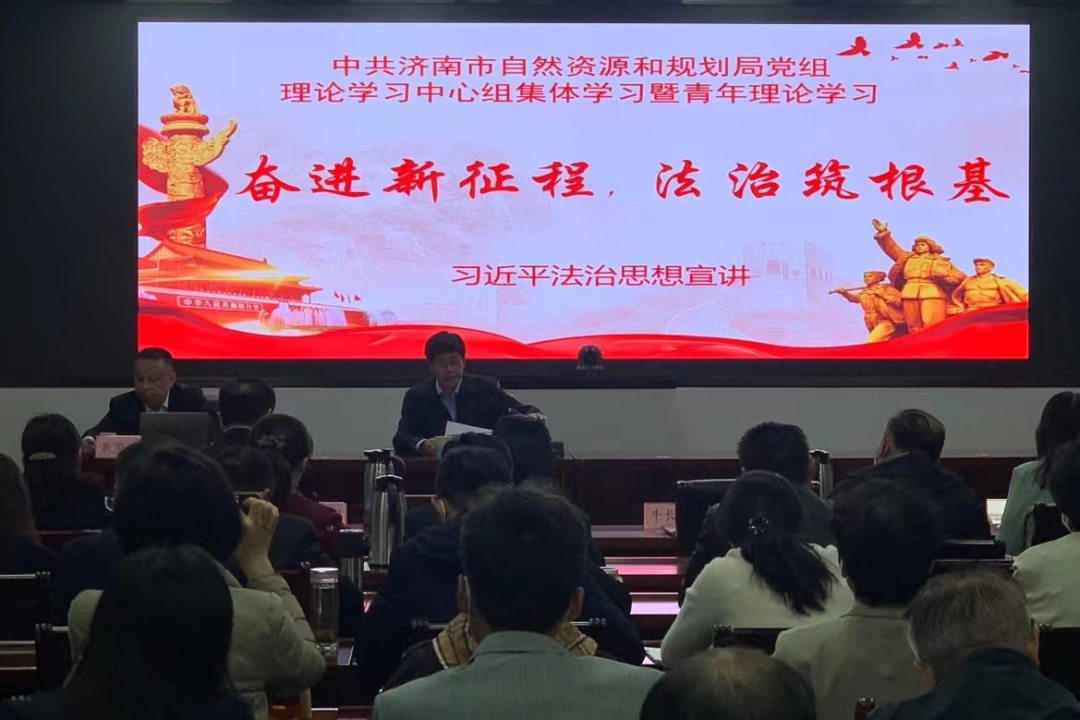
Since the 18th National Congress of the Communist Party of China, the Party Central Committee with Comrade Xi Jinping at the core has positioned the rule of law, laid out the rule of law, and strictly enforced the rule of law from the overall and strategic height of upholding and developing socialism with Chinese characteristics, and creatively put forward a series of new concepts on the comprehensive rule of law. New ideas and new strategies have formed Xi Jinping's rule of law thought. In order to further deepen Xi Jinping's thoughts on the rule of law, the Municipal Party Committee's Rule of Law Office, the Municipal Party Committee's Political and Legal Committee, and the Municipal Judicial Bureau have specially established Xi Jinping's rule of law "Jinan Lawyers Propaganda Group" to carry out propaganda activities for all levels and units in the city. Coinciding with the 20th National Congress of the Communist Party of China, Geng Guoyu, director of Zhongcheng Qingtai (Jinan) Law Firm, as the head of the "Jinan Lawyers Propaganda Group", was invited to the Jinan Natural Resources and Planning Bureau on October 13 to carry out Xi Jinping's rule of law propaganda activities. Niu Changchun, deputy secretary of the party group and deputy director of the Jinan Natural Resources and Planning Bureau, and other members of the bureau, responsible comrades of various branches and institutions participated in this propaganda activity. Director Geng Guoyu focused on studying and implementing Xi Jinping's rule of law, combining years of theoretical research and rich practical experience, based on the historic achievements of comprehensively governing the country according to law since the 18th CPC National Congress, and comprehensively and systematically expounded the background and formation process of Xi Jinping's thought on the rule of law. At the same time, combined with the Civil Code and social hot events, and using fresh examples, this paper deeply interprets the basic spirit of Xi Jinping's thought of the rule of law and the core meaning of "eleven insistences"; it deeply analyzes and emphasizes the importance of cultivating the thinking of the rule of law to enhance the ability of modern governance, and deeply learning and practicing Xi Jinping's thought of the rule of law to promote the modernization of governance. The whole lecture has a clear theme, profound thinking, detailed content, and simple language. It has both theoretical generalization and practical guidance. It has a strong pertinence and guidance for the participants to further learn and understand the rule of law. After the meeting, everyone expressed that they would use this training as an opportunity to further study and deeply understand the scientific connotation and significance of Xi Jinping's rule of law, further improve political positions in their work, strengthen responsibility, and effectively implement Xi Jinping's rule of law. To the work of natural resources and planning management. Next, we will continue to help build a government under the rule of law and welcome the victory of the 20th CPC National Congress with a more high-spirited attitude.
2022-10-13
12
2022-10
Viewpoint... Analysis of the nature of the difference make-up commitment and the application of law.
Definition of the concept of 1. gap-making commitments. Deficiency, also known as deficiency compensation, deficiency payment, etc., refers to the act of fulfilling the obligation to make up the deficiency in accordance with the agreement when the obligor fails to perform its obligations in accordance with the agreement or fails to achieve a certain profit-making performance goal in order to ensure the realization of the interests of the right holder in the relationship between the principal rights and obligations. It is often represented in the asset management products as a special arrangement in which the underlying assets are not sufficient to pay the current overdue income or principal due on the corresponding payment date in accordance with the agreement of the transaction documents, and the difference undertaker assumes the obligation to make up the difference. This commitment is commonly used in a large number of tiered financial products to reduce investment risk for senior investors. Depending on the object of the replenishment, the difference can be divided into the difference of the expected return, the difference of the debt service debt, the difference of the investment dividend, the difference of the collection of funds, etc. The difference between the differential replenishment commitment and the rigid payment is that the differential replenishment on the equity investment side is essentially the same as the common gambling agreement or gambling clause in the field of private equity investment, which is the redistribution of equity investment risk based on the autonomy of the parties to the transaction. On the investment side, the legal status of the asset management product is the investor. If the counterparty or its affiliates or other third parties voluntarily provide credit enhancement measures for the equity investment transaction, if the subject of the credit enhancement obligated party is qualified and there is no invalid contract, it does not constitute rigid payment, because the credit enhancement obligated party is not the issuer or manager, even if there are economic consequences of "capital preservation and income protection" for the product end investor, it is also not derived from the promise or payment of the issuer or manager, and does not pose a more serious financial risk. The dispute 2. judicial practice on the determination of the commitment to make up the difference. Article 91 of the Minutes of the National Court's Civil and Commercial Trial Work Conference stipulates: "If the parties outside the trust contract provide similar commitment documents such as third-party balance compensation, performance of due repurchase obligations, liquidity support, etc. as credit enhancement measures, and their contents conform to the provisions of the law on guarantee, the people's court shall determine that a guarantee contractual relationship has been established between the parties. If its content does not conform to the provisions of the law on guarantee, the corresponding rights and obligations shall be determined according to the specific contents of the commitment document, and the corresponding civil liability shall be determined according to the facts of the case." The article points out the idea in terms of the qualitative nature of the validity of the contract, but there is no doubt that the content of the credit enhancement measures "conforms" or "does not conform" to the standard of the law on guarantee. In the latter sentence, where "the content does not comply with the provisions of the law on warranties", it is also not clear whether the provisions of the Company Law on external guarantees of companies are permitted. According to article 36 of the "Judicial Interpretation of the Security System", the legal nature of the deficiency shall be interpreted according to its content, which may be interpreted as a guarantee, a debt accession or an independent contract, depending on the circumstances. However, the law does not provide for the criteria for judging different situations, which also makes judicial practice have different judgments on the nature of the commitment to make up the difference. 1. Recognized as a guarantee According to article 681 of the Civil Code, the conditions that constitute a guarantee include: the existence of a principal creditor's debt relationship. Accordingly, if there is an obvious principal-subordinate contractual relationship in the transaction model, and the performance of the differential replenishment obligation is premised on the debtor's failure to perform the debt due, it is more likely that the differential replenishment agreement is considered to be a guarantee contract. For example, (2019) in the case of Supreme Law Minzhong No. 560, Huarong Company signed a Trust Loan Contract with Kaidi Company, and the debtor of Kaidi Company borrowed 0.5 billion yuan from Huarong Company. Huarong Company and Kaidi Ecological Company signed a Letter of Commitment to Make up the Difference, agreeing that if Kaidi Company fails to repay the main contract debt in full and on time, fails to pay any money under the main contract, or has any breach of contract under the main contract, Huarong Company has the right to directly require Kaidi Ecological Company to perform the obligation to make up the difference without any pre-procedure. The court held that the Trust Loan Contract was the principal claim contract, and the Letter of Commitment to Make Up the Difference guaranteed the realization of the principal claim and established a joint and several liability guarantee. "From the definition of the meaning of the difference between the two parties, the" Difference Make-up Contract "stipulates that the main contract is the" Trust Loan Contract ", the principal debtor is Kaidi Company, and the scope of liability for the difference make-up is all the debts under the main contract, all of which are in line with the legal characteristics of the subordination of the guarantee contract. It follows that the nature of the contract is consistent with the legal characteristics of the contract of guarantee, both in terms of the literal interpretation of the core terms of the Contract for Deficiency and in terms of the interpretation of the contract system." 2. Recognized as debt accession According to article 552 of the Civil Code and the general theory, debt accession, also known as "concurrent debt assumption", means that a third party joins the existing debt relationship as a new debtor and assumes joint and several debts with the original debtor to the extent that it is willing to assume. The commonality between debt joining and guarantee is that there must be an existing creditor's and debt relationship as a prerequisite; the difference is that the debt joining establishes a new creditor's and debt relationship, which is independent of the original creditor's and debt relationship, and the guarantee has obvious subordination. It can be seen that, compared with the guarantor, the liability of the debt joining party is heavier, and the requirements for the establishment of debt joining are also higher, because it needs to make a comprehensive agreement on the relationship between creditor's rights and debts. (2019) In the case of Supreme Court Minzong No. 1438, China CITIC Bank and Letv Holding Company signed the "Merger and Acquisition Loan Contract". Letv Company issued a letter to China CITIC Bank stating that in case of overdue or default on the principal and interest of the loan, Letv promised to bear the responsibility of making up the difference in the repayment obligations of the borrower Letv Holding under the "Merger and Acquisition Loan Contract. In the first instance, the Beijing High Court held that the M & A Loan Contract agreed on the guarantee method and the specific name of the guarantee contract, but did not include the letter promising to make up the liability for the difference, indicating that the parties did not recognize the commitment as a guarantee when signing the M & A Loan Contract and a series of guarantee contracts. Secondly, LeTV promises to bear the responsibility for making up the difference as long as there is overdue or default on the principal and interest of the loan. The above promise does not mean to guarantee, on the contrary, it means to actively join the debt. Third, since the guarantee is a typical form of guarantee, its establishment, entry into force, guarantee period, mode of performance, etc. have more stringent provisions. In the absence of a very clear and clear agreement between the parties, it should not be easily identified as a guarantee. Therefore, LeTV's commitment to assume the responsibility of making up the difference belongs to the meaning of debt joining. In the second instance, the Supreme Court upheld the determination. 3. Identified as an independent contract or unilateral burden. In the structure of financial transactions, if there is no principal creditor's rights and debts, or the obligation to make up the difference is not based on a certain creditor's rights and debts, at this time, the balance does not constitute a guarantee or debt accession, but an independent contract or unilateral burden, and the obligation to make up the difference shall perform the corresponding obligations according to the agreement or commitment letter. For example, (2019) in the case of Supreme Law No. 1524, Ankang Company, as a principal, signed a "trust contract" with the trust company, and the trust funds were earmarked for the issuance of trust loans to Renjian Company. Guo, as the actual controller of Renjian Company, signed the "Difference Compensation and Assignment Agreement" with Ankang Company. The agreement stipulates that Ankang Company shall, on each trust benefit distribution day under the Trust Contract, if due to any reason including but not limited to Renjian Company's failure to pay off the principal and interest under the Trust Loan Contract in time and in full, if Ankang Company fails to obtain the distribution of trust benefits on time and in full according to the annualized 13% trust rate of return, Guo shall bear the full supplementary responsibility for the difference. The court held that the agreement agreed that Guo made up Ankang Company's annualized 13% of the trust income, paid the principal of the trust loan and the trust beneficiary right of the transferee Ankang Company, rather than assuming the guarantee liability for the debts incurred by Renjian Company under the contract involved in the case, so it was not recognized as a guarantee guarantee. The nature analysis and legal application of the commitment to make up the difference in 3.. Perhaps noting the particularity of the commitment to make up the difference, some argue that, based on the principle of autonomy of the will of the civil law, the balance of the difference, as an expression of the obligor's willingness to bear the debt, is the result of the autonomy of the parties, and can be recognized as an independent contractual obligation in cases where there is no prior debt that does not conform to the legal characteristics of the guarantee or the debt is added. In view of the fact that the deficiency make-up commitment is in several respects identical to, at least similar to, the guarantee designed in the Civil Code, the advantages of the classification of the deficiency make-up commitment as an atypical guarantee are even more advantageous: the provision of the law on guarantees shall not be applied to the deficiency make-up commitment in cases where the intention of the parties clearly shows that the deficiency make-up commitment and the guarantee differ in terms of constituent elements and legal effect; where the parties' intention is not easy to identify the difference between the commitment to make up the difference and the guarantee, the corresponding provisions of the Civil Code on the guarantee apply by analogy. In this way, cases of deficiency replenishment commitments can be resolved in a more comprehensive and appropriate manner. As far as the application of the specific law for the shortfall is concerned, the following aspects are noteworthy: First, the subordinate nature of the guarantee should not apply to the commitment to make up the difference. The scope of liability for the shortfall may be greater than the secured principal obligation, which is different from the scope of liability for a guarantee, and may itself establish a breach of contract clause. The principle of civil law holds that the secured obligation, since it has a subordinate nature, shall not be heavier than the principal obligation. However, in terms of the transaction structure and purpose of the credit enhancement measure, most parties treat it as an independent obligation, and it is common to set up a default clause. At present, if the people's court supports the plaintiff's claim of making up the difference in the judicial decision, it will usually support the liability for breach of contract. By extension, based on the principle of autonomy, it is entirely possible that the debt content of the credit enhancement measure may be agreed to exceed the scope of the secured debt. However, if the debtor and the creditor subsequently negotiate to change the principal debt and increase the debt, the court may apply the provisions of article 695 of the Civil Code by analogy, and the credit-enhancing party shall not be liable for the increased debt. Secondly, under article 686 of the Civil Code, guarantees are divided into general guarantees and joint and several guarantees, and are presumed to be general guarantees in the absence of an agreement or when the agreement is unclear. The legislative rationale for the presumption of general guarantees in the Civil Code is primarily to mitigate the liability of the guarantor and to avoid the presumption of joint and several liability leading to the bankruptcy of a number of enterprises in "serial debt", which would affect socio-economic development. However, most of the shortfall is used in commercial situations, and there is a reasonable expectation and prior agreement of the parties to initiate credit enhancement measures if the creditor is not fully satisfied. Even if the people's court handles the case of making up the difference according to the idea of guarantee, it should generally find that the credit-adding party bears joint and several guarantee liability. Finally, when the company is the commitment party to the deficiency make-up clause, it shall be bound by the provisions of article 16 of the Company Law and articles 7 to 11 of the Judicial Interpretation of the Guarantee System on the company's external guarantee. Although there is a difference between the commitment to make up the difference and the guarantee, as a kind of nameless contract with the function of guarantee, its content is to increase the credit party to bear an irrevocable debt without compensation, in the economic substance affecting the company's stakeholders, so the company's external guarantee rules should be applied by analogy. Moreover, the parties' use of the margin replenishment commitment is more based on the consideration of facilitating the realization of the rights of the right holder, the burden of the commitment party is heavy, and the lack of the guarantor's defense, more should emphasize the company's decision-making control of the margin replenishment commitment.
2022-10-12
12
2022-10
On October 12, Zhou Jiakui's lawyer team once again received the pennants presented by the parties. The client of this case went to work in Hebei from his hometown in Shandong and was seriously injured by the perpetrator of driving an unlicensed motorcycle on the way off work. Although the traffic police determined that the perpetrator was fully responsible for the accident, they treated the case as an ordinary traffic accident. The client's family condition is difficult, even unable to pay the medical expenses after admission, the perpetrator refused to compensate. After understanding the situation, lawyer Zhou Jiakui decided to represent the case free of charge and immediately arranged for team lawyers to carry out their work. Due to the restrictions of the epidemic prevention and control policy, the team lawyers were unable to go to Hebei to communicate with the local case-handling authorities in person, and could only continuously promote the relevant legal procedures by mailing documents and telephone communication. After repeated requests from lawyers, the local public security department conducted an injury appraisal for the client, and found the perpetrator to tell him that he was suspected of traffic accident. Finally, with the efforts of the team lawyers, the perpetrator paid 270000 yuan to the client in one lump sum. Zhongcheng Qingtai (Jinan) Law Firm is committed to the development of public welfare undertakings and assumes social responsibility with legal power. The law firm organizes lawyers to carry out legal aid projects on a regular basis, shouldering moral responsibility and writing articles. Zhou Jiakui's lawyer team has been engaged in handling major litigation cases and non-litigation business for many years, and has been committed to the development of public welfare legal undertakings. The slogan "Defend justice and safeguard fairness" on the banner is the unremitting pursuit of Zhongcheng Qingtai lawyers! Case handling enlightenment: In the case of my country's enforcement legal system is not yet perfect, many debtors hold the mentality of restricting high consumption to have little impact on their lives, and the phenomenon of "rotten" in civil debt is not uncommon. In this case, the team lawyer changed the public security organs' wrong determination that this case was only an ordinary traffic accident by applying for injury identification and submitting a lawyer's opinion. The perpetrator was criminally detained. The perpetrator was finally paid in one lump sum in order to obtain the victim's understanding. Compensation. This time to help clients defend their rights is another successful attempt by team lawyers to safeguard the legitimate rights and interests of the parties by means of criminal prosecution.
2022-10-12

11
2022-10
Viewpoint... On Chinese investors-host country dispute settlement mediation rules.
内容摘要:主权国家间的正常关系的若要维护完全,东道国良好的跨境投资环境若要得到保证,跨境投资中双方当事人的合法权益若要得到维护、国家间友好合作关系若要得到健康发展,妥善解决国际间投资争端是重中之重。作为一种非诉解决纠纷方式,调解是指在第三方的帮助之下,争端各方在互谅互让的基础上达成协议解决争端的方法。调解具有独特的效益价值与和谐价值,具有节约争端解决成本、稳定合作关系的功能,能够为当事人提供一次性解决争议的机会。 本文通过研究现行国际争端的调解规则与程序适用,试图在创新调解规则、拓宽调解规则适用、完善调解规则执行程序三方面提出具体建议。 关键词:国际投资争端解决 调解规则 BIT 一、投资者-东道国争端解决调解规则概述 他国于东道国的跨国投资、交易行为导致的各类争议是国际投资争端的主要形式。从主体上可分为投资者与东道国投资者之间的争端、投资者与东道国之间的争端和投资者国与东道国之间的争端,本文主要探析的是相较之下出现更频繁的投资者与东道国之间的争端。 解决国际投资争端主要依托于国家之间签订的国际投资条约的约定。国际投资条约包括多边投资条约、双边投资条约和区域性投资条约。国际投资争端问题只有早期的《华盛顿公约》专门对争端解决做出了规定。 调解作为一种解决争端的救济程序主要表现为:争端出现——双方当事人选取第三方介入争端——第三方按照一定标准和流程听取各方意见、总结争议焦点、提出解决建议——双方当事人遵从自愿合法原则作出决定。[1]从现代法治的意义上分析,规则是对意思自治的框定限制,但调解的灵魂在于自由,具有一种“反程序外观”[2],虽然通常调解有利于“开诚公布”,但并非实现实质公正的必然捷径。而调解规则是指经权威制定并遵守的标准或原则;或者指规定或指引特定情况下的行为或活动的一般性标准。[3]因此,作为调解程序的载体,调解规则极具研究价值,我国可以完善投资者—东道国争端解决机制中的调解规则。 调解规则与诉讼或仲裁规则相比具有较为任意的外观,这是由合意这一调解的本质因素决定的。[4]调解中,调解人可以用多种方式灵活协助当事人查明争议、提出方案、促成和解,而不必严格遵循程序顺序。一但调解合意达成,也往往能迅速调解结案。 二、中国投资者-东道国争端解决调解规则的实践检视 (一)中国多边投资条约中的投资者-东道国投资争端调解规则 1.《华盛顿公约》中的调解规则分析 调解机制在此公约中第一次于国际公约范围内被规定为解决国际投资争端的方式之一。他国投资者与被投资国政府之间在被投资国发生投资争端,国际上已存在相当数量的双边性投资保护条约对此进行规制,即将该类争端的管辖权提交互认的争议解决“中心”处理,中心可以进行调解或仲裁。 ICSID公约还有其调解规则,即《ICSID公约调解规则》(2006年)与《ICSID调解附加便利规则》(2006年),两个规则是争端解决中心对公约中调解规则适用方式上的再明确。 2011年,马来西亚的伊佳兰公司在ICSID秘书处登记于中国海南政府土地出让权纠纷案,该案是和解(调解)结案。该案由海南省政府而起,该政府单方面收回伊佳兰开发万宁市土地的权利,未对其进行合理补偿。因涉案土地足有2000多亩且涉及国际投资,中国方面高度重视,积极开展与伊佳兰公司的协商工作,于同年顺利达成和解。当然,伊佳兰公司不再纠缠的原因,是由于海南政府承诺另寻500亩土地开发权对其补偿。此案是中国在ICSID被诉的第一案,伊佳兰公司按照1988年中马BIT最惠国待遇条款援引1995年中国-以色列BIT投资者-东道国投资争端解决条款,该条款规定投资争端可提交ICSID加以解决。本案涉及到管辖权以及国家主权利益等问题。 2.《多边投资担保机构公约》中的调解规则分析 该公约附件二第三条详列了调解解决争端的规则。20世纪80年代初,许多发展中国家都面临着类似的债务危机,由于无力还债,导致国际债务纠纷频起。在此背景之下,《多边投资担保机构公约》应运而生。公约创造性地设立了代位求偿制度,既以MIGA行使代位权,间接解决国际投资争端。该公约规定,机构与成员国之间与解释和执行无关的其他争端,都须采取谈判、仲裁和调解的方式加以解决,明文规定了调解规则的适用。MIGA为我国私人资本自由流动起到了积极的促进作用。2000年,中国人保与MIGA签署了合作协议,共同保障中国投资者在其它发展中国家的投资。2006年,中国出口信用保险公司与MIGA签署全面合作谅解备忘录,进一步深化和规制双方合作关系。MIGA对我国投资发展也起到了极大的促进作用:一是MIGA为小额投资提供担保,保障民间投资者的小额国际投资行为;二是随着国力提升和“一带一路”倡议的支持,我国对外直接投资增加,MIGA使我国对外直接投资投资获得了国际法意义上的保护。 (二)中国双边投资条约中的投资者-东道国投资争端调解规则 1.双边投资条约中的调解程序剖析 注:2015年7月29日,中国与土耳其签署了《中华人民共和国政府和土耳其共和国政府关于相互促进和保护投资协定》。该协定已于2020年11月11日生效 2.双边投资条约中的调解规则适用 我国目前双边投资协议有105个,其中明确指出可寻求调解或第三方介入解决争端的条约有12个,分别是中国与乌兹别克斯坦、比利时与卢森堡、坦桑尼亚、以色列、土耳其、印度、巴布亚新几内亚、日本、斯洛伐克、荷兰、俄罗斯、希腊,占比11.4%。 中国与希腊政府签订的于1993年生效的《关于鼓励和相互保护投资协定》[7]条规定投资者东道国之间争议当事人合意,可提交ICSID通过调解或仲裁解决,明确提出了调解程序的适用。 中国与印度签订的于2007年生效的《关于促进和保护投资的协定》第九条之(二)规定,若双方不能在期间内通过友好协商解决争议,经当事人同意,可将争议提交司法、仲裁或行政机构解决,也可以根据《联合国贸法会调解规则》进行调解。 与乌兹别克斯坦签订的于2011生效的《关于促进和保护投资的协定》[7]第12条第1款规定,争议应尽可能通过双方当事人磋商解决,其中包括调解程序的适用。 与以色列签订的于2009年生效《关于促进和相互保护投资协定》[8]第八条规定,若不能友好解决,则可以向解决投资争端国际中心秘书长提出书面请求来诉诸调解或仲裁程序,是前置程序经过之后可以再通过解决投资争端国际中心调解,同样的还有与日本签订的双边协定(1989年)。 与坦桑尼亚联合共和国政府于2014年生效的《关于促进和相互保护投资协定》[9]第十三条规定,投资者与另一方缔约国领土内的投资争端,应尽可能通过双方当事人友好磋商解决,其中包括调解程序的应用。 (三)中国自贸区协定中的投资者-东道国投资争端调解规则 1.中国-新西兰自贸区协定中的调解规则分析 中国与新西兰《中国-新西兰自由贸易协定》[10]规定,投资者与东道国之间的投资争端,应尽量通过投资者与另一方的磋商友好解决,若争端双方都接受第三方程序的介入,争端解决也可以引入第三方程序。这非约束性的第三方程序包括调解程序。该规定与上述乌兹别克斯坦和坦桑尼亚国家相类似,将调解置于磋商或谈判的“友好协商”语境之下。 2.中国-东盟自贸区协定中的调解规则分析 中国与东盟《全面经济合作框架协议投资协议》是规定在中国—东盟自贸协定之中的。2015年,中国与东盟在北京就升级谈判达成成果文件《议定书》,《议定书》于2016年生效。该《议定书》旨在为在投资领域进一步深化合作做出一系列保障。为促进投资便利化,双方达成简化投资批准手续,促进发布投资相关政策、法规信息,必要时可建立一站式投资中心或相关机制,支持为商界提供营业执照便利许可与咨询等一系列共识。 虽然该协议中对缔约方与投资者间争端解决的规则是争端所涉方应尽可能通过磋商解决争端,未解决则可以提起仲裁,没有直接规定调解规则的适用,但提到了将争端提交所列的投资争端国际解决中心、贸法会或双方同意的其他仲裁机构后可以适用该仲裁机构的调解规则。 三、完善中国投资者-东道国争端解决调解规则的具体建议 (一)创新投资者-东道国争端解决调解规则 目前,贸法会正在推动投资者与国家争端解决的改革,梳理出来了现有制度的一系列问题,中国可以在讨论会议中加入自己的合理主张或建议。 第一,可将调解程序独立于仲裁程序,将调解与诉讼、仲裁相分离。通过分离,可以促使调解独立发展,促进调解规则演进与创新,形成规范、合法、合理的调解规则,发挥其司法功能,提高调解的“程序正义”,增加程序的使用效率。同时,可以提高调解程序的保密性与独立性,使调解程序不至于给诉讼或仲裁程序的公正性造成影响,不会因为调解中悉知的事项使审判庭或仲裁庭做出预判。 第二,可将调解设定为优先程序,以节约司法资源。参照我国民事诉讼法第122条、133条规定的“先行调解”制度,可以将投资者与东道国政府之间关于投资的部分裁量性问题先行调解,若能重新协商或者探讨则不必诉之法院或仲裁机构,以节约时间和费用,节约司法资源。同时,应强调争端是否能够适用调解程序(即调解适用规则),取决于该纠纷的争议焦点是否具有调解可能性,让步的内容是否能够被该方主体所决定,不得强迫调解。“优先适用”并不是必然适用调解程序解决问题,要注意避免对调解过分推崇。同时要注意保障当事人诉权,如果争端双已经僵持,明显无法通过调解程序解决争议,应及时终止程序,转如其他诉讼或仲裁程序。 第三,可构建规范、多元的调解员资质选任制度。成功的调解员能够根据自己的角色定位,选择合适的方式方法,运用合适的沟通技巧,进行专业的调解,并恰当处理调解中获取的材料与信息,成功促成调解。这种制度支持将为调解提供稳定的外部环境,夯实调解环节的基础功能,降低调解机制机会成本。 第四,在制度上提供便利,一是可以论证国际投资中调解效力与执行可能性,通过不断完善调解规则,增加对调解中司法正义的认可;二是可以在实践中对调解机构设置完备,调解规则构成完善,调解人员适格权威,调解结果公正恰当的调解在合适条件下就认可与执行进行评估,并进行试点,以促进调解制度的良性发展。 (二)拓宽投资者-东道国争端解决规则的具体适用 经过上述分析,可以得知,我国与大多数国家签订的BIT中,关于投资者与东道国的争端解决方式上的约定没有明确出调解规则的适用,但这种规定并没有排除投资者在实际操作中将调解作为解决投资争端解决方式[11]。理由如下: 第一,条约中都没明确限制第三方介入争端,即使用调解程序解决争议的方式的适用,没有岔路口条款。岔路口条款是指投资者在选择救济途径时已经选择了国内诉讼或国际仲裁程序之后再不得诉诸另一程序。调解规则的适用并不在限制之中。 第二,大多数我国签订的BIT中都明确规定了协商前置程序,且需要经过一定的冷却期,当事人可以在协商程序中达成调解合意,作为协商的具体方式之一。这种相对扩大解释既不会妨害后续救济程序的进行,也不会改变现有规则。能充分利用调解优势增强了协商成功的可能性。 第三,确实存在BIT中列明协商程序包括调解程序的适用,将调解视为协商程序之一,这在现行法律框架下,这样解释是可行的。 (三)完善投资者-东道国争端解决调解规则的执行程序 完善调解规则的执行程序,可以尝试建立类似于对仲裁程序的衔接机制。由于对投资者—东道国争端规则最彻底的公约是《华盛顿公约》,因此,可以参照其拟定如下要点:(1)每一缔约国都负有承认与执行的义务。(2)每一缔约国都应把经专门机构制定的调解协议(不涉及国家利
2022-10-11
11
2022-10
In order to give full play to the professional "external brain" role of the municipal government's legal advisers, strengthen professional training and exchanges, and further improve the legal literacy and legal ability of administrative staff, on the afternoon of October 10, the Jinan Municipal Bureau of Justice held the first phase of the Jinan Municipal Government Legal Adviser Lecture hall. The third legal adviser of Jinan municipal government, legal expert of PPP expert database of Ministry of finance, expert of PPP expert database of Shandong Provincial Department of finance, and senior partner of Zhongcheng Qingtai (Jinan) law firm, Shi Guangbo, was invited to give a special lecture on "legal practice issues of PPP project. Lawyer Shi Guangbo combined the characteristics of administrative management and a large number of typical cases, focusing on the PPP project "basic understanding, landing process, normative requirements, contract review, risk prevention, dispute handling" and other six aspects of legal practice knowledge, for the participants to give a key explanation and guidance. The lecture was rich in content, easy to understand, easy to understand, and practical, and answered relevant theoretical and practical questions raised by the participants on the spot. The atmosphere of discussion and exchange was warm and achieved positive results. It was welcomed and praised by the participants. Over the years, Zhongcheng Qingtai Law Firm has worked hard to provide professional, high-quality and efficient legal services for party committees and government agencies at all levels. It has served as a perennial and special legal consultant for more than 100 party and government agencies, and has accumulated rich performance and experience in the field of government legal affairs. experience.
2022-10-11

09
2022-10
Viewpoint... A brief analysis of the guarantor's right of recovery after the transfer of claims.
一、导言 《中华人民共和国民法典》(下称“《民法典》”)与《最高人民法院关于适用<中华人民共和国民法典>有关担保制度的解释》(下称“《担保制度解释》”)对于保证人受让债权行为性质和追偿权的问题作了更为细化的规定,并在追偿主体方面相较《民法典》颁行之前的《中华人民共和国担保法》等相关法律法规进行了一定的修改变动。 笔者近期提供法律顾问服务时遇到此类咨询事项,在此谨通过法律对比和判例检索等方法,对保证人受让债权后的追偿权问题进行分析,以供读者参考。 二、相关法律条文 (一)《中华人民共和国民法典》 第七百条 保证人承担保证责任后,除当事人另有约定外,有权在其承担保证责任的范围内向债务人追偿,享有债权人对债务人的权利,但是不得损害债权人的利益。 (二)《最高人民法院关于适用<中华人民共和国民法典>Interpretation of the Guarantee System Article 13 If two or more third parties provide guarantee for the same debt, the guarantors agree on mutual recovery and share, and the guarantor who has assumed the guarantee liability requests other guarantors to share according to the agreement, the people's court shall support it. If the guarantors agree to undertake joint and several joint guarantees, or agree to recover each other but do not agree to share, each guarantor shall share the part that cannot be recovered from the debtor in proportion. If two or more third parties provide guarantee for the same debt, and the guarantors have not agreed on mutual recovery and have not agreed to undertake joint and several joint guarantee, but each guarantor signs, seals or prints on the same contract, and the guarantor who has assumed the guarantee liability requests other guarantors to share the part that cannot be recovered from the debtor in proportion, the people's court shall support it. Except for the circumstances specified in the preceding two paragraphs, the people's court shall not support the request of the guarantor who has assumed the liability for security to request other guarantors to share the part that cannot be recovered from the debtor. Article 14 Where two or more third parties provide security for the same debt, and the guarantor is transferred to the claim, the people's court shall determine that the act is liable for the guarantee. If the guarantor of the transferred claim, as a creditor, requests other guarantors to assume the liability for security, the people's court shall not support it; if the guarantor requests other guarantors to share the corresponding share, it shall be dealt with in accordance with the provisions of Article 13 of this interpretation. Article 18 If a guarantor who has assumed the liability for security or compensation recovers from the debtor within the scope of its liability, the people's court shall support it. The the People's Republic of China Guarantee Law of (III) (hereinafter referred to as "the Guarantee Law", which has been repealed) Article 12 Where there are two or more guarantors for the same debt, the guarantors shall bear the guarantee liability in accordance with the guarantee share agreed in the guarantee contract. If there is no agreement on the share of the guarantee, the guarantor shall bear joint and several liability, and the creditor may require any one of the guarantors to bear full responsibility for the guarantee, and the guarantor shall have the obligation to guarantee the realization of all claims. A surety who has already assumed suretyship liability shall have the right to recover from the debtor or to require other sureties who are jointly and severally liable to pay off their share. Comparison of legal provisions: 1. With regard to the nature of the act of the guarantor's assignment of the claim and the consequences of recovery, the Guarantee Law does not specify, while the Interpretation of the Guarantee System makes it clear that "if the guarantor assigns the claim, the people's court shall determine that the act is liable for security". Through the case search, it can be seen that before the promulgation of the Civil Code, some people's courts, in the course of the trial through the application of the Guarantee Law, have identified the nature of the guarantor's transfer of claims as the assumption of security liability, which is consistent with the provisions and spirit of the Civil Code. 2. There is a clear difference between the Guarantee Act and the Interpretation of the Guarantee System as to the right of recourse after the guarantor has assumed the responsibility for the guarantee. Article 12 of the Guarantee Law stipulates that a guarantor who has already assumed the responsibility for the guarantee shall have the right to require other guarantors who bear joint and several liability to pay off their share. The definition of "other guarantors with joint and several liability" is broader, and if "there are more than two guarantors for the same debt" and "there is no agreed guarantee share", the guarantors are jointly and severally liable. Article 13 of the Interpretation of the Guarantee System stipulates that if two or more third parties provide guarantees for the same debt, if the guarantors have not agreed on mutual recovery and have not agreed to undertake joint and several guarantees, nor have they signed, sealed or fingerprinted the same contract, the guarantor who has already assumed the guarantee liability has no right to recover from other guarantors. It can be seen that there are obvious differences before and after the implementation of the Civil Code as to whether guarantors can recover from each other. Compared with the Guarantee Law, the Interpretation of the Guarantee System has significantly tightened the caliber of recovery between guarantors. 3. Case Retrieval (I) Zibo Intermediate People's Court of Shandong Province:(2019) Lu 03 Min Zhong No. 286, (2020) Lu 03 Min Zhong No. 3135 Summary of the case: On January 14, 2014 and October 15 of the same year, the defendant Zibo Duoshan Building Materials Co., Ltd. (hereinafter referred to as "Duoshan Building Materials") and Industrial and Commercial Bank of China Co., Ltd. Zibo Linzi Sub-branch (hereinafter referred to as ICBC Linzi Sub-branch) signed two "Working Capital Loan Contracts", borrowing 5 million yuan and 9.25 million yuan from ICBC Linzi Sub-branch respectively. On January 15 and October 16 of the same year, 5 million yuan and 9.25 million yuan were transferred to the defendant's Duoshan building materials account respectively. Defendant Zibo Oneth Plastic Co., Ltd. (hereinafter referred to as "Oneth Company") signed the "Maximum Guarantee Contract" with the contract number of 2013 Linzi (Bao) Zi No. 0529 with ICBC Linzi Sub-branch on September 27, 2013, promising to undertake joint and several liability guarantee for the loan contract of Defendant Duoshan Building Materials to ICBC Linzi Sub-branch with the maximum balance of RMB 20 million from September 27, 2013 to September 26, 2016, the guarantee period is two years from the day following the expiration of the term of the loan under the autonomous contract. Defendant Sun Duoshan and Defendant Yang Honglian issued a guarantee letter to ICBC Linzi Sub-branch on October 8, 2014, promising to provide joint and several liability guarantee for the credit business of Defendant Duoshan Building Materials in ICBC Linzi Sub-branch with their existing and future legal property. The guarantee period is two years from the day following the expiration of the credit business period under the independent contract. On October 15, 2014, the plaintiff Shandong Longyang Chemical Co., Ltd. (hereinafter referred to as "Longyang Company") and Linzi Sub-branch of ICBC signed a "Guarantee Contract" with the contract number of 2014 Linzi (Bao) Zi 0522, assuming the guarantee responsibility for the 9.25 million yuan loan on October 15, 2014. The guarantee period is two years from the day following the expiration of the credit business term under the independent contract. The defendant refused to repay the principal and interest and stopped paying the interest on the second loan after the first loan was due. Later, ICBC Shandong Branch transferred the claims of the above two loans to Great Wall Company, and on July 3, 2015, ICBC Shandong Branch and Great Wall Company issued a joint announcement on the transfer of claims and debt collection through Shandong Legal News. On September 10, 2015, Great Wall Company and Gaoyang Company issued a joint announcement on the transfer of creditor's rights and debt collection through Shandong legal newspaper. Great Wall transferred the two claims to Gaoyang. Longyang Company, as the joint and several liability guarantor of the two loans mentioned above, signed a "creditor's rights transfer agreement" with Gaoyang Company on October 8, 2015 to obtain the creditor's rights of the two loans. Entrusted by Gaoyang Company, Longyang Company has notified the defendant in writing of the fact of the transfer of creditor's rights on October 12, 2015. The actual controller of the defendant Duoshan Building Materials, Sun Hongchao (son of the defendant Sun Duoshan and Yang Honglian), signed it and delivered it to Wang Zheng, the legal representative of the defendant Oneth Plastic. After the creditor's right expired, the defendant did not repay the principal of 14234377.12 yuan and interest after the plaintiff claimed the right. Longyang Company paid 230000.00 yuan for the lawyer's fees for the lawsuit. ICBC Shandong Branch transferred the creditor's rights of the above two loans to Great Wall Company on the transfer date (April 30, 2015) with a principal of 14234377.12 yuan, an interest of 189979.82 yuan and a total principal and interest of 14424356.94 yuan. Both Liquidity Borrowing Contracts expressly stipulate that the Borrower shall bear the costs incurred by the Lender in realizing the claims under this Contract, including but not limited to attorney's fees, appraisal fees, auction fees, etc. All three assignments of claims agree that the principal claim and all rights under the security contract are enjoyed by the transferee. The Court held that: (2019) The court of first instance in case No. 286 of Lu 03 Min Zhong held that the plaintiff Longyang Company obtained the creditor's right of 14234377.12 yuan through legal creditor's right transfer, and the creditor's right transfer had legal effect on the four defendants. It was decided that the defendant Zibo Duoshan Building Materials Co., Ltd. paid the plaintiff Shandong Longyang Chemical Co., Ltd. the loan principal of 14234377.12 yuan, and the defendant Zibo Oneth Plastic Co., Ltd., the defendant Sun Duoshan and the defendant Yang Honglian were jointly and severally liable for repayment. The Intermediate People's Court of Zibo City, Shandong Province (hereinafter referred to as "Zibo Intermediate People's Court"), as the court of second instance of (2019) Lu 03 Min Zhong No. 286, held that Longyang Company had different identities in the two loans involved and should be distinguished: (1) On the issue of 9.25 million yuan loan. In this loan relationship, the appellee is one of the guarantors. Therefore, the appellee from Gaoyang company "transfer claims" behavior, in fact, should be the guarantor to bear the responsibility of the guarantee. According to Article 31 of the the People's Republic of China Guarantee Law, "After the guarantor assumes the responsibility for the guarantee, he has the right to recover from the debtor" and the Supreme People's Court on the application of<中华人民共和国担保法>Article 38, paragraph 1, of the Interpretation of Certain Issues "Where the same claim has both a guarantee and a security provided by a third party, the creditor may request the guarantor or the guarantor of the goods to assume the liability for security. If the parties have no agreement on the scope of the guarantee or the scope of the guarantee in rem or the agreement is unclear, the guarantor who has assumed the guarantee liability may recover from the debtor or require other guarantors to pay off their share." The appellee has the right to recover from the debtor the amount actually paid off, or to require other guarantors to pay off their share. The appellee brought a lawsuit as a "creditor's rights transferee", but the 9.25 million yuan loan did not belong to the "creditor's rights" transferred by him in essence. The two were different in nature, and the appellee did not submit valid evidence to prove the actual repayment amount of the 9.25 million yuan loan. Therefore, the issue of the 9.25 million yuan loan was not dealt with in this case, and the appellee may claim another right. (II) about the 5 million yuan loan. The appellee's assigned creditor's rights are legal and valid. The principal of the loan he claims shall be calculated according to 4984377.12 yuan. The appellant shall bear the principal, interest and economic losses of the loan. The defendants in the original trial, Oneth Company, Sun Duoshan and Yang Honglian shall bear joint and several liability for the above debts. In addition, combined with the fact that the maturity date of 5 million yuan is earlier than 9.25 million yuan, it is believed that part of the loan principal of 15622.88 yuan (14250000-14234377.12) repaid by the defendant should belong to the 5 million yuan, so the balance of the loan principal of 5 million yuan should be 4984377.12 yuan. To sum up, Zibo Intermediate People's Court ruled that the defendant Zibo Duoshan Building Materials Co., Ltd. paid the plaintiff Shandong Longyang Chemical Co., Ltd. the loan principal of 4984377.12 yuan and interest, and the defendant Zibo Oneast Plastic Co., Ltd., the defendant Sun Duoshan and the defendant Yang Honglian were jointly and severally liable for repayment. Since then, all parties concerned have filed a separate lawsuit and appealed against the 9.25 million yuan loan. Zibo Intermediate People's Court held in (2020) Lu 03 Min Zhong No. 3135 that the plaintiff's act of transferring creditor's rights as a guarantor belongs to the way the guarantor assumes the guarantee responsibility, and the guarantor can recover from the debtor after assuming the guarantee responsibility. This case is a lawsuit filed by the plaintiff to realize the right of recovery. Because the plaintiff's agreement with Gaoyang Company specified that the consideration was 9.5 million yuan and the interest on the commercial loan since October 8, 2015, and the share of the two claims was not specified in the previous transfer of claims, the plaintiff's agreement with Gaoyang Company did not specify the share of the consideration for the debt and the transfer of claims, the compensation for the debt recovered by the plaintiff can be calculated according to the proportion of the debt in the total amount of the agreement (I .e. the compensation actually paid by the plaintiff for the loan of 9.25 million yuan = 9.5 million yuan * 9.25 million yuan/14234377.12 yuan = 6173434.87 yuan). Judgment: The appellant Duoshan Building Materials returned the appellee Longyang Company's compensation of 6173435 yuan. The part that the plaintiff Longyang Company could not recover from the debtor Duoshan Building Materials shall be shared equally by all joint guarantors, namely the plaintiffs Longyang Company, Oneth Company, Sun Duoshan and Yang Honglian. Case Summary: An analysis of the two relevant cases and their respective two-level trial proceedings shows that: 1. Although the Civil Code and the Interpretation of the Guarantee System had not been enacted at the time of the judgment of this case, and there were some differences among the courts on the nature of the guarantor's assignment of claims and the consequences of recovery, the people's court that made the judgment in force of this case was consistent with the spirit of the Civil Code and the Interpretation of the Guarantee System, that is, the nature of the guarantor's assignment of claims should be identified as the responsibility for security, its recovery is not based on the status of the new creditor, but can only be recovered within the scope of liability. 2. As mentioned earlier, there are significant differences in the applicable law and the outcome of the judgement before and after the enactment of the Civil Code as to whether the guarantor can recover from other guarantors after assuming the liability for the guarantee. In this case, there is no agreement between the guarantors on mutual recovery or joint guarantee, or sign, seal or fingerprint on the same contract. However, according to the provisions of the Guarantee Law, the court identified other guarantors as joint guarantors in (2020) Lu 03 Min Zhong No. 3135 and ruled that the guarantor who bears the guarantee liability cannot recover from the debtor, shared equally by the joint guarantors. People's Court of Weidu District, Xuchang City, (II):(2021) Yu 1002 No. 3439 Minchu Summary of the case: On January 19, 2017, Zhongheng Company borrowed 2 million yuan from Zhongyuan Bank. On the same day, Lu Guangbin, as a mortgagor, signed a "Mortgage Contract" with Zhongyuan Bank to provide mortgage guarantee for the above loan with commercial houses under his name. Lu Guangbin, Jiao Xiaoshu and Zhang Lifeng respectively issued "Personal Guarantees" to Zhongyuan Bank. From May 26 to June 11, 2021, Lu Guangbin transferred 200000 yuan, 300000 yuan, 300000 yuan, 200000 yuan, 300000 yuan, 300000 yuan, and 70000 yuan to Juliyuan Company, totaling 1.67 million yuan. On May 27, 2021, the company delisted the above-mentioned claims at a transaction price of 1.65 million yuan by participating in the auction of the non-performing debt project of Zhongheng Company Limited by Tianjin Financial Assets Exchange. </中华人民共和国担保法></中华人民共和国民法典></中华人民共和国民法典>
2022-10-09
09
2022-10
In order to thoroughly study and implement Xi Jinping's thinking on the rule of law, give full play to the leading advantages of party building in law firms, carry forward the vanguard role of party members and lawyers, and welcome the victory of the party's 20th National Congress with outstanding results, Shandong Zhongcheng Qingtai Law Firm has recently launched a series of multi-angle, full platform, Wide coverage of the rule of law gift activities. On October 8, lawyer Zhou Jiakui, deputy director of Zhongcheng Qingtai (Jinan) Law Firm and director of the Public Welfare Executive Committee, once again appeared on the radio program "Legal Life". Lawyer Zhou Jiakui presented a vivid lecture on the rule of law for millions of listeners in the Saturday special program "legal Lecture Hall" of "legal Life" launched by Jinan News Comprehensive Broadcasting, Jinan Municipal Party Committee and Jinan Municipal Bureau of Justice. Lawyer Zhou Jiakui has been a guest of the "Legal Life" program for many years, dedicated to public welfare law popularization through the broadcast media, and has been awarded the title of "Excellent Guest Lawyer" of the program many times. Lawyer Zhou also protects the legitimate rights and interests of the people in need by participating in free agency programs such as CCTV's "The Lawyer Is Coming. Senior lawyers such as Chen Jinling, Wang Xuefeng, Zhang Qinbo and Li Shujing have also participated in the recording of radio programs and the popularization of law, conveying the spirit of the rule of law through audio, and being good lawyers to the satisfaction of the party and the people.
2022-10-09


Zhongcheng Qingtai Jinan Region
Address: Floor 55-57, Jinan China Resources Center, 11111 Jingshi Road, Lixia District, Jinan City, Shandong Province
