


24
2022-11
J & T Capital Watch | Analysis on the Issue of Shareholder Removal of Limited Liability Company
Introduction The removal of shareholders is the most severe punishment for shareholders of all the provisions of the Company Law. Its legislative purpose is to better maintain the orderly operation of the company and protect the trust interests of honest shareholders and the overall interests of the company. For the protection of the human nature of limited liability companies and to prevent the de-listing system from being abused by shareholders, the judicial authorities tend to be more conservative in the judicial practice of shareholder de-listing litigation. As a result, it is difficult to remove shareholders from the list, and differences between shareholders accumulate for a long time, which ultimately harms the vital interests of the company and shareholders, and makes the company fall into a "closed dilemma. 1. Overview Provisions on the Removal of Shareholders in the Judicial Interpretation III of the Company Law of (I) Article 17 of the "(III) of the Supreme People's Court on Several Issues Concerning the Application of the the People's Republic of China Company Law" stipulates: "If a shareholder of a limited liability company fails to fulfill his capital contribution obligation or withdraws all his capital contribution, he has not paid or returned the capital contribution within a reasonable period of time after being urged to pay or return the capital contribution, the company shall dissolve the shareholder's qualification by resolution of the shareholders' meeting, and the shareholder requests to confirm that the dissolution is invalid, The people's court will not support". That is, if a company wants to remove a shareholder, it needs to meet both substantive and procedural conditions: in terms of substantive conditions, the removed shareholder has failed to fulfill its capital contribution obligations or has withdrawn all its capital contributions. In order to protect the interests of shareholders and the human nature of the company, the Judicial Interpretation III of the Company Law strictly limits the substantive conditions for the removal of shareholders: only shareholders who completely fail to fulfill their capital contribution obligations or withdraw all their capital contributions may become eligible for removal. For shareholders who have contributed but not fully, or who have only withdrawn part of their funds, it can only be considered that the shareholder's contribution is defective. Such shareholders are often limited only to their right to subscribe to new shares, the company's remaining property distribution claims, dividend claims, and liability for breach of contract. Shareholders only need to make up their capital contributions and bear joint and several liability for the company's debts for the part they have not contributed or withdrawn. From the point of view of procedural conditions, the company needs to fulfill the obligation of urging the shareholders to report before dismissing the shareholders. Only after a certain period of time can the shareholders disqualify the shareholders by resolution of the shareholders' meeting if the shareholders have not contributed or returned the withdrawn funds. If the company intends to remove the name of a shareholder and convenes a shareholders' meeting without urging the shareholder, or if the company directly removes the name of a shareholder without convening a shareholders' meeting to make a resolution, the removal of the shareholder cannot be achieved. Process for the removal of (II) shareholders The process of removing shareholders is generally as follows: Sorting out the Judgment Views on the Issue of Shareholder Removal in 2. Judicial Trials The court will not support the delisting lawsuit in which the (I) shareholder has partially contributed or not fully withdrawn. Representative Case:(2015) No.10163 of No.3 Middle School Min (Shang) Zhong Zi, Dispute over Confirmation of Effectiveness of Resolutions between Gu Mou, Zhao Mou and a Company of Beijing Yike In that case, the court held that such severe measures as disqualification of shareholders should only be applied in cases of serious breach of capital contribution obligations, I .e. failure to make capital contributions and withdrawal of all capital contributions, and failure to fully fulfill the capital contribution obligations and withdrawal of part of the capital contribution should not be included. Before the company deletes a shareholder who fails to fulfill its capital contribution obligations or withdraws all capital contributions, it shall give the shareholder the opportunity to make corrections, that is, it shall urge the shareholder to pay or return the capital contribution within a reasonable period of time. Therefore, the resolution of the shareholders' meeting made by a company in Yike did not meet the preconditions for the company to disqualify Zhao as a shareholder. Gu asked for confirmation of the validity of the agreement. The evidence was insufficient and the court did not support it. (II) of Exclusion of Voting Rights from Deleted Shareholders to Participate in Shareholders' Meetings at which They are Disqualified as Shareholders Representative Case 1:(2014) Hu Er Zhong Min Si (Shang) Zhong Zi No. 1261, Dispute over Confirmation of Effectiveness of Resolutions of Wan Mou Company, Song Mou and Hao Mou Company In this case, the court held that the right of shareholders to remove the names of shareholders stipulated in Article 17 of the (III) for Judicial Interpretation of the Company Law is a legal power enjoyed by the company to eliminate the adverse effects of shareholders who fail to perform their obligations on the company and other shareholders, and is not based on the premise and basis of soliciting the meaning of the removed shareholders. In certain circumstances, when a shareholder's resolution to remove the name is made, it will involve the possibility that the removed shareholder may manipulate the voting rights. Therefore, when a shareholder has a special interest in the resolution discussed at the shareholders' meeting, the shareholder may not exercise the right to vote on the shares held by him. In this case, Hao company is a major shareholder holding 99% of the shares of Wan company. Wan company notified Hao company to attend the meeting before the meeting of shareholders, and the agent entrusted by it defended and raised objections at the meeting, thus protecting the rights of the shareholders to be removed. However, as mentioned earlier, when a company is voting on a resolution in dispute, the voting rights corresponding to its shareholding should be excluded. Representative Case 2:(2018) Supreme Law Minzai No. 328, if the shareholders' meeting disqualifies the shareholders who have withdrawn their capital contributions, the required approval ratio must be reached after excluding non-voting shareholders, otherwise the resolution of the shareholders' meeting will not be established. In this case, the Supreme Court held that when calculating the proportion of the shareholders' meeting to disqualify the shareholders who have withdrawn their capital contributions, the shares of non-voting shareholders should be excluded before voting; if it is illegally excluded, the resolution of the shareholders' meeting will not be established. In this case, Li did not participate in the resolution of the shareholders' meeting, nor did he participate in the litigation in this case. The plaintiff did not provide evidence and the court did not find out the fact that Li had withdrawn his capital contribution, and whether Kaifa Company had fulfilled the legal collection and notification procedures. Therefore, the resolution of the shareholders' meeting directly excluded Li's voting rights, lacking factual basis, and the resolution was not established. The articles of association of a (III) company may independently agree on the conditions for the removal of shareholders based on the autonomy of the company. Representative Case 1:(2017) Xiang Min Zai No. 75, Jiang Rong and Hengyang Tian 'an Passenger Transport Development Co., Ltd. Civil Judgment for Retrial of Surplus Distribution Dispute In this case, the court held that my country's "Company Law" and judicial interpretations did not negate the shareholder delisting system of limited liability companies. According to the principle of private law that "permission is permitted without express prohibition by law", the principle of good faith and public order and good customs are not violated. Under the circumstances, based on the autonomy of a limited liability company, the shareholders of the company can make an agreement on the reasons for the termination of shareholder qualification in the company's articles. If a shareholder violates the provisions of the articles of association relating to the termination of the shareholder's qualification and the exhaustion of internal relief procedures cannot be resolved, the shareholders' meeting of a limited liability company, as the highest authority for the shareholder to exercise the rights of the owner, has the right to make a resolution on the termination of the shareholder's qualification in accordance with the legal procedures. (IV) other refereeing views on the removal of shareholders Representative Case:(2017) Supreme Famin Shen No. 1010, Dissolution Dispute between Yinchuan Automatic Packaging Machine Manufacturing Co., Ltd. and Wen Mou and Other Companies In this case, the Supreme People's Court held that the "Company Law" did not clearly stipulate the procedures for removing the company's shareholders. With reference to Article 49, paragraphs 2 and 3 of the "the People's Republic of China Partnership Law", "The resolution to remove the partner shall be written Notify the removed celebrity. The date on which the removed celebrity is notified shall take effect and the removed celebrity shall withdraw from the partnership. If the removed celebrity has any objection, he may, within 30 days from the date of receiving the notice of removal, bring a suit in a people's court. At the same time, if the company urges the shareholders to pay the capital within the time limit, it shall state the consequences of not paying the capital within the time limit. Sorting out the problems related to prosecution in 3. The mode of litigation for the company's removed shareholders can be divided into the following two categories according to the type of litigation: The first mode of litigation, based on the resolution of the shareholders' meeting made by the company, to the court to confirm the validity of the resolution of the shareholders' meeting. Article 17 of the Judicial Interpretation III of the Company Law stipulates that "if a company removes the shareholder's qualification as a shareholder by resolution of the shareholders' meeting, the people's court shall not support the request of the shareholder to confirm that the removal is invalid." This provision is an action to confirm whether the resolution of the shareholders' meeting of the company is defective. In this kind of litigation, the removed shareholder shall be the plaintiff, the company shall be the defendant, and the removed shareholder shall file this lawsuit, requesting to confirm the validity of the resolution of the shareholders' meeting. After accepting the lawsuit, the court shall conduct a substantial review of the company's removal resolution, determine that the company's resolution to dismiss the shareholder violates the law or the articles of association of the company, and then decide whether the company's resolution is effective or not, and finally decide whether to dismiss the litigation mode of dismissing the shareholder. In the second mode of litigation, the company directly requests the court to disqualify the shareholder. This model usually takes the company as the plaintiff and the shareholder to be removed as the defendant, and is an action for removal, because the removal action is a direct disqualification of the shareholder, so the action to confirm the effectiveness of the resolution of the shareholders' meeting is not necessary here, but has been included in the removal action. Such litigation should grasp the following principles: whether it is based on the provisions of the Company Law or the articles of association of the company to dismiss a shareholder, it must be that the shareholder's behavior has caused significant losses to the interests of the company, and only by dismissing the shareholder can the deadlock faced by the company be solved; The act of dismissing a shareholder must be guided by the principles of good faith, fairness and justice, and public order and good customs. Of course, delisting suits can also be merged with other suits, such as suits in which the company demands compensation from the company by the delisted shareholder or compensation from the company by the delisted shareholder, but the specifics should also be considered in terms of whether the merger can improve the efficiency of the lawsuit. Problems after the delisting of 4. shareholders Post-procedure for the removal of (I) shareholders When the company convenes a shareholders' meeting, in addition to removing the shareholders through legal procedures, it may also agree on the follow-up issues of the company's removed shareholders in the resolution. For example, the removed shareholder shall cooperate with the company in the registration of the change of equity, and carry out internal transfer or capital reduction procedures for the shares of the removed shareholder. If the interests of creditors are damaged or the shares of delisted shareholders are transferred due to the resolution of capital reduction, special protective measures for creditors can be added to the interests of creditors in the procedure of delisting shareholders. The delisting of shareholders cannot exempt them from their responsibilities. If the delisted shareholders fail to fulfill their capital contribution obligations, they shall be liable to creditors within the scope of capital contribution. Compensation for the delisting of (II) shareholders At present, the "Company Law" and its judicial interpretations do not clearly stipulate whether compensation is required after the dismissal of shareholders, but most judicial organs generally have reservations about compensation. "Shareholder removal" itself, as a company's punishment for shareholders who infringe on their rights and interests, is usually no longer necessary to require shareholders to pay punitive or compensatory damages to shareholders, unless otherwise provided for in the articles of association. 5. Summary This article is a summary of the relevant thinking caused by a shareholder de-listing litigation case recently handled by our lawyers, and this article is committed to analyzing the current situation of judicial practice and litigation path of shareholder de-listing through specific cases. Because the relevant legal provisions are not fully perfected, whether it is "to confirm the validity of the resolution to remove shareholders" or "to disqualify shareholders", there is a risk that the people's court may rule to reject the lawsuit, so when handling specific cases, it is still necessary for lawyers to choose different litigation strategies according to the actual situation. Finally, I would like to thank Zhong Qian Yi (a graduate student of Dongbei University of Finance and Economics) for his contribution to the collation and writing of the relevant materials in this article.
2022-11-24
24
2022-11
Presentation of 1. issues Under the mode of commercial housing presale system and presale capital supervision system, real estate development enterprises (hereinafter referred to as "development enterprises") implement the "high turnover" strategy, through continuous land acquisition and new projects, in order to achieve rapid return of funds. In recent years, under the macroeconomic impact of malaise and depression, the slowdown in growth and tight liquidity have led to the inability of some development companies to make up for the funding gap, which in turn leads to construction stagnation, failure to deliver on schedule, and even unfinished projects and failure to deliver presale commercial houses, thus violating the main contractual obligations of the Commercial Housing Sales Contract (hereinafter referred to as the "sales contract") on "delivery". At this time, the buyer claims the right in addition to liquidated damages, often will also require the termination of the contract, then its right of discharge and the specific exercise method, exercise period how to determine? What is the judicial value orientation of our country? 2. Analysis and Judicial Decision (I) analysis of the "right of rescission" "Late delivery" belongs to the breach of contract of the development enterprise, according to the basic principle of "there is an agreement from the agreement, no agreement from the statutory", in the case of the sale contract does not give the buyer the right to terminate the contract, it can only exercise the legal right of termination. 1, for the vast majority of "late delivery" of commercial housing, buyers are based on "delayed performance" and exercise the legal right of discharge. Items 3 and 4 of paragraph 1 of article 563 of the civil code stipulate two situations in which the contract is terminated due to delay in performance of the debt. item 3 stipulates that "one of the parties delays in performance of the main debt and fails to perform within a reasonable period of time after being urged"; Item 4 stipulates that "one of the parties delays in performance of the debt or has other breach of contract, resulting in the failure to achieve the purpose of the contract". According to the Supreme People's Court's (I) on the Understanding and Application of Contracts in the Civil Code, item 3 is aimed at the situation where "the period of performance does not have a substantial impact on the realization of the purpose of the contract", that is, the debtor's performance after the expiration of the period of performance will usually only make the creditor suffer limited losses and will not completely defeat the purpose of the contract. Item 4 is aimed at the situation where "the period of performance has a substantial impact on the realization of the purpose of contract, that is, if the debtor does not perform on the agreed date or time limit, the creditor's contract purpose will not be achieved, such as the seller to the manufacturer to order Christmas goods, if the manufacturer does not supply on time, will inevitably cause the seller's contract purpose completely failed. According to the above point of view, with respect to the "late delivery" of commercial housing by development enterprises, buyers enjoy the legal right of release based on the provisions of paragraph 1, item 3 above. 2, the buyer based on the "delay in performance" and the exercise of the statutory discharge right, the need to perform the "reminder" of the pre-procedure. Under the circumstances stipulated in paragraph 1, paragraph 3, of article 563 of the Civil Code, the creditor is not allowed to terminate the contract immediately, and it shall issue a reminder to the debtor for the performance of the debt, which is generally made after the expiration of the period of performance, with the main purpose of establishing a grace period as soon as possible and clarifying the conditions for the exercise of the right of discharge. If the debtor fails to perform at the expiration of the grace period, the creditor may exercise the right of discharge. According to the "Interpretation of the Supreme People's Court on Several Issues Concerning the Application of Laws in the Trial of Disputes over Commercial Housing Sales Contracts (2020 Amendment)" (hereinafter referred to as the "Commercial Housing Interpretation"), Article 11, paragraph 1, the seller delays the delivery of the house or the buyer delays the payment of the house purchase, and still fails to perform within a reasonable period of three months after being urged, and the person with the right of release requests to terminate the contract shall be supported, unless otherwise agreed by the parties. That is, in the absence of an express agreement, the "grace period" is a reasonable period of three months. As far as "late delivery" is concerned, "reminder" is a necessary pre-procedure for property buyers to exercise the legal right of rescission, and only after the expiration of the grace period agreed by both parties or the reasonable period of three months (not agreed upon), the property buyer can exercise the legal right of rescission only if the development enterprise has not fulfilled its delivery obligation. For example, (2022) Lu 01 Min Zhong No. 7098, which is represented by our lawyers, holds that "only when the breaching party fails to perform its contractual obligations after the expiration of a reasonable period of time, can the breaching party exercise the right to terminate the contract. *** No reminder was made to** company, so the conditions for its exercise of the statutory right of discharge are not fulfilled." 3. When the buyer exercises the legal right of discharge for a very small number of "failed purposes", if the development enterprise has the delivery conditions stipulated in the contract in the course of litigation, the buyer no longer enjoys the right of discharge. In practice, when the buyer exercises the legal right of rescission based on a very small number of "failed purposes", such as the project has major quality problems and cannot pass the completion acceptance for a long time, or is in a "unfinished" state of shutdown for a long time, if the development enterprise has the delivery conditions during the litigation process, especially before the first trial, the referee will consider that the breach of contract of the development enterprise is no longer sustainable, the purpose of the buyer's contract for delivery has been achieved, and the "continued performance" of the sales contract is realistic and operable, thus diverting its attention to ordering the development enterprise to "pay the bill" for its breach of contract in the form of "money"; according to the provisions of Article 577 of the Civil Code, the development enterprise is required to bear the responsibility in a more rational and moderate way such as "continuing to perform, taking remedial measures or compensating for losses, thus does not support the buyer's request to terminate the contract. For example,(2020) Lu 01 Minzong No. 13241 judgment held that "Dayao Real Estate Company, as the seller, has postponed the delivery of the house, but has obtained the" Housing Construction Project Completion Acceptance Record Form "and the" Real Estate Development Project Comprehensive Acceptance Record Certificate "of the project involved, and notified Liu Zhuangzhuang to accept the house. The purpose of the contract signed by both parties can be realized, and the conditions for continued performance are met, therefore, Liu Zhuangzhuang's request to terminate the contract involved was not supported by the court." (II) Analysis of the "Time Limit for the Exercise of the Right of Discharge" 1. Analysis of the 30-day period for the exercise of the right of rescission as agreed in the contract of sale and purchase. The general sales contract will stipulate the time limit for the exercise of the right to terminate the sales contract and the supplementary agreement in the "Annex" supplementary agreement. For example, if there is a legal or agreed reason that the buyer has the right to terminate the sales contract and the supplementary agreement, and the development enterprise fails to receive a written notice of the termination of the contract within 30 days from the date of the occurrence of the cause, it shall be deemed that the buyer has waived the right to terminate the sales contract and the right (if any). (1) The law gives the subject of the contract the right to freely agree on the time limit for the exercise of the right of discharge. Article 564 of the Civil Code stipulates that if the law stipulates or the parties agree on a time limit for the exercise of the right of rescission, the right shall be extinguished if the parties do not exercise it at the expiration of the time limit. That is, the law on the exercise of the right to terminate the contract left a "white place type loophole", and the agreed circumstances of the right to terminate the exercise of the time limit is not guided, this is the legislator left to the contract parties to negotiate a consensus of the white place, but also to urge the parties to fully exercise the right of self-determination, in order to facilitate the signing of the contract and the conclusion of the transaction. (2) The clause does not exclude the right to terminate the contract of the buyer, there is no unreasonable restriction of the main rights of the buyer, legal and effective. First of all, according to Article 497 of the Civil Code, the format clause is invalid if "the party providing the format clause excludes the main rights of the other party. Whether or not to enjoy the right of rescission and the time limit for the exercise of the right of rescission are two aspects of different levels of rights under the right of rescission; the limitation of the time limit for the exercise of the right of rescission in the contract of sale and purchase does not affect the exercise of the right of rescission, and the right of rescission is valid as long as the exercise of the right within the agreed time limit. That is, the restriction on the period of exercise of the buyer's right of rescission in the contract of sale does not exclude the buyer's objective right of rescission, which is legally valid. Secondly, according to Article 497 of the Civil Code, the format clause is invalid if "the party providing the format clause restricts the main rights of the other party. The right of rescission belongs to the right of formation, which can be expressed by the unilateral intention of the rescission holder to break the existing trading rules and eliminate the validity of the contract, and both the Civil Code and the Commodity House Interpretation impose strict restrictions on the period of exercise of the right of rescission. The legal principle behind it is that, on the one hand, if the rescission right owner neither exercises nor gives up the rescission right enjoyed, because the contract may be rescinded at any time, the rights and obligations established by the contract will be in an unstable state for a long time, which is contrary to the legislative purpose of transaction security and maintaining the stability of social and economic order; on the other hand, the rescission right owner will not exercise the rescission right for a long time, it is also sufficient to prove that it has no real intention to terminate the contract and can be regarded as a waiver of its own rights. That is, the contract of sale limits the period of termination of the buyer's right to 30 days, which, based on the interpretation of the text, does limit his rights; however, based on the interpretation of the purpose, such "restrictions" are in line with the original intent of the legislation, in line with the true wishes of the person with the right to release, and are "reasonable" and legal and effective. For example, (2021) Lu 0103 Minchu No. 8424 judgment held that "the time for the defendant to deliver the house involved to the plaintiff is before July 31, 2020. If the defendant fails to deliver the house to the plaintiff within the agreed time limit due to the defendant's reasons, the plaintiff agrees to give the defendant a 60-day extension period for the delivery of the house. Therefore, the plaintiff has been aware of the fact that the defendant has overdue the delivery of the house since September 29, according to the contract and supplementary agreement for the sale of commercial housing involved in the case, the period for the exercise of the right of rescission shall be 30 days from September 29, 2020. Now the plaintiff has not provided evidence to prove that it has claimed to the defendant to rescind the contract and supplementary agreement for the sale of commercial housing involved in the case within the above period. Therefore, the court does not support the plaintiff's request to confirm the termination of the" Jinan Commercial Housing Sale Contract "signed by the defendant on May 9, May 9, 2021." (3) In the event that the development enterprise extends the delivery period, the period for exercising the 30-day discharge right shall be calculated from the expiration of the extended delivery period. In practice, if the development enterprise has determined that it cannot deliver the house as promised or the fait accompli of late delivery before the expiration of the delivery period, it will generally "notify" the buyer to postpone the delivery of the house in the form of "delayed delivery notice" or "letter to the owner" or "reply to the owner's claim for a certain project", and determine the specific time limit after the extension. If the "notice" is issued before the buyer files a lawsuit, the period of exercise of the 30-day discharge right shall be recalculated from the expiration of the delivery period after the extension. For example,(2021) Lu 01 Min Zhong No. 10828 Judgment held that "in accordance with the contract and supplementary agreement, the company shall deliver the house that has obtained the completion acceptance record before December 31, 2019. ......** Before filing this case, the company had issued a notice of deferral to the delivery of the property to April 30, 2021. **This case was filed on May 13, 2021, not exceeding the agreed period of exercise of the right of discharge." Here, our lawyers suggest that the development enterprise must conservatively and reasonably estimate the delivery time point before issuing any written document of the nature of "notice of delayed delivery" to ensure that the actual delivery can be made on the postponed date. Otherwise, every action of the development enterprise will give the buyer a new 30-day time limit for the exercise of the right of rescission, thus keeping the contractual relationship in an unstable state. 2, on the sale of the contract did not agree on the term of the case, the buyer's right to discharge the exercise of the period of how to determine the analysis. (1) In the case of the development enterprise's reminder, the buyer shall exercise the right of cancellation within three months after the reminder. According to the provisions of Article 564 of the Civil Code, if the law does not provide for or the parties do not agree on a time limit for the exercise of the right of rescission, ...... or if it is not exercised within a reasonable period of time after being urged by the other party, the right shall be extinguished. According to the provisions of Article 11 of the "Commercial Housing Interpretation", there is no provision in the law or the parties have not agreed. After being urged by the other party, the reasonable period for the exercise of the right of cancellation is three months. In practice, after overdue delivery, the usual practice of development enterprises is to inform the buyers of the fact that they are overdue and the new delivery period, and there are few cases of urging the buyers to exercise the right of discharge; and once the "reminder" is made, the exercise period of the buyer's right of discharge is three months after the reminder. (2) In the absence of a reminder by the development enterprise, the buyer shall exercise the right of cancellation within one year from the date when he knows or should know the cause of cancellation According to the provisions of Article 564 of the Civil Code, if the law does not provide for or the parties do not agree on a time limit for the exercise of the right of rescission, the right shall not be exercised within one year from the date on which the person of the right of rescission knows or should know the cause of the rescission, ......, the right shall be extinguished. According to the provisions of Article 11 of the "Interpretation of Commercial Housing", if the other party does not call for notice, the person with the right of release shall exercise it within one year from the date when he knows or should know the cause of the release. If it is not exercised within the time limit, the right of rescission shall be extinguished. For example, (2021) Supreme Court Minshen No. 1273 Judgment held that "Chunfa Company shall have the right to terminate the contract, which shall be effective from January 30, 2018. Since the parties have no evidence that Xingdingan Company has urged Chunfa Company to exercise the right of termination since January 30, 2018, the exercise period of this right shall be exercised within one year from the date of occurrence, I .e. before January 30, 2019, according to the above judicial interpretation." (III) analysis of the value orientation of judicial adjudication on the removal of property buyers. The Supreme People's Court issued.<全国法院民商事审判工作会议纪要>的通知》法〔2019〕254号确立了“鼓励交易”的基本价值取向,明确指出“合同是市场化配置资源的主要方式,人民法院在审理合同纠纷案件时,要坚持鼓励交易原则,充分尊重当事人的意思自治。要依法审慎认定合同效力。要根据诚实信用原则,合理解释合同条款、确定履行内容,合理确定当事人的权利义务关系,审慎适用合同解除制度,促进诚信社会构建”。 我国司法实践一直以来的裁判导向也是鼓励交易,不轻易解除合同。正如(2015)民申字第1124号民事裁定书认为“社会资源的流转有利于社会财富的增加,基于此,合同法的基本价值取向是鼓励交易,所以,除非一方当事人严重违约导致交易目的不能实现,人民法院在个案中判断是否应当解除双方当事人之间的合同关系时,应当秉持前述立法精神,综合个案情况在利益平衡的基础上具体考量。在交易相对人存在一般违约的情况下,尤其是如果解除合同将导致社会财富的不当浪费时,不宜支持当事人解除合同。” 三、小结 我国民商事合同法律制度的根本理念,在于尊崇契约自由、鼓励市场交易、维护交易稳定,此为权利行使的内在动力;而又之所以设立法定解除权,在于当主客观情况发生重大变化、合同履行陷入僵局时,</全国法院民商事审判工作会议纪要>
2022-11-24
22
2022-11
In Zhongcheng Qingtai, there are always a group of senior lawyers who stick to their profession and ideals. They are the role models for the law firm to learn from. They are the guides of future generations. They are also professional lawyers who reassure the party and the government and satisfy their clients. Let's get to know them, walk into their stories and listen to their voices. The first cover figure-Geng Guoyu 01 The career path begins with the faith of a legal person After graduating from East China University of Political Science and Law in 1992, Geng Guoyu was assigned to work in the Foreign Economic and Trade Commission of Pingyin County, his hometown. The longer he worked, the more he yearned for the sacred legal path in his school career. With the original intention of a legal person, Geng Guoyu obtained a lawyer qualification certificate, resigned from public office in 1998 and came to Shandong Zhongcheng Renhe Law Firm, and began his career as a lawyer for more than 20 years. Under the selfless guidance of the founding partner, Director Wang Guangren, he quickly "entered the industry". Geng Guoyu sighed with emotion that Director Wang was also a teacher and father, and carefully guided him to enter the door of the legal profession, guiding himself all the way forward. From the beginning of practice, lawyer Geng Guoyu devoted the greatest enthusiasm and responsibility to every case, and reported the most sincere sincerity to every client. Regarding the decision to give up the "iron rice bowl" and become a lawyer, Geng Guoyu said that he had never regretted it, and he was still firm in his heart when he made another choice. Day after day of down-to-earth diligence, the achievements of today's "top ten lawyers in Shandong Province", "national excellent lawyers". 02 Rational blend of emotional, Realizing the rationality of law with the sensibility of lawyers "To be a lawyer, one must regard the lawyer as a noble cause, not a means of earning a living." Geng Guoyu has always taken this sentence of Director Wang Guangren as his motto. Geng Guoyu believes that "the ultimate goal of law is to realize social fairness and justice and safeguard everyone's legitimate rights and interests". When he handled a criminal case in the early stage, according to his understanding of the client and the facts of the case, in order to fully safeguard the legitimate rights and interests of the client, he traveled to and from Beijing more than 30 times in three and a half years, and finally achieved a good defense effect. Since the lawyer's fees charged were not even enough to cover the round-trip tickets and accommodation, the client's family members expressed their material gratitude to him many times afterwards, but they were all rejected. In this regard, Geng Guoyu said that as long as the client can be treated fairly, he will spare no effort regardless of the cost, and he "has done it, and his heart will be at ease". Legal workers should also have a humanistic feeling of compassion for the common people. If the inner benevolence and righteousness are emotional feelings and the law is the rational meaning of building society, then lawyers are to realize the compatibility of sensibility and rationality within the framework of the law and find the best solution to solve the legal problem equation. The sensibility of Geng Guoyu is also reflected in the quality of sincerity. People who have come into contact with Geng Guoyu can always be infected by his smile and sincerity. "Law is a kind of strength, sincerity is also a kind of strength". He always treats everyone he knows and gets along with with a sincere smile, talks with a smile, handles cases with a smile, and lives with a smile. "Sincerity is to restore the original face of things", which is the basis of communication between people. The character of sincerity is consistent with the attribute of law. The process of handling a case is a process of treating each other sincerely and trying to restore the objective facts. Geng Guoyu said, "A person with inner strength can turn his most authentic personality into an advantage in the process of practicing". The Seventh Shandong Law Firm Construction Forum in 2022 Geng Guoyu's speech Geng Guoyu reflected the advantages of his personality in the process of legal practice and became a lawyer with unique personal style. He has represented hundreds of influential litigation and arbitration cases in courts at all levels and local arbitration institutions. Geng Guoyu always believes that "if a lawyer wants to achieve first-class performance, he must consciously serve the overall situation of development, devote himself to the pursuit of fairness and justice, and be a good builder and defender of socialism with Chinese characteristics, a service provider of economic and social development, a defender of the legitimate rights and interests of the parties, a guarantor of social fairness and justice, and a promoter of social harmony." For more than 20 years, Geng Guoyu has provided full-process legal services for many major construction projects such as Jiqing High-speed Railway, Yaoqiang Airport, Jinan Rail Transit, Quancheng Square, Olympic Sports Center, and Xueye Lake Environmental Improvement, ensuring that the project is carried out in compliance with laws and regulations; for Laigang, Yankuang, Hualu and other state-owned enterprises The restructuring provides professional consulting opinions to help state-owned enterprises deepen the reform. In addition to handling business, he also translates his daily thoughts into words. He has written more than 10 papers and won awards in theoretical seminars organized by the provincial and municipal law associations. The book "Company Law" compiled by him as the main writer has become a general textbook for colleges and universities, and the book "Research on Legal Issues of Asset Securitization" It was also officially published. Geng Guoyu was invited to participate in the legal adviser of the party and government organs in Shandong Province. Work experience exchange meeting and experience sharing 03 Innovation leads development, public welfare helps to take on In 2018, the founder of the law firm, Director Wang Guangren, died unfortunately. Geng Guoyu was deeply saddened and shouldered the responsibility of leading the law firm to become bigger and stronger. In the face of tremendous internal and external pressure, he quickly organized the management team to formulate a "three-year plan" for the development of the law firm, and made every effort to promote the integration of law firm resources and cross-regional cooperation, and promote the integrated development strategy of law firms. Under the scientific planning, all the people are working together, and Zhongcheng Qingtai Law Firm is making a new leap. "Together, Liuhe Qingtai". This is the text engraved on the cultural wall of the law firm, and it is also the best cultural interpretation of Zhongcheng Qingtai Law Firm. Geng Guoyu often explains to visiting law firm personnel that "unity of purpose" means that all law firm personnel advocate teamwork internally, achieve employee dreams, serve the public externally, and achieve client entrustment. "Liuhe Qingtai" is quoted from the ancient book "Jin Shu", warning all employees to take the law as the bottom line, practice in accordance with the law, and finally use their own legal services to promote the realization of a clear society and peace in the world. "Individual progress is always dependent on collective development." Geng Guoyu emphasized that a team full of vitality and career tension is the best cradle for lawyers to grow. His achievements today also benefit from the broad platform provided by Zhongcheng Qingtai. Zhongcheng Qingtai is committed to building a first-class professional legal service team, and will also provide the broadest platform for young lawyers. At the beginning of 2019, in memory of lawyer Wang Guangren, Zhongcheng Qingtai set up a permanent "Zhongcheng Qingtai-Guangren Fund" with the purpose of training to participate in social welfare, training young lawyers and helping lawyers in difficulty. During the new crown epidemic, Geng Guoyu advocated the rapid establishment of a public welfare legal service team of law firms to provide free legal services for small, medium and micro enterprises, so that the group of lawyers with "skills" can play an effective role in the prevention, control and treatment of the epidemic. Zhongcheng Qingtai has always interpreted social responsibility and family and country feelings with practical actions. Note: Top 10 Rule of Law Figures in Jinan in 2020 Geng Guoyu, second right 04 Be a good lawyer to the satisfaction of the party and the people. Since joining the Communist Party of China in 1996, Geng Guoyu has devoted the party spirit and social responsibility of a party member lawyer to every detail of the lawyer's work. As a front-line practicing lawyer, he closely revolves around the party committee and government center to do a good job in legal services; as a law firm manager, he firmly establishes the office with the party, unswervingly realizes the party's leading role in the development of the lawyer industry and the law firm, gives full play to the vanguard and exemplary role of party members and lawyers, and innovates in Zhongcheng Qingtai to promote the work mode of "party building +" and "party members. Geng Guoyu said, "in order to polish the brand of party building, every legal service team formed by Zhongcheng Qingtai should try to achieve the majority of party members, so that party organizations and party members can play a core and leading role in the development of the team, so that clients can be more assured of Zhongcheng Qingtai's specialty and team." Looking back on the road, we will know how far we have gone; only by standing on the peaks of the times can we grasp the direction of development. The mountains are high and the road is far but the scenery is infinite. It is expected that Zhongcheng Qingtai Law Firm will climb more peaks under the leadership of Director Geng Guoyu. Secretary of the Party Committee of Shandong Zhongcheng Qingtai (Jinan) Law Firm, Director and Senior Partner of Zhongcheng Qingtai (Jinan) Law Firm. Representative of the 11th Shandong Provincial Congress of the Communist Party of China and member of the 15th Jinan CPPCC. Legal expert of the Shandong Provincial Committee of the Communist Party of China, legal adviser of the Shandong Provincial Committee of the Communist Party of China, legal adviser of the Jinan Municipal Committee of the Communist Party of China and the Jinan Municipal People's Government. He is currently the executive director of the 10th all China Lawyers Association, the executive director of Shandong Lawyers Association, and the president of Jinan Lawyers Association; the arbitrator of China International Economic and Trade Arbitration Commission, Jinan Arbitration Commission, Qingdao Arbitration Commission, Zibo Arbitration Commission and Shijiazhuang Arbitration Commission; visiting professor of Yantai University and Jinan University Law School, executive director of Shandong University of political Science and Law, executive director of Jinan Law Society. The first batch of bankruptcy case administrators of the Higher People's Court of Shandong Province. He has been awarded the honorary titles of "national excellent lawyer", "national advanced individual of public legal service", "top ten lawyers of Shandong Province", "excellent lawyer of Shandong Province", "advanced individual of standardized practice in judicial administration system of Shandong Province", "excellent lawyer of Jinan City", "top professional and technical talents of Jinan City", and won the second class merit and third class merit each.
2022-11-22

21
2022-11
Presentation of 1. issues Based on the principle of "how much cultivated land is occupied and how much cultivated land is cultivated", a coal mining company pays the cultivated land reclamation fee to the local land and resources department (now the Bureau of Natural Resources and Planning) under the condition that it does not have the ability to reclaim cultivated land. Later, the coal mining company paid the farmland occupation and compensation balance fee to the local land comprehensive improvement center (responsible for land improvement management and occupation and compensation balance index transaction), so as to convert the farmland occupied by it into state-owned construction land by means of cross-administrative transaction of occupation and compensation balance index. Although the above-mentioned cultivated land reclamation fees and balance fees are levied on different subjects, but the amount paid is the same, the purpose is also to protect the total amount of cultivated land, does it constitute a repetitive charge? In other words, should the occupation of the same cultivated land pay the land reclamation fee and the balance fee? After the occupied arable land is converted into state-owned construction land, if the land use right cannot be obtained in the end, should the paid arable land reclamation fee and occupation compensation balance fee be returned? 2. legal analysis The dispute over whether the same arable land should be paid at the same time the arable land reclamation fee and the balance fee of occupation and compensation, after case search, did not find the rule of class case judgment in judicial practice. In the absence of legal provisions, various legal interpretation methods can be used to determine the resolution of disputes. (I) legal analysis of whether the same land should be charged at the same time the land reclamation fee and the balance fee. Regarding whether the occupation of a piece of land should pay both the land reclamation fee and the balance fee, the legal interpretation and analysis can be carried out from the three aspects of the purpose of the two fees, the subject of payment and the conditions of the fees: 1. The purpose of charges on the land reclamation fee and the balance fee. According to Article 30 of the "Land Management Law": "The state protects arable land and strictly controls the conversion of arable land to non-arable land. The State implements a system of compensation for the occupation of cultivated land. If non-agricultural construction is approved to occupy cultivated land, in accordance with the principle of" how much is occupied, how much is cultivated ", the unit occupying the cultivated land is responsible for reclaiming cultivated land that is equivalent to the quantity and quality of the occupied cultivated land; there is no condition to reclaim or the reclaimed cultivated land does not meet the requirements, The cultivated land reclamation fee shall be paid in accordance with the regulations of provinces, autonomous regions and municipalities directly under the central government, and special funds shall be used for reclaiming new farmland." At the same time, Article 8 of the "Regulations for the Implementation of the Land Management Law" stipulates: "The state implements a compensation system for the occupation of cultivated land. The occupation of cultivated land within the scope of construction land for cities, villages and market towns determined by the land space plan is approved according to law, and the construction projects of energy, transportation, water conservancy, mining, military facilities and other construction projects outside the scope of construction land for cities, villages and market towns determined by the land space plan are approved according to law to occupy cultivated land, the people's governments at the county level, rural collective economic organizations and construction units shall be responsible for the reclamation of cultivated land equivalent to the quantity and quality of the occupied cultivated land; if there are no conditions for reclamation or the cultivated land does not meet the requirements, the cultivated land reclamation fee shall be paid in accordance with the provisions of provinces, autonomous regions and municipalities directly under the Central Government, and the special funds shall be used for the reclamation of new cultivated land." According to the above-mentioned laws and regulations, when an enterprise occupies cultivated land due to construction needs, it can make up for it in two ways: one is "how much it occupies, how much it cultivates". The direct reclamation of cultivated land by the enterprise is equivalent to the quantity and quality of the occupied cultivated land, which is the most direct balance of cultivated land occupation and compensation; the second is to pay the cultivated land reclamation fee when the enterprise has no reclamation conditions or reclamation capacity, the reclamation of cultivated land by other entities (including the government) on behalf of the enterprise is equivalent to the quantity and quality of cultivated land occupied by the enterprise, which is an indirect way to achieve the balance of cultivated land occupation and compensation. Either way, the aim is to keep the total amount of arable land unchanged. The cultivated land occupation and compensation balance fee refers to the transaction cost of the cultivated land occupation and compensation balance index. According to the (VII) paragraph of Article 3 of the "Opinions of the Central Committee of the Communist Party of China and the State Council on Strengthening the Protection of Cultivated Land and Improving the Balance of Occupation and Compensation": "Strictly implement the balance of cultivated land occupation and compensation responsibility. Improve the implementation mechanism of the responsibility for the balance of arable land. If non-agricultural construction occupies cultivated land, the construction unit must fulfill the obligation of replenishing cultivated land in accordance with the law, and if it is unable to replenish the amount and quality of cultivated land on its own, it shall pay the cultivated land reclamation fee in full in accordance with the provisions. Local governments at all levels are responsible for organizing and implementing land consolidation, promoting the construction of high-standard farmland through land consolidation, reclamation, and development, increasing the amount of cultivated land, and improving the quality of cultivated land, focusing on county-level self-balance, supplemented by adjustments within the province, and appropriate national coordination. Supplement, implement the task of supplementing arable land." The index of cultivated land occupation and compensation balance is the product of the goal of completing the balance of cultivated land occupation and compensation in the county, province and even at home. For example, the cultivated land occupied by domestic development and construction in one county cannot be reclaimed within the scope of the county, and the balance between occupation and compensation cannot be achieved. However, if there is a considerable amount and quality of cultivated land in another county, the two counties can trade the index of the balance between occupation and compensation, so that the cultivated land can be "landed" in the buyer's county in the form of transfer of the index of the balance between occupation and compensation ", the purpose of the trade is still to achieve the balance of arable land occupation and compensation stipulated by law and policy, and to keep the total amount of arable land unchanged. In summary, the cultivated land reclamation fee and the cultivated land occupation and compensation balance fee (the cost of the natural resources department at or above the county level to trade the cultivated land occupation and compensation balance index) have the same charging purpose, both of which are to keep the total amount of cultivated land unchanged, and should not be charged repeatedly for the same land. 2. The main body of the payment of the land reclamation fee and the balance fee. In the case of an enterprise occupying arable land without the conditions or capacity for reclamation, it is necessary to pay the arable land reclamation fee to the government, obviously, the main body of the arable land reclamation fee is the enterprise, which belongs to the consideration that the enterprise should pay for the occupation of arable land. The balance fee is the cost of the balance index transaction. No matter according to the provisions of the law or the requirements of the policy, only the government and the competent department of natural resources have the qualification to carry out the balance index transaction, that is, the balance fee should be generated between different governments or the competent department of natural resources, and the government that purchases the balance index is the main body that pays (pays) the balance fee. The payment unit stated on the receipt for the purchase of the indicator is the land and resources department, because the enterprise has no right to purchase the land indicator and can only purchase the land indicator on behalf of the land and resources department, so the receipt can only be issued to the land and resources department. The main body of the payment of the cultivated land reclamation fee and the balance fee is different, indicating that the enterprise should not bear two fees at the same time for the same parcel of land. The normal legal logic should be that after the enterprise occupying the cultivated land pays the cultivated land reclamation fee, if the government and the competent department of natural resources cannot reclaim the cultivated land, in order to achieve the goal of balancing the occupation and compensation of the cultivated land, it can only purchase from other regions. The cost of purchasing the balance index should be equal to the cultivated land reclamation fee already paid by the enterprise, that is, the government replaces its reclamation obligation by purchasing the index. If it is considered that the occupation of the same land must pay the land reclamation fee and the balance fee of occupation and compensation at the same time, it should be a repeated charge for the same occupation of cultivated land. 3. On the charging conditions of cultivated land reclamation fees. According to the "Shandong Province Implementation<中华人民共和国土地管理法>办法》第十五条的规定:“没有条件开垦或者开垦的耕地不符合要求的,应当按本办法的规定缴纳耕地开垦费,由省人民政府土地行政主管部门组织开垦。耕地开垦费由批准农用地转为建设用地的人民政府土地行政主管部门收取。其中,依法应当报经国务院批准的,由省土地行政主管部门收取。收取的耕地开垦费按规定缴省财政,专项用于开发整理新的耕地。”根据上述规定,耕地开垦费应由批准农用地转为建设用地的自然资源主管部门收取,即收取耕地开垦费的前提条件是农用地已经批准转为建设用地,此时土地的用途已经发生改变。 本案中,煤矿公司缴纳耕地开垦费的前提应是自然资源主管部门将农用地转为建设用地,煤矿公司在缴纳耕地开垦费后即可完成土地用途的转变,并无需履行另行开垦耕地的法律义务。土地综合整治中心要求煤矿公司另行缴纳占补平衡指标交易费,实则是以收费的形式要求煤矿公司增加本行政区域内可供使用的占补平衡指标,属于行政重复性收费。若煤矿公司符合缴纳耕地开垦费的条件,即已获取相应的建设用地使用权,应无需另行缴纳占补平衡指标交易费;若煤矿公司所占用地块未转化为建设用地,则其不应缴纳耕地开垦费。综上,就耕地开垦费的收费条件来看,也不应重复缴纳耕地开垦费和占补平衡费。 (二)关于企业无法获取涉案土地情形下政府是否应返还耕地开垦费和占补平衡费的法律分析 首先,根据《山东省实施<中华人民共和国土地管理法>办法》第十五条的规定,在政府部门批准将土地用途由农用地转化为建设用地之后,企业才负有缴纳耕地开垦费的义务。若政府部门未完成涉案土地用途的转变,从行政收费角度而言,收费的条件不具备,已经收取的耕地开垦费应当返还。 其次,从耕地占补平衡指标交易的角度来看,购买耕地占补平衡指标的目的在于扩充本行政区域内的可用建设用地。企业缴纳了耕地占补平衡指标费,政府以该笔费用购买指标后若未给予企业相应建设用地,则政府收取占补平衡指标费的条件与目的皆不能成就,使得原本就于法无据的占补平衡指标收费丧失现实基础。政府已经收取的占补平衡指标费在性质上属于行政性收费,在其无法履行行政义务向企业交付建设用地的情形下,其保有企业已经缴纳的耕地开垦费和占补平衡费无事实依据,应予以返还。 最后,本案若因纠纷进入司法程序,应属于行政诉讼的范畴,在行政法律规范没有明确规定的前提下,应参照适用民事法律规范。从民事交易的角度而言,企业付出了耕地开垦费和占补平衡指标费的双重对价,却没有获取相应建设用地的使用权,则政府的收费明显构成“不当得利”。在政府未履行行政法义务的情形下,为保障行政相对人的合法权益,政府收取的费用不再具有法律上的原因,应当予以返还。 三、结语 根据相关法律、法规以及规范性文件的规定,从耕地开垦费和占补平衡费(严格意义上该表述并非法律概念,一般指政府用以购买占补平衡指标的费用)的收费目的、缴纳主体和收费条件等角度分析,自然资源主管部门就占用同一宗土地同时收取耕地开垦费和占补平衡费的行为应构成行政重复性收费。在企业最终无法获取所占用建设用地使用权的情况下,政府自然资源主管部门保有企业已缴纳的双重费用无法律和事实依据,构成不当得利,应予以返还。</中华人民共和国土地管理法></中华人民共和国土地管理法>
2022-11-21
18
2022-11
Viewpoints... The boundaries of different charges in telecommunications fraud.
At present, the crime of telecommunications fraud is high, and online part-time fraud, fraud by pretending to be a leader, fraud by pretending to be a public prosecutor, and online winning fraud are endless. In the chain of fraud crime, different nodes, the corresponding charges are different. It may be an accomplice in the crime of fraud, it may be the crime of helping information network criminal activities, or it may be the crime of concealing or concealing the proceeds of crime and the proceeds of crime. Are you too stupid to tell? Today, the author will take you to understand the past and present life of telecom fraud crime! The crime of fraud refers to the behavior that the perpetrator deliberately fabricates false facts and conceals the truth to defraud other people's property for the purpose of illegal possession. The specific behavior structure is: the perpetrator fabricates false facts and conceals the truth-the deceived person falls into a cognitive error-The deceived person disposes of property based on cognitive errors-the perpetrator obtains property-the victim loses property. The crime of helping information network criminal activities (I. e. the crime of helping letters) refers to the behavior that the perpetrator knows that others use the information network to commit crimes, and provides them with technical support such as Internet access, server hosting, network storage, communication transmission, or provides advertising promotion, payment and settlement, which seriously disrupts the network order. The crime of concealing or concealing the proceeds of crime and the proceeds of crime refers to the act in which the perpetrator, knowing that the object of the act is the proceeds of crime and the proceeds generated, still conceals or conceals it, thus seriously hindering the prosecution of criminal acts by judicial organs. The above three crimes may exist in telecom fraud activities. Different nodes, different intention and different functions will constitute different charges. three crimes of distinction: Knowing that others have committed telecommunications network fraud crimes, participate in fraud gangs or form a relatively stable cooperative relationship with fraud gangs, and provide bank cards or transfer cash for others for a long time, they shall be punished as accomplices in fraud crimes. Those who know that others use the information network to commit crimes, only rent or sell bank cards to others, and do not carry out other acts, and reach the standard of serious circumstances, shall be punished as the crime of helping information network criminal activities. After renting or selling bank cards to others, the perpetrator, knowing that it is the proceeds of crime and its proceeds, transfers, cashes, withdrawals, etc., or provides verification services such as face brushing in order to cooperate with others in transferring, cashing, or withdrawing cash, The crime of concealing or concealing the proceeds of crime and the proceeds of crime shall be punished. In practice, the same is to provide bank cards for the use of fraud, but under different circumstances, the provider may constitute different charges. The first case: The victim's money is directly transferred to the provider's bank card. At this time, the victim is disposing of property under the deception of the upstream offender. The crime has not been completed. It belongs to the act of helping before the upstream crime is completed. It is an indispensable part of the completion of the upstream crime. The provider is either a joint crime of the upstream crime or a crime of helping information network criminal activities; If the objective behavior of the predicate crime has been found out, the common behavior and its division of labor have been found out, and the provider has clear communication and consciousness contact with the predicate crime, it should be determined that the provider is a joint crime of the predicate fraud crime; If the provider has no contact with the upstream crime, no division of labor, and only provides bank cards for criminal use, it should be the crime of helping information network criminal activities; In the case that the principal offender has not been arrested or even identified, but there is sufficient evidence to prove that the upstream act constitutes a crime, and the perpetrator of this crime has carried out an act of help, and the meaning of the contact is uncertain or unclear, in this case, it should also be identified as the crime of helping information network criminal activities. The second case: If the victim's money does not directly enter the bank card provided by the perpetrator, but is transferred to the bank card provided by the perpetrator after other transfers, the provider acts after the predicate crime has been completed, and it should be the crime of concealing or concealing the proceeds of crime and the proceeds of crime. The third case: The bank card provided by the perpetrator was used both to commit the predicate offence and to transfer the stolen money. In this case, the provider's bank card occurs and exerts its influence before the accomplishment, and the provider also transfers funds again or withholds cash offline according to the instructions of the upstream offender. The previous act of providing bank cards belongs to the crime of helping information network criminal activities, while the subsequent act of transferring funds again and withdrawing cash offline belongs to the crime of concealing and concealing the proceeds of crime and the proceeds of crime. The two acts are independent of each other, it should be punished in accordance with the crime of helping information network criminal activities and the crime of concealing or concealing the proceeds of crime and the proceeds of crime. A few days ago, the author handled a crime of this kind. The client not only provided a bank card for criminal use, but also withdrew cash according to the instructions of others. The court found that it constituted the crime of helping information network criminal activities and concealing and concealing criminal proceeds. The crime of proceeds from crime was punished for both crimes and sentenced to two years in prison and a fine.
2022-11-18
18
2022-11
On November 17, 2022, lawyers Tian Qingsong and Zhang Xuping, partners of Zhongcheng Qingtai (Jinan), were invited to Shandong Madsen Development Group Co., Ltd. to give an on-site interpretation of Jinan's main preferential enterprise policies for some managers, operators and financial personnel of the enterprise in 2022. The interpretation covers preferential tax policies for enterprises, phased deferment policies for basic social insurance expenses, phased reduction of unemployment insurance rates, stable post return and post expansion subsidy policies, financing support policies, government procurement policies to support the development of small and medium-sized enterprises, and government service guarantee policies. Shandong Madsen Development Group Co., Ltd., as a private enterprise group integrating publishing and printing, big data of traditional Chinese medicine, vocational training, medicine and health, information technology, cultural tourism and other industries, has more than a dozen business subsidiaries. They have a "six taxes and two fees" reduction policy for small and micro enterprises in Jinan, and a tax rebate policy at the end of the value-added tax period, the VAT exemption policy for small-scale taxpayers and the corporate income tax reduction policy for small-scale low-profit enterprises have shown great interest, and fully affirmed the lawyer's on-site explanation. After the meeting, Liu Xuesen, vice president of the group, and Yang Yanchun, financial director, had in-depth exchanges with lawyers Tian and Zhang. From the standpoint of the group's transformation and upgrading, they hoped to strengthen cooperation with the law firm, and hoped that the law firm could provide more consulting services for the group company and its subsidiaries in terms of enterprise-related policy interpretation and legal risk prevention, so as to overcome the difficulties and forge ahead. Zhongcheng Qingtai (Jinan) Law firm fully implements the spirit of the 20th CPC National Congress and carries out in-depth publicity and education on the rule of law. Actively assume the social responsibility of the law firm and organize lawyers to set up public welfare legal propaganda groups. Regularly carry out a series of public welfare legal publicity activities, such as the rule of law into the campus, the rule of law into the village, and the rule of law into enterprises, so as to enhance the concept of the rule of law among the whole people and achieve good social benefits.
2022-11-18

16
2022-11
Viewpoint... Related transactions harm the company's interests dispute practice discussion.
Disputes over liability for damage to connected transactions have been classified as one of the cause of action under "company-related disputes", articles 21, 148 and 216 of the Company Law and the Supreme People's Court on the application of<公司法>Articles 1 and 2 of the (V) on Certain Issues, etc., and Article 84 of the Civil Code, etc., use terms such as "related relationships and related transactions. However, in judicial practice, there are no clear provisions on how to determine the liability for damage in related transactions, how to determine the subject of liability and the scope of damage. Through the study of the judgment case, the author extracts the relevant answers to the above questions in judicial practice, for reference only. 1. what is an association? Article 216 of the Company Law stipulates that the relationship refers to the relationship between the controlling shareholders, actual controllers, directors, supervisors and senior managers of the company and the enterprises directly or indirectly controlled by them, as well as other relationships that may lead to the transfer of the interests of the company. According to Article 21 of the company law, the controlling shareholders, actual controllers, directors, supervisors and senior managers of the company shall not use their related relationships to harm the interests of the company; those who violate the provisions of the preceding paragraph and cause losses to the company shall be liable for compensation. It can be seen that the company law does not prohibit related party transactions, but only regulates the behavior of "using related party transactions to damage the company" and makes it clear that it should be liable for compensation. The determination of the dispute over the liability for damage of the 2. constitutes a related transaction. In judicial practice, related transaction damage liability disputes need to be considered from the subject, behavior, damage results, causality four factors: First, the main body, to meet the provisions of the company law, the damage party is the company's controlling shareholders, actual controllers, directors, supervisors or senior managers; Second, the damaging party must have the act of actually carrying out related transactions; Third, the manifestations of damage are direct economic losses and the loss of indirect legitimate economic interests that should have been obtained; Fourth, there is a causal relationship between the related transactions of the damaging party and the damage to the company. [Case] (2021) Supreme Famin No. 181 This case is a dispute over liability for damage from a related transaction of the Company, and the parties have no objection that the transaction between Company S and Company Q is a related transaction. The focus of the dispute in this case is mainly on the issue of whether the related transactions involved in the case have harmed the interests of Company S, on which the court comments from the following three points: 1. Whether Gao and Cheng have fulfilled their disclosure obligations. [Guiding Case] (2018) Supreme Famin Re -192 Disclosure of connected transactions relies on directors and senior management to actively fulfill their duties of loyalty and diligence and to disclose and report to the Company the connected transactions they have entered. According to the "Articles of Association" of Company S, Gao and Cheng, as directors and senior managers in this case, failed to fulfill their disclosure obligations and violated the loyalty obligations of directors and senior managers. According to Article 21 of the Company Law, the behavior of Gao and Cheng not only violates the provisions of the articles of Association of S Company, but also violates the above-mentioned legal provisions. 2. Whether the price of the related transaction is in line with the fair market price. The Company Law protects lawful and valid related transactions and does not prohibit related transactions, and the substantive element of lawful and valid related transactions is the fairness of the transaction consideration. With reference to Article 1 of the (V) of the Supreme People's Court on Several Issues Concerning the Application of the the People's Republic of China Company Law, which states that "connected transactions harm the interests of the company, the plaintiff company requests the controlling shareholder, actual controller, director, Supervisors and senior management personnel compensate for the losses caused, if the defendant only defends on the grounds that the transaction has fulfilled the information disclosure, approved by the shareholders' meeting or the shareholders' general meeting and other laws, administrative regulations or the company's articles of association, the people's court shall not support the spirit of", it shall be examined from the essence of the transaction, that is, the contract agreement, whether the performance of the contract conforms to the normal commercial transaction rules, and whether the transaction price is reasonable. In the procurement transaction model between Company S and Company Q, Company S could have purchased the relevant products in the market, while purchasing products through Company Q would have added unnecessary links and increased procurement costs, with Company Q enjoying the benefits of the additional links. ...... To sum up, S Company's claim that Gao and Cheng will purchase related products that could have been purchased through market procurement to Q Company to increase the purchase cost. The extra cost paid by S Company has damaged the rights and interests of S Company, which has factual and legal basis. Company S's appeal that the transaction consideration was higher than the market price and did not have fairness was accepted by the Court. 3. There is a causal relationship between the behavior of Gao and Cheng and the occurrence of the damage result of S company. Related transactions occurred during the tenure of Gao and Cheng as directors, and during the period when Gao was the general manager in charge of production and operation, the proportion of related transactions to the total procurement of S Company increased significantly, and after Gao and Cheng were removed from their positions, related transactions decreased rapidly and disappeared. The occurrence and changes of related transactions are synchronized with the changes in the tenure and position of Gao and Cheng. According to the provisions of Article 21 of the Company Law, the related party transactions jointly carried out by Gao and Cheng have harmed the interests of Shaangu Steam Turbine Company. Identification of the Subject of Liability for 3. Damage In the case of liability disputes against the interests of the company, the defendants mainly include the shareholders of the company and the directors and supervisors. In practice, there are often situations such as unclear articles of association, irregular operation of the company, and inconsistency between the authority and position of the company's personnel. For example, the terms of reference of the person in charge of a branch of the company include a number of company management responsibilities, but in the case of the articles of association of the company does not list them as senior managers, whether such personnel can be the main body of responsibility for harming the interests of the company, there are still differences in practice. [Case] Guangdong Shenzhen Intermediate People's Court (2020) Yue 03 Min Zhong No. 28310 Judging point of view: the main body responsible for the damage to the interests of the company by related party transactions shall be the controlling shareholders, actual controllers, directors, supervisors and senior managers of the company. Senior managers refer to the managers, deputy managers, financial officers, secretaries of the board of directors of listed companies and other personnel stipulated in the articles of association of the company. In the opinion of the Court, first, although Tao Linlin worked for Froude, Liu Lishun, Long Jianhua and Liu Songlin did not prove that they were the financial officers or other senior managers stipulated in the articles of association of the company, and that they were not senior managers of the company and were not the responsible subjects of related transactions. [Case] Haidian District People's Court of Beijing (2008) Hai Min Chu Zi No. 21067 Referee's point of view: In practice, for the typical manifestations of senior management personnel, the standard of formal review is generally adopted, that is, the judgment is made according to whether the position of a specific person in the company is consistent with the legal provisions. However, due to the complexity and diversity of practice, formal review also has the risk of anomie. Therefore, while not excluding the limited role of formal review, more attention should be paid to the substantive review of the identity of the company's senior managers. Regarding the perspective of substantive review, it can be considered from the following aspects: one is the relationship between the job responsibilities of the review object and the company's main business; the second is the causal relationship between the salary of the review object and its job responsibilities; the third is the review object The degree of influence of the performance of job responsibilities on the company's main business status. Taking into account the above three aspects, it is appropriate to determine whether the subject of the review has the status of senior management. [Case] Gansu Higher People's Court (2018) Gan Min Zhong No. 590 Referee's point of view: Zhou's identity is as the manager of the marketing department of Gansu Company, who is fully responsible for the sales work. During this period, Gansu Company did not set up a deputy general manager. Zhou has the decision-making power on the selection of trading objects and whether to sign contracts. Zhou also has the right to decide how to recover funds. Zhou actually exercises the authority of the company's senior managers. This judgment is a comprehensive determination made after a substantive review of Zhou's identity. How is the scope of 4. loss determined? Circumstances under which (I) loss can be determined 1. The amount of compensation for losses is calculated according to the difference between the price of the related transaction and the market price. [Case] (2021) Lu 0792 Minchu No. 989 Referee's point of view: The three heat exchangers involved in the case totaled 40 ㎡, and the amount was 400000 yuan according to the general market price at that time. The two defendants used the related relationship to purchase 280000 yuan from the plaintiff through Yide Company. The difference of 120000 yuan can be regarded as a loss. Therefore, based on the actual situation of the case, the court determined that the defendants Ji and Niu jointly compensated the plaintiff for the economic loss of 120000 yuan. 2. The amount of compensation for losses is based on the income obtained through the related transaction less the cost of its expenses. [Case] (2020) Lu 0704 Minchu No. 712 Referee's view: Song should compensate Home and Hing for the loss on the basis of deducting reasonable costs from the subject matter of the contract. The evidence of its cost expenditure provided by Song can not directly reflect the relevance of the performance of the contract involved, and the court will not accept it according to law. Jia Hexing Company claims that the cost of performing the contract is about 47000 yuan per month, which is the self-admission of the parties to their own unfavorable facts and is more in line with the actual situation. The court will accept it according to law. Therefore, after deducting the cost, Song should compensate Jiahe Xing Company for the loss of 85000 yuan. Situations where (II) loss is difficult to determine 1. If the defendant fails to prove the reasonableness of the consideration of the transaction, the court will directly take the price of the related transaction as the amount of the loss. If the plaintiff raises reasonable doubts about the related transaction, the defendant shall prove the reasonableness of the transaction, and if it cannot prove the reasonableness of the transaction price, it shall bear the adverse consequences of the failure of the proof, and the court will directly use the price of the related transaction as the amount of the loss. [Case] (2020) Su 12 Min Zhong No. 2251]] Referee's Point of View: Dagnoth Company did not pay 600000 yuan and 900000 yuan as scheduled after the signing of the License Contract for Proprietary Technology for Production of Ractopamine Testing Reagents. After that, it was paid by 1.5 million yuan, the research and development fee of the Aimeib-C Agreement, which was obviously contrary to normal trading practices, and the other 500000 yuan to be paid, which was obviously against common sense. In this regard, the price of 2 million yuan licensed by China Peptide Company for the production of ractopamine testing reagents should be proved by proof. However, because China Peptide Company failed to submit evidence in this regard, it should bear the adverse consequences. 2. If the evidence and claims of both parties are not fully accepted by the court, the court will determine the amount of loss according to the facts. [Case] (2021) Lu 0403 Minchu No. 1350 Referee's view: The Court believes that the investment lending event is significant and that a meeting of shareholders should be held to form a resolution of the meeting. For many years the plaintiff knew or should have known of the defendant's lending and did not prevent it, so the defendant's liability for damages should be mitigated. In addition, due to the interest charged by the defendant identified by the Court, according to the audit report issued by Shandong Xuzheng Accounting Firm, the third party's repayment of the defendant's loan is not clearly stated in the account book vouchers, and it is not determined which loan the repayment is to repay, and whether the repayment amount is to repay the principal or interest. The defendant in this case also did not provide evidence to prove the specific calculation method of interest charged. Also, because the defendant approved the above audit report, the plaintiff filed a lawsuit based on the audit report. Based on the case and the principle of fairness, the plaintiff considered that the third party used a large amount of the defendant's funds to maintain and increase the value of the third party's assets. If all the interest is returned, it is obviously unfair to the defendant. The defendant returns the interest to the third party. The court will determine the return of interest 6,742,585.15 yuan according to the principle of fairness. practical recommendations] 1. Strengthen the company's compliance management, carry out regular audits, and improve the ability of the board of supervisors to perform their duties. A good internal governance system can effectively avoid improper related party transactions. The company should strengthen internal compliance management, improve internal governance system, carry out regular audit, improve the ability of the board of supervisors to perform supervision duties, and implement the resolution approval system for major matters such as operation, investment and contract, so as to avoid providing space for directors and senior executives to seek personal interests. 2. Detailed loyalty obligations and responsibilities in the articles of association or in the internal system. The company should be good at standardizing and detailing the responsibilities and authorities of directors and executives in the operation through the system design of the articles of association. For transactions that may result in the transfer of interests of directors and senior executives, risk prevention shall be carried out in advance through the articles of association or internal system. 3. Attach importance to the appointment and management of directors and senior management, and appropriately expand the scope of senior management. In other cases involving this type of dispute, the defendant's defense is more because he is not a director or senior executive of the company. Because the subject of such cases is specific, the company should pay attention to the appointment and management of relevant directors and senior executives, pay attention to the clarification of positions, appropriately expand the scope of senior executives, and fix the identity of senior executives through written documents. 4. Fully organize evidence and exercise power in a timely manner. The damaged company should fully organize the evidence, especially for the damage act, the result of the damage, the causation, and avoid the consequences of the failure to prove. In addition, the company should pay attention to the timely exercise of power, related transactions damage to the interests of the company's litigation for tort liability disputes, should know or should know that the company's interests damaged three years from the date of the exercise of litigation rights.</公司法>
2022-11-16
16
2022-11
In order to further publicize Xi Jinping's thought of the rule of law and enhance the leading and supporting ability, risk management and control ability and active rights protection ability of the rule of law, Jinan City Construction Group organized a special propaganda activity on Xi Jinping's thought of the rule of law on November 15, 2022. Geng Guoyu, Secretary of the Party Committee and Director of Zhongcheng Qingtai (Jinan) Law Firm, was invited to give a special lecture. At the scene of the propaganda activity, director Geng Guoyu made a systematic explanation and in-depth interpretation around the formation process of Xi Jinping's rule of law thought, the key requirements of comprehensively governing the country according to law, and the in-depth implementation of Xi Jinping's rule of law thought, using fresh examples, This paper deeply interprets the basic spirit of Xi Jinping's rule of law thought and the core meaning of "eleven persistence; it deeply analyzes and emphasizes the importance of cultivating the thinking of the rule of law to enhance the ability of modern governance, and deeply learning and practicing Xi Jinping's thought of the rule of law to promote the modernization of governance. It is of great guiding significance for the group cadres and workers to fully and accurately understand Xi Jinping's thought of the rule of law. Studying and implementing Xi Jinping's thoughts on the rule of law is a major political task for the construction of the rule of law. All participants expressed that they must fully and deeply understand and accurately grasp Xi Jinping's thoughts on the rule of law through the lecture, and consciously be a firm believer and faithful practitioner of Xi Jinping's thoughts on the rule of law; find the right combination, Build up the concept of governing enterprises according to law, create a good legal environment, and strive to transform the broad and profound theory into a powerful driving force for the rule of law, to contribute to the transformation of Xi Jinping's thought on the rule of law into the vivid practice of building Jinan under the rule of law. The presentation was welcomed and praised by the participants. Through this lecture, all the participants had a deeper understanding and understanding of the profound connotation and spiritual essence of Xi Jinping's thought on the rule of law, and improved their ability and level of using the thinking and way of the rule of law.
2022-11-16

15
2022-11
On the afternoon of November 7, lawyer Zhou Jiakui, deputy director of the Civil Committee of Shandong Lawyers Association and deputy director of Zhongcheng Qingtai (Jinan) Law firm, was invited by Demai International Industry Group Co., Ltd. to conduct public welfare legal training activities for the management of Demai, Jinhengfeng and New Energy under Demai Group. Demai International Industrial Group is a comprehensive group with the real economy as its core and is committed to the investment, construction, operation and management of high-tech industrial parks. The group's business covers seven major sectors, including industrial parks, science and technology industries, urban complexes, research institutes, science and technology platforms, incubators, and diversified services. In the process of rapid development of the company, Demai Group is also faced with many legal risks in production and operation. In order to enhance the legal awareness of employees and prevent legal risks in operation and production, lawyer Zhou Jiakui is specially invited to conduct this public welfare legal training. In this training, lawyer Zhou Jiakui explained the common contract legal risks and prevention and control measures from the perspectives of the importance of the contract, the connotation and function of the contract, the common risks and prevention and control measures of the contract, the key matters needing attention in the contract signing process, and the key matters needing attention in the contract performance process, combined with wrong contract examples, common error-prone clauses, wrong signing methods, and negative typical cases, the situation that should be avoided in signing and performing the contract is explained to the employees of the enterprise in a negative way. This training provides strong scientific guidance for preventing legal risks and escorting the healthy development of enterprises. After the meeting, the participants fully recognized and affirmed the training. Zhongcheng Qingtai (Jinan) Law firm fully implements the spirit of the 20th CPC National Congress, carries out in-depth publicity and education on the rule of law, and strengthens the concept of the rule of law among the whole people. Zhongcheng Qingtai (Jinan) Law Firm actively undertakes social responsibility and organizes lawyers to set up public welfare legal propaganda groups. Regularly carry out a series of public welfare legal publicity activities, such as the rule of law into the campus, the rule of law into the village, the rule of law into the enterprise, and so on, and achieved good social benefits.
2022-11-15
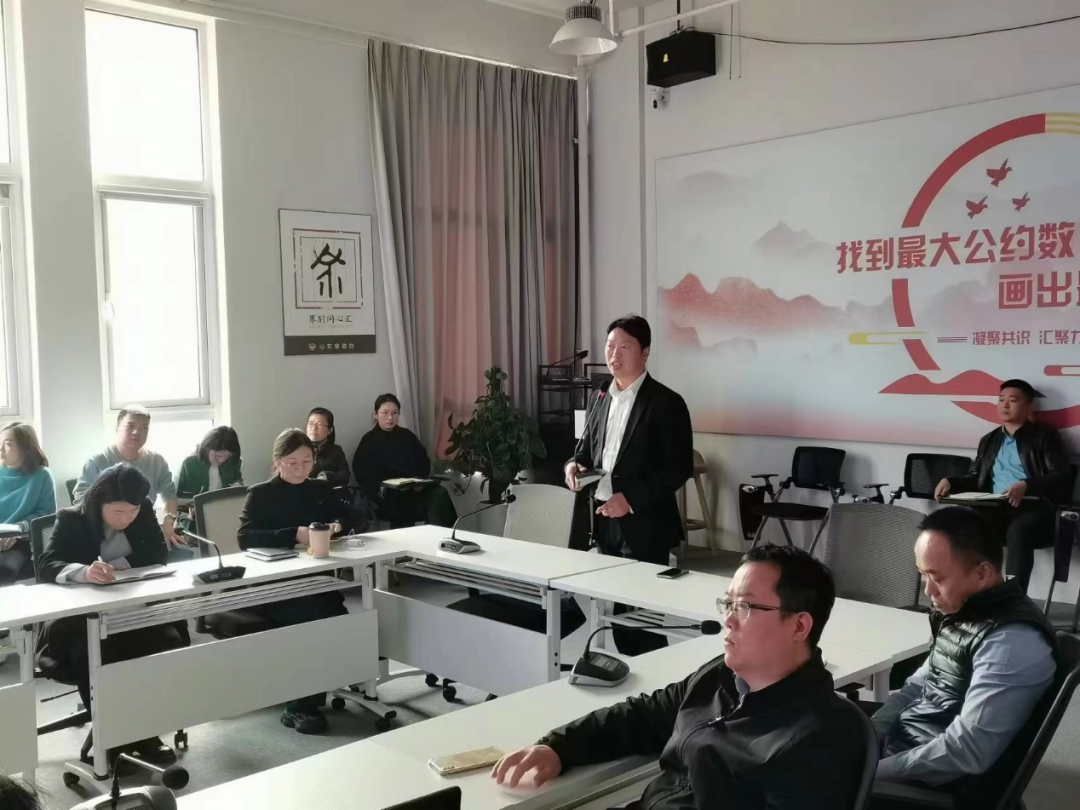
11
2022-11
Introduction An electronic commercial promissory note (hereinafter referred to as an "electronic commercial note") refers to a note made by the drawer in the form of a data message, relying on the electronic commercial bill of exchange system, in which the payer is entrusted with the unconditional payment of a fixed amount to the payee or bearer on a specified date. On October 28, 2009, the People's Bank of China's Electronic Commercial Bill of Exchange System (ECDS) was put into operation, and electronic commercial promissory notes were widely used in settlement payments in many industries by virtue of their low transaction costs and high transaction efficiency. However, with Evergrande Group and other head housing enterprises broke out the electronic business ticket payment crisis, around the electronic business ticket recourse litigation is also a massive growth, how to pay the electronic business ticket to realize the creditor's rights has become the focus of many ticket holders. This paper combs through the concept of bill recourse in electronic commercial paper, the pre-conditions for exercise, the scope of recourse, the court of jurisdiction and other issues, in order to provide some ideas and guidance for the treatment of similar situations in the future. The concept of recourse to 1. instruments. The right of recourse to an instrument is the right of the holder to request repayment of the instrument and other legal amounts from the debtor of the instrument (including the drawer, the endorser, the acceptor and the guarantor) when the instrument is due to exercise the right to request payment and is rejected or cannot be accepted or there are other legal reasons for impeding the right to request payment. Bill recourse is divided into refusal to pay recourse and non-refusal to pay recourse, in which refusal to pay recourse refers to the act of the bill being refused payment after maturity and the holder requesting prior payment; non-refusal to pay recourse refers to the act of the holder requesting prior payment when the acceptor is declared bankrupt in accordance with the law and the acceptor is ordered to terminate business activities due to violation of the law. In judicial practice, refusal to pay recourse is more common, enterprise bankruptcy is still a minority, so the content of the bill recourse discussed in this paper also revolves around the situation of refusal to pay recourse. Pre-conditions for the exercise of the right of recourse by the 2. holder. (I) prompt payment on schedule 1, electronic commercial acceptance draft prompt payment period. After the maturity of the electronic commercial ticket, the holder shall first exercise the right to request payment to the bill acceptor, that is, to request payment according to the amount recorded in the bill. According to Article 53 of the the People's Republic of China Bill Law and Article 66 of the Measures for the Administration of Electronic Commercial Bill of Exchange Business, for bills of exchange for regular payment, the holder shall prompt the acceptor for payment within the prompt payment period, I .e. within ten days from the maturity date of the bill. If the bearer does not prompt payment within the aforementioned period, the bearer directly loses the right of recourse against subjects other than the drawer and the acceptor. In view of this, whether the holder has carried out the prompt payment operation in the electronic commercial ticket system during the prompt payment period is whether it can finally obtain the advance and key of payment, and failure to prompt payment on time will lose the right of recourse to the forehand (except the drawer and the acceptor). In addition, according to Article 58 of the Measures for the Administration of Electronic Commercial Bill of Exchange Business, the prompt payment period shall be 10 days from the maturity date of the bill, and the last day shall be postponed in case of statutory holidays, non-business days of large-value payment system and non-business days of electronic commercial bill of exchange system. However, it should be noted that the non-business days of statutory holidays and large payment systems are not exactly the same as the non-business days of the electronic commercial ticket system. Therefore, the author recommends that the holder complete the prompt payment operation as soon as possible during the prompt payment period to avoid the risk of losing recourse to other forehands (except the drawer and the acceptor) due to late prompt payment. 2, electronic commercial acceptance draft online prompt payment. According to Article 5 of the Measures for the Administration of Electronic Commercial Bills of Exchange, the business of issuing, accepting, endorsing, guaranteeing, prompting payment and recourse of electronic commercial bills of exchange must be handled through the electronic commercial bill of exchange system. Thus, the exercise of the right of recourse for electronic commercial promissory notes needs to be exercised through the online system, and the offline sending of paper letters does not have recourse effect. [Case] Beijing Aerospace Xinli Technology Co., Ltd. and Jiyuan Fengze Special Steel Industry Co., Ltd. Civil Judgment of Second Instance on Bill Recourse Dispute (2021) Jing 74 Min Zhong No. 188 The court held that although Jiyuan Fengze Company sent the "Notice of Recourse of Electronic Commercial Acceptance Bill" to Titanium Company and Aerospace Xinli Company respectively on July 26, 2019, Zheng Xiao, director of the Market and Industry Development Center of Aerospace Xinli Company, requested to put the mail into the express counter on July 29, and the mail inquiry form showed that it had been signed, the exercise of the right of recourse was not handled through the electronic commercial bill system, jiyuan Fengze Company's prompt payment before the due date of the electronic commercial bill of exchange does not meet the constituent elements of the refusal to pay to all predecessors. The bill has no cause, form and context, while the electronic commercial bill of exchange clearly requires that the electronic bill of exchange transactions should be carried out on the electronic commercial bill of exchange system, emphasizing the appearance and form of the electronic commercial bill of exchange, in order to ensure that the electronic commercial bill of exchange has a high degree of liquidity. (II) Prompt Payment Rejected According to Article 62 of the the People's Republic of China Bill Law, when exercising the right of recourse, the holder shall provide relevant proof of the refusal of acceptance or refusal of payment. Thus, an important prerequisite for the exercise of recourse is to obtain a certificate of refusal to pay from the acceptor or payer. In the case of an electronic commercial promissory note, the fact that the bearer has been refused payment is reflected in the contents of the bill status at the top right of the face of the electronic commercial promissory note, for example, the bill status states that "prompt payment has been refused payment", which indicates that the bearer has made prompt payment during the prompt payment period and has been refused payment, and may exercise the right of recourse. However, the content of the note may reflect different states, the author combined with the relevant cases to organize the following: Bill Status I: Prompt Payment to be Signed This status is due to the failure of the acceptor and the failure of the access institution to respond on behalf of the acceptor, and the status of the bill is displayed as "prompt payment to be signed". In judicial practice, most cases regard this state as a substantial refusal to pay, and the holder can exercise the right of recourse. [Case] Civil Judgment of Second Instance on Bill Recourse Dispute of Shengli Oilfield Wanhe Petrochemical Co., Ltd. and Binzhou Huihong Construction Engineering Co., Ltd. (2021) Lu 05 Min Zhong No. 1295 The court held that after the electronic commercial acceptance bill expired, Binzhou Huihong Company prompted Baota Petrochemical Group Finance Co., Ltd. for payment within the prompt payment period. However, Baota Petrochemical Group Finance Co., Ltd. neither paid in full and on time nor issued a certificate of refusal to pay or a refund reason, resulting in the bill being in a state of "prompt payment to be signed. Binzhou Huihong Company in the prompt payment to January 24, 2019, Baota Petrochemical Group Finance Co., Ltd. this "prompt payment to be signed" continued state, has constituted a substantial refusal to pay, at this time Binzhou Huihong Company should recognize that the payment has been rejected, should be in accordance with the law to exercise recourse to its forehand in a timely manner. Bill Status II: Prompt Payment Rejected The status of such an instrument is due to the holder prompting payment before the maturity date of the instrument and the acceptor refusing to pay before the maturity date of the instrument. In this status, prompt payment can be operated again within the prompt payment period, and the bill status will be rolled again. However, do not easily cancel the operation of prompt payment before expiration. If the prompt payment has exceeded the prompt payment period after cancellation, the bill status will show overdue prompt payment. In judicial practice, there are cases in which the court has found that the holder has the right of recourse to the bill before the due date. [Case] Zunyi Xiangjiang Investment (Group) Co., Ltd. and Miluo Jianliang Forestry Technology Co., Ltd. Civil Judgment of Second Instance on Bill Recourse Dispute (2021) Xiang 06 Min Zhong No. 1767 The court held that in this case, the due date of the bill of exchange was July 21, 2020, Jianliang Company prompted payment on July 20, 2020, only one day in advance, and its request for prompt payment was in a continuous state in the electronic commercial bill of exchange system because it had not been answered. When the bank replied to the refusal of the acceptor on July 27, 2020, it was already within the legal prompt payment period, in this case, it is not necessary for Jianliang to reapply for prompt payment. Therefore, Jianliang's act of prompting payment on July 20, 2020, prior to the maturity date of the note, has the legal effect of prompting payment, and it has effectively exercised its right to request payment of the note. Bill Status III: overdue prompt payment Since the bearer should prompt the acceptor for payment within ten days from the maturity of the instrument, the bearer will lose the right of recourse against his forehand if the bearer fails to sign for or refuses to pay the overdue prompt for payment. However, there are also exceptions in judicial practice. For example, the holder actually prompts for payment before the due date of the bill, and the acceptor also refuses to pay within the prompt payment period. After that, the holder will prompt payment again in the electronic commercial bill system after the prompt payment expires. At this time, although the bill status in the system is shown as overdue prompt payment, combined with the operation records of the system, the acceptor has made a refusal to pay during the prompt payment period, and the holder does not lose the right of recourse against all forehand. [Case] Jilin Ji 'an Rural Commercial Bank Co., Ltd. and Longli Guofeng Village Bank Co., Ltd. Civil Judgment of Second Instance on Bill Recourse Dispute (2020) Supreme Law Minzong No. 888 The court held that the loss of the holder's right of recourse against the forehand depended crucially on the timing of the acceptor's refusal to pay. That is, as long as the acceptor does not refuse to pay before the maturity date of the bill, the holder has the right of recourse against all forehand. In this case, although the holder is early prompt payment and late prompt payment, but the acceptor in the nuclear engineering company is in the prompt payment period to make the intention of refusing to pay. In view of the fact that the acceptor in the nuclear engineering company within ten days from the due date, that is, in the prompt payment period to make a refusal to pay the meaning of the intention, so the ticket holder Bohu Agricultural Commercial Bank does not lose all the forehand, namely Jilin Ji'an Agricultural Commercial Bank, Longli Guofeng Village Bank recourse. The scope of recourse for the 3. holder to exercise the right of recourse to the bill. According to Article 70 of the the People's Republic of China Negotiable Instruments Law, the holder exercising the right of recourse may request the person against whom the recourse is made to pay the following amounts and expenses: (1) the amount of the bill of exchange for which payment has been refused; The interest calculated at the interest rate set by the People's Bank of China from the maturity date or the prompt payment date to the liquidation date of the (II) bill amount; (III) the cost of obtaining the relevant refusal certificate and issuing notice. When the person against whom the claim is made pays off the debt, the holder shall surrender the bill of exchange and the relevant proof of refusal and issue a receipt for the interest and expenses received. In view of the electronic commercial acceptance bill of exchange prompt payment and refusal to pay proof can be processed in the electronic commercial bill of exchange system, so the judicial practice of electronic commercial acceptance bill of exchange recourse to the scope of the bill amount and interest. What is "interest calculated at the interest rate prescribed by the People's Bank of China", according to Article 21 of the Provisions of the Supreme People's Court on Several Issues Concerning the Trial of Bills Dispute Cases, the interest rate prescribed by the People's Bank of China refers to the interest rate of the enterprise's liquidity loan for the same period as prescribed by the People's Bank of China. In view of the fact that the standard of the benchmark loan interest rate of the people's Bank of China has been canceled since August 20, 2019, the "interest calculated in accordance with the enterprise working capital loan interest rate stipulated by the people's Bank of China for the same period" in Article 70 of the the People's Republic of China bill law can be interpreted as "the interest calculated according to the loan market quotation rate published by the national interbank lending center in the same period". [Case] Chongqing Higher People's Court, Jiangsu Haina Zhiguang Technology Co., Ltd. and Hangzhou Bogao Vehicle Electrical Engineering Co., Ltd. Civil Judgment of Second Instance on Bill Recourse Dispute (2021) Yu Min Zhong No. 13 The court held that Article 21 of the Provisions of the Supreme People's Court on Several Issues Concerning the Trial of Bills Dispute Cases stipulates: "The interest rate stipulated by the People's Bank of China as mentioned in Articles 70 and 71 of the Bills Law refers to the interest rate of the People's Bank of China for the same period." Since August 20, 2019, the People's Bank of China has authorized the National Interbank Lending Center to announce the loan market quotation interest rate at 9:30 on the 20th of each month (postponed in case of holidays), the standard of the People's Bank of China's benchmark loan interest rate has been canceled. The court of first instance calculated interest on the basis of the quoted interest rate of the loan market published by the National Interbank Lending Center during the same period, which was based on the law. Haina Technology Company advocates that the interest shall be calculated at 2 times the quoted interest rate of the loan market published by the National Interbank Lending Center in the same period, which has no legal basis and is not supported by the Court. The limitation of the exercise of the right of recourse of the 4. holder. According to Article 17 of the the People's Republic of China Bill Law, the right to an instrument is extinguished without exercise within the following periods: (a) the holder's rights to the drawer and acceptor of the instrument are two years from the maturity date of the instrument. See pay-as-you-go bills, promissory notes, two years from the date of issue; (II) the holder's rights against the cheque drawer, six months from the date of issue; (III) the holder's recourse against the forehand, six months from the date of refusal of acceptance or refusal of payment; (IV) the holder's recourse against the forehand, three months from the date of liquidation or the date of prosecution. In addition, according to Article 18 of the the People's Republic of China Bill Law, if the holder loses the interest in the bill due to the expiration of the time limit of the bill's rights or the lack of the matters recorded in the bill, he still enjoys civil rights and may request the drawer or acceptor to return his interest equivalent to the amount of the unpaid bill. Due to the short and important characteristics of bill rights, the holder is more likely to lose his rights than the general creditors. In order to help the imbalance of interests, based on the principle of fairness and the concept of equity, the system of claim for the return of bill interests is set up, that is, the claim for the return of bill interests is a general civil claim, and the statute of limitations system of civil law is applicable-the statute of limitations period is 3 years, the limitation of action for the right to return the interests of the bill shall run from the date of the expiration of the limitation period of the bill's rights, not from the date of the refusal to pay. [Case] Quanzhou Lianan Industrial Co., Ltd. and Putian Chengnan Sub-branch of Agricultural Bank of China Limited (2017) Minmin Shen No. 1898 The court held that in this case, Lianan Company claimed that Putian Chengnan Sub-branch of Agricultural Bank of China had the right to return the interest equivalent to the amount of 400000 yuan of the bank acceptance bill involved, while Putian Chengnan Sub-branch of Agricultural Bank of China believed that the statute of limitations for Lianan Company's claim had passed. In this regard, the Fujian Provincial Higher People's Court held after review that the focus of the dispute between the two parties in this case is whether Lianan Company's exercise of the right to return the benefits of the bill has exceeded the statute of limitations. The statute of limitations for the right to claim the return of the interests of the bill is two years in accordance with the provisions of the General Principles of Civil Law, and the statute of limitations period is calculated from the date on which the right is or should be known to have been infringed. The maturity date of the bill of exchange in this case is August 2, 2008. According to the provisions of Article 17 of the the People's Republic of China Bill Law on the limitation of bills, the holder's bill rights are extinguished due to non-exercise within two years from the maturity date of the bill. Therefore, Lianan Company should have known on August 2, 2010 that its rights under the bill have been infringed, and since then it can request the return of the bill benefits to Putian Chengnan Sub-branch of Agricultural Bank, however, Lianan Company only claimed to Putian Chengnan Sub-branch of Agricultural Bank of China in 2015.
2022-11-11

Zhongcheng Qingtai Jinan Region
Address: Floor 55-57, Jinan China Resources Center, 11111 Jingshi Road, Lixia District, Jinan City, Shandong Province
