


20
2021-12
Viewpoint | Analysis of the reliability of patent protection
It is generally believed that the value of patent rights includes legal value, technical value and economic value. The reliability of patent protection is an important index to evaluate and analyze the legal value of patent. The so-called reliability of patent protection refers to the reliability of the patentee or patent user in the face of the suspected infringing object, using the current infringement determination rules to determine whether the suspected infringing object falls into the scope of specific patent protection. Through the analysis of the stability of the specific patent itself and the restriction degree of the following patent, the probability of a specific patent winning a patent infringement lawsuit is judged. This paper will start with the writing quality of the claims and instructions to analyze the reliability of patent protection, so it is only applicable to inventions or utility models, not design. The author thinks that the reliability of patent protection can be analyzed comprehensively from the five dimensions of patent category, patent text quality, restriction degree of implementation, restriction degree of following patent and stability, so as to draw a more objective expectation judgment on whether infringement is established in patent infringement litigation. 1. patent category According to China's current patent examination and authorization rules, utility model patents can be authorized only through formal examination, while invention patents can only be authorized after passing formal examination and passing substantive examination. Therefore, the stability of a particular patent can be judged by the type of patent and the nature of the invention, and it is clear that the stability of the invention patent is higher than that of the utility model patent. In addition, starting with the layout of the claims, the independent claim is a product claim and has more subordinate claims, which is better than only one product claim, and then better than only the method claim. 2. patent text quality The consideration of the quality of the patent text should include at least the following three aspects: first, the writing quality of the independent claims; second, the layout and writing quality of the dependent claims; third, the clarity and completeness of the patent specification and the support for the claims. An ideal authorized patent should meet all the following conditions:(1) the patent specification provides a clear and complete description of the invention and creation, and the embodiments are specific, to the extent that can be realized by those skilled in the art in combination with the accompanying drawings;(2) The independent claims are supported by the specification, with clear expressions and appropriate generalizations;(3) The subordinate claims are reasonably arranged and have a considerable number of subordinate claims;(4) There is no case where the amendment provided for in Article 33 of the Patent Law exceeds the scope. Obviously, if a patent deviates more and more negatively from the above conditions, the text quality will be worse. Constraints on 3. implementation The purpose of this indicator is to analyze whether a specific patented technical solution falls within the scope of protection of the prior patent, and if so, the implementation of the specific patent requires the permission of the prior patentee, otherwise the prior patent will be infringed. In the specific judgment method, after searching, compare a particular patent with a closest prior patent, determine the degree of overlap with the prior patent independent claim, and determine whether the two constitute equivalent if there is a difference in technical characteristics. Obviously, if there is a substantial difference between a particular patent and the nearest prior patent, and the technical characteristics of the independent claim are significantly different, then the particular patent can be implemented independently and is not subject to the surviving patent, which is the best. If a particular patent is subject to a prior patent, but the prior patent clearly has a flaw that has been declared invalid or if the particular patent has room to avoid the prior patent, it is an intermediate result. If a particular patent falls within the scope of prior patent protection and lacks substantive characteristics relative to the prior patent, it is a poor result. 4. degree of restriction on following patents This indicator is used to determine the degree of restriction of a particular patent on the implementation of a subsequent follow-up improvement technology, I .e., the probability of a subsequent follow-up technology avoiding a particular patent infringement. In the specific method, compare the specific patent with the following patent, and analyze whether the specific patent can effectively restrict the independent implementation of the following patent relative to the specific patent. Obviously, it is best if the follow-up patent is not retrieved, or if the follow-up patent falls unquestionably within the scope of protection of a particular patent. If, although there are different technical characteristics between the following patent and the specific patent, there is no substantial difference, that is, the following patent has a high probability of falling into the scope of protection of the specific patent, is also a better result. If the follow-up patent does not fall within the scope of protection of the particular patent, I .e. the follow-up patent can be implemented freely without the restriction of the particular patent, then the value of the particular patent will be diminished. 5. stability This indicator is used to determine the possibility of invalidation of a particular patent. Compare the specific patent with the existing technology before the filing date, and determine whether the specific patent has the risk of being declared invalid as stipulated in Article 65 of the Regulations of the Patent Law. Under this index system, the stability of patents with more distinguishing technical features is higher than that of patents with less distinguishing technical features. If a particular patent independent claim has more distinguishing technical features that are materially different from the combination of more than one prior art, then the probability of that particular patent being declared invalid is small and optimal. If a particular patent independent claim has few or no distinguishing technical features that differ materially from a combination of prior art within 3 articles, then the probability that the particular patent will be invalidated is high and is a poor result. If a particular patent independent claim has several distinguishing technical features compared with the combination of 3 or so existing technologies, but it is doubtful whether the distinguishing technical feature is a replacement of customary technical means, then the probability of the particular patent being declared invalid is in the middle. To sum up, according to the relevant provisions of China's Patent Law, Detailed Rules for the Implementation of the Patent Law and Patent Examination Guidelines, the author takes the quality of patent text as the main line, combines the characteristics of invention or utility model patents, and discusses the reliability of patent protection from five aspects: patent category, patent text quality, restriction degree of patent implementation, restriction degree of patent to follow patent, and stability of patent, the legal restriction effect of specific patented technology on the related technology in the same technical field is given objectively, and the result probability of infringement litigation is expected.
2021-12-20
20
2021-12
The revocation of the arbitral award needs to meet the statutory requirements, and this paper focuses on the analysis of whether the arbitral tribunal's failure to make an arbitral award within the statutory time limit constitutes a violation of the statutory procedure in the arbitral procedure and leads to the revocation of the arbitral award. 1. [link to the law]] the People's Republic of China Arbitration Act Article 58 If the parties provide evidence to prove that the award has one of the following circumstances, they may apply to the intermediate people's court where the arbitration commission is located to cancel the award. (I) there is no arbitration agreement; The matters awarded by the (II) do not fall within the scope of the arbitration agreement or the arbitration commission does not have the power to arbitrate; (III) the composition of the arbitration tribunal or the arbitration procedure violates the legal procedure; (IV) the evidence on which the award is based is falsified; (V) the opposing party conceals evidence sufficient to affect a just decision; (VI) arbitrators have solicited or accepted bribes, practiced favoritism, or perverted the law in adjudicating the case. If the people's court, after forming a collegial panel to examine and verify the award, has one of the circumstances specified in the preceding paragraph, it shall rule to cancel the award. If the people's court determines that the award is contrary to the public interest, it shall rule to cancel it. Interpretation of the Supreme People's Court on Several Issues Concerning the Application of the the People's Republic of China Arbitration Law Article 20 The term "violation of legal procedures" as stipulated in Article 58 of the Arbitration Law refers to the circumstances in which the violation of the arbitration procedures stipulated in the Arbitration Law and the arbitration rules chosen by the parties may affect the correct award of the case. 2. Typical Case] Case 1: The case of Company A and Company B applying for setting aside the arbitral award. On November 11, 2019, Chen and Company B filed an application for arbitration in this case to the Beijing Arbitration Commission. The respondent was Company A. After the Beijing Arbitration Commission formally accepted the case on November 18, 2019, it was held on December 31, 2019. Form an arbitration tribunal. In accordance with the arbitral award made on 8 March 2021, the arbitral tribunal of summary proceedings shall, in accordance with the provisions of the Arbitration Rules, make an award within 75 days from the date of the formation of the tribunal. If there are special circumstances that require an extension, the sole arbitrator shall submit it to the Secretary-General for approval, and the extension may be appropriately extended. Company A believes that the arbitration award made by the Arbitration Commission on March 8, 2021 exceeds the above-mentioned time limit, and requests the court to revoke the (2021) Beijing Arbitration Zi No. XXX award made by the Arbitration Commission in accordance with the law. The court held that this case was a case in which the parties applied for the revocation of the domestic arbitration award and should be reviewed in accordance with Article 58 of the the People's Republic of China Arbitration Law. Article 58 of the the People's Republic of China Arbitration Law stipulates that if the parties provide evidence to prove that the award has one of the following circumstances, they may apply to the intermediate people's court where the arbitration commission is located for cancellation of the award: (1) there is no arbitration agreement; the matters on which the award is (II) do not fall within the scope of the arbitration agreement or the arbitration commission has no power to arbitrate; the composition of the arbitration tribunal or the arbitration procedure violates legal procedure; the evidence on which the (IV) award is based is forged; the other party to the (V) has concealed evidence sufficient to affect the fairness of the award; the (VI) arbitrator has solicited and accepted bribes, practiced favoritism, or perverted the law in the arbitration of the case. If the people's court, after forming a collegial panel to examine and verify the award, has one of the circumstances specified in the preceding paragraph, it shall rule to cancel the award. If the people's court determines that the award is contrary to the public interest, it shall rule to cancel it. The above-mentioned provisions are the statutory reasons for the people's court to revoke the domestic arbitral award. With regard to Company A's claim that the arbitration procedure violates the legal procedure, the Court holds that the "violation of legal procedure" stipulated in Article 58 of the the People's Republic of China Arbitration Law refers to the situation that the violation of the arbitration procedure stipulated in the Arbitration Law and the arbitration rules chosen by the parties may affect the correct award of the case, and the violation of legal procedure shall seriously affect the procedural rights of the parties and substantially affect the correct award of the case. With regard to the fact that the award involved in the case was heard by a sole arbitrator, the Beijing Arbitration Commission made a clear statement on the matter. In addition, in accordance with Article 54, paragraph (I), and Article 55, paragraph (I), of the Arbitration Rules, the arbitration involved in the case was filed on the basis of the parties' arbitration request, which met the conditions for the application of the summary procedure in the Arbitration Rules, and it was not improper for the sole arbitrator to hear the case. Article 58 of the Arbitration Rules stipulates that if the amount of the dispute in the case exceeds 5 million yuan due to the change of the arbitration request, the summary procedure shall not be affected. Regarding the extension of the trial limit of the arbitration involved in the case, the case was applied by the sole arbitrator and approved by the Secretary-General of the Beijing Arbitration Commission to extend the trial limit, which does not violate the provisions of the Arbitration Rules. In addition, the arbitration tribunal heard all the arbitration requests of Chen Mou and Company B and the defense of Company A, investigated the relevant facts of the case, and organized both parties to provide evidence and cross-examine the evidence. The two parties debated around the focus of the dispute. Before the end of the trial, the two parties issued their final statements. No company A's rights were infringed. Therefore, the court did not support company A's claim. Case 2: The case of Xu and Chen's application to set aside the special procedure of the arbitral award. On September 23, 2009, Xu filed an arbitration application with the Yangzhou Arbitration Commission in accordance with the arbitration clause agreed in the contract, requesting the cancellation of the equity transfer agreement signed on October 16, 2008. The Yangzhou Arbitration Commission accepted Xu's arbitration request on September 24, 2009, and served relevant materials to the respondent Chen. On 26 November 2009, the Tribunal held its first hearing. On 19 and 20 December 2009, the Tribunal held its second session. On January 30, 2010, Xu filed an application for withdrawal from the chief arbitrator Xing. On February 8, 2010, Yangzhou Arbitration Commission made (2009) decision No. 668-1, deciding to reject Xu's application for chief arbitrator Xing to withdraw. On August 23, 2010, Yangzhou Arbitration Commission delivered the decision to Xu and Chen. … On July 5, 2016, Yangzhou Arbitration Commission made Award (2009) Yang Arbitration Zi No. XX, which was served on Xu and Chen on July 27, 2016. Xu later considered that the arbitral award had exceeded the statutory time limit and requested that it be set aside. Court view: on the question of whether the arbitration proceedings are illegal. Article 46 of the Yangzhou Arbitration Rules stipulates: "The arbitral tribunal shall make an arbitral award within four months after the formation of the arbitral tribunal. If there are special circumstances that require an extension, the chief arbitrator or the sole arbitrator may report to the chairman of the arbitration commission for approval, and the extension may be appropriately extended." According to this provision, four months is the time limit that the arbitral tribunal should abide by. Even if it needs to be extended, it should be appropriately extended, and the extended time limit should be specified when handling the application and approval procedures. The arbitral award involved in the case took 6 years and 8 months from the formation of the arbitral tribunal on November 2, 2009 to the service of the arbitral award to the parties on July 27, 2016, far exceeding the four-month period stipulated in the Yangzhou Arbitration Rules. Although the arbitral tribunal applied for an extension of the trial period on the grounds of the complexity of the case, no specific time limit was determined at the time of application and approval, resulting in an extension of the arbitration period for more than six years, a serious departure from the provisions of the Yangzhou Arbitration Rules on the period of award. The arbitration case file also reflects that the arbitration tribunal's trial activities were mainly concentrated before the end of 2010, and the trial activities were basically stagnant from 2011 to 2012, and no trial activities were carried out for more than three years from 2013 to 2015. The applicant Xu has written to the arbitration tribunal many times to request the award as soon as possible, but it was not until July 2016 that the arbitration tribunal made a final award. It is therefore clearly inappropriate for the arbitral tribunal to extend a period sufficient to give the parties reasonable doubt as to the fairness of the arbitral proceedings. The Court needs to emphasize that "to ensure fair and timely arbitration of economic disputes and to protect the legitimate rights and interests of the parties" is the basic legislative purpose of China's arbitration law. As we all know, the procedure design of arbitration system is to achieve the value goal of fair and timely settlement of disputes. This is an important reason why the parties choose arbitration to resolve disputes, and it is also an important basis for the survival and development of the arbitration system. However, the arbitration tribunal in this case did not adjudicate for a long time without legitimate reasons and justifiable reasons, and the arbitration period lasted as long as six years and eight months, resulting in a long-term unstable legal relationship between the parties and unable to obtain timely and effective relief, which seriously damaged the legitimate rights and interests of the parties, the arbitral award involved in the case seriously violates the provisions of Article 51, paragraph 1, of the the People's Republic of China Arbitration Law and Article 42, paragraph 1, and Article 46 of the Yangzhou Arbitration Rules, which may affect the correct award of the case and should be revoked in accordance with the law. Summary of 3. Lawyers From the above cases 1 and 2, it can be seen that failure to make an arbitration award within the prescribed time limit does not constitute a violation of the arbitration procedure stipulated in the third paragraph of Article 58 of the Arbitration Law and a violation of the legal procedure. The "circumstances that may affect the correct award of the case" stipulated in Article 20 of the Interpretation of the Supreme People's Court on Several Issues Concerning the Application of the the People's Republic of China Arbitration Law shall also apply." After comprehensive consideration, if it is necessary to extend the arbitration trial period due to special circumstances such as complex circumstances or epidemic situation, it will not affect the correct award of the case, and the arbitration award cannot be revoked according to this clause. On the contrary, arbitration is an efficient and convenient way to resolve disputes. If the arbitration tribunal does not issue an award for a long time without justifiable and legal reasons, and it will affect the rights of the parties and the correct award of the case, the court may set aside the arbitral award accordingly.
2021-12-20
17
2021-12
一、问题提出 《中华人民共和国公司法》(以下简称《公司法》)第十六条规定了公司对外担保制度,规定如下: “公司向其他企业投资或者为他人提供担保,依照公司章程的规定,由董事会或者股东会、股东大会决议;公司章程对投资或者担保的总额及单项投资或者担保的数额有限额规定的,不得超过规定的限额。 公司为公司股东或者实际控制人提供担保的,必须经股东会或者股东大会决议。 前款规定的股东或者受前款规定的实际控制人支配的股东,不得参加前款规定事项的表决。该项表决由出席会议的其他股东所持表决权的过半数通过。” 《公司法》第十六条的第二、第三款是关于公司为股东或者实际控制人提供担保的规定,《公司法》对这种担保进行了程序上的限制,即由“其他股东”对担保进行表决,由此便产生一个问题,如果没有“其他股东”对外担保应如何表决。一人有限责任公司包括自然人独资的有限责任公司和法人独资的全资子公司两种情况,因一人公司不设股东会,如果依据《公司法》第十六条第二、第三款规定的股东会根本无法召开,此时公司能否为股东提供担保就成为了疑问。换句话说,一人有限责任公司为其股东提供担保的效力及后果如何? 在《民法典》和《最高人民法院关于适用<中华人民共和国民法典>Prior to the introduction of the Interpretation of the Guarantee System, there was considerable controversy in judicial practice regarding the effectiveness of a one-person company's guarantee for its shareholders. One point of view is that according to the provisions of paragraphs 2 and 3 of Article 16 of the Company Law, when a company provides guarantees for its shareholders, it must be resolved by the shareholders' meeting or the shareholders' meeting, and the guaranteed shareholders are not allowed to participate in the voting. The voting is approved by more than half of the voting rights held by other shareholders present at the meeting. In the case of a one-person company providing guarantees for shareholders, not only can it not form an effective shareholders' meeting resolution, it cannot even convene a shareholders' meeting, therefore, a contract entered into by a one-person company to provide security for shareholders should be considered invalid. Another view was that, according to article 63 of the Companies Act, the personality of a one-person company was presumed to be confused with the personality of its shareholders, and that, therefore, the provision of a guarantee by a one-person company for its shareholders should be understood as a guarantee by the company for itself, even if the company was unable to form a valid resolution in that regard, it would not affect the validity of the guarantee. 2. classic case 1. Viewpoint 1: The provisions of Article 16 of the Company Law are regulatory rather than effective norms. Case No.: Supreme People's Court (2012) Minti Zi No. 156 Case excerpt: The Court believes that the focus of the dispute between the parties in this case is the definition of the responsibility of the guarantor Zhenbang Co., Ltd. In view of the fact that the loan contract involved in the case has been determined to be valid for a court of second instance, and the applicant for retrial has no objection to this, the Court directly confirms the validity of the loan contract involved in the case. The Mortgage Contract and the Irrevocable Guarantee are guarantees made by the guarantor Zhenbang Co., Ltd. to the creditor Donggang Branch of China Merchants Bank for the liabilities of its shareholder Zhenbang Group Company. As a company organization and corporate behavior, it is regulated by the Company Law, and its external guarantee in the form of contract is also subject to the contract law and the security law. The determination of the validity of the company's guarantee contract in the case, because it does not go beyond the scope of the contractual act between equal commercial subjects, should first be judged from the relevant provisions of the contract law. With regard to the validity of a contract, Article 52 of the the People's Republic of China Contract Law (hereinafter referred to as the Contract Law) stipulates that "a contract shall be null and void under any of the following circumstances. ...... (V) violate the mandatory provisions of laws and administrative regulations". Regarding the "mandatory" in the aforementioned law, Article 14 of the Supreme People's Court's "Interpretation (II) on Several Issues Concerning the Application of the the People's Republic of China Contract Law" (hereinafter referred to as the Contract Law Interpretation II) makes the following interpretation and stipulates that "The" mandatory provisions "stipulated in Item (V) of Article 52 refer to effective mandatory provisions". Therefore, the law and relevant judicial interpretations have made it clear that violation of the mandatory norms of validity in laws or administrative regulations is one of the criteria for determining the validity of contracts. As a legal entity different from a natural person, the company's contractual behavior, while accepting the regulation of contract law, is subject to the company law as a special norm of the company. Article 1 of the Company Law clearly stipulates that "in order to regulate the organization and behavior of companies, protect the legitimate rights and interests of companies, shareholders and creditors, maintain social and economic order, and promote the development of the socialist market economy, this law is formulated". Article 16, paragraph 2, of the Company Law stipulates: "Where a company provides guarantees for the shareholders or actual controllers of the company, it must be resolved by the shareholders' meeting or the general meeting of shareholders". The above-mentioned provisions of the Company Law have made it clear that its legislative intent is to restrict the subject behavior of the company and prevent the actual controller or senior management of the company from harming the interests of the company, minority shareholders or other creditors, so its essence is an internal control procedure, which cannot be used to restrain the counterparty of the transaction. The above provisions should therefore be understood as regulatory peremptory norms. In principle, it is inappropriate to find the contract invalid in violation of this norm. In addition, if it is determined as a criterion of validity, it will reduce the efficiency of transactions and damage the security of transactions. For example, when the shareholders' meeting will be held, in what form, and who can express the true will on behalf of the shareholders are beyond the judgment and control ability of the counterparty of the transaction. If the contract is ruled invalid by violating the shareholder resolution procedure, it will definitely reduce the transaction efficiency. At the same time, it also leaves a system gap for the company to easily violate the shareholder resolution and claim that the contract is invalid, ultimately endangering the transaction safety, it is not only against the rules of good faith in commercial conduct, but also against fairness and justice. Therefore, 1. the court of second instance in this case, on the grounds that the resolution of the "guarantee resolution of the shareholders' meeting" involved in the case has not been approved by the shareholders' meeting of Zhenbang Co., Ltd., and Zhenbang Co., Ltd. has not held a shareholders' meeting on this matter, according to Article 16 of the Company Law, it is an error of applicable law to make a determination that the irrevocable guarantee and the mortgage contract are invalid, and the court will correct it. 2. Viewpoint 2: Article 16 of the Companies Act does not apply to one-person limited liability companies. Case No.: Sichuan Higher People's Court (2014) Chuan Min Di Zi No. 334 Excerpts from the case: the issue of the law applicable to the original judgment. 1. Whether the Ritz Hotel is liable for the guarantee. First of all, the "the People's Republic of China Company Law" and related judicial interpretations do not clearly stipulate whether a one-person limited liability company can provide guarantees for shareholders' debts, and based on the principle of freedom of contract, a one-person limited liability company can guarantee shareholders' debts. Secondly, Article 16 of the the People's Republic of China Company Law stipulates: "if a company invests in other enterprises or provides guarantee for others, it shall be decided by the board of directors or the shareholders' meeting or the general meeting of shareholders in accordance with the provisions of the articles of association; if the articles of association stipulate the total amount of investment or guarantee and the amount of individual investment or guarantee, it shall not exceed the prescribed limit. Where a company provides a guarantee for the shareholders or actual controllers of the company, it must be resolved by the shareholders' meeting or the general meeting of shareholders. The shareholders specified in the preceding paragraph or the shareholders controlled by the actual controller specified in the preceding paragraph shall not participate in the voting on the matters specified in the preceding paragraph. The vote was passed by a majority of the voting rights held by other shareholders present at the meeting." The legislative purpose of this article is to restrict related party transactions. The guarantee provided by the company for shareholders or actual controllers is a related party transaction, which may harm the interests of the company and other shareholders. Therefore, the second paragraph of Article 16 of the the People's Republic of China Company Law stipulates that the provision of related party guarantee for shareholders or actual controllers must be voted by the shareholders' meeting or the general meeting of shareholders, and cannot be decided by the board of directors through the articles of association. At the same time, the third paragraph of the article stipulates that shareholders or shareholders controlled by actual controllers shall abstain from voting. It can be seen that the law does not prohibit related guarantees, but through a special resolution mechanism in the internal governance of the company to achieve the risk control of related guarantees. For a one-person limited liability company, there is only a single shareholder, and there is no situation in which major shareholders use related party transactions to harm the interests of the company or minority shareholders. After long Zhaogang and Zhou Lin transferred their shares to Yang Guang in this case, the company is a one-person company and does not have the prerequisites for the application of paragraphs 2 and 3 of Article 16 of the the People's Republic of China Company Law. Furthermore, Article 61 of the the People's Republic of China Company Law stipulates: "A one-person limited liability company shall not have a shareholders' meeting. When the shareholders make the decisions listed in the first paragraph of Article 38 of this Law, they shall be in writing and shall be signed by the shareholders and kept in the company." Therefore, a one-person limited liability company does not have a shareholders' meeting, so it is naturally impossible to establish a shareholders' meeting and form a resolution of the shareholders' meeting. The ownership and management rights of the company are not separated and are exercised by the owner of the company, that is, the sole shareholder. Since the shareholders of a one-person limited liability company can exercise all the functions and powers of the shareholders' meeting, it should include making a decision that the company guarantees the debts of the shareholders. Therefore, Article 16 of the the People's Republic of China Company Law does not apply to one-person limited liability companies. 3. the views of our lawyers Due to the lack of community nature of one-person companies, there has been considerable controversy over whether the Company Law should recognize one-person companies in the process of amending the Company Law. The Company Law, as amended in 2005, adopts a compromise approach, I .e., while recognizing a one-person company, adopts an inversion of the burden of proof, providing that shareholders are jointly and severally liable for the debts of the company if they are unable to prove that the company's property is independent of their own property. In the case of a one-person company providing a guarantee for shareholders, whether the guarantee contract is found to be invalid because there is no resolution of the shareholders' meeting is a more controversial issue in practice. We believe that the company law makes it clear that its legislative intention is to restrict the main body of the company and prevent the actual controller or senior management of the company from harming the interests of the company, minority shareholders or other creditors. Therefore, its essence is an internal control procedure, which cannot restrict the counterparty of the transaction. Although a one-person company has an independent personality in form, in the case that the shareholders do not prove that the company's property is independent of the shareholder's property, the personality of the company will be presumed to be confused with the personality of the shareholders, so we can understand the guarantee provided by a one-person company to the shareholders as the company guarantees its own debts, and the company resolution is not a necessary condition. In other words, if a one-person company, after providing a guarantee for shareholders, requests the people's court to determine that the guarantee contract is invalid on the grounds that there is no resolution of the shareholders' meeting, the people's court shall not support it. In addition, the Supreme People's Court on the application of<中华人民共和国民法典>有关担保制度的解释》第10条对上述观点提供了法律依据,“一人有限责任公司为其股东提供担保,公司以违反公司法关于公司对外担保决议程序的规定为由主张不承担担保责任的,人民法院不予支持。公司因承担担保责任导致无法清偿其他债务,提供担保时的股东不能证明公司财产独立于自己的财产,其他债权人请求该股东承担连带责任的,人民法院应予支持。”综上,我所律师倾向于认为一人有限责任公司为股东提供担保具有法律效力,在没有公司决议的情况下公司以违反对外担保决议程序主张不承担担保责任的不应得到支持。</中华人民共和国民法典></中华人民共和国民法典>
2021-12-17
16
2021-12
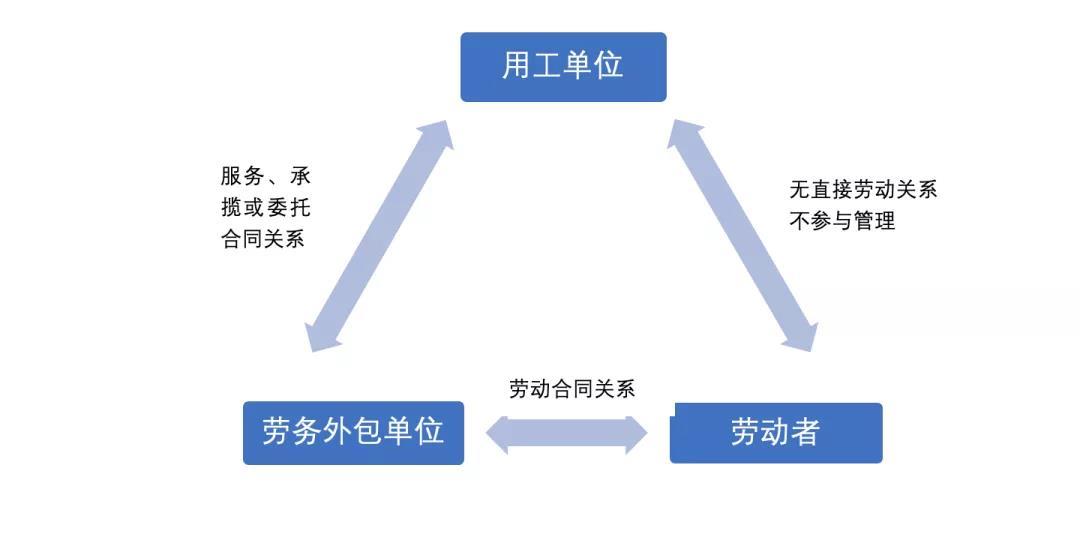
In practice, most of the proposed IPO enterprises have more or less labor problems, and with more and more enterprises adopting the labor outsourcing model, the CSRC is paying more and more attention to the labor outsourcing problem. This paper summarizes the difference between labor outsourcing and labor dispatch, and analyzes the focus of the audit of labor outsourcing and labor dispatch by the regulatory authorities in the IPO, with a view to learning and discussing with you. 1. what is labor outsourcing? Labor outsourcing refers to the business outsourcing mode in which an enterprise contracts part of its business or function to the relevant labor service organization, and the labor service organization arranges the labor service personnel to complete the corresponding business or work according to the specific needs of the enterprise. Under the labor outsourcing mode, there is no actual employment relationship between the enterprise and the worker, so there is no need to bear the obligations of the employer. To some extent, labor outsourcing can save the labor cost of the enterprise and reconfigure the various resources of the enterprise according to the business characteristics of the enterprise. Its basic legal relationship is shown in the following figure: In the June 2020 revision of the CSRC's "Questions and Answers to Certain Questions on Initial Business", question 47 answers the situation related to the outsourcing of labor services of the initial enterprise: "Question 47, the outsourcing of labor services of the initial enterprise, what aspects should the intermediary focus on? A: Some of the first-time enterprises have handed over more labor activities to specialized labor outsourcing companies for implementation. Intermediary agencies should pay full attention to the following aspects:(1) the legal compliance of the labor service companies, such as whether they are independent entities, whether they have the necessary professional qualifications, whether the business implementation and personnel management comply with relevant laws and regulations, the background of the business transactions between the issuer and the issuer and whether there are major risks;(2) whether the labor service company specializes or mainly serves the issuer, if there is a situation that mainly serves the issuer, attention should be paid to its reasonableness and necessity, and whether the identification and disclosure of related relationships are true, accurate and complete. Intermediary agencies shall check such situations according to the relevant requirements of related parties from the perspective of substance over form, and especially consider the impact of their operating results on the issuer's financial data and whether the issuer meets the issuance conditions;(3) The composition and changes of the labor service company, the main contents of the labor service outsourcing contract, whether the changes in the number of labor services and expenses match the issuer's operating performance, whether the pricing of labor costs is fair and whether there is an inter-period accounting situation. Intermediaries should make full arguments on the above aspects and express clear opinions." In recent years, when the CSRC approves the listing of enterprises, many enterprises are required to disclose or explain the outsourcing of labor services in their feedback. We are concerned that the main businesses of these enterprises that are required to give feedback on labor outsourcing are different, and the industries are distributed in the fields of construction, building materials and chemical industry, computer, logistics and transportation. In general, the outsourcing is mostly engineering construction work, and it is non-critical and auxiliary business. The primary concern of the CSRC is whether the intermediary agencies disclose the labor outsourcing truthfully, especially when the labor outsourcing costs account for a relatively high proportion or pose a significant risk to the issuer's business, the intermediary agencies are required to disclose the relevant information in detail according to the principle of "substance is more important than form", not only the specific situation of the labor outsourcing business and the reasons for outsourcing, the specific circumstances of the labor outsourcing unit should also be disclosed. 2. what is labor dispatch? According to the provisions of the the People's Republic of China Labor Contract Law (2012 Amendment) and the Interim Provisions on Labor Dispatch, labor dispatch refers to the labor dispatch unit with the qualification of labor dispatch business to conclude a labor contract with the laborer, and the labor dispatch unit then signs a labor dispatch agreement with the employing unit that needs the laborer. Finally, the labor dispatch unit sends the laborer to the employing unit to work. As a flexible way of employment, labor dispatch is usually used by enterprises to solve the problem of labor shortage, which can effectively save the labor cost of labor enterprises, especially in some labor-intensive enterprises. Its basic legal relationship is shown in the following figure: The Interim Provisions on Labor Dispatch stipulate that labor dispatch can only be implemented in temporary, auxiliary or alternative jobs: temporary jobs refer to jobs that last no more than 6 months; auxiliary jobs refer to non-main business jobs that provide services for main business jobs; alternative jobs refer to a certain period of time when the workers of the employing unit are unable to work due to off-duty study, vacation and other reasons, jobs that can be replaced by other workers. And the employing unit shall strictly control the number of dispatched workers, and the number of dispatched workers shall not exceed 10% of the total number of workers. In the practice of enterprise IPO, the employment method of labor dispatch is more common in labor-intensive enterprises. At the same time, in order to prevent the issuer from failing to sign labor dispatch contracts in accordance with the law and damage the legitimate rights and interests of dispatched employees during the reporting period, in the IPO declaration process, labor dispatch is often one of the issues that regulators focus on. 3. the difference between the two and audit points From the foregoing analysis, it follows that labor dispatch is a moderate separation of employment and use, and that labor outsourcing does not involve a separation of employment and use. That is, under the employment form of labor dispatch, the employing unit transfers the right to establish labor relations, but does not transfer the right to manage things and people. The labor of workers is completed under the supervision and management of the employing unit and is managed by the employing unit. In addition, in the actual operation process, we are concerned that the regulatory authorities in the filing process of the proposed IPO enterprises on the two audit points have the following differences: 1. The common audit concerns of regulatory agencies on labor outsourcing in the IPO declaration process are as follows:(1) whether the information disclosure is sufficient;(2) Independent judgment: comprehensively judge whether the enterprise has significant dependence on labor outsourcing suppliers and analyze the impact on the independence of the issuer;(3) Internal control: pay attention to the internal control and risk control measures related to the labor outsourcing link of the issuer;(4) The determination of labor outsourcing and labor dispatch: the situation of "false outsourcing, real dispatch" is more concerned. 2. The common audit concerns of regulatory agencies on labor dispatch issues during the IPO declaration process are as follows:(1) Whether the labor dispatch unit has an associated relationship with the issuer, and whether the related transactions are legal and compliant;(2) Whether all links of labor dispatch comply with The provisions of laws and regulations, whether there are circumstances that damage the legitimate rights and interests of workers;(3) Whether there are major violations or the risk of being punished. In summary, labor and employment compliance is an important part of corporate compliance operations and a basic requirement for companies to go public. Therefore, for the employment of enterprises, we should pay attention to the provisions of relevant laws and regulations, implement and arrange the corresponding production and operation plans in accordance with the relevant provisions of laws and regulations on labor dispatch and labor outsourcing, and not only ensure that the employment mode, number of people, posts, etc. meet the restrictions of relevant laws and regulations, but also examine the qualifications of the other party, it is not allowed to deliberately evade the obligations of the employer by means of labor dispatch or labor outsourcing. As for the intermediary agencies, they should judge the actual employment nature of the enterprise from the principle of "substance is more important than form", rather than simply judging according to the contract form signed by the enterprise. For the situation that the essence belongs to labor dispatch and there are violations, it should be regulated in time to avoid obstacles in the process of listing audit and affect the progress of listing.
2021-12-16
15
2021-12
[brief case]] In 2012, a Tianjin Beverage Co., Ltd. (hereinafter referred to as "Tianjin Beverage Company") signed a one-year house lease contract with a scientific research institute in Chengde (now "Chengde Academy of Sciences"), agreeing that the company would lease the warehouse of the institute to store products and equipment. In December of the same year, a beverage company in Tianjin insured all risks to the Beijing branch of an insurance company. On April 20, 2013, an electrician of a scientific research institute in Chengde illegally operated, causing a fire in the warehouse, and the items stored in the warehouse of a beverage company in Tianjin were burned. Later, the Higher People's Court of Hebei Province determined in a separate civil judgment that the electrician's behavior was an act of duty, and the institute was mainly liable for compensation for the accident. After the accident, a beverage company in Tianjin applied for a claim to the Beijing branch of an insurance company for the loss of the accident. Beijing Branch of an insurance company paid insurance compensation of 2.5 million yuan and more than 1.92 million yuan to a beverage company in Tianjin on June 9, 2013 and November 11, 2014 respectively according to the insurance contract. On November 9, 2016, the Beijing branch of an insurance company filed a subrogation lawsuit with the People's Court of Shuangqiao District, Chengde City, Hebei Province. The first-instance judgment found that the first insurance compensation of 2.5 million yuan had passed the statute of limitations for subrogation. The claim for the insurance money was not supported. Later, the company appealed to the Intermediate People's Court of Chengde City, Hebei Province, and the original judgment was upheld in the second instance. In 2018, the company applied for a retrial, and the Hebei Provincial higher people's Court made a retrial judgment on November 29, 2018, finding that the first insurance compensation of 2.5 million yuan did not exceed the statute of limitations, and decided to revoke the 1. judgment of second instance. A scientific research institute in Chengde should pay compensation for fire losses to the Beijing branch of an insurance company within the scope of full insurance compensation in accordance with the proportion of fire accident liability. focus of controversy] Whether the insurance compensation claimed by the insurance company exceeds the statute of limitations. The court of first instance held that] According to the first paragraph of Article 60 of the the People's Republic of China Insurance Law, the insurance company must meet the following conditions to exercise the right of recovery: first, the insurance company has compensated the insured for the insurance money; second, the loss of the subject matter of the insurance is caused by the damage of a third party. In this case, the insurance contract relationship between a Tianjin beverage co., ltd. and the plaintiff is legal and valid. the plaintiff has paid compensation for the actual losses of a Tianjin company caused by the accident according to the insurance contract between the two parties. therefore, the plaintiff has the right to claim subrogation from a certain academy of sciences in Chengde city for 60% of the insurance premium payable. According to the provisions of Article 16, paragraph 2, of the (II) of the Supreme People's Court on the Interpretation of Several Issues Concerning the Application of the the People's Republic of China Insurance Law, the limitation period for the insurer's right of subrogation shall be calculated from the date on which it obtains the right of subrogation. According to the first paragraph of Article 60 of the Insurance Law, the insurer shall, from the date of compensation to the insured, exercise the right of the insured to claim compensation from a third party within the scope of the amount of compensation. Therefore, the date on which the insurer obtains the subrogation claim is the date on which its insurance is paid. In this case, the plaintiff paid insurance compensation of RMB 2500000 yuan and RMB 1920296.79 yuan to a company in Tianjin on June 9, 2013 and November 11, 2014 respectively. On June 9, 2013, the plaintiff's first insurance compensation of RMB 2500000 yuan obtained the right of subrogation against an academy of sciences in Chengde City. On November 11, 2014, the plaintiff's second insurance compensation of RMB 1920296.79 yuan obtained the right of subrogation against an academy of sciences in Chengde City. This case is a dispute over damages between the plaintiff, a Beijing branch of an insurance company, acting on behalf of a company in Tianjin, and the defendant. It is a lawsuit based on the debt of infringement. The limitation period of action should be two years. The limitation period for the plaintiff's first insurance compensation is from June 10, 2013 to June 9, 2015. According to Article 140 of the General Principles of Civil Law, the limitation of action is interrupted by the initiation of a lawsuit, the request of one of the parties or the consent to perform the obligation. The limitation period is recalculated from the time of the interruption. Article 10 of the Provisions of the Supreme People's Court on Several Issues Concerning the Application of the Limitation of Action System in the Trial of Civil Cases stipulates that under any of the following circumstances, it shall be deemed as "a request by one of the parties" stipulated in Article 140 of the General Principles of Civil Law, which shall have the effect of interruption of the limitation of action: (2) One of the parties claims its rights by sending letters or data messages, and the letters or data messages arrive or data messages should arrive or reach the other parties. In this case, a law firm in Beijing sent a lawyer's letter EMS on claiming compensation to a scientific research institute in Chengde City on June 9, 2015. The lawyer's letter did not attach the plaintiff's authorization document. In combination with a law firm in Beijing as the agent of the insurer and the insured in the warehouse fire series case, it could not be determined that it claimed the right to a certain person in Chengde City based on the authorization act. In addition, the EMS did not arrive at the defendant on June 9, 2015, and could not interrupt the statute of limitations for the first insurance compensation. The statute of limitations for the first insurance compensation of 2500000 yuan has passed for the past two years. In this case, the limitation period of action for the second insurance compensation of 1920296.79 yuan was calculated from November 11, 2014 to November 9, 2016. The plaintiff filed a lawsuit with Chengde intermediate people's court, and the limitation period of action for the second insurance compensation of 1920296.79 yuan was not expired. According to the provisions of Article 60 of the Insurance Law, the scope of the insurer's exercise of the right of subrogation is limited to the insurance compensation paid, and the loss of interest after the insurer pays the compensation shall not be claimed to a third party. In accordance with Article 60 of the the People's Republic of China Insurance Law, Article 16 of the Interpretation (II) of the Supreme People's Court on Several Issues Concerning the Application of the the People's Republic of China Insurance Law, Article 140 of the General Principles of the Civil Law, Item (II) of Article 10 of the Provisions of the Supreme People's Court on Several Issues Concerning the Application of the Limitation of Action System in the Trial of Civil Cases, and Article 144 of the the People's Republic of China Civil Procedure Law, the judgment: the 1. defendant, a scientific academy of sciences in Chengde city, shall compensate the plaintiff for 1152178.07 yuan (1920296.79 X60%) of the Beijing branch of an insurance company within 15 days after the judgment comes into effect. The 2. defendant, a trading co., ltd. in Chengde city, shall not be liable for compensation; The 3. rejected other claims of the plaintiff's Beijing branch of an insurance company. The court of second instance held that] After the insurance accident occurred, the Beijing branch of an insurance company paid insurance compensation of RMB 2500000.00 yuan and RMB 1920296.79 yuan to a company in Tianjin on June 9, 2013 and November 11, 2014 respectively according to the insurance compensation request of the insured company in Tianjin and the relevant accident materials provided, indicating that the Beijing branch of an insurance company should know the infringer and infringement when paying the first insurance compensation, and an insurance company Beijing branch did not provide evidence to prove that the two insurance compensation payment methods are agreed by both parties or the legal provisions of the installment payment method, so the two insurance compensation statute of limitations should be calculated separately. The limitation period for the first insurance compensation is from June 10, 2013 to June 9, 2015. Although a law firm in Beijing sent a lawyer's letter claiming compensation to a scientific research institute in Chengde City through EMS on June 9, 2015, the lawyer's letter did not attach the authorization document of a Beijing branch of an insurance company, and it cannot be determined that it claimed rights from a certain company in Chengde City based on the authorization act, and the lawyer's letter did not arrive on June 9, 2015, there is no interruption of the statute of limitations for the first insurance compensation. The judgment of the original court that after the Beijing branch of an insurance company paid the first insurance compensation of 2500000 yuan to a Tianjin company, it claimed this right to a scientific research institute in Chengde city after two years of limitation of action was found to be not improper. The scope of the Beijing branch of an insurance company exercising the right of subrogation as an insurer is limited to the insurance compensation paid in accordance with the provisions of Article 60 of the Insurance Law. The judgment of the court of first instance against the claim of interest of an insurance company Beijing Branch was not supported, and there was nothing improper. In summary, the appellant's appeal request from the Beijing branch of an insurance company cannot be established and should be rejected. The first-instance judgment has clear facts and the applicable law is correct and should be maintained. The retrial court held that] On the question of whether an insurance company's Beijing branch claimed to a Chengde academy of sciences whether the 2500000 yuan insurance compensation exceeded the statute of limitations. The Supreme People's Court on the application
2021-12-15
15
2021-12
A private equity fund (Private Fund) is an investment fund that raises funds from specific investors in a non-public manner and invests in a specific target. Private equity funds are recruited by means other than mass communication, and the promoters pool the funds of non-public diversified subjects to set up investment funds to invest in securities. With the improvement of China's financial and economic system, private equity funds have become a financial investment method recognized and supported by the state. At the same time, in order to regulate private equity fund activities, protect the legitimate rights and interests of investors and related parties, and promote the healthy development of the private equity investment fund industry, the China Securities Regulatory Commission has successively formulated and implemented the Interim Measures for the Supervision and Administration of Private Equity Investment Funds, and Securities and Futures Laws and regulations such as the Interim Provisions on the Operation and Management of Private Equity Asset Management Business of Operating Institutions, and the Provisions on Strengthening the Supervision of Private Equity Investment Funds. From the definition of private equity funds can be seen, fund raising, investment, the pursuit of return is the core of the main line of private equity funds. Private equity funds can easily trigger legal risks in the process of product design, management and operation, and even exit, especially the criminal legal risks of illegal fund-raising. According to the statistics of judicial practice, illegal fund-raising crimes have become the top ten high-incidence crimes among the 483 crimes in the Criminal Law, and more than 70% of the crimes triggered by private equity activities are illegal fund-raising crimes. Therefore, practitioners and related personnel in the field of private equity funds should pay close attention to the criminal legal risks of illegal fund-raising, and prevent violations of criminal law due to improper operation and triggering criminal legal risks. Illegal fund-raising is an act of absorbing funds from the public (including units and individuals) in violation of national financial management laws. In view of the complexity of illegal fund-raising criminal activities, in order to facilitate practical grasp, the "Judicial Interpretation of Illegal Fund-raising" specifically refines the elements of illegal fund-raising behavior, and clarifies that the establishment of illegal fund-raising needs to be illegal, open, inducement, and social. Four characteristics:(1) Absorbing funds without the approval of relevant departments in accordance with the law or borrowing the form of legal operations;(2) Publicize to the public through the media, promotion conferences, leaflets, mobile phone text messages, etc.;(3) Promise to repay the principal and interest or pay returns in currency, in kind, equity, etc. within a certain period of time;(4) To absorb funds from the public, that is, non-specific objects of society. 1. to avoid violating the national financial management laws and regulations, to prevent the violation of "illegal" characteristics With regard to private equity funds, China adopts the registration and filing system of the China Securities Investment Fund Industry Association, that is, the fund manager needs to register with the fund industry association; after the private equity fund is raised, the private equity fund manager shall, in accordance with the provisions of the fund industry association, handle the fund filing procedures. The above registration and filing are mandatory provisions, and fund managers must strictly abide by them. Violation of the above provisions is "violation of national financial management laws and regulations" and "without the approval of relevant national competent departments". Article 1 of the "Opinions on Several Issues Concerning the Handling of Criminal Cases of Illegal Fund-raising" issued by the Supreme People's Court, the Supreme People's Procuratorate, and the Ministry of Public Security in January 2019 stipulates the basis for determining the "illegality" of illegal fund-raising. The people's courts, people's procuratorates, and public security organs shall determine the "illegality" of illegal fund-raising based on national financial management laws and regulations. If the national financial management laws and regulations are only stipulated in principle, they can be determined in accordance with the spirit of the law and with reference to the departmental rules formulated by the people's Bank of China, the China Banking and Insurance Regulatory Commission, the China Securities Regulatory Commission and other administrative departments in accordance with the national financial management laws and regulations or the provisions of the state's relevant financial management regulations, measures, implementation rules and other normative documents. Accordingly, the "Interim Measures for the Supervision and Administration of Private Investment Funds" and other provisions issued by the China Securities Regulatory Commission can be used as a legal basis for judging whether private equity behavior has the characteristics of "illegality. Because the "Interim Measures" have made relevant provisions on the qualifications of fund-raising entities, fund-raising methods, fund-raising objects, and sources of fund-raising, violating these provisions is also a violation of "violation of national financial management laws and regulations". Of course, it is not that private equity funds have full legitimacy as long as they have gone through the registration and filing procedures, but failure to carry out legal registration and filing directly violates the constitutive element of "without the approval of the relevant national authorities. 2. standardize the way funds are raised to prevent violations of the "openness" feature. Private placement, as the name implies, is limited to "non-public" in the way of raising funds ". Article 6 of the "Several Provisions on Strengthening the Supervision of Private Equity Investment Funds" of the China Securities Regulatory Commission clearly stipulates that "private equity fund managers, private equity fund sales agencies and their employees shall not directly or indirectly have the following behaviors in the process of private equity fund raising: through newspapers, radio, Television, Internet and other public communication media, lectures, reports, analysis meetings, etc, notices, leaflets, text messages, instant messaging tools, blogs and e-mails and other carriers to promote and promote to unspecified targets." Therefore, any form of public communication, direct, indirect or otherwise, is prohibited by regulation. Private equity fund managers, private equity fund sales institutions and their practitioners should strictly abide by this provision, otherwise they will violate the "openness" feature. 3. improve the examination measures of qualified investors, penetrate the examination of qualified investors, and prevent the violation of "social" characteristics. According to the Measures for the Administration of the Suitability of Securities and Futures Investors, the Measures for the Administration of Private Investment Fund Raising Behavior, and the Instructions for the Filing of Private Investment Funds, private equity fund managers, private equity fund sales agencies and their practitioners should conduct the following two aspects Review. First, the verification of investors' risk identification ability and affordability. The specific verification standards are clearly stipulated in the "Measures for the Supervision and Administration of Private Investment Funds": (1) The amount invested in a single private equity fund shall not be less than 1 million yuan;(2) The net assets of unit investors shall not be less than 10 million yuan;(3) Personal financial assets shall not be less than 3 million yuan or the average annual personal income in the last three years shall not be less than 500000 yuan." Second, the number of qualified investors is limited: the number of investors in a single private equity fund shall not exceed the number of restrictions stipulated in the Company Law, the Partnership Law, and the Securities Investment Fund Law. The maximum number of legal fundraisers for partnership and corporate private equity funds is 50. In terms of review measures, it is possible to verify whether the investor (legal person) meets the criteria for qualified investors by reviewing the year-end net assets, audited financial statements, financial asset supporting documents, personal annual income and other evidentiary materials. Where a private equity fund manager sells private equity funds on its own, it shall adopt questionnaires and other methods to evaluate the investor's risk identification ability and risk-bearing ability, and the investor shall make a written commitment to meet the conditions of qualified investors. Where a private equity fund manager entrusts a sales agency to sell a private equity fund, the private equity fund sales agency shall take the measures such as the evaluation and confirmation provided for in the preceding paragraph. The content and format guidelines of the questionnaire and risk disclosure letter of investors' risk identification ability and bearing ability are formulated by the fund industry association according to the characteristics of different types of private equity funds. In response to the phenomenon of "holding on behalf" to circumvent the restrictions on the number of private equity funds and investment limits, the "Instructions for the Filing of Private Equity Funds" stipulates: "For private equity funds invested in the form of partnerships and other illegal entities, the raising institution shall penetrate to verify whether the final investor is a qualified investor and calculate the number of investors in combination." In response to the issue of private equity fund share transfer, the "Private Investment Fund Filing Instructions" stipulates: "The fundraising institution shall ensure that the investor is aware of the private equity fund transfer conditions, and the investor shall promise in writing to purchase the private equity fund for himself, and complete the private equity fund risk disclosure After that, the fundraising institution shall require investors to provide necessary asset certification documents or income certification." At the specific operational level of private equity funds, the qualification verification of qualified investors is an important aspect to ensure the legitimacy of the object of raising funds, and also an important guarantee to ensure that private equity funds raise funds from "specific objects. 4. standardize propaganda behavior, grasp the distribution principle of benefit sharing, risk sharing, risk and income matching, and prevent the violation of "inducement" characteristics. Article 1 of the Supreme People's Court's Interpretation on Several Issues Concerning the Specific Application of Laws in the Trial of Criminal Cases of Illegal Fund-raising stipulates: "Violation of national financial management laws and regulations, the act of absorbing funds from the public (including units and individuals) meets the following four conditions. Unless otherwise provided in the Criminal Law, it shall be deemed as" illegal absorption of public deposits or absorption of public deposits in disguised form "as stipulated in Article 176 of the Criminal Law: promise to repay principal and interest or pay returns in money, in kind, equity, etc. within a certain period of time." This is the provision for the "inducement" feature, which is commonly referred to as "capital preservation". And private equity fund is a kind of investment behavior, income and risk go hand in hand. Private equity fund managers and private equity fund sales institutions shall not promise investors that the principal of the investment shall not be lost or that the minimum return shall be promised, the expected return shall not be promised, and the performance comparison shall not be publicized. The Interim Provisions on the operation and management of private equity asset management business of securities and futures operating institutions issued by China Securities Regulatory Commission clearly states that "securities and futures operating institutions and relevant sales institutions shall not sell asset management plans in violation of regulations, and shall not have improper publicity, mislead and cheat investors, or promise to investors in any way without loss of principal or minimum income, Including but not limited to the following situations: there are expressions in asset management contracts and sales materials that contain the connotation of capital preservation, such as zero risk, guaranteed income, and worry-free principal; The name of the asset management plan contains the word "capital preservation"; sign repurchase agreements or commitment letters and other documents with investors in private, and directly or indirectly promise capital preservation and income protection; promise capital preservation and income protection to investors orally or through various methods such as SMS and WeChat; Promote the expected rate of return of the asset management plan to investors; Exaggerate or one-sided promote products, exaggerated or one-sided publicity of the past performance of the asset management plan manager and the products under his management, investment managers, etc., did not fully disclose the product risks, and investors did not sign risk disclosure letters and asset management contracts when subscribing to the asset management plan. For structured funds that are more likely to violate the characteristics of "inducement" in judicial practice, the "Interim Regulations" specifically clarify: "The establishment of structured asset management plans by securities and futures operating institutions shall not violate benefit sharing, risk sharing, and matching of risks and returns. The following situations shall not exist: (1) Directly or indirectly provide capital protection and income arrangements to subscribers of priority shares, including but not limited to the provision of priority share income, early termination penalty interest, inferior or third-party institutions to make up the difference of priority income, provision of risk margin to make up the priority income, etc. agreed in the contract of structured asset management plan; (II) fail to conduct sufficient and appropriate due diligence on the identity and risk bearing capacity of inferior share subscribers of structured asset management plan; the (III) fails to fully disclose and disclose the structured design and corresponding risk situation, income distribution, wind control measures and other information in the asset management contract; The leverage ratio of (IV) stock and hybrid structured asset management plans exceeds 1 times, the leverage ratio of fixed income structured asset management plans exceeds 3 times, and the leverage ratio of other types of structured asset management plans exceeds 2 times. It is (V) to check the investment target of structured asset management plans through penetration, the structured asset management plan nests and invests in the inferior share of other structured financial products; the name of the (VI) structured asset management plan does not contain the words" structured "or" graded "; the total assets of the (VII) structured asset management plan account for more than 140 per cent of net assets, and the total assets of the unstructured collective asset management plan (I. e." one-to-many ") account for more than 200 per cent of net assets." On the issue of credit enhancement measures such as guarantees provided by third parties. First of all, the credit enhancement measures can not be simply identified as "capital preservation and income protection"; second, it is not prohibited to take relevant credit enhancement measures in the asset management plan from the level of laws and regulations; third, it should be legal, true and effective in the implementation of third-party credit enhancement measures, so as to prevent the occurrence of credit enhancement measures as a means of "capital preservation and income protection" in disguise. With respect to premium repurchase and gambling agreements, attention should be paid to the design of the trigger clause in the Equity or Fund Share Repurchase Agreement to prevent the occurrence of an agreement on the contingency of the achievement of the condition as inevitable. With regard to the dividend mechanism, the issue of the source of dividend funds should be strictly grasped. Dividend funds should be derived from the investment income of the fund, not the fund itself, otherwise it may be found to be in line with the characteristics of "inducement" in judicial practice.
2021-12-15
15
2021-12
Viewpoint | From an intentional injury case to see "intentional injury"
1. brief Sun is an employee of a certain industrial and commercial bureau. He found Shen, the director of the bureau, because of work problems and asked Shen to solve the problem for him. Shen mou has arranged to go out to receive guests, so he asked sun mou to come back in the afternoon and prepare to go out by bus. Sun did not agree, insisted on letting Shen solve the problem for him now, and grabbed the rearview mirror of Shen's vehicle to prevent him from leaving. Several colleagues from the same unit came to persuade Sun to let go of the rearview mirror and let Shen receive the guests first, but Sun did not let go and insisted that Shen solve the problem. Seeing this situation, Shen decided to let others go out to receive guests instead of himself, and invited Sun to go to the unit canteen for lunch with himself. Sun still disagreed, and Shen went to Sun to pull Sun to the canteen for dinner. Sun disagreed and pushed Shen's chest. Later, Shen and Sun both fell to the ground. When Shen fell, his right wrist landed first. The hospital film showed that Shen had a comminuted fracture of his right wrist. After injury identification, Shen's right wrist comminuted fracture constitutes minor injury grade II. 2. jurisprudence analysis The crime involved in this case is the crime of intentional injury, and its basic meaning is: the perpetrator's illegal injury to others causes the consequences of minor injury or more, and the perpetrator has a hopeful or laissez-faire attitude towards the consequences of the injury, which constitutes the crime. In this case, according to Sun's confession, he broke off the mirror of the car, and Shen pulled him to eat. His hand couldn't hold on to let go, causing both of them to fall. According to the testimony of the victim Shen and other witnesses, when Shen pulled Sun, Sun was between Shen's feet and pushed Shen with his hand, causing Shen to fall. Whether it is Sun's confession, the victim's statement or the witness's testimony, it can be seen that the result of the victim Shen's right wrist injury has a causal relationship with Sun's behavior. In this case, it is necessary to further examine whether Sun's subjective aspect has intentionally hurt Shen. In the view of some judicial officers, any misconduct (such as minor violence or general assault) may cause harm, and the perpetrator is aware that his or her actions will result in harm. That being the case, the perpetrator nevertheless committed misconduct, indicating that the perpetrator wished or allowed the outcome to occur. Thus, as long as a certain act causes minor injury, the perpetrator bears criminal responsibility for the crime of intentional injury. However, from a conceptual point of view, this approach is a remnant of the responsibility for the result, that is, as long as the victim is slightly injured, even if the perpetrator is not intentional or even negligent, the perpetrator must be held criminally responsible for the crime of intentional injury. From the theory of criminal law, this kind of practice adopts the abstract conformity theory in the intentional judgment. Article 14 of my country's "Criminal Law" stipulates: "Those who know that their actions will result in harm to society, and hope or allow such results to occur, thus constituting a crime, are intentional crimes." The "own behavior" refers to the concrete behavior that causes harmful results, rather than the behavior in the abstract general sense. Even in the abstract sense, minor violence or general assault may cause minor injuries, but the behavior is always performed in a specific time and space. Moreover, from the general social experience, the vast majority of minor violence or general beatings are difficult to cause minor injuries. When the perpetrator carries out minor violence or general beating on a specific object, especially when the behavior is not continuous and continuous, and only pushes or hits, even if minor injuries are caused, the perpetrator should not be deemed to have intentional injury. The Supreme People's Procuratorate's evaluation of the Fuzhou Zhao Yu case believes that "although there is a serious injury result, the intention of injury cannot be introduced", and this serious injury result is not deliberately pursued by Zhao Yu subjectively, but the result of negligence. Specific to the case of sun suspected of intentional injury, we can see whether sun has "criminal intention to hurt Shen" subjectively from the following two aspects ". On the one hand, Sun's purpose of looking for Shen that day was to let him solve his work problems, not to hurt Shen. The result of Shen's injury is not only not what he subjectively pursues, but also what Sun subjectively rejects; on the other hand, even if Sun stumbles Shen with his foot and pushes him with his hand, it will not cause harm to others under normal circumstances. It is difficult for Sun to foresee that Shen's comminuted fracture of his right wrist after falling to the ground constitutes a minor injury. Moreover, the physical condition of the victim Shen in this case is not special. In this case, it is difficult to determine that Sun has the intention of "knowing that his behavior will result in bodily harm to others, and hoping that others will be physically harmed. In other words, Sun is only negligent in the minor injury to the victim, but the act of causing minor injury through negligence does not establish a crime. Therefore, Sun's behavior should not be treated as a crime. Summary Compared with the Zhao Yu case, Zhao Yu's behavior of stepping on and kicking others in the abdomen was found not to have the intention of injury, and in this case, Sun's tripping or pushing was even more not found to have the intention of injury. In addition, when the cause of the victim Shen's injury is unknown and Sun does not plead guilty, it is not appropriate to determine that Sun's behavior is suspected of intentional injury.
2021-12-15
14
2021-12
(I) of Vision of Administrative Litigation | Scope of Administrative Litigation
Foreword The scope of administrative litigation is an important theoretical and practical issue in administrative litigation. In short, it refers to which cases the people's court can accept as administrative cases. It determines which administrative actions citizens, legal persons and other organizations in administrative legal relations can bring administrative litigation relief, and also determines the scope of administrative power restricted by judicial power. The Concept and Nature of the Scope of Accepting Cases in 1. Administrative Litigation The scope of accepting cases in administrative litigation refers to the scope of accepting administrative cases by the court, that is, the jurisdiction of the court to accept and try administrative cases. From the point of view of the judicial power of the court, it refers to the judicial review power of the court over which administrative acts of the administrative organ; from the point of view of the administrative organ, it refers to which acts of the administrative organ will be supervised by the people's court; from the point of view of the administrative counterpart, it means that the counterpart can sue the people's court when he is not satisfied with which administrative acts. Not all administrative disputes can bring administrative litigation to the court. Only when the administrative dispute is within the scope of accepting cases stipulated by law, the administrative relative can bring administrative litigation. The scope of accepting cases is an important issue in administrative litigation and an important symbol that distinguishes administrative litigation from other litigation. The scope of administrative litigation cases accepted by the people's courts determines the scope of supervision by judicial organs over the actions of administrative subjects, the scope of administrative litigation brought by citizens, legal persons and other organizations infringed by administrative subjects, and the scope of the power of final administrative adjudication. 2. Legal Provisions on the Scope of Accepting Cases in Administrative Litigation On the whole, China's current legislation uses a combination of generalization, positive and negative enumeration to provide for the scope of administrative litigation. (I) General Provisions The first paragraph of Article 1 of the Interpretation of the Supreme People's Court on the Application of the Administrative Litigation Law of the People's the People's Republic of China of China (Law Interpretation No. 1 [2018], hereinafter referred to as the "Interpretation of the Administrative Litigation Law") stipulates in a general manner the scope of administrative litigation, that is, "Citizens, legal persons or other organizations that are dissatisfied with the administrative actions of administrative agencies and their staff and file lawsuits in accordance with the law shall fall within the scope of the people's courts". (II) the positive list and cover the bottom. Article 12 of the the People's Republic of China Administrative Procedure Law (amended in 2017, hereinafter referred to as the "Administrative Procedure Law") stipulates the scope of administrative litigation accepted by the people's court in two paragraphs by specifically enumerating and covering the bottom, that is, "the people's court shall accept the following lawsuits brought by citizens, legal persons or other organizations: (1) those who are not satisfied with administrative penalties such as administrative detention, temporary suspension or revocation of permits and licenses, order to suspend production or business, confiscation of illegal gains, confiscation of illegal property, fines, warnings, etc.; (II) those who are not satisfied with administrative compulsory measures such as restriction of personal freedom or the seizure, seizure or freezing of property; (III) the administrative organ refuses or fails to reply within the statutory time limit for the application for administrative license, or refuses to accept other decisions made by the administrative organ on administrative license; (IV) refuses to accept the decision made by the administrative organ on confirming the ownership or right to use of natural resources such as land, mineral deposits, water flows, forests, mountains, grasslands, wastelands, beaches, sea areas, etc.; (V) refuses to accept the decision on expropriation, requisition and compensation; (VI) the administrative organ refuses to perform or fails to reply to the application for the administrative organ to perform its legal duties of protecting personal rights, property rights and other legitimate rights and interests; (VII) believes that the administrative organ infringes on its management autonomy or rural land contractual management right or rural land management right; (VIII) believes that the administrative organ abuses its administrative power to exclude or restrict competition; (IX) believes that the administrative organ illegally raises funds, apportions expenses or illegally requests to perform other obligations; the (X) believes that the administrative agency has not paid pensions, minimum living security benefits, or social insurance benefits in accordance with the law; (11) It believes that the administrative agency has not performed in accordance with the law, failed to perform in accordance with the agreement, or illegally changed, or terminated the government franchise agreement, and the land and house expropriation compensation agreement And other agreements; (12) It is believed that the administrative agency infringes other legal rights and interests such as personal rights and property rights. In addition to the provisions of the preceding paragraph, the people's court shall accept other administrative cases that may be brought by law and regulations." (III) negative provisions Article 13 of the Administrative Litigation Law lists in a negative way the matters that are not accepted in administrative litigation, that is, "the people's court shall not accept lawsuits brought by citizens, legal persons or other organizations on the following matters: (1) national defense, foreign affairs and other state acts; (II) administrative regulations, rules or decisions and orders with general binding force formulated and issued by administrative organs; (III) administrative organs' decisions on rewards and punishments, appointment and removal of staff of administrative organs; an administrative act that is finally decided by an administrative organ as prescribed by (IV) law." The second paragraph of Article 1 of the Judicial Interpretation of the Administrative Procedure Law also lists in a negative way the acts that do not fall within the scope of administrative litigation, that is, the following acts do not fall within the scope of administrative litigation of the people's courts: (1) acts carried out by public security, national security and other organs in accordance with the explicit authorization of the Criminal Procedure Law; acts of (II) mediation and arbitration as prescribed by law; (III) acts of administrative guidance; (IV) the repeated handling acts of rejecting the party's complaint against the administrative act; the act of (V) the administrative organ that does not produce external legal effect; the preparation, demonstration, research, layer reporting, consultation and other procedural acts carried out by the (VI) administrative organ for the purpose of making the administrative act; the execution act made by the (VII) administrative organ in accordance with the effective judgment of the people's court and the notice of assistance in execution, however, except for administrative agencies that expand the scope of enforcement or adopt illegal methods; (VIII) higher-level administrative agencies to listen to reports, law enforcement inspections, and supervise the performance of responsibilities to lower-level administrative agencies based on internal hierarchical supervision relationships; (IX) administrative agencies to register for letters and visits, Acceptance, assignment, transfer, review, review opinions, etc; (X) acts that do not actually affect the rights and obligations of citizens, legal persons or other organizations." Types and Characteristics of 3. Administrative Acts According to the above provisions, the actionable administrative acts can be summarized as: specific administrative acts; administrative factual acts; administrative agreements; other administrative cases that can be sued by laws and regulations. (I) specific administrative acts A specific administrative act is an act of administrative law that is unilaterally made by an administrative agency in response to a specific event, has external effects, and contains administrative inaction. Specific administrative acts have the characteristics of unilateral, individual and legal effect. 1. Unitarity. Refers to the fact that the legal effect is based on the unilateral meaning of the administrative organ. The production of legal effect is determined by the administrative organ unilaterally, which is the embodiment of administrative coercive force and reflects the inequality between the two sides of the administration. This is different from the administrative agreement in which the relative person participates in the meaning. 2. Individuality. Refers to the administrative action is made for a specific person, specific events. Generally binding administrative acts that are not directed at specific persons or specific matters are not specific administrative acts, but abstract administrative acts, which are not actionable. 3. legal effect. Refers to the direct external legal effects of the act. Contains the following points: direct, means that the legal effect must occur directly to the relative, once the administrative act is done, it will lead to the creation, change and elimination of the rights and obligations of the relative. Externally, it refers to the legal effect of administrative acts on persons other than the administrative subject, the exchange of views between administrative organs or within administrative organs, internal supervision and guidance and other administrative internal acts are not justiciable due to lack of external nature (see (2017) Administrative Judgment No. 295 of the Supreme Law). In addition, the act produces a legal effect, is legally binding, and aims to generate, change, and eliminate the rights and obligations of the counterpart (including substantive law and procedural law), such as the rejection of the application of the recipient, and only produce The administrative fact that the result is different. Legal validity also includes the characteristics of binding force and compulsion. Administrative acts that do not have legal binding force on the rights and obligations of the relative person do not have legal validity, such as administrative guidance and administrative mediation. (II) administrative factual acts Administrative factual acts can directly produce factual effects. This kind of behavior objectively has no legal effect, subjectively does not produce legal effect. The act itself cannot produce the creation, change and elimination of legal relations in administrative law, nor does its purpose be to produce, change or terminate the rights and obligations of the relative, but only the actual profit and loss in the result. Such as the act of forced demolition, although the result of the demolition caused losses to the relative person, but the purpose of the demolition act is not to create an obligation to the relative person, but in the case of the relative person does not perform the demolition obligation to make a factual act of the pursuit of the result of the fact. The reason why administrative factual acts are included in the scope of litigation is that the administrative factual acts are only uncertain of the rights and obligations of the parties in terms of content, not that they do not affect the rights and interests of the parties in terms of consequences, and their inclusion in the scope of administrative litigation is conducive to protecting the legitimate rights and interests of administrative counterparts and standardizing the law enforcement behavior of administrative personnel. (III) administrative agreement Article 12, paragraph 1, item 11 of the Administrative procedure Law brings administrative agreements into the scope of accepting cases in the Administrative procedure Law. Article 1 of the Provisions of the Supreme People's Court on Several Issues Concerning the Trial of Administrative Agreement Cases (Fa Shi [2019] No. 17) stipulates the definition of an administrative agreement, and Article 4 includes all disputes arising from the conclusion, performance, modification and termination of an administrative agreement into the scope of accepting cases. Whether an agreement is an administrative agreement or a civil agreement, from the perspective of court judgments in practice, there are three main criteria for judging: first, one of the parties to the agreement is an administrative agency; second, the content of the agreement involves rights and obligations in administrative law; Third, the purpose of the agreement is to achieve public interest or administrative management goals. Other administrative cases that may be instituted in (IV) with the provisions of laws and regulations 1. The administrative acts stipulated in the Administrative Procedure Law include administrative acts made by organizations authorized by laws, regulations and rules. Therefore, even if the subject of the act is not an administrative agency, as long as the act is authorized by laws, regulations and rules, the act is regarded as an administrative act and is actionable. 2. Government information disclosure behavior. Article 51 of the regulations on the Disclosure of Government Information of the the People's Republic of China gives citizens, legal persons or other organizations the right to bring administrative proceedings against the disclosure of government information by administrative organs. 3. Administrative reconsideration cases. Article 5 of the "the People's Republic of China Administrative Reconsideration Law" stipulates the right of citizens, legal persons or other organizations to initiate administrative litigation against administrative reconsideration decisions, except where the law stipulates that administrative reconsideration decisions are final. 4. Administrative compensation. Administrative compensation refers to the legal exercise of administrative power by the administrative subject, which damages the legitimate rights and interests of the administrative counterpart, or when the administrative counterpart damages his legitimate rights and interests for the public interest, the state makes up for the loss of the administrative counterpart. The "Reply of the Supreme People's Court on Accepting Housing Demolition, Compensation, Resettlement and Other Cases" once stipulated: "Citizens, legal persons, or other organizations are related to housing demolition, compensation, resettlement and other issues made by the people's government or the urban housing administrative agency in accordance with their powers. If the ruling is not satisfied, the people's court shall accept a lawsuit as an administrative case." 5. Administrative compensation. Article 2 of the "the People's Republic of China State Compensation Law" stipulates: "If a state agency or a staff member of a state agency violates the lawful rights and interests of citizens, legal persons, and other organizations in the illegal exercise of powers and causes damage, the victim has the right to obtain state compensation in accordance with this law." Article 2 of the "Provisions of the Supreme People's Court on Several Issues Concerning the Trial of Administrative Compensation Cases" stipulates: "If the compensation claimant confirms that the specific administrative act is illegal but decides not to compensate, or has objections to the determined amount of compensation, the people's court shall accept the administrative compensation lawsuit." 6. Administrative public interest litigation. In the course of performing its duties, the people's Procuratorate finds that administrative organs responsible for supervision and management in the fields of ecological environment and resource protection, food and drug safety, state-owned property protection, transfer of state-owned land use rights, and protection of heroic memorial facilities have illegally exercised their functions and powers or failed to act, resulting in infringement of national interests or social public interests, Procuratorial recommendations shall be made to the administrative organs to urge them to perform their duties in accordance with the law. If the administrative organ still fails to perform its duties in accordance with the law after being urged by the procuratorial organ, and the national interests or social public interests are in a state of infringement, the people's procuratorate shall file an administrative public interest lawsuit in accordance with the law. Characteristics of non-actionable administrative acts in 4. Not all administrative acts are actionable. Combined with the provisions of laws and judicial interpretations and court decisions, non-actionable administrative acts have the following characteristics: (I) administrative act is not directed at a specific person or event and is not actionable. If an administrative act is aimed at an unspecified person, it cannot be sued, but attention should be paid to the judgment of the administrative act of a specific and determined group of people with a large number of people. This type of administrative act is an actionable administrative act. For example, in the case of Huang Shaohua v. Huixian municipal government to raise the pension standard, the pension standard for more than 1700 migrant workers belongs to this group of specific personnel, which should be a specific administrative act and can be sued. Internal acts of (II) administrative organs are generally not actionable. Behaviors such as listening to reports, law enforcement inspections, supervision and performance of responsibilities between administrative agencies, internal meeting minutes, rewards and punishments, appointments and dismissals, and mediation and guidance that are not legally binding and coercive do not directly have legal effect to the outside world. It is actionable. However, when the revocation or change of the original administrative act by the higher administrative organ has a substantial impact on the rights and obligations of the parties, this kind of internal supervision is external and can be sued. For administrative acts that require the approval of a higher authority and are made by a lower authority in the joint name of a higher authority and a lower authority, the approval of the higher authority has been externalized and is justiciable. (III) administrative acts that do not actually affect the rights and obligations of the administrative counterpart shall not be sued. Such acts include the repeated handling of complaints filed by the parties to the administrative act, the execution of the administrative organ in accordance with the effective judgment of the people's court, the notice of assistance in execution, etc., except for the administrative organ's expansion of the scope of execution or the act of assistance in execution in an illegal manner. If the people's government identifies the community as a shantytown, it does not have a substantial impact on the rights of the administrative counterpart and cannot be sued. The act of the government changing the property right of the relative person's house according to the court's notice of assistance is not actionable. However, at the request of other departments, the administrative organ exercises its administrative functions and powers in accordance with its own will, and makes specific administrative acts independently on specific matters, which have a substantial impact on the rights of the administrative counterpart and are actionable. At this time, the requirements of other departments are only the cause of initiating specific administrative acts and are not actionable. (IV) procedural administrative line, not actionable For example, non-performance of procedural obligations such as the service of notice, non-litigation. However, if a procedural administrative act does have an impact on the legitimate rights and interests of the counterparty, and because the final substantive decision cannot be made, the process cannot be made.
2021-12-14
13
2021-12
Abstract: China's law adopts the "three-point method" for company resolutions, including non-establishment, invalid and revocable. The company's resolution is invalid because the content of the resolution is seriously flawed, that is, its content violates laws and administrative regulations. The invalidity of a company resolution is statutory from the beginning and does not apply the statute of limitations. Keywords: company resolution invalid content serious defects The act of corporate resolution is a civil legal act of a certain procedural nature made by the legal person of the company in accordance with the method of discussion and voting procedures stipulated by the law or the articles of association. As a kind of civil legal act, the company resolution must meet the establishment requirements of civil legal act, that is, the resolution must be made by the shareholders' meeting or the board of directors, and the final voting result represents the true intention of the corresponding proportion of shareholders or directors. As the company's intention, the company's resolution can only have legal effect if the procedure and content of the resolution are legal and fair. Our law adopts the "trichotomy" for corporate resolutions, which includes three categories: non-establishment, invalidity and revocability. The company's resolution is invalid because the content of the resolution is seriously flawed, that is, its content violates laws and administrative regulations. 1. relevant mandatory legal provisions Article 4 of the Company Law "Inherent Rights of Shareholders of a Company (Income from Assets, Participation in Major Decisions, Selection of Managers)." Article 16 "The provisions of the company's guarantee (the guarantee for others shall be resolved by the board of directors or the shareholders' meeting or the general meeting of shareholders in accordance with the provisions of the articles of association, and the guarantee for shareholders or the actual controller shall be avoided by the resolution of the shareholders' meeting or the general meeting of shareholders, and the voting of the shareholders controlled by the above-mentioned shareholders and the actual controller shall be passed by more than half of the voting rights of other shareholders present at the meeting)." Article 20 "The shareholders of the company shall not abuse the provisions of the rights of shareholders. (The rights of shareholders shall not be abused to the detriment of the interests of the company, other shareholders and creditors)", Article 21 "The related relationship to the detriment of the interests of the company." Article 34 "The provisions on the distribution of dividends and the subscription of capital contributions. (Shareholders shall share dividends and subscribe for additional capital contributions in proportion to their actual contributions, unless otherwise agreed by all shareholders.)" Article 16 of the (III) for Judicial Interpretation of the Company Law "Provisions on Reasonable Limitation of Shareholders' Rights. (Failure to fulfill or fully fulfill the obligation of capital contribution or withdrawal of capital contribution, the right to request profit distribution, the right to subscribe for new shares, the right to distribute surplus property, etc. may be restricted in accordance with the Articles of Association or the resolution of the shareholders' meeting)", Article 17 "The provision of disqualification of shareholders. (Failure to fulfill the obligation to contribute or to withdraw all the capital contribution, and failure to make up for it within a reasonable period of time after being urged may disqualify the shareholder.)" Article 59 of the "Civil Servants Law" stipulates that "civil servants shall not take shares and hold posts concurrently." The statute of limitations is not applicable to the lawsuit that the 2. confirms the invalidity of the company's resolution. It is generally believed that the statute of limitations applies to claims and primarily to claims, I .e., the statute of limitations may apply only if the right holder requests a particular act or not for a particular act. The exorcism period applies to the right of formation, the application of the exorcism period is usually expressly provided by law, the law only provides for the application of the exorcism period for the revocation of the resolution, and for the invalidity of the company's resolution. The invalidity of the company's resolution is invalid from the beginning and is not subject to the limitation period. In the second instance of Dong Fangdi v. Zhu Hong Company's resolution dispute ((2018) Hu 01 Min Zhong No. 6946), the court held that the original application of Zhu Hong, Sha Yan and Chen Xiaoying confirmed that the resolution of the shareholders' meeting was invalid, and the object of the application was not the right to claim creditor's rights. Therefore, the limitation of action was not applicable to the original application of Zhu Hong, Sha Yan and Chen Xiaoying. In the second instance of the dispute over the resolution of Yin Yongqiang and Gu Yalin Company ((2020) Ji 01 Min Zhong No. 626), the court held that Gu Yalin's lawsuit in this case was to confirm that the company's resolution was invalid. The court of first instance held that the claim was a right of formation, and the statute of limitations was not applicable and there was nothing improper. Determination of the Eligible Plaintiff 3. to Initiate the Invalidation of the Confirmation Resolution Company resolutions, as internal resolutions, have internal effect only, not external effect. The creditors of the company, as outsiders of the company, are generally not bound by internal resolutions of the company. Under normal circumstances, the company's resolution does not have a direct legal relationship with the creditor, unless the creditor and the company signed a contract with the relevant express agreement, otherwise, the creditor has no practical legal interest in intervening in the dispute over the validity of the company's resolution. A shareholder in the legal sense refers to a shareholder recorded in the company's register of shareholders and registered by the company's registration authority, and an anonymous shareholder is not a shareholder in the sense of the company law, and generally has no right to independently claim that the company's resolution is invalid until the company confirms its shareholder status. In the civil ruling case of the second instance of the dispute over the confirmation of the validity of the resolution of Anhui Longzhi Construction Investment Co., Ltd. and Anhui Outlets Investment Co., Ltd. ((2020) Wan 01 Min Zhong No. 3867), the court held that although Longzhi Construction Company was no longer a shareholder of Outlets Company in terms of industrial and commercial registration when the resolution of the shareholders' meeting involved in the case was made, Longzhi Construction Company was an industrial and commercial registered shareholder of Outlets Company, and the resolution of the shareholders' meeting also contains the opinions on the transfer of equity of Longzhi Construction Company and the corresponding changes in the equity structure of the company. As a shareholder at the time of the formation of the resolution of the shareholders' meeting, Longzhi Construction Company is an internal member of the company, and its interest in the resolution of the shareholders' meeting is not only in the maintenance of individual rights and interests, but also in the supervision of the legality of the company's actions. Therefore, there is no need to determine the relationship between the resolution of the shareholders' meeting involved in the case and the result of the equity transfer. Even if the existence of the resolution of the shareholders' meeting is not the fundamental reason why the equity of Outlets Company enjoyed by Longzhi Construction Company was transferred to Nikpu Company, which is an outsider, it cannot be used to push Longzhi Construction Company not to have any litigation interest in confirming the invalidity of the resolution of the shareholders' meeting. In the first instance of the dispute over the validity confirmation of the resolution between you zhuofan and Shenzhen huate city construction and development co., ltd. ((2018) yue 0303 min Chu no 12310), the court held that: except shareholders, directors and supervisors, other personnel need to prove that they have a direct interest in the content of the company's resolution before they can be qualified plaintiffs. In this case, the plaintiff was only a general creditor of the defendant, not an insider of the company, nor a bondholder or creditor who may have a voting arrangement, and there was no direct interest between it and the defendant's corporate resolution, but only a contract of debt and debt type with the company as the subject. The contract between the plaintiff and the defendant belongs to the contract between two independent subjects, and the protection can be realized by applying the existing legal system such as contract law or the right of avoidance. The company resolution made by the defendant is only the internal behavior of the defendant, which belongs to the formation process of the will and even the expression of the will of the unilateral subject of the company, and the plaintiff, as a creditor, has no right of action to negate the effectiveness of the defendant's internal behavior. The determination of the qualified plaintiff in the case of the 4. to confirm the validity of the resolution. According to the provisions of relevant laws and judicial interpretations, the litigation of the validity of corporate resolutions in China only includes three types of litigation: the invalidity of the resolution, the revocation of the resolution and the non-establishment of the resolution, and does not include the confirmation of the validity of the resolution. The three kinds of corporate resolution validity litigation stipulated in relevant laws and judicial interpretations are designed to give shareholders who may be harmed by defective resolutions to exercise statutory shareholder relief rights to protect their legitimate interests. However, if the shareholder does not take the initiative to bring a lawsuit in accordance with the above-mentioned provisions of the company law and judicial interpretation, the court shall not directly intervene in the affairs of the company's autonomy through the coercive force of the state. The trial of a lawsuit confirming the validity of a company's resolution requires both formal and substantive examination. When conducting a substantive review, it is necessary to make an empirical judgment from the perspective of the commercial subject, and the result is likely to deviate from the spirit of corporate autonomy. The company law and judicial interpretation do not provide for the confirmation of the validity of the company's resolution, which reflects the careful measurement of the relationship between corporate autonomy and judicial intervention. A court that confirms the validity of a resolution is generally inadmissible. The plaintiff who confirms the validity of the resolution should generally take the interest of the lawsuit as the prerequisite, and the determination of whether the interest of the lawsuit is not only based on the existence of a dispute in the legal relationship of the civil entity, but also on whether the legal relationship in dispute constitutes a dispute or the core legal relationship of the lawsuit. In other words, a contested legal relationship cannot be a prerequisite for other disputes or litigation, but only in this way can it have a confirmed interest and can be sued for confirmation. In the second instance of the civil dispute over the resolution of Guangdong Xinhui Bioenergy Co., Ltd., Beijing Xinhui Bioenergy Technology Co., Ltd., Beijing Qing 'an Hongda Bioengineering Technology Co., Ltd., Dongguan Zhongchang Environmental Protection Investment Co., Ltd., and Guangdong Qingda Venture Capital Co., Ltd. ((2020) Yue 19 Min Zhong No. 2622), the court held that the company law and its judicial interpretation did not explicitly exclude the lawsuit confirming the validity of the relevant agreement. Therefore, whether the parties exercise the right of action has the interest of litigation, it should be distinguished according to the specific objective circumstances of different cases, that is, if the validity of the resolution involved in the case is not confirmed, it will affect the legitimate interests of the parties to the lawsuit to confirm the validity of the agreement, resulting in the unstable relationship between the rights and obligations of the parties. In this case, it has the interest of litigation. In this case, the content of the resolution of the board of directors involved in the case involves the change of the legal representative, which is different from the general business and management resolutions of the company. Because the legal representative is in the special status of the company, if the validity of the resolution involved is not confirmed in time, it may cause confusion or obstacles to the operation of the company. Therefore, the two directors in this case filed a lawsuit to confirm the validity of the agreement involved, which has the interest of litigation and falls within the scope of the people's court. In the civil second instance case ((2020) Yue 19 Min Zhong No. 3269) of the dispute over the validity of the resolution of Dongguan Jiahong Education Technology Co., Ltd. and Huang Dongnan and He Zhipeng Company, the court held that: having the interest of litigation should meet the following requirements at the same time: 1. There is sufficient evidence to prove that the validity of the resolution of the shareholders' meeting is not clear, so there are disputes among shareholders; 2. The right or legal status of the shareholder who brought the lawsuit is in real danger or anxiety due to the unclear effect of the resolution of the shareholders' meeting; 3. The interest of the shareholder's lawsuit for confirmation cannot be covered by other claims for payment. In this case, Huang Dongnan claimed that the resolution of the shareholders' meeting formed by the interim shareholders' meeting on March 1, 2019 was valid, while Jiahong Company and He Zhipeng claimed that the resolution was not valid, and there was a dispute between the two parties over the validity of the resolution. Due to the unclear validity of the resolution of the shareholders' meeting, Huang Dongnan was unable to change to the executive director, supervisor and legal representative of Jiahong Company, and went through the corresponding company change registration, which objectively led to Jiahong Company's chaotic operation and management. Therefore, the Court considers that Huang Dongnan has an interest in litigation for the request to confirm the validity of the resolution, and his lawsuit for the validity of the resolution of the shareholders' meeting falls within the scope of the court's case. The resolution on the removal of 5. shareholders shall meet the requirements of procedural and substantive elements. According to the provisions of Article 17 of the Judicial Interpretation (III) of the Company Law, the company may disqualify a shareholder by resolution of the shareholders' meeting, but the following conditions must be met: 1. The shareholder fails to fulfill the obligation of capital contribution or withdraw all capital contribution; 2. The company has fulfilled the pre-procedure of reminder and given shareholders a reasonable time limit to make up for it; 3. The company made a resolution to delist in the form of a resolution of a shareholders' meeting. In addition, the provisions of this article grant the right of delisting of shareholders who fail to fulfill their capital contribution obligations or withdraw all their capital contributions, and on the basis that the actions of the defaulting party have seriously harmed the interests of the company and the rights and interests of shareholders, the defaulting party should not be granted the right of delisting of shareholders who fail to fulfill their capital contribution obligations or withdraw all their capital contributions. In the second instance of the dispute over the validity confirmation of the resolution of Guanling lingnan driving school co., ltd. and Lu rongzhi company ((2017) Qian 04 min zong no 750), the court held that Lu rongzhi, Lu rongtao, tan chenglin, Luo xingju and Wang kaixian should urge Wang changmei to pay and pay the capital within a certain reasonable period of time even if they believed that Wang changmei had failed to fulfill his capital contribution obligation. However, the appellant has no evidence to prove that he has fulfilled the above-mentioned reminder obligation, and Wang Changmei can prove that he has fulfilled the obligation of capital contribution, which does not meet the substantive elements of the shareholder's removal. In the second instance of the dispute over the validity confirmation of the resolution between Huai 'an Ye Chen Real Estate Co., Ltd. and He Bing Company ((2019) Su 08 Min Zhong No. 1434), the court held that in this case, Ye Chen Company made a shareholders' meeting resolution to disqualify He Bing as a shareholder on the grounds that He Bing had withdrawn more than its capital contribution of 20 million yuan and was not returned by the company. Now both parties agree that the dispute in this case is whether the appellee He Bing constitutes withdrawal of all, if the entire list is not withdrawn, the resolution of the shareholders' meeting to remove the list shall be invalid for violating the above-mentioned legal provisions. The evidence available to the appellant is not sufficient to prove that the appellee He Bing has withdrawn all the capital contributions of Ye Chen Company, so his resolution of the shareholders' meeting to remove He Bing is invalid due to violation of the provisions of the above-mentioned company law. In the second instance of the dispute over the confirmation of the validity of the resolution between Yu Hanying, Wu Wenbiao and Guangdong Yuehui Environmental Protection Co., Ltd. ((2020) Yue 19 Min Zhong No. 11525), the court held that in this case, Wu Mou 1 also had the situation of withdrawing all capital contributions. According to the legal principles of consistency of rights and obligations, fairness and integrity, that is, Wu Mou 1 had no right to hold a shareholders' meeting, the resolution disqualified Yu Hanying as a shareholder, so the resolution of the shareholders' meeting made by Guangdong Hui Company on May 25, 2020 was invalid, and the trial court made an error in this handling, which was corrected by this court. The resolution of the 6. shareholders' meeting to impose a fine on a shareholder shall be based on the standard and range of the fine clearly stated in the articles of association of the company. After the shareholders fulfill the obligation of capital contribution, they and the company are equal civil subjects, have independent personality between each other, there is no relationship between management and management, the company's shareholders' meeting in principle has no right to impose any punishment on the shareholders. The provisions of the articles of association on the imposition of fines on shareholders at the shareholders' meeting are a sanction measure preset by all shareholders of the company for violating the articles of association, which is in line with the overall interests of the company, reflects the human characteristics of the limited company, does not violate the prohibitions of the company law, and should be legal and effective. However, when the articles of association give the shareholders' meeting the power to impose fines on shareholders, the standard and range of fines shall be clearly defined. In the case of Nanjing AXA Financial Consulting Co., Ltd. v. Zhu Juan's shareholders' meeting resolution fine dispute (Bulletin of the Supreme People's Court, No. 10 (General No. 192), 2012), the court held that in this case, when AXA revised its articles of association, although it stipulated that the shareholders' meeting had the right to impose a fine on the shareholders in the eight circumstances of the first paragraph of Article 36, however, the standard and range of the fine are not clearly recorded in the articles of association of the company, so that Zhu Wei can not make a prior prediction of the consequences of the violation of the articles of association of the company, so the resolution of the interim shareholders' meeting of AXA Company to impose a fine on Zhu Wei is obviously insufficient legal basis and should be considered invalid. Invalidity of 7. violation of voting recusal Voting rights avoidance system refers to the system in which a shareholder or agent may not exercise voting rights in respect of the shares held by him or her when he or she has a special interest in the resolution discussed at the general meeting of shareholders. The "Company Law" only provides for three types of voting rights avoidance situations. Article 16 stipulates that if a company provides guarantees for shareholders or actual controllers, shareholders controlled by the guaranteed shareholders or actual controllers shall not participate in voting; Article 17 The shareholder delisting rules established are only applicable to two types of shareholders who have completely failed to fulfill their capital contribution obligations or evaded all capital contributions; article 124 stipulates that if the directors of a listed company are related to the enterprise involved in the resolution of the board of directors, they shall not participate in the voting.
2021-12-13
11
2021-12
Abstract: The crime of producing and selling toxic and harmful food is an important crime of food safety. The key to the identification of this crime lies in the subjective and objective determination of "toxic and harmful. The objective level requires that the non-food raw materials must be able to cause harm after human consumption in quality, and must reach a certain degree of impact on human health in quantity. The subjective level requires that the perpetrator be aware of the toxicity. Keywords: toxic and harmful knowingly identified The "Criminal Law Amendment (VIII)" has revised and improved the crime of producing and selling toxic and harmful food, increased the penalty, and strengthened the protection of food safety. However, there are still many uncertainties in how to determine "toxic and harmful" in judicial practice. The place. Based on the actual experience of handling cases, this paper makes a detailed analysis of the criteria of "toxic and harmful" from the perspective of criminal law hermeneutics, with a view to benefiting the application of this crime. Objective Level of 1. -- Definition of Toxic and Harmful The key to the identification of the crime of producing and selling toxic and harmful food is "toxic and harmful". If the mixed non-food raw materials are non-toxic and harmless, then it does not constitute a crime. If the mixed non-food raw materials do not meet the safety standards, then it constitutes the crime of producing and selling food that does not meet the safety standards. In the provisions of the crime of producing and selling toxic and harmful food stipulated in Article 144 of the Criminal Law, there is no clear definition of the toxic and harmful nature of food, so it is necessary to carefully interpret "toxic and harmful". So as to correctly delineate the boundaries between crime and non-crime, this crime and the other crime. According to the provisions of the Food Safety Law, food safety means that food is non-toxic and harmless, meets the due nutritional requirements, and does not cause any acute, subacute or chronic harm to human health. From this article, we can conclude that toxic and harmful means that it does not meet the nutritional requirements and causes any acute, subacute or chronic harm to human health. Some scholars also pointed out that "food safety refers to the situation that will not cause any damage to consumers when used by consumers in accordance with the intended use." Therefore, toxic and harmful should be understood as food that causes harm to human health and does not meet the standards for human consumption or drinking. Does this mean that as long as non-food raw materials contain toxic and harmful ingredients can be identified as a crime? In real life, food contains certain toxic and harmful substances is completely normal. At present, there are about three thousand kinds of food additives, and most of them are toxic and harmful, but the country has not banned the addition of additives to food because of these toxicities, because appropriate additives can make food more delicious and more beautiful., The preservation time is longer. Obviously, we cannot think that as long as there are toxic and harmful ingredients in food, we must be recognized as a crime, and we must also clarify the degree of toxicity and harm required. (I) toxic and harmful judgment data Non-food raw materials themselves are toxic and harmful, and they also bring harm to the human body after eating. For those non-food raw materials that are toxic and harmful and will cause harm to the human body after eating, they should naturally be regarded as toxic and harmful. This is not controversial. Non-food raw materials themselves are toxic and harmful, but they will not cause harm to the human body after eating. Do non-food ingredients that are inherently toxic but do not cause harm to the human body after consumption fall within the scope of this crime? The author believes that although this crime is a crime, it does not mean that it does not require any degree of requirement. In this case, because it will not produce results that harm the society, it does not have social harm, and it does not meet the toxic and harmful standards in the crime of producing and selling toxic and harmful food. 3, non-food raw materials itself non-toxic, harmless, but after eating to bring harm to the human body This situation needs to be discussed on a case-by-case. The first is to eat or drink food caused by their own reasons. There are two kinds of situations, one is that consumers eat or drink too large a dose and lead to poisoning. The second is that for those who have a special constitution, their consumption of food containing certain non-food raw materials has caused damage to health, and ordinary people will not cause harmful results after eating. We believe that the above two cases of non-food raw materials do not meet the toxic and harmful standards. The reasons are as follows: first of all, the health problems of the eaters who do not eat or drink food according to the dose are caused by their personal reasons, not by the behavior of the perpetrator. According to the responsibility doctrine, this harmful result can not be attributed to the perpetrator, so it can not be regarded as a crime. Secondly, everyone's physical condition is different. If the eaters have health problems due to their own physical fitness, we naturally cannot pursue the criminal responsibility of the perpetrator. The second is that the non-food raw materials themselves are not toxic but react after compounding, resulting in the production of toxic and harmful substances. This situation needs to be based on the premise that the perpetrator knows that chemical changes will occur and produce toxic and harmful elements. If the perpetrator does not know that it will react to generate toxic substances, it should be regarded as an accident and should not be regarded as a crime. Contrary to this situation, non-food raw materials are inherently toxic, but when non-food raw materials are mixed into food, chemical changes occur between non-food raw materials and food or in the case of compound addition, making food non-toxic. This situation also requires the perpetrator to know that non-food raw materials will produce chemical changes after the addition of food non-toxic, otherwise it is purely accidental coincidence and lead to non-toxic, but the perpetrator's understanding of the error, still constitute the crime, but in this case may be established is the attempted form of this crime. Defining Standard of (II) Toxic and Harmful Through the above discussion of toxic and harmful judgment data, we think that we should grasp the standard of toxic and harmful identification from the two levels of quality and quantity. Qualitative requirements. The non-food material must be capable of causing harm after human consumption. Here to exclude the consumption of personal reasons for the harm caused by the situation. In addition, this crime is a crime does not require the actual harm results, but requires toxic, harmful to be highly closely related to the harm to human health, for those who are toxic but will not cause any harm can not be identified as this crime. amount of requirements. Poisonous ingredients must reach a certain degree of impact on human health. Food should not contain factors that cause harm to human health, but this does not mean that food cannot contain any harmful ingredients, but that the content of harmful ingredients cannot reach the level that can cause harm to human health. Some non-food raw materials themselves are indeed harmful, but their quantity is not enough to cause damage or threat to human health, so this non-food raw material does not meet the requirements of toxicity and harm, and cannot be used as a prerequisite for conviction. 2. the subjective level-the actor should know that it is toxic and harmful. Is toxic and harmful a knowingly content? Some scholars believe that in determining the subjective aspect of the crime of producing and selling toxic and harmful food, the perpetrator can only be required to have knowledge of the incorporation of non-food raw materials, not knowledge of the toxic and harmful nature. If the producers and sellers are required to know the toxicity, it will undoubtedly put forward extremely high requirements for the subjective cognition of the criminal subject, which will bring great difficulties to the identification of the crime. The nature of raw materials, on the other hand, is the basis of the rationality and cognitive rationality of the behavior of producers and sellers. Some scholars have even pointed out that when judging the subjective aspect of the perpetrator, the perpetrator only needs to have a general understanding of the harmful consequences of his own behavior, and does not require the perpetrator to have a detailed understanding of the chemical properties and toxicity of the added substances. According to the general theory of criminal law, whether directly or indirectly intentionally, its "knowingly" is the understanding of the harmful result. Knowing should contain two levels of content: the factual level and the value level. The so-called factual level is that the behavior has an understanding of the facts of its own behavior, including the understanding of the nature of the behavior, the way of behavior, the object of the behavior, the time and place of the behavior, the result of the behavior, etc. Specific to this crime, on the factual level, the actor realizes that he is mixing toxic and harmful non-food raw materials into food or selling toxic and harmful non-food raw materials. On the value level, the actor realizes that the behavior of mixing or selling toxic and harmful non-food raw materials will harm the society. In fact, at the factual level, it can be subdivided into the knowledge of "non-food raw materials" and the knowledge of "toxic and harmful", and it is based on the knowledge of "toxic and harmful" that can identify the actor's knowledge at the value level, that is, the actor can come to the conclusion that it may cause harm to the health of others when he recognizes the toxicity, however, the mere understanding of "non-food raw materials" cannot be established as a result of the harm. This crime, as a criminal act, does not require the reality of the harmful results, as long as the perpetrator has carried out the constituent elements of the act can be identified as a crime, and the criminal law can be separated from the harmful results of the actor's behavior to evaluate, it is precisely because of the high degree of closeness of the act and the harmful results and early intervention. Only the behavior can reflect and harm the results of the close correlation can be identified as a crime. If it is only recognized that the incorporation of "non-food raw materials" does not reflect the high correlation between behavior and harmful results, only by recognizing that the incorporation of non-food raw materials is "toxic and harmful" can the behavior and results be demonstrated. High degree of tightness. It should be noted here that the fact that the elements of the act do not contain the harmful result does not mean that the perpetrator is unaware of the result of his act and the nature of the result. If the crime of invading a house is a typical behavior offender, as long as the perpetrator implements the act of invading another person's house, it should be considered a crime, without asking whether the reality has caused damage to the right of tranquility of another person's house, but the perpetrator has obviously realized that what he implements is the act of invading another person's house and this act will affect the tranquility of another person's house. If it does not include knowing the result of the harm, the perpetrator should also be considered a crime if he only visits the owner's home. The main reason why some people question whether "toxic and harmful" should be known as the content of this crime is that if the perpetrator is required to have an understanding of the harmfulness of the result, he will often use this as an excuse to defend himself. I did not realize that my actions would cause consequences harmful to society, which caused difficulties in intentional identification. The author believes that it is difficult to identify in judicial practice as a reason to deny that "toxic and harmful" is not the known content of this crime. First of all, there are many difficulties in the identification of criminal law. For example, what is a dangerous state is still a question of wisdom, and practice and theory cannot be confused. Secondly, intentional identification is a process of unity of subjectivity and objectivity. It is necessary to listen to the perpetrator's justification, but also to judge objectively. The perpetrator's one-sided statement should not be considered to be subjectively intentional, but also to grasp his subjective guilt through the objective aspect. Secondly, it has been discussed in the previous article that only knowing that "non-food raw materials" does not reflect people's understanding of the harmful results of their behavior. Only when they have an understanding of "toxic and harmful" can they be considered to have recognized the social harmfulness of their behavior. Finally, only by recognizing the "toxic harmfulness" can it reflect the greater subjective malignancy of human beings. Knowing that "non-food raw materials" and knowing that "toxic and harmful" is actually a layered relationship. Only when the perpetrator has a second knowing, can his subjective malignancy reach the level of conviction. As for the view put forward by some people, only the actor needs to have a general understanding of the harmful consequences of his own behavior, and does not require the actor to have a detailed understanding of the chemical properties and toxicity of the added substances. If the perpetrator has already been aware of the harmful consequences of his actions, how can he not be aware of the "toxic and harmful" nature of the non-food ingredients he is mixed with? Since it is admitted that the perpetrator should be aware of the harmful results, it is necessary to admit that he knows "toxic and harmful".
2021-12-11

Zhongcheng Qingtai Jinan Region
Address: Floor 55-57, Jinan China Resources Center, 11111 Jingshi Road, Lixia District, Jinan City, Shandong Province
