


13
2023-07
Viewpoint... Commercial real estate leasing legal risks and recommendations.
1. Foreword In recent years, with the cooling of the leasing market and the rise of e-commerce platforms, the number of disputes over commercial real estate leasing has increased. Compared with residential leasing, the commercial background and commercial interests involved in commercial real estate leasing are more special and complex, so such disputes are relatively more complex. Based on the author's own experience in handling relevant cases and retrieving the judgment cases of local courts in recent years, the author briefly combs and analyzes the legal risks encountered by the lessor in the process of commercial real estate leasing, and puts forward corresponding suggestions. Legal Risks of 2. Commercial Real Estate Leasing 1, the lessee will be no real estate certificate housing rental risk. If the leased house is an illegal building, according to Article 2 and Article 3 of the Interpretation of the Supreme People's Court on Several Issues Concerning the Specific Application of Laws in the Trial of Disputes over Urban House Lease Contracts, if the construction project planning permit is not obtained or is not constructed in accordance with the provisions of the construction project planning permit; or if the leased house is a temporary building that is not approved or constructed in accordance with the approved content, the house lease contract is invalid, the lessor may be found to be primarily at fault or equally at fault and therefore liable for damages. Reference Case 1, Guangdong Provincial High Court 2020 Yue Min Zhong No. 2217 The Court held that "... from the lease contract and supplementary agreement, the leased property is a house, because the house involved in the case did not obtain the construction project planning permission, so the lease contract is invalid contract". Whether the rental housing has been processed real estate certificate, is not the only criterion to judge whether the housing lease contract is valid. Under the "presale + mortgage" purchase mode, if the lessor has obtained the occupation and use right when renting the house, the house lease contract can be considered valid. Reference Case 2, (2020) Xiang 01 Min Zhong No. 10100 On the issue of the validity of the contract, the court held that according to the provisions of Article 2 of the interpretation of the Supreme People's Court on Several Issues concerning the specific application of law in the trial of urban housing lease contract disputes, the lease contract concluded between the lessor and the lessee for the house built without obtaining the construction project planning permit or in accordance with the provisions of the construction project planning permit is invalid. However, if a construction project planning permit is obtained before the end of the debate in the court of first instance or the construction is approved by the competent department, the people's court shall determine it as valid. The factory buildings, warehouses and office buildings involved in the case have not obtained the construction project planning license, and the "lease contract" signed by both parties is an invalid agreement because it violates the mandatory provisions of the law. The court of first instance, in accordance with the principle of fairness, has not wrongly upheld the degree of fault of both parties in accordance with their respective proportions of 50%. Regarding the steel structure expansion loss of 68400 yuan claimed by the appellant, the court held that both parties were at fault because the contract involved in the case was invalid. The first instance determined that the steel structure expansion loss of 34200 yuan was not improper according to the degree of fault of both parties and the proportion of 50%, and the court maintained it. Reference Case 3, Supreme People's Court (2022) Supreme Famin Shen No. 302 After hearing the case, the Supreme People's court held that: "under the circumstances that the relevant facts have been confirmed in the effective judgment of another case, the original judgment comprehensively considers the current" presale + mortgage "mode in China's real estate field. It takes a long time for the buyer to become the owner of the house in the legal sense through the registration procedures of house transfer, If the buyer is not allowed to lease the house during this period, it is not conducive to the use of social resources, but also contrary to the basic principles of the market economy that encourages transactions. It is finally determined that the" House Lease Contract "belongs to the true meaning of Liu Xiaobing and Wang Yuanjie, and it does not violate the mandatory provisions of laws and regulations, and is legal and effective. The contract is not improper"; "Combining the original intention and fairness principle of'buying and selling without breaking the lease, it is confirmed that Hengshun Company has transferred the possession and use right of the house involved in the case to Liu Xiaobing, and Liu Xiaobing's lease behavior is essentially to transfer the possession and use right of the house obtained from Hengshun Company to Wang Yuanjie. The lease relationship occurred during the period when Liu Xiaobing legally owned the use right of the house involved in the case, and the lease relationship does not violate laws and regulations, it is not improper that a legally established lease right should not be denied or affected by facts such as subsequent changes in property rights or termination of contracts." Suggestion: The lessee will rent the house after obtaining the construction project planning permit; if the corresponding procedures cannot be completed before the lease, it is recommended to clearly stipulate in the lease contract or lease announcement that the lessee has already known that the leased house has not obtained the real estate certificate and has not obtained the construction planning permit. The lessee shall not claim that the contract is invalid or terminate the contract on the grounds that the leased house has not obtained the real estate certificate or the construction planning permit. The lessee may not claim damages from the lessor on the grounds that the lease contract for the house has not obtained planning permission is invalid and there is a loss of performance. Temporary buildings approved by government departments and constructed in accordance with the approved content are legal buildings within the approved period, and the lessor may lease them according to law. The part that exceeds the approved use period of the temporary building is generally deemed invalid. If the building leased by the lessor exceeds the approved period, it is recommended that the lessor go through the formalities to extend the use period to the competent government department as soon as possible to avoid the lessee's claim dispute that the contract is partially invalid. 2, the risk of rental housing in violation of the planned use. Article 3 of the "Urban and Rural Planning Law" "Construction activities in urban and town planning areas shall meet the planning requirements." Article 7 "Urban and rural planning approved in accordance with the law shall not be modified without legal procedures." Leased items leased by the lessor for illegal planning purposes may involve the risk of termination of the contract and the lessee's claim. Reference Case 4, (2022) Wan 03 Min Zhong No. 2324 The Court believes that ...... both parties to the contract are at fault for the termination of the performance of the contract, whether they should bear the corresponding legal responsibility. Article 3 of the "the People's Republic of China Urban and Rural Planning Law" stipulates: "Cities and towns shall formulate urban plans and town plans in accordance with this Law. Construction activities within the planned areas of cities and towns shall meet the planning requirements." Article 7 stipulates: "Urban and rural planning approved in accordance with the law is the basis for urban and rural construction and planning management, and may not be modified without legal procedures." According to the above-mentioned legal provisions, the operation of the swimming fitness center involved in the case cannot violate the planned use. The use of the site agreed in the contract, whether it is a small parking lot or a warehouse, as a swimming and fitness center, violates the planned use, and the parties have not proved that the planning has been approved. Therefore, the purpose of the contract cannot be achieved due to the change of the planned use of the site involved in the case, and the parties may request the termination of the contract on this ground. According to Article 5 of the Cooperation Contract, the main obligation to handle fire inspection and acceptance is at Pufa Hotel. Due to the violation of the planned use of the site renovation involved in the case, it will inevitably lead to the failure of fire control and the inability of the swimming fitness center to operate. Pufa Hotel should bear the main responsibility. As an actual investor in the swimming and fitness center, Yang Zihan should fully understand the planned use of the small parking lot and warehouse involved in the case before investing in the construction. He should know that he cannot change the planned use of the building at will. He has not fulfilled the duty of prudence and has subjective fault. According to the degree of fault of both parties, the hospital decided that Pufa Hotel should bear 60% of the responsibility and Yang Zihan should bear 40% of the responsibility. According to the degree of fault between Yang Zihan and Pufa Hotel, the court of first instance decided that Yang Zihan should bear 70% of the responsibility and Pufa Hotel should bear 30% of the responsibility. The court corrected it. Suggestion: The lessor should rent out the house in strict accordance with the planned use of the house. If it is necessary to change the original planned use for lease, it is suggested that the lessee should be responsible for handling the relevant planning approval and construction procedures in the lease contract, and the lessee should not claim compensation from the lessor for handling obstacles in the planning approval procedures. 3, the lease contract opening rate terms of the legal risk. Based on the special properties of commercial properties, the leasing parties often have a corresponding agreement on the opening rate and opening time of the mall. If the lessee fails to meet the opening rate requirements or fails to realize the brand entry agreed upon by both parties, the court may find that the lessor is in breach of contract and shall bear the liability for breach of contract in proportion. Reference Case 5, (2021) Yu 05 Min Zhong 69 The Court believes that the focus of the dispute in this case is whether Pengheng Company has breached the contract in the process of performing the contract, and whether it should bear the corresponding liability for breach of contract. First of all, the supplementary agreement on the house lease contract signed by Pengheng Company and Mengya Company is the true intention of both parties, and both parties should perform according to the contract. The supplementary agreement clearly stipulates that when the mall opens, Pengheng Company shall ensure that the main merchants in the mall (Goodfield Fitness, Cross-border Cinema, Wanda Baby King, NIKE, Adidas Collection Store or other merchants of the same level) enter and open at the same time. The house leased by Pengheng Company is an integral part of Renyue Tiandi Shopping Center. The level and scale of merchants introduced by the shopping center will inevitably affect the level positioning and passenger flow of the entire shopping center. Therefore, the introduction and opening of merchants agreed in the supplementary agreement by both parties belong to the guarantee clause of the rental market environment and belong to Pengheng Company's main contractual obligations. As of April 29, 2019, when Renyue Tiandi Shopping Center opened, Pengheng Company did not guarantee Goodfili Fitness, Wanda Baby King, NIKE,Adidas Collection Store or other businesses of the same level to enter and open at the same time according to the contract. Although Pengheng Company provided evidence to prove that it introduced Mengshi Fitness, Adventure Sunshine Park, rookie and Tebu kids stores, however, both Goodfili Fitness and Wanda Baby Wang agreed in the contract belong to chain organizations that enjoy a certain popularity nationwide. rookie and Tebu kids also do not belong to the same level as NIKE and ADIDAS in brand popularity and brand positioning. Pengheng Company claims that it has signed a contract with Goodfili Fitness and Wanda Baby King. Goodfili Fitness and Wanda Baby King have nothing to do with it, the supplementary agreement between Pengheng Company and Mengya Company stipulates that Pengheng Company shall ensure the introduction of the above-mentioned merchants and start business at the same time. Even if Pengheng Company signs a contract with the above-mentioned merchants, it does not conform to the contract agreement between the two parties if it does not start business at the same time. Therefore, the evidence shown by Pengheng Company is not sufficient to prove that it has fulfilled its investment invitation obligations according to the contract agreement, because Pengheng Company did not fulfill its contractual obligations, constitutes a breach of contract. Although the housing lease contract and supplementary agreement involved in the case did not stipulate the legal consequences of Pengheng Company's violation of the above agreement, as a guarantee clause of the rental market environment, Pengheng Company's failure to fulfill the corresponding contractual obligations can be regarded as Pengheng Company's delivery of the leased site to Mengya Company does not conform to the purpose agreed in the contract. The evidence of Pengheng Company's use of the site involved in the case does not serve as a contractual obligation for Mengya Company to agree to waive Pengheng's market environment guarantee clause. Because the site delivered by Pengheng Company to Mengya Company does not conform to the purpose agreed in the contract, Mengya Company has the right to exercise the right of simultaneous performance of the defense to suspend the payment of the corresponding rent to Pengheng Company. After receiving the rectification notification letter from Mengya Company, Pengheng Company not only failed to perform the corresponding obligations according to the contract, but also sent a notification letter to Mengya Company to terminate the contract. As a result, Pengheng Company shall bear the responsibility for the cancellation of the lease contract. According to this, the first instance supports the reasonable loss arising from the termination of the contract by Mengya Company. Pengheng Company believes that it does not constitute a breach of contract and should not be liable for compensation. The court does not support the appeal reason. Suggestion: It is recommended that the opening rate be agreed as the overall opening rate of the rental project, not limited to a certain floor or area, and try not to specify the entry of a certain brand in the contract, and the lessor can increase the number of types of brands. 4, lease defects do not disclose the risk of notification. The lessor's lease to the lessee of a house that has not passed the fire acceptance or completion acceptance does not necessarily result in the invalidity of the lease contract. Article 13 of the "Fire Protection Law" stipulates that "construction projects that must implement the fire protection acceptance system shall not be put into use without acceptance." Article 61 of the "Construction Law" A construction project may be delivered for use only after it has been completed and passed the acceptance check; if it has not been accepted or fails to pass the acceptance check, it is prohibited to put it into use. The above-mentioned provisions are mandatory provisions on the conditions of use of the leased property, if the lessor does not disclose the status quo of the leased property has not passed the fire acceptance and completion acceptance, the lessee may request the termination of the contract and require the lessor to compensate for the loss of decoration on the grounds that the leased property is not eligible and the purpose of the lease contract cannot be realized. Legal basis: Article 724 of the the People's Republic of China Civil Code stipulates that "if the leased property violates the mandatory provisions of laws and administrative regulations on the applicable conditions, and the leased property cannot be used, the lessee may terminate the contract." Reference Case 6, Supreme People's Court (2018) Supreme Law Minshen No. 871 Ruling This court believes that according to the third provision of Article 8 of the Interpretation of the Supreme People's Court on Several Issues Concerning the Specific Application of Laws in the Trial of Urban Housing Lease Contract Disputes, it can be seen that the leased house violates the mandatory provisions of laws and administrative regulations on the conditions for the use of the house. If the leased house cannot be used, the lessee may request to terminate the contract. The judicial interpretation establishes the basic principle of determining the validity of urban housing lease contracts and limits the scope of invalid contracts. The fire acceptance stipulated in the the People's Republic of China Fire Protection Law belongs to the provisions of the conditions for the use of the house. Therefore, even if there is a company's alleged case involving the second workshop without fire acceptance, it does not necessarily lead to the invalidity of the lease contract. Judging from the actual situation of this case, after the signing of the "Plant Lease Contract" involved in the case, China Railway Company delivered the subject matter of the contract to a company in accordance with the contract, and a company also actually used the plant and other facilities of China Railway Company, and both parties are in accordance with the contract. perform. The "Plant Lease Contract" is the true intention of both parties, the content does not violate the mandatory provisions of laws and administrative regulations, and there is no invalidity of the contract as stipulated in Article 52 of the the People's Republic of China Contract Law. A company that the original judgment did not adopt its defense of the validity of the lease contract in the case can not be established. Reference Case 7, Supreme People's Court (2021) Supreme Law Minshen No. 4912 The Court considers that… according to the provisions of Article 61 of the Construction Law and Article 13 of the Fire Protection Law, construction projects that have not completed the completion acceptance and fire protection acceptance cannot be delivered for use, which does not affect the conclusion of the lease contract for the relevant construction projects by the parties concerned and the validity of the contract. According to the facts that have been ascertained, a house lease contract relationship has been established between the Land Reclamation Company and Wang Zitian, and the content of the contract to be performed shall be subject to the "Lease Contract" signed by Ai Hong and the Land Reclamation Company and the supplementary agreement. Paragraph 2 of Article 3 of the contract stipulates: "The land reclamation company will deliver the leased property to Party B for use as it is..." It shall be deemed that the parties to the contract have known and recognized the state of the leased property at that time, including the physical condition and the examination and approval and acceptance. Wang Zitian, as the lessee, has a duty of prudent care in this regard. Therefore, Wang Zitian advocates that the delay in completion acceptance and fire acceptance of the leased property affects its normal use of the leased property and does not have a contractual basis. Recommendation: The author believes that when leasing the construction in progress without a real estate certificate, the lessor should clearly agree in the lease contract that the delivery method of the lease is the status quo delivery, and make it clear that the lessee has known that the lease has not handled the real estate certificate.
2023-07-13
12
2023-07
In order to improve the supervision system of private equity funds, the business activities of private investment funds will be further included in the rule of law and standardized track for supervision. On July 9, 2023, the State Council officially issued the Regulations on the Supervision and Administration of Private Investment Funds (hereinafter referred to as the "Regulations"), which will come into force on September 1, 2023. These regulations have a total of seven chapters and 62 articles, which are divided into general provisions, private equity fund managers and private equity fund custodians, fund raising and investment operations, special provisions on venture capital funds, supervision and management, legal responsibilities and supplementary provisions. The following is a review of the contents of the new and revised provisions of these Regulations, the specific contents of which are interpreted as follows: 1. specify the scope of application Article 2 of the "Regulations on the Supervision and Administration of Private Investment Funds" clearly stipulates the scope of application, that is, "within the territory of the People's Republic of China, raising funds in a non-public manner, establishing investment funds or establishing companies or partnerships in accordance with the law for the purpose of conducting investment activities, private fund managers or general partners manage and conduct investment activities for the benefit of investors, these Regulations shall apply". The above provisions also specify the basic definition of private equity funds. 2. to clarify the problem of superior law The interim regulations on the Administration of Private Investment funds (draft for soliciting opinions) (hereinafter referred to as the draft for soliciting opinions, except that the securities regulatory authorities and their dispatched offices exercise some of their administrative rights in accordance with the Securities Investment Fund Law in Article 4, it does not take the Securities Investment Fund Law as the legislative basis for its superior law. Compared with the draft, this regulation clarifies its upper legal basis. In addition, with regard to the regulatory authority of private equity funds, these regulations are formally placed in the documents of the effectiveness level of administrative regulations in terms of legality, and implement the supervision and management rights of the China Securities Regulatory Commission and its dispatched agencies on the business activities of private equity funds. 3. strengthen the requirements of fund managers and their shareholders. (I), compared with the draft for soliciting opinions, these regulations delete some principled requirements for private equity fund managers (e. g., business premises, employees, risk control compliance and other systems). In view of the previous "Measures for the Registration and Filing of Private Investment Funds", the requirements of private equity fund managers in terms of paid-in capital, business premises, employees, internal control system, etc. have been quantified and refined, and more clear landing standards have been provided. Not retained. (II) Article 7 of these Regulations clearly stipulates that the manager of a private equity fund shall be a company or partnership established in accordance with the law. If the assets of a private equity fund established in the form of a partnership are managed by a general partner, the general partner shall apply the provisions of these Regulations on private equity fund managers. This provision is intended to prevent backdoors by fund managers in practice. (III), the negative list of controlling shareholders and actual controllers of private equity fund managers is compared with the draft for soliciting opinions, which states that the subjects required by the negative list in the draft for soliciting opinions include major shareholders or partners, and the regulations on Private Equity funds have been adjusted to make it clear that they are controlling shareholders, actual controllers or general partners. These adjustments solve the problem of unclear judgment criteria for "major shareholders. 4. to increase the negative list of senior executives. On the basis of the draft for soliciting opinions, these regulations further expand the negative list, adding "administrative penalties imposed by the financial management department for major violations of laws and regulations in the past three years" and "acting as the legal representative, executive partner or appointed representative of the private equity fund manager whose registration has been canceled due to the circumstances listed in item 3 of the first paragraph of Article 14 of these regulations." or senior managers responsible, since the private equity fund manager was deregistered for less than 3 years ", the main content is basically consistent with the" Private Investment Fund Registration and Filing Measures. 5. clarify the registration requirements of fund managers. Article 10 of these regulations clearly stipulates that "private equity fund managers shall perform registration procedures with institutions entrusted by the securities regulatory authority under the State Council in accordance with the law." This time, the registration requirements are uniformly clarified from the level of administrative regulations. In addition, compared with the draft for soliciting opinions, these regulations delete the requirement that the fund industry association complete the registration formalities within 20 working days from the date of accepting the registration application. 6. clarify the performance of private equity fund managers and the prohibited behavior of related subjects. (I) Regarding the responsibilities of private equity fund managers, these regulations have added the provisions of "separate management and separate bookkeeping of different private equity fund properties under management"; added the provisions of "establishing an effective risk control system"; at the same time, from operability From a perspective, the relevant provisions of "calculating and reporting investor account information to investors in accordance with the agreement of the fund contract" have been deleted. Moreover, the following clause is separately stipulated: "Where an investment fund is established by raising funds in a non-public manner, the private equity fund manager shall also exercise litigation rights or perform other legal acts in its own name for the property interests of the private equity fund". (II) This Regulation increases the prohibited sexual acts of shareholders, actual controllers and partners of private equity fund managers, such as false capital contributions and evasion of capital contributions; unauthorized interference in the business activities of private equity fund managers; and the use of private equity fund property for their own or other people's interests. The main purpose is to prevent the shareholders and actual controllers of private equity fund managers from dominating the property of private equity funds in practice, making profits for themselves or related stakeholders, and harming the interests of investors. 7. increases ongoing compliance requirements These regulations increase the continuous compliance requirements of private equity fund managers, mainly reflected in: The (I) is in good financial condition and has working capital commensurate with the type of business and the size of assets under management; The legal representative of the (II), the executive partner or the appointed representative, or the senior manager in charge of investment management shall, in accordance with the provisions of the securities regulatory authority under the State Council, hold a certain proportion of the equity or property shares of the private equity fund manager, except as otherwise provided by the State; The Measures for the Registration and Filing of Private Investment Funds require senior executives to directly or indirectly hold a certain percentage of the equity or property shares of the private equity fund manager, and the total paid-in capital shall not be less than 20% of the paid-in capital of the private equity fund manager, or Not less than 20% of the minimum paid-in capital of the private equity fund manager stipulated in the "Registration and Filing Measures. 8. clarify the circumstances in which the registration of the fund manager is canceled These regulations mainly modify and adjust the situation of cancellation of registration from "the first private equity fund has not been filed within 6 months after registration" to "the first private equity fund has not been filed within 12 months from the date of registration". At the same time, the situation in item (VI) of Article 13 of the draft for soliciting opinions that "does not comply with the provisions of paragraph 2 of Article 6 of these regulations, and shall not be corrected within the prescribed time limit, and the circumstances are serious" has been deleted. In addition, these regulations provide for the handling of private equity fund assets before the cancellation of private equity fund managers, that is, "the private equity fund manager shall be notified to liquidate the private equity fund assets or transfer the private equity fund management responsibilities to other registered private equity fund managers in accordance with the law". 9. Clarify Prohibitive Provisions on Solicitation Behavior Articles 17 and 18 of these Regulations clearly stipulate the relevant acts of fund raising. Article 17 Private equity fund managers shall raise funds by themselves and shall not entrust others to raise funds, except as otherwise provided by the securities regulatory authority under the State Council. Article 18 A private equity fund shall be raised or transferred from qualified investors, and the cumulative number of investors in a single private equity fund shall not exceed the number prescribed by law. Private equity fund managers shall not take the establishment of multiple private equity funds for a single financing project, etc., to break the legal limit on the number of people, and shall not take the private equity fund shares or income rights to split and transfer, etc., to lower the standard of qualified investors. The term "qualified investor" as mentioned in the preceding paragraph refers to the units and individuals who have reached the prescribed asset scale or income level, and have the corresponding risk identification ability and risk bearing ability, and the subscription amount is not less than the prescribed limit. 10. clarify the fund's investment scope and negative list (I) on the investment scope of private equity funds. The provisions of these regulations are basically consistent with the "Measures for the Registration and Filing of Private Investment Funds", but the "Measures for the Registration and Filing of Private Investment Funds" further refines the provisions, which clearly include "stocks of non-listed public companies, stocks issued by listed companies to specific targets, The shares of listed companies traded in bulk transactions, negotiated transfers, etc., and the shares of equity investment funds", etc. In addition, the scope of fund investment stipulated in these regulations does not include "debt investment". In practice, for some funds that invest in special opportunity areas, they may make debt investment to participate in non-performing asset business. The feasibility of such investment needs to be further clarified by the regulatory authorities. (II) negative list on investment scope Money lending and credit business are already regulated in the "Certain Provisions on Strengthening the Supervision of Private Investment Funds", which are further clarified here. However, the "Provisions on Strengthening the Supervision of Private Investment Funds" clearly in accordance with the contract to provide loans within one year for the invested enterprises, except for guarantees, there is no such exception in these regulations, whether the above provisions apply or which provisions are based on, to be further clarified by the regulatory authorities. (III) about government investment projects These regulations add the prohibited behavior of "not to increase the government's hidden debt in disguise by requiring the local people's government to promise to buy back the principal. XI. Implementation of differentiated management and new investment level management regulations Article 25 of these regulations stipulates that the investment level of private equity funds shall comply with the provisions of the financial management department of the State Council. However, private equity funds that meet the conditions prescribed by the securities regulatory authority under the State Council and invest the main fund property in other private equity funds are not included in the investment hierarchy. The investment levels of venture capital funds and private equity funds as stipulated in the second paragraph of Article 5 of these Regulations (I. e. government funds) shall be prescribed by the relevant departments of the State Council. Therefore, private equity funds with reasonable development needs, such as venture capital funds and government funds, are exempted from a layer of nesting restrictions on the basis of existing rules. XII. Restrictive requirements for delegation of investment management authority Article 27 of these regulations stipulates that the manager of a private equity fund shall not entrust the investment management duties to others. Where a private equity fund manager entrusts other institutions to provide securities investment advice services for private equity funds, the entrusted institution shall be the fund investment advisory institution stipulated in the Securities Investment Fund Law. From this, it can be seen that the above provisions may have some impact on the dual GP model of funds that exist in practice, in which the GP who does not act as a fund manager assumes a portion of the responsibilities related to investment management there is a compliance risk of violating the above provisions. However, the investment adviser of private equity investment funds is not specifically stipulated in these regulations, and only the qualification of investment adviser of private equity investment funds is clarified. However, private equity investment funds do need external third-party institutions to provide investment advisory services, to be further clarified by the regulatory authorities. XIII. Clear requirements for the establishment of a system of connected transactions Article 28 of these regulations stipulates that private equity fund managers shall establish and improve the management system of related party transactions, and shall not conduct improper transactions or transfer of interests between private equity fund property and related parties, and shall not conceal them through multi-layer nesting or other means. The above provisions add provisions on the related transaction system and decision-making procedures. XIV. Clarify the prohibited sexual acts of fund managers and other entities at the investment stage Article 30 of these regulations clearly stipulates that some prohibited acts of private equity fund managers, private equity fund custodians and their practitioners: The (I) confuses its inherent property or the property of others with the property of the private equity fund; (II) use the property or position of private equity funds to seek benefits for people other than investors; (III) embezzlement and misappropriation of private fund property; (IV) divulging undisclosed information obtained for the convenience of his position, and using the information to engage in or express or imply that others are engaged in relevant securities and futures trading activities; Other acts prohibited by (V) laws, administrative regulations and the provisions of the securities regulatory authority under the State Council. Fifteen, increase the private equity fund managers can not normally perform their duties and other circumstances of the disposal measures. Article 34 of these regulations stipulates that due to the inability of private equity fund managers to perform their duties normally or the occurrence of major risks, private equity funds cannot be
2023-07-12
10
2023-07
1. brief In May 2016, Cui and Guo jointly established an ornamental fish company with a subscribed capital of 10 million yuan, of which Cui was 8 million yuan and Guo was 2 million yuan, with a subscription period of 30 years. In July 2017, Cui transferred his shares to Li. In August 2018, the ornamental fish company confirmed that it owed 1 million yuan to Wanhu Company for the decoration project, which has not been paid. In April 2019, Li and Guo canceled the company. In March 2020, Wanhu sued Li, Guo and Cui to the court, demanding that Li and Guo be liable for repayment, and Cui be jointly and severally liable for the above debts within the range of 8 million yuan. 2. Judgment Result As to whether Cui should bear the responsibility, the court of second instance made a judgment contrary to the court of first instance. The court of first instance held that Article 22 of the "Interpretation II of the Company Law" stipulates that when the company is dissolved, the outstanding capital contributions of shareholders should be regarded as liquidation property. The outstanding contributions of shareholders, including the outstanding contributions due and payable, as well as the contributions that have not yet expired in instalments in accordance with the provisions of Articles 26 and 80 of the Company Law. When the company's property is not sufficient to pay off the debts, the people's court shall support the creditor's claim that the shareholders who have not paid the capital contribution and other shareholders or promoters at the time of the establishment of the company shall bear joint and several liability for the company's debts within the scope of the unpaid capital contribution. Article 18 of Interpretation III of the Company Law stipulates that the shareholders of a limited liability company transfer their equity if they fail to perform or fully perform their capital contribution obligations. The transferee knows or should know that if the company requests the shareholder to perform the capital contribution obligations and the transferee bears joint and several liability for this, the people's court shall support it. Where the creditor of the company brings a lawsuit against the shareholder in accordance with the second paragraph of Article 13 of these regulations, and requests the transferee to bear joint and, the people's court should support it. Cui, the promoter and original shareholder of the ornamental fish company, transferred the equity without fulfilling the obligation of capital contribution. Therefore, Cui should be jointly and severally liable for the company's debts within the scope of his unpaid capital contribution. The author as Cui a commissioned litigation agent in the subsequent appeal. In my opinion, under the registration subscription system, the transfer of shares by shareholders before the expiration of the subscription period is a legal and effective act, so the rights and obligations of shareholders have been broadly transferred. However, in the interpretation of the Company Law, "failure to fulfill or fully fulfill the obligation of capital contribution" should be defined as that after the expiration of the subscription period, Cui does not belong to this situation, and in addition, before the transfer of Cui's equity arises from the debts of the ornamental fish company and the reasons for the dissolution of the company, the provisions of Articles 18 and 22 of Interpretation II of the Company Law shall not apply. Cui should not be jointly and severally liable. Subsequently, the court of second instance adopted the author's point of view and revoked the judgment of the court of first instance. 3. legal analysis Summing up the case in the abstract, the question can be raised: after the shareholders transfer their shares before the expiration of the capital contribution period, are they liable for the company's subsequent debts? 1. The issue of the effectiveness of equity transfer. The validity of the equity transfer should be judged before discussing whether the shareholders of the transferred equity should bear the debt. It is generally believed that under the paid-up capital system, the shareholders of the company shall enjoy the benefits of the period of the paid-up capital during the life of the company, and the shareholders of the company shall enjoy the rights and obligations of the shareholders after paying a certain amount of capital, so that the exercise of the rights of the shareholders to transfer their own equity is valid as long as it conforms to the relevant laws on the transfer of equity. In China, the transfer of equity in accordance with the Civil Code of legal acts effective elements and the relevant provisions of the Company Law can be. The Company Law and its relevant judicial interpretations are not prohibitive. And from the essence of the equity transfer, the equity transfer is not a physical contribution, but a qualification. Anyone who has acquired the status of a shareholder in accordance with the law has the right to transfer, even if the transfer of shares is valid before the expiration of the subscription period. 2. The circumstances in which the liability for the debt is required. The transfer of shares is legal and valid, and then we will discuss the circumstances under which the original shareholders should bear the relevant responsibility for the debts of the subsequent company. Article 18 of Interpretation III of the Company Law stipulates that if a shareholder of a limited liability company fails to perform or fully perform its capital contribution obligations, the transferee knows or should know that the company requests the shareholder to perform its capital contribution obligations and the transferee knows or should know that the company requests the shareholder to perform its capital contribution obligations and the transferee bears joint and several liability for this, the people's court shall support it; where the creditors of the company file a lawsuit against the shareholder in accordance with the second paragraph of Article 13 of these provisions, and at the same time request the aforementioned transferee to bear joint and several liability for this, the people's court shall support it. According to the above provisions, the original shareholders to bear joint and several liability to meet the requirements of:(1) the transfer of equity without full performance of capital contribution obligations;(2) the transferee knew or should have known of this. The more controversial item is item (1), so only this requirement is discussed, how should the failure to fully fulfill the capital contribution obligation be defined, especially under the registered capital system, is the failure of shareholders to fulfill the capital contribution before the expiration of the period of time belong to the above situation? According to the relevant decision rules of the Supreme Court (see Part IV), it is concluded that shareholders enjoy the benefits of the term before the expiration of the subscription period, so that the failure of shareholders to pay or not fully pay the capital contribution within the subscription period is not an unfulfilled or incomplete performance of the capital contribution obligation. Shareholders who transfer their shares before the expiration of the subscription period are not required to be jointly and severally liable for the company's unliquidated debts within the scope of the unfunded principal and interest. And the Nine People's Minutes also make relevant provisions, shareholders in accordance with the law to enjoy the benefits of the term. Therefore, "failure to fully fulfill the obligation to contribute capital" should be understood in a narrow sense, and it should be interpreted as an equity transfer that has not paid the capital contribution (the capital contribution has been expired) beyond the payment period, I .e. a defective capital contribution. In summary, we can conclude that shareholders who have not actually made capital contributions are not liable for the transfer of equity under the following conditions: 1. The period of capital contribution before the transfer of equity has not expired; 2. The debt occurs after the transfer of equity; 3. There is no accelerated maturity under the Company Law. Summary of 4. referee rules On May 28, 1.2013, Anhui Holdings and China Energy Holdings signed the Equity Transfer Agreement, transferring 99% of its equity in An Investment to China Energy Holdings, and transferring the rights and obligations of shareholders together. Therefore, the transfer of equity by Anhui Holdings in the case of capital contribution obligations have not yet expired, does not belong to the expiration of the capital contribution period and does not fulfill the capital contribution obligations, Anhui Holdings should no longer bear the responsibility of capital contribution to the company. (2016) Supreme Famin Re -301 2. According to the first paragraph of Article 28 of the "the People's Republic of China Company Law", "Shareholders shall pay in full and on time the amount of capital contributions they have subscribed for as stipulated in the company's articles of association", before the expiration of the subscription period, shareholders enjoy the benefits of the period, Therefore, the failure of shareholders to pay or fully pay their capital contributions within the subscription period does not belong to the failure or failure to fully perform their capital contribution obligations. A shareholder who transfers his equity before the expiration of the subscription period is not required to be jointly and severally liable for the company's unpayable debts within the scope of the unfunded principal and interest, unless the shareholder has the bad faith of transferring the equity to evade the obligation of capital contribution, or there are exceptional circumstances such as zero paid-in capital and setting an ultra-long subscription period in the case of a low registered capital. (2021) Supreme Famin Shen No. 6421 3. In this case, Feng Liang and Feng Dakun, the former shareholders of Gansu Huahuineng Company, have a capital contribution period up to December 31, 2025. Article 28 of the the People's Republic of China Company Law stipulates that shareholders shall pay in full and on time the amount of capital contributions they have paid as stipulated in the articles of association of the company. Shareholders enjoy the "term interest" of capital contribution, and the creditors of the company have the opportunity to examine whether to conduct a transaction with the company on the basis of reviewing the credit information such as the time of capital contribution of the shareholders of the company, and the creditors' decision on the transaction shall be subject to the time of capital contribution of the shareholders. The Supreme People's Court on the application<中华人民共和国公司法>The "failure to perform or fully perform the obligation of capital contribution" stipulated in Article 13, paragraph 2, of the (III) on Certain Issues shall be understood as "failure to pay or fully pay the capital contribution", and shareholders whose capital contribution period has not expired and have not fully paid their share of capital contribution shall not be deemed as "failure to perform or fully perform the obligation of capital contribution". In this case, when Feng Liang and Feng Dakun transferred all the equity, the capital contribution period of the subscribed equity has not expired, which does not constitute Article 13, paragraph 2, of the "(III) of the Supreme People's Court on Several Issues Concerning the Application of the the People's Republic of China Company Law" The situation of "transferring equity without fulfilling or fully fulfilling the obligation of capital contribution" as stipulated in Article 18. (2019) Supreme Law No. 230 Comprehensive case 1. 2. three decision rules can be considered that the shareholders who transfer the equity before the expiration of the capital contribution period should not be considered as "not fulfilling or not fully fulfilling the obligation of capital contribution". 4. Yazer Company filed for bankruptcy liquidation in a timely manner when it had the reasons for bankruptcy. As the sole shareholder of Yazer Company at that time, Microneet Company did not actively promote Yazer Company to file for bankruptcy liquidation, nor did it actively pay capital to supplement the company's capital to pay off its debts. In this case, in order to safeguard the interests of the creditors of Yaze Company, it shall, in accordance with the provisions of Article 35 of the Enterprise Bankruptcy Law, determine that the capital contribution of the shareholders who have not reached the period of capital contribution shall be accelerated due to the bankruptcy of the company, and determine that the capital contribution obligation of the micro-network company shall be accelerated due before the transfer of equity. (2020) Shanghai 03 Minchu No. 5 Combined with the case 4 decision rules, it can be held that the period of capital contribution has not expired but there is an accelerated maturity situation under the company law. 5. In this case, Bian Xiangping's secured creditor's rights to Beijing Zhengrun Energy Company occurred after Gao Yang's transfer of capital contribution, that is, the company's creditor's rights did not exist at the time of equity transfer; Gao Yang and Guoxin Zhixi Center signed the "Capital Contribution Transfer Agreement" which stipulates that the transferee Guoxin Zhixi Center shall take over the rights and obligations of the funder, beijing Zhengrun Energy Company registered the relevant "Shareholders' Meeting Resolution" and "Investment Transfer Agreement" with the industrial and commercial department and registered the industrial and commercial change. Bian Xiangping should know that Gao Yang is no longer a shareholder when accepting the guarantee provided by Beijing Zhengrun Energy Company. The legal guarantee relationship between Beijing Zhengrun Energy Company and Beijing Zhengrun Energy Company has nothing to do with Gao Yang, and there is no expectation interest or trust interest in Gao Yang. Therefore, the judgment of the second instance found that Gao Yang's transfer of equity before the expiration of the period of capital contribution, its capital contribution obligations are transferred together, does not belong to the failure to fulfill or fully fulfill the capital contribution obligations, and there is nothing improper. Bian Xiangping applied for a retrial and held that Gao Yang's transfer of capital contribution was an expected breach of the company's capital contribution liability and had no legal basis. (2020) Supreme Law Minshen No. 5769 In conjunction with the rules of judgment in Case V, it can be held that there is no liability for claims and debts arising after the transfer of equity before the expiration of the period of contribution. Reference article: 1. Liu Min. On the liability of capital contribution after the transfer of unpaid-up equity, Law and Business Research, 2019,36(06). 2. The shareholders who have not reached the period of capital contribution shall still have the obligation to contribute after the transfer of equity, WeChat public number Shanghai High Court Research Office. https://mp.weixin.qq.com/s?__biz=MzI2ODUzMDA3MA==&mid=2247499886&idx=1&sn=69268d6e27169ac9e21e1120d1ab481a&chksm=eaecb897dd9b31811ddff7860e876a9cb4d107f947d654c527aaefbe5914c24916c2c7999f3c&scene=27</中华人民共和国公司法>
2023-07-10
10
2023-07
1. issues raised Fire inspection and acceptance refers to the qualified investigation of fire inspection conducted by the fire department during the completion and operation of enterprises and institutions. The completed construction project is generally submitted by the construction unit to the housing and construction department for fire control acceptance of the project, and can be put into use only after passing the acceptance. Because of the safety of the people's lives and property, which is directly related to fire safety, the third paragraph of Article 13 of my country's Fire Protection Law clearly stipulates: "Construction projects that should be subject to fire protection acceptance in accordance with the law, without fire protection acceptance or unqualified fire protection acceptance, It is forbidden to put into use; other construction projects that fail to pass random inspections in accordance with the law shall be stopped." In practice, there are many houses that are rented out without fire inspection, how to judge the validity of the above-mentioned housing lease contract, how to understand the provisions of Article 13 of the Fire Law, there are different views in judicial practice, this paper intends to analyze the above-mentioned problems through four cases. 2. Related Cases and Referee Views The (I) determines that the lease contract is invalid on the grounds that whether the leased house has passed the fire protection acceptance is related to the public interest, and the provisions of Article 13 of the Fire Protection Law shall be applied. Case 1: Dispute over Housing Lease Contract between Wang Mou 1 and Ke Mou (People's Court of Menyuan Hui Autonomous County, Qinghai Province [2018] No. 469, 2221 Minchu) The court held that although the house lease contract between the plaintiff Wang mou 1 (counterclaim defendant) and the defendant ke mou (counterclaim plaintiff) was the true intention of both parties, the whole building system indemnificatory housing project to which the house involved belongs is a large-scale densely populated place, and whether it has passed the fire control acceptance is related to the social and public interest. Therefore, the house involved in this case should be identified as a house that must be checked and accepted by the fire department of the public security organ. However, before the end of the court debate in this case, the whole building to which the house involved belongs has not yet been checked and accepted. In this case, the plaintiff Wang Mou 1 (counterclaim defendant) rented the house involved to the defendant Ke Mou (counterclaim plaintiff) who runs the Internet cafe, which obviously violated the provisions of Article 13 of the Fire Law. When the defendant Ke entered into the contract, he failed to fulfill his duty of careful examination, so that he could not go through the relevant fire-fighting procedures. The parties shall bear the liability for the negligence of the contract for the invalid lease of the house. (II), even if the house has been completed and accepted or fire-fighting acceptance after the conclusion of the lease contract, the contract will be found to be invalid on the grounds that the lease contract was signed and the time agreed to deliver the house was before the fire-fighting acceptance. Case 2: Bole Jixiangsheng Real Estate Development Co., Ltd. and Huo Yiming Housing Lease Contract Dispute (Xinjiang Uygur Autonomous Region Bortala Mongolian Autonomous Prefecture Intermediate People's Court [2021] Xin 27 Min Zhong No. 352) The court of first instance held that: Articles 10 and 13 of the "the People's Republic of China Fire Protection Law" stipulate that construction projects that require fire protection design in accordance with national engineering construction standards shall implement a construction project fire protection design review and acceptance system. Projects that should be subject to fire control acceptance according to law shall not be put into use without fire control acceptance or unqualified fire control acceptance. Although the houses involved in this case have been completed and accepted between November 2017 and April 2020, they are prohibited from being put into use without fire control acceptance. The "Jixiangsheng Commercial Plaza Store Lease Management Contract" signed by Huo Yiming and Bole City Jixiangsheng Real Estate Company on November 2, 2017 violated the mandatory provisions of the the People's Republic of China Fire Protection Law and was an invalid contract. The court of second instance held that on November 2, 2017, Bole city Jixiangsheng Real Estate Company and Huo Yiming signed the "Jixiangsheng Commercial Plaza Lease Management Contract", which agreed that the delivery time of the store would be November 11, 2017. On April 14, 2020, Jixiangsheng Commercial Plaza passed the fire acceptance. Both parties sign the contract and agree to deliver the house before passing the fire inspection. Articles 10 and 13 of the "the People's Republic of China Fire Protection Law" stipulate that construction projects that require fire protection design in accordance with national engineering construction standards shall implement a construction project fire protection design review and acceptance system. Projects that should be subject to fire control acceptance according to law shall not be put into use without fire control acceptance or unqualified fire control acceptance. Therefore, the "Jixiangsheng Commercial Plaza Store Lease Management Contract" signed by Huo Yiming and Bole City Jixiangsheng Real Estate Company on November 2, 2017 violated the mandatory provisions of the the People's Republic of China Fire Protection Law and was an invalid contract. The subject matter of the (III) lease has passed the fire safety acceptance, which is not a necessary condition for determining the validity of the housing lease contract. As long as the subject matter of the lease obtains a construction project planning permit, it is not appropriate to deny the validity of the lease contract. Case 3: Disputes over Lease Contracts between Li Huanliang and Liu Zhenzhu (Intermediate People's Court of Bayingoleng Mongolia Autonomous Prefecture, Xinjiang Uygur Autonomous Region [2023] No. 42, New 28 Minzong) The Court held that: This Court held that Article 153 of the the People's Republic of China Civil Code stipulates that "a civil juristic act that violates the mandatory provisions of laws and administrative regulations is invalid. However, the mandatory provisions do not render the civil juristic act invalid. Civil juristic acts that violate public order and good morals are invalid." The provisions of Article 10 and the third paragraph of Article 13 of the the People's Republic of China Fire Protection Law do not invalidate the civil legal acts signed by both parties to the lease contract. The shop involved in the case is a market shop, and the subject matter of the lease has passed the fire safety acceptance, which is not a necessary condition for determining the validity of the housing lease contract. Article 2 of the Interpretation of the Supreme People's Court on Several Issues Concerning the Specific Application of Law in the Trial of Urban Housing Lease Contract Disputes stipulates that "the lessor has not obtained a construction project planning permit or has not been constructed in accordance with the provisions of the construction project planning permit. The lease contract concluded with the lessee is invalid." The appellee also provided that he had obtained the construction project planning permit, and the court of first instance determined that the lease contract between the two parties was valid and correct, and the court confirmed it. (IV) without completion acceptance and fire acceptance, it is only an administrative provision for delivery and use, not a legal reason for the invalidity of the contract. Case 4: Dispute over Housing Lease Contract between Guiyang Legend Hospital Co., Ltd. and Guizhou Fu 'an Real Estate Development Co., Ltd. (Guiyang Intermediate People's Court of Guizhou Province [2020] Qian 01 Min Zhong No. 4579) The court held that: in addition, for the leased property involved in the case claimed by Legend Hospital without completion acceptance and fire control acceptance, in accordance with Article 61 of the the People's Republic of China Construction Law, "the construction project can only be delivered for use after the completion of the construction project has passed the acceptance; those who have not passed the acceptance or the acceptance shall not be delivered for use." And the second paragraph of Article 13 of the "the People's Republic of China Fire Protection Law", "Construction projects that should be subject to fire protection acceptance according to law, without fire protection acceptance or unqualified fire protection acceptance, shall be prohibited from being put into use; other construction projects that fail to pass random inspections according to law shall be stopped. use." The provisions of the "housing lease contract" should also be invalid reasons, the court believes that without the completion of acceptance and fire acceptance, only the delivery and use of the management provisions, is not the legal reason to determine the invalidity of the contract, so the court also does not accept this. 3. Summary Through the above-mentioned cases, adjudication point of view, there is a certain controversy in the judicial practice of the validity of the house lease contract without fire acceptance. The focus of the dispute is mainly whether the provisions of Article 13 of the Fire Protection Law are administrative mandatory provisions or effective mandatory provisions. Our lawyers tend to think that this provision is a management mandatory provision, because although the provision stipulates that the house is prohibited from being put into use without fire inspection or fire inspection, it does not explicitly state that violation of this provision will result in the invalidity of the contract. And combined with the punishment measures that Article 58 of the Fire Protection Law stipulates that fire control acceptance should be carried out and put into use without acceptance, it can better reflect that the legislative intention of Article 13 of the Fire Protection Law is for the needs of administrative management. Secondly, the contract of external lease without fire acceptance is recognized as effective to better protect the legitimate rights and interests of the contract-keeping party. According to article 157 of the Civil Code, in the event that the contract is invalid, the parties shall return the property or compensate for the discount, and the compensation claimed by the breaching party shall include only the losses caused by the breaching party. And the invalidity of the contract is a cause that both parties can claim, if the lessor in the course of the performance of the contract to claim that the contract is invalid and thus achieve its purpose of termination, the lessee's rights and interests will be further infringed. In the case of the validity of the contract, if the contract stipulates the liability for breach of contract, as long as the agreed breach of contract is not excessively higher than the loss caused to the contract-keeping party, the contract-keeping party has the right to require the breaching party to bear the liability for breach of contract if it fails to cooperate with the fire acceptance procedures or the house fails to pass the fire acceptance. Therefore, it is not appropriate to consider a lease contract that has not passed the fire inspection as an invalid contract. Finally, judging from the judicial practice in recent years and the answers to this question by the local courts, the applicable space for finding the above-mentioned contract invalid will become smaller and smaller. On the one hand, the court in line with the principle of modesty for the determination of the invalidity of the contract more cautious, more respect for the autonomy between the parties, more attention to maintain the stability of the transaction. On the other hand, the "Beijing Higher People's Court's Several Answers on the Trial of Housing Lease Contract Dispute Cases" (Jinggao Fafa (2013] No. 462) also clarified the point of view on this issue. "If one of the parties requests to confirm that the house lease contract is invalid on the grounds that the leased house has not been completed or the fire control acceptance, or the acceptance is unqualified, it will not be supported. If the leased house fails to complete the project or pass the fire control acceptance due to the lessor's reasons, the house does not meet the conditions for use, and the lessee requires the termination of the lease contract in accordance with the (III) provisions of Article 8 of the interpretation of the Supreme people's Court on several issues concerning the specific application of law in the trial of disputes over urban housing lease contracts, which shall be supported." 4. Risk Alert 1. The purpose of the fire inspection and acceptance filing system is to ensure the quality of the house and maintain the safety of people's lives and property. Therefore, although the fire inspection and acceptance does not necessarily lead to the invalidity of the contract, the acceptance is still a prerequisite for the smooth use of the house. It is forbidden to put into use without fire control acceptance or unqualified acceptance; if other construction projects are unqualified after random inspection, there will also be a risk of stopping use. 2. In order to avoid the risk that the purpose of the contract cannot be achieved due to the failure of the fire inspection, it is recommended that the lessor and the lessee clearly agree on the subject of responsibility for fire inspection and related liability for breach of contract in the lease contract.
2023-07-10

07
2023-07
On July 2, 2023, under the auspices of the People's Court of Caoxian County, Shandong Province, and with the understanding, cooperation and support of all creditors, the first creditors' meeting of the bankruptcy liquidation case of Caoxian Hanguang Real Estate Development Co., Ltd. (hereinafter referred to as "Hanguang Real Estate") was successfully held with Shandong Zhongcheng Qingtai (Jinan) Law Firm as the administrator. The Cao County People's Court ruled on November 1, 2022 to accept the creditor's bankruptcy liquidation application for Hanguang Real Estate, and appointed Shandong Zhongcheng Qingtai (Jinan) Law Firm as the Hanguang Real Estate Manager on March 27, 2023. After accepting the appointment, under the supervision and guidance of the Cao County People's Court, and in accordance with the provisions of the the People's Republic of China Enterprise Bankruptcy Law and relevant laws and regulations, the Firm quickly formed a team of managers, formulated detailed work plans and plans, and carried out the debtor in a timely manner The bankruptcy management work has performed various duties diligently and faithfully. The creditors' meeting was held online on the National Enterprise Bankruptcy and Reorganization Case Information Network. Representatives of administrators, audit institutions, evaluation institutions, Hanguang Real Estate representatives, and employee representatives attended the meeting on site. More than 80 creditors logged on to the online meeting port to participate. meeting. At the meeting, the manager read out the "phased work report on the performance of duties", "the report on submitting to the creditors' meeting to verify the creditor's rights" and "the remuneration plan of the manager", and made the report on the "property management plan", "the property price change plan" and "the discussion mechanism and voting rules of the creditors' meeting". After the voting of all the creditors with voting rights, the voting matters were passed with a high vote rate, The agenda was successfully completed. Zhongcheng Qingtai (Jinan) Law firm will always adhere to the working principle of "according to law, standardization, efficiency and fairness", scrupulously and diligently carry out follow-up work, safeguard the rights and interests of all parties to the maximum extent, and promote the smooth progress of bankruptcy procedures.
2023-07-07

06
2023-07
Dynamic | Zhongcheng Qingtai Law Firm and SH Law Firm of Oman Reach Strategic Cooperation
On June 14 and June 25, 2023, lawyer Wang Lili, deputy director and senior partner of Shandong Zhongcheng Qingtai (Jinan) Law Firm, visited SAIDALHARTHYADVOCATES & LEGALCONSULTANTS(SH Law Firm) twice in Muscat, the capital of Oman. The founder MohammedALZadjali of SH Law Firm, partner AhmedAlShibli, and senior lawyer GhusoonAlShehi were warmly received. The two sides held talks on developing the legal service market of the two countries. Through two talks, lawyer Wang Lili introduced the details of Shandong Zhongcheng Qingtai Law Firm to SH Law Firm. As a first-class law firm in China, Zhongcheng Qingtai hopes to establish long-term strategic cooperation with SH Law Firm in Oman to jointly develop the legal service market of the two countries. MohammedALZadjali said that SH, as one of the best law firms in Oman, is willing to seek common development with Zhongcheng Qingtai and will provide strong support for the development of Zhongcheng Qingtai law firm in all aspects. Lawyer Wang Lili signed a strategic cooperation agreement with SH Law Firm on behalf of Zhongcheng Qingtai Law Firm, and the two sides exchanged gifts. As one of the best law firms in Oman, SH stands out among the elite law firms in Oman. Since its establishment, SH has always been aiming at providing high-quality, efficient and professional legal services, emphasizing "quality as the core and brand as the guarantee". With a rigorous and practical style, strictly abide by the lawyer's professional standards and professional ethics, and wholeheartedly provide first-class, all-round high-quality and efficient legal services for clients from all walks of life.
2023-07-06

05
2023-07
In order to better play the dual-core leading role of Jinan and Qingdao as the provincial capital economic circle and Jiaodong economic circle, and jointly provide suggestions for the new financial services represented by funds to serve Shandong's high-quality development goals, July 4, 2023, in Qingdao Under the guidance of the Management Committee of Jinjiling Financial Cluster, zhongcheng Qingtai Law Firm, together with Qingdao Wealth Management Fund Industry Association, Jinan Fund Industry Association, Hong Kong Mai Jiarong Law Firm, Taihua Shangheng (Qingdao) Associated Law Firm, Jinan Science and Technology Innovation Finance Association and other units, jointly organized the Jiqing Private Equity Fund Cooperation and Development Forum in the Global Venture Capital Building to deepen the cooperation and exchanges among the participants of Jiqing Fund through the linkage between the two places and promote the cooperative development of Shandong funds and investment and financing and financing business. Li Jianrong, member of the Party Working Committee and deputy director of Qingdao Jinjialing Financial Agglomeration District Management Committee, attended the meeting and delivered a speech on the theme of "Interpretation of Several Policies and Measures to Further Support the Construction of Venture Capital Venture Capital Center in Qingdao and Laoshan District". He said that Shandong, as a new and old kinetic energy conversion zone, needs "capital living water" to help and enable high-quality development. Ji and Qing echo each other, need to "go ahead", form a joint force for the development of the venture capital industry and go to the future together. Gong Lixin, director of the administrative committee of Zhongcheng Qingtai Law Firm, said that Jinan and Qingdao, as two cities with a GDP of more than one trillion yuan in Shandong, our province proposed to "strengthen the provincial capital" and "strong leader", to promote the development strategy of Qingdao and Jinan, and to hold a summit forum in cooperation between the associations of Jinan and Qingdao, which is the right time and glorious mission. We should make this forum a platform for sharing and cooperation between the associations of Jinan and Qingdao, to promote the two private equity fund industry norms and orderly, healthy development, with value-empowered new fund ecology, for the linkage of Jiqing, for the development of Shandong private equity fund industry, to create a new business card for China's venture capital venture capital. Gao Dong, the investment director of China Science and Technology Holding Group, the general manager of China Science and Technology Innovation (Shandong) Co., Ltd., the president of Jinan Fund Industry Association and the executive president of Jinan Science and Technology Innovation Finance Association, first shared the theme of "Shandong Science and Technology Innovation Finance must surpass the natural moat of venture capital, the development direction of Shandong's science and technology finance is pointed out from the aspects of the reform of financial services, the system of financial elements of science and technology, the underlying logical relationship of financial services, the special role of venture capital in science and technology finance, and the two wings of the new economic take-off. Wang Qiaolian, the executive secretary of the Hong Kong Chamber of Commerce in Shandong Province, the chairman of the Hong Kong-Macao Cooperation and Exchange Promotion Association in Jinan, and the director of the representative office of Hong Kong Mai Jiarong Law Firm in Jinan, shared the theme of "The Cooperation Path of Lu-Hong Kong Fund, and the Establishment, Operation and Supervision of Hong Kong Fund, the Hong Kong Limited Partnership Fund (LPF), the Open-End Fund Company (OFC), the comparison of LPF and OFC, the Cayman Independent Portfolio Company (SPC), and the way the fund exits are introduced one by one. Lawyer Zhang Jian, director of the fund legal business center of Zhongcheng Qingtai Law Firm, shared the theme of "analyzing the focus of fund investment cooperation mode from the perspective of fund exit". Through practical cases, this paper makes an in-depth analysis of the practical problems in many aspects, such as fund investment exit, clear stock and real debt, gambling arrangement, etc. Luan Jing, deputy director and partner of Taihua Shangheng (Qingdao) Associated Law Firm, made a detailed interpretation of the current situation and prospects of cross-border private equity funds from the aspects of the development process of cross-border private equity funds-QDLP and QFLP. The forum was presided over by lawyer Yu Yang, deputy director of Zhongcheng Qingtai Qingdao Institute, with a number of industry experts and lawyers engaged in fund business as keynote speakers. More than 130 representatives of Shandong, Jinan and Qingdao investment institutions and fund management companies, as well as representatives of member organizations of the Youth Foundation Association and the Economic Foundation Association participated in the forum online and offline, The participants said that the forum promoted the exchange of private equity industry and benefited a lot. Zhongcheng Qingtai Fund Legal Business Center brings together excellent lawyers from all branches of Zhongcheng Qingtai. At present, it consists of more than 70 senior lawyers who are proficient in and familiar with the legal business field of the fund. All the team lawyers graduated from well-known law colleges in China. More than 80% of the lawyers have master's degree or above, diploma with double degree, and diversified compound lawyers, A number of lawyers have securities qualification certificate, private equity fund qualification certificate, accounting qualification certificate and other professional certificates. Since its establishment, the fund legal business center has been committed to the professional development of fund business, providing customers with the whole process of fund legal services, providing customers with accurate scheme design to the maximum extent, and reducing legal risks for customers to the maximum extent.
2023-07-05

05
2023-07
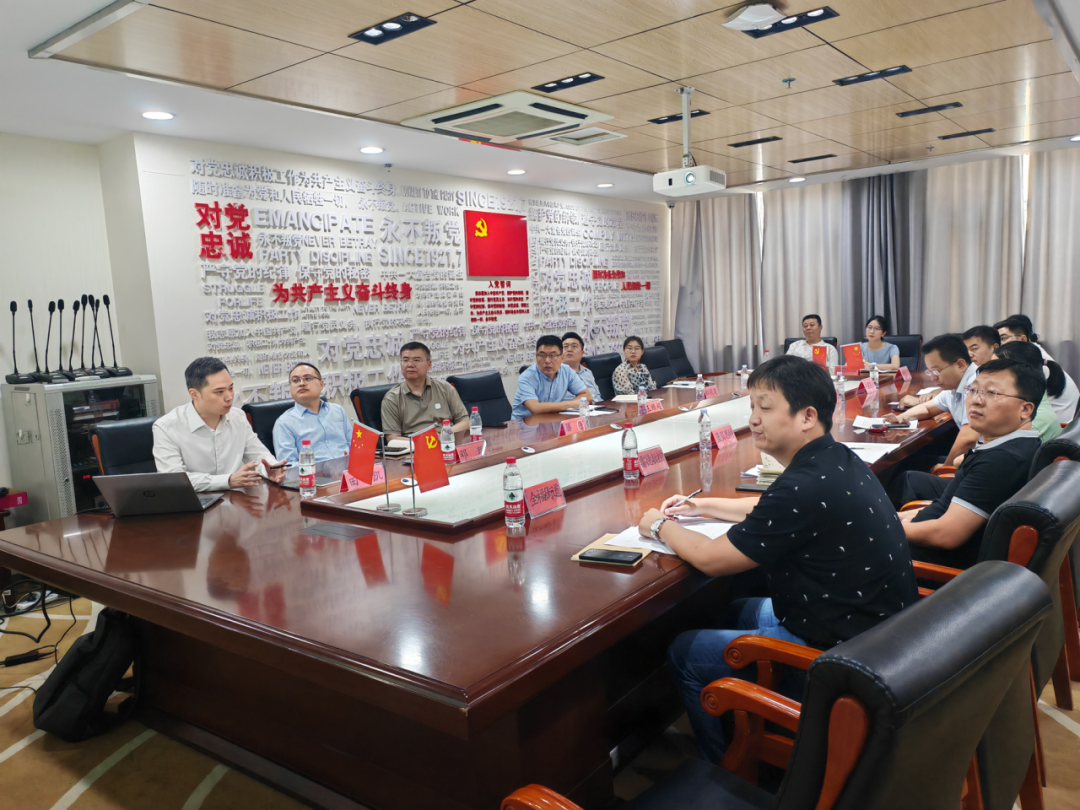
On June 29, 2023, lawyer Yu Peng, senior partner of Zhongcheng Qingtai Jinan Institute, lawyer Guo Wei, partner and lawyer Mao Yukun were invited to carry out "Brave New Mission, Strive for New Journey" for Jinan International Medical Center Management Committee to improve the comprehensive quality of cadres and workers and new employee induction training. The main purpose of this training is to further enhance the legal awareness and compliance awareness of the new and old employees of the Jinan International Medical Center Management Committee, and to elaborate on key and difficult issues such as the disclosure of government information upon application. During the training process, Director Yu Peng conducted in-depth exchanges with the participants on contract conclusion, contract review, contract management and other issues, and answered the practical problems faced by the participants in the work process. Through vivid and interesting cases, the participants had a new understanding of the application of the civil code contract in work and life, and achieved a good response. Lawyer Mao Yukun shared with the participants the actual problems involved in reconsideration litigation in the process of disclosing government information according to application, and made an in-depth interpretation of some classic cases involved. Through this training, the leaders and staff of the management committee have an in-depth understanding of the risks and difficulties that the management committee may have in the process of performing their duties, and have received positive responses.
2023-07-05


Zhongcheng Qingtai Jinan Region
Address: Floor 55-57, Jinan China Resources Center, 11111 Jingshi Road, Lixia District, Jinan City, Shandong Province
