


27
2021-11
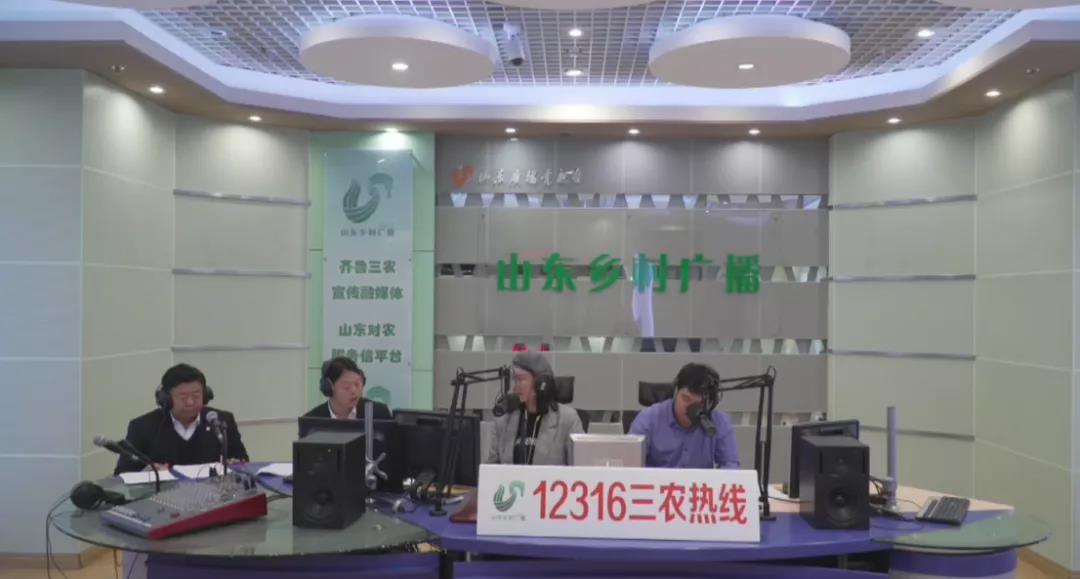
On November 24, 2021, lawyer Zhou jiakui was invited to participate in the "12316 three rural hotline" program of Shandong radio and television station, together with Zhang Zhiqiang, deputy director of Shanghe county justice bureau and Qin Tianhui, President of Shanghe county rope net association, to escort the rule of law for small and micro enterprises. In this program, lawyer Zhou expressed the importance and assistance of governments at all levels to small and micro enterprises and the important role of legal services for small and micro enterprises; summarized the three common legal risks of small and micro enterprises: first, the organizational structure is not sound and the operation is not standardized; second, the legal personality is not independent; third, the financing channels are not healthy, And shared four typical cases for the above risks, the possible adverse consequences of the aforementioned risks are suggested. Zhongcheng Qingtai lawyers provide free legal support for small and micro enterprises by visiting enterprises and broadcasting law popularization, which further strengthens the connection between lawyers and enterprises, and optimizes the communication mechanism between lawyers and enterprises. The practice of "sending law to enterprises" has been highly appreciated by local entrepreneurs. During the program, Shanghe County Justice Bureau and Rope Net Association presented a thank-you banner to Zhongcheng Qingtai Law Firm.
2021-11-27
26
2021-11
On November 26, 2021, Liu Lei, a cadre of the Second Organization Division of the Organization Department of the Shandong Provincial Party Committee, Huang Hai, deputy director of the Second Organization Division of the Organization Department of the Jinan Municipal Party Committee, Sui Xianxin, a cadre, Shi Ying, a member of the Party Committee of the Jinan Municipal Bureau of Justice and Director of the Political Department, Liu Yuqiu, Director of the Office of Lawyers Work and Deputy Secretary of the Party Committee of the Municipal Lawyer Industry, Sheng Lianwu, zhuang Xuliang, deputy director of the lawyer's office and full-time deputy secretary of the municipal lawyer's party Committee, and a group of seven people visited Zhongcheng Qingtai Jinan Institute to carry out grass-roots party building research activities. Geng Guoyu, deputy secretary of the Jinan Lawyer's Party Committee, president of the municipal lawyer's association, secretary and director of Zhongcheng Qingtai Jinan Institute, Han Honggang, deputy director Tang Xiangdong, and Shi Guangbo, deputy director of Jinan Institute, warmly received the visiting leaders. Geng Guoyu, secretary of the party committee and director of Zhongcheng Qingtai Jinan Institute, made a report on the party building work to the leaders of the Organization Department of the Provincial CPC Committee. From the aspects of party history study and education, basic work, tens of millions of promotion projects, playing a substantive role, improving the quality of party branches, celebrating the 100 anniversary of the founding of the party, party member development, party member education and management, etc., this paper comprehensively summarizes the achievements of Zhongcheng Qingtai Jinan Jinan Institute in 2021. Zhongcheng Qingtai will persist in taking the study and education of party history as a major political task, thoroughly study and implement the spirit of the sixth Plenary session of the 19th CPC Central Committee, continue to creatively carry out party building work, and carry out the original mission of legal workers. strengthen responsibility.
2021-11-26

26
2021-11
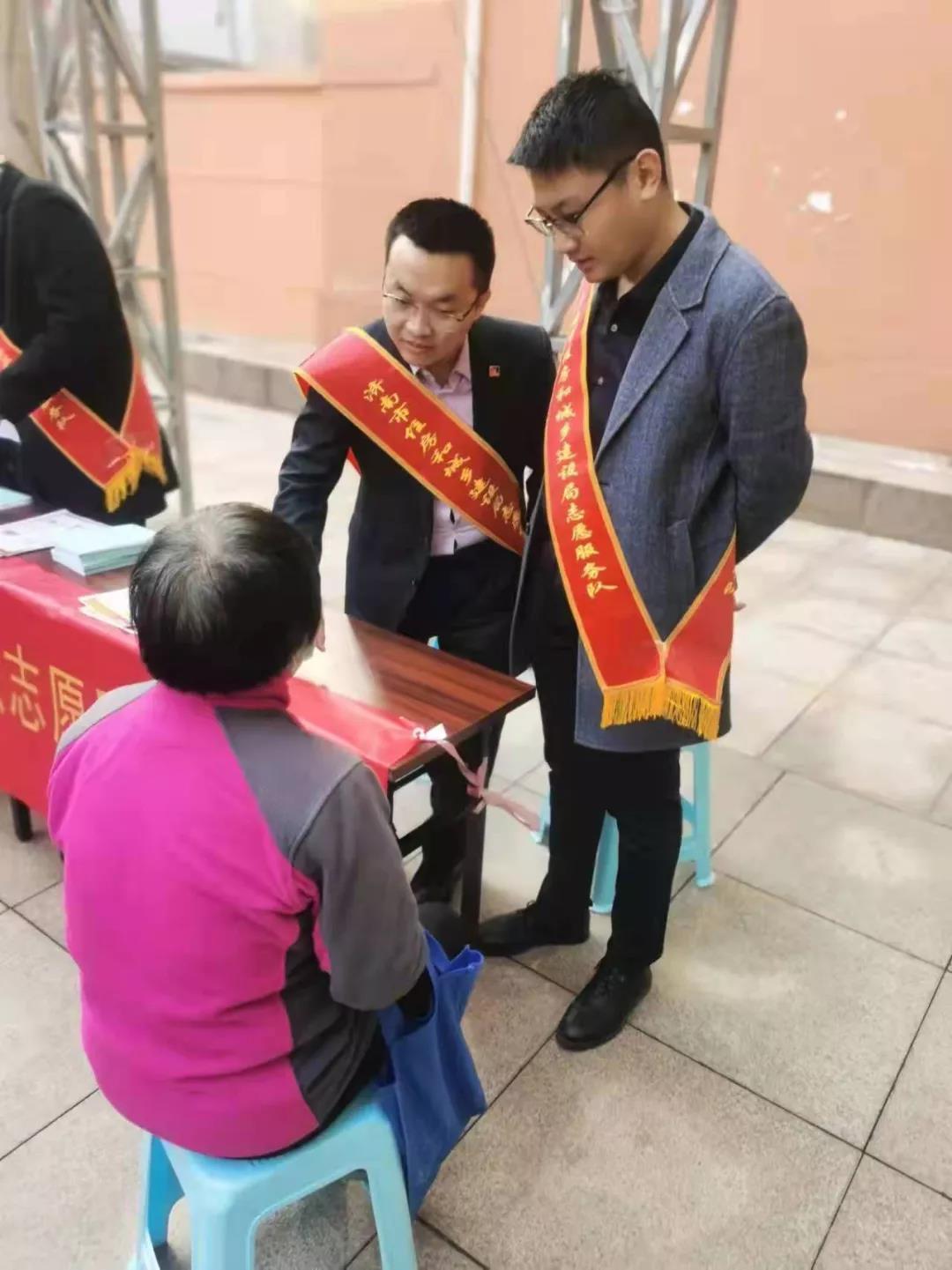
On the afternoon of November 25, 2021, Comrade Zhang Wei, deputy bureau-level leader of the Jinan Housing and Urban-Rural Development Bureau, led a team to the Puli Street Community of Luoyuan Street to carry out the activities of "double check-in" and "sending law to the community for private affairs". Lawyers Liu Wanfeng and Li Jianqiao of Zhongcheng Qingtai (Jinan) Law Firm participated in the event as consultant lawyers. During the event, lawyers Liu Wanfeng and Li Jianqiao provided business and legal consulting services for community residents, and distributed publicity materials such as the Civil Code and the protection of famous cities on the spot. In particular, in view of the problems mentioned by the community, such as property management, the installation of elevators in old residential areas, and real estate inheritance, the staff of the Municipal Housing and Construction Bureau and our lawyers have given meticulous and professional answers, which have won the affirmation and praise of community residents. This activity answered the confusion of the relevant legal issues for the community residents. Zhongcheng Qingtai will continue to respond to the call of relevant departments, carry out the work of popularizing the law, and be a qualified propagandist of popularizing the law.
2021-11-26
26
2021-11
Foreword: The company resolution is the meaning of the company's authority, which affects and reflects the company's business decision-making and internal governance will, and the company's application for change registration to the registration authority must be based on an effective company resolution. The fourth paragraph of Article 22 of China's "Company Law" stipulates that the company can apply to the registration authority for cancellation of the change registration according to the effective judgment document after the company resolution is invalid and revoked. However, there is no specific regulation on whether the company resolution can be applied for cancellation of the change registration. The approval criteria held by the registration authorities in different regions are not the same. There are many disputes in practice, the introduction of clearer legal guidelines in the area of registration authority approval scales has become a real need. 1 The conceptual background of the company's resolution is not established. Before the introduction of the "Company Law Interpretation IV", my country has always adopted a "dichotomy" for the form of corporate resolutions, like Germany, Switzerland, and Taiwan ". The so-called "dichotomy" refers to the validity of the company's resolution defects into procedural defects and content defects, and respectively identified as revocable and invalid, its legal logic is based on the analysis of the degree of resolution defects, serious defects constitute invalid reasons, relatively minor general defects constitute revocable reasons. The division of the validity of the "dichotomy" for the company's resolution is relatively simple and direct, but the defects are also obvious: the establishment of a legal act is a prerequisite for the validity of a legal act, and only after the establishment of a legal act can it be judged whether it is valid. The constituent elements and value orientations of the two are not the same. The establishment element focuses on the objective evaluation of the facts, while the effective element is the secondary value evaluation of whether the established legal act violates the mandatory provisions and social public order and good customs. However, the revocation or invalidity of a resolution is premised on the establishment of the resolution, and when the resolution is not established at all, it is undoubtedly wrong to judge the validity of its revocation or invalidity. Article 5 of the Interpretation of the Company Law adds a lawsuit of non-establishment of the resolution, which means that China has divided the company resolution into three cases: non-establishment, revocable and invalid, and has moved from the "dichotomy" of the determination of the validity of the resolution to the "trichotomy". The "trichotomy", based on the system of meaning in the theory of legal acts, separates the establishment of a resolution from its entry into force. The essence of corporate resolution is the act of resolution, and the fundamental feature of the act of resolution is that it takes the meaning of majority decision to form a mechanism in accordance with the requirements of procedural justice. The company resolution as the company's meaning, unlike the natural person to make a meaning may only need to go through a psychological weighing process, the establishment of the company resolution to comply with the statutory or articles of association agreed voting methods or procedures as a necessary condition, does not meet the procedural value of the resolution can not be recognized as the company's meaning. 2 Legal provisions 1. Article 40 of the regulations on the Administration of Company Registration: if a company applies to the company registration authority for cancellation of change registration in accordance with the provisions of Article 22 of the Company Law, it shall submit the following documents: The application signed by the legal representative of the (I) company; the judgment document of the (II) people's court. 2. Article 22, paragraph 4, of the Company Law: if the company has gone through the change registration in accordance with the resolution of the shareholders' meeting or the general meeting of shareholders or the board of directors, after the people's court declares the resolution invalid or revokes the resolution, the company shall apply to the company registration authority to cancel the change registration. 3. Article 5 of Interpretation IV of the Company Law: If the resolution of the shareholders' meeting or the general meeting of shareholders or the board of directors has one of the following circumstances, if the parties claim that the resolution is not established, the people's court shall support it... 3 Disputes in Practice There are two controversial views in practice: The first point of view is that Article 40 of the Regulations on the Administration of Company Registration and the fourth paragraph of Article 22 of the Company Law only stipulate two legal situations: the people's court declares the resolution invalid and revokes the resolution. The registration authority can approve the company's application for cancellation of change of registration based on the effective judgment that the resolution is invalid or the resolution is revoked, the registration authority needs to comply with the requirements of administration according to law. The law cannot do without authorization. In the absence of clear provisions, the application for cancellation of change registration based on the effective judgment of "the resolution is not established" lacks legal basis and should not be approved. The second view is that although the invalidity and revocation of resolutions stipulated in paragraph 4 of Article 22 of the Company Law are both for resolutions that have already been established, there is no clear provision for the circumstances under which resolutions are not established. However, a resolution that is not established is of course not legally binding and does not produce legal effect. The consequences of non-establishment are even more than invalid and revocable. The applicant may apply to the company registration authority for cancellation of the change registration based on the effective judgment of the resolution that is not established. The registration authority shall approve it in accordance with the law. 4 The author suggests The author agrees with the second view, for the following reasons: 1. In August 2017, the Supreme People's Court issued the Supreme People's Court on the application of<中华人民共和国公司法>When answering a reporter's question, Judge Du Wanhua, a full-time member of the Judicial Committee of the Supreme People's Court, replied as follows: "Article 22 of the Company Law of our country stipulates that the actions of confirming the invalidity of the resolution and revoking the resolution are all aimed at the resolution that has already been established and do not cover the situation where the resolution is not established. In our view, from the interpretation of the system, a resolution that is not established is of course not legally binding and should be an implied provision of company law. Therefore, Article 5 of the" Interpretation IV of the Company Law "stipulates that the action of the resolution is not established, together with the action of invalidation of the resolution and the action of revocation of the resolution, together constitute the pattern of" trichotomy ". The Supreme Court's attitude towards this can also be seen from the Supreme Court's previous communiqué cases: whether a legal act is established or not is a matter of factual judgment, the validity of a legal act is a matter of legal value judgment, and if a resolution lacks basic establishment elements, there is no question of effectiveness evaluation. Unestablished civil legal acts do not have legal effect, which is in line with the basic logic of the law. The legislature does not need to make separate legislation on this issue. Moreover, the background of the promulgation of the Interpretation IV of the Company Law is that the Supreme People's Court uses the way of issuing judicial interpretations to fill the loopholes in Article 22 of the Company Law. Therefore, Article 5 of the Interpretation IV of the Company Law stipulates that the resolution is not established, it should be the same as the invalidity and revocability of the resolution, which should belong to the applicable circumstances of Article 22 of the Company Law, and the failure of the resolution can be regarded as one of the circumstances in which the company applies to the registration authority to cancel the registration of the change. 2. Whether it is the theory of legal acts or judicial practice in our country, it is recognized that "the resolution is not established" can be used as the applicable situation stipulated in the fourth paragraph of Article 22 of the "Company Law". For example, the second item of Article 4 of the "Interim Administrative Measures for the Cancellation of Enterprise Registration by Sichuan Provincial Industry and Commerce and Market Supervision Authorities" clearly includes the non-establishment of the resolution of the shareholders' meeting as one of the cancellation of registration by the registration by the registration authority, for example, the civil judgment of Zhengzhou intermediate people's court (2018 Yu 01 min zong No. 4885) and other effective documents also regard the non establishment of the resolution as the implied application of Article 22 of the company law. In practice, the non establishment of the resolution should also be regarded as the situation that the company applies to the registration authority to cancel the change registration. Lawyer Profile Chen Xiaotong, male, corporate lawyer of Shandong Zhongcheng Qingtai (Jinan) Law Firm, Bachelor of Law of Shandong University, Master of International Commercial Law and Maritime Law of Swansea University, UK, Outstanding Young Lawyer of Shandong Province, Director of European and American Alumni Association of United Front Work Department of Shandong Provincial Committee of the Communist Party of China, Student entrepreneurship mentor of Jinan University. Since its official practice in June 2014, its work has mainly been to serve as perennial legal adviser to medium and large state-owned enterprises, banks and other financial institutions, special legal adviser to financial institutions for enterprise investment and financing projects, and special legal adviser to capital market business. conduct legal risk assessment on the main business of enterprises, and issue legal opinions for daily operation of enterprises and special projects. Chen Xiaotong's lawyer team has experience in serving many large and medium-sized state-owned enterprises, banks, and listed companies. They have certain experience in corporate governance of state-owned enterprises, corporate restructuring, laws and regulations of listed companies, capital market business, etc., and are familiar with procedures and relevant laws and regulations. In terms of non-litigation business, the team has been responsible for the issuance of corporate bonds, corporate bonds, medium-term notes, ultra-short-term financing bills, debt financing plans, listing on the company's main board and asset securitization, and is familiar with the characteristics of the legal field of investment and financing in the capital market. The main consultants who have served since their practice are: shandong Provincial Development and Reform Commission, Shandong Iron and Steel Group Co., Ltd., Jinan Iron and Steel Group Co., Ltd., Shandong Commercial Group Co., Ltd., Lushang Real Estate Co., Ltd., Shandong Branch of People's Insurance Company of China, Industrial and Commercial Bank of China Limited Shandong Branch, Standard Chartered Bank Jinan Branch, Jinan Rural Commercial Bank Co., Ltd., Qingdao Bank Co., Ltd. Jinan Branch, Jiyang Rural Commercial Bank Co., Ltd., Qingdao Huangdao Development (Group) Co., Ltd., Qingdao West Coast New Area Fusion Holdings Co., Ltd., Weifang Infrastructure Construction Investment and Development Co., Ltd. and other units. Contact number: 15614682525 E-mail: eroscxt@163.com</中华人民共和国公司法>
2021-11-26
26
2021-11
Viewpoint... "Discussion of the period of exercise of mortgage."
Problem Background On May 2, 2017, Company A and Bank B signed the Liquidity Loan Contract, agreeing that Bank B would grant it a loan of $50 million for a period of 12 months. On the same day, the two parties signed the Maximum Mortgage Contract, which agreed that Company A would provide a mortgage guarantee for the claim with the property in its name and register the mortgage. When the loan matures, Company A is unable to repay the loan and Bank B takes it to court. On July 20, 2018, under the mediation of the court, the two parties reached a settlement, agreeing that Company A will repay Bank B 50 million yuan of principal and interest within three days after the effective date of the mediation agreement, and the case acceptance fee will be borne by Company A. Later, because Company A did not fulfill its repayment obligations, Bank B applied to the People's Court for enforcement based on the effective civil mediation, and the court ruled on September 23, 2020 to terminate the enforcement procedure. In this case, the court's mediation did not confirm the mortgage enjoyed by the bank, so did Bank B lose the mortgage, or what remedy was sought to realize the mortgage? The lack of confirmation of the mortgage right in the judgment and mediation statement 1. in force does not result in the loss of the mortgage right of the mortgagee. First of all, the "Maximum Mortgage Contract" signed by Company A and Bank B clearly stipulates the mortgage matters, and goes through the mortgage registration procedures to obtain the other title certificate of the property involved in the case. In accordance with the provisions of Article 172 of the Civil Code, the mortgage is established in accordance with the law. Secondly, according to Article 140 of the Civil Code, the meaning of silence can only have legal effect if the law clearly stipulates and the parties have special agreement. Although the civil mediation statement does not state that Bank B has a mortgage on the property involved in the case, nor does it state that Bank B waives the mortgage on the property involved in the case. Bank B has not expressly renounced the mortgage, and has not canceled the mortgage registration, in the absence of an express agreement or no special provisions of the law, it is not appropriate to presume that Bank B has renounced its rights, so Bank B still enjoys the mortgage on the property involved in the case. (Reference Case:(2021) Supreme Famin Shen No. 1134) Period of exercise of the mortgage of 2. B Bank Article 419 of the Civil Code stipulates that the mortgagee shall exercise the mortgage right during the limitation period of the main claim. As we all know, the statute of limitations system was established to urge civil rights holders to actively claim their rights within the statutory period, and if the statute of limitations expires and the principal claim loses the protection of legal coercion, the debtor can defend it. The statute of limitations system does not apply to security interests, as a security right and a mortgage from the right, can only be exercised during the statute of limitations for the principal claim, I .e., during the exercise of the mortgage. In the light of the above background, the problems during the exercise of the mortgage in judicial practice are classified as follows: Scenario 1: Bank B fails to sue this claim during the statute of limitations for the principal claim. The creditor did not bring a lawsuit against the claim within the limitation period of the main claim, and when the limitation period expires, the claim becomes a natural debt, that is, it loses the protection of legal force and is a debt that cannot be requested for enforcement. If Company A defends this, the court does not protect the claim. A mortgage is a subordinate right, subordinate to the principal claim, in which case the mortgage of Bank B is not protected by law under Article 419 of the Civil Code. If the mortgage registration of Bank B continues to be protected, it loses its legal basis. Therefore, Company A may request the registration of the cancellation of the mortgage in accordance with Article 59 of the Minutes of the National Court's Civil and Commercial Trial Work Conference. Scenario 2: Bank B files a lawsuit against the principal claim during the statute of limitations for the principal claim, fails to apply for confirmation of the mortgage, and fails to apply for enforcement during the enforcement period after the judgment becomes effective. Before the expiration of the statute of limitations for the principal creditor's rights, Bank B only filed a principal creditor's rights lawsuit against Company A, and did not request the court to confirm its mortgage right. After the judgment or mediation of the people's court, it did not apply for execution of the debtor within the time limit for application for execution stipulated in the Civil Procedure Law. If it claims to exercise the mortgage right to the mortgagor, the people's court will not support it. The view in the Judicial Interpretation and Application of the Guarantee System of the Civil Code of the Supreme People's Court: "Since the current law of our country has modified the period of application for enforcement, even if the claim has been confirmed by the people's court, it will no longer be protected by the people's court because the period of limitation for enforcement has passed. Since the principal claim is no longer protected by the people's court, the security interest subordinate to the principal claim is naturally no longer protected by the people's court." In such cases, the period during which the mortgagee exercises the mortgage is up to the time when the statute of limitations for enforcement of the principal claim judgment has elapsed. Scenario 3: Bank B only filed a lawsuit against the principal claim during the statute of limitations for the principal claim, did not apply for confirmation of the mortgage, applied for enforcement within the statute of limitations after the judgment of the principal claim came into effect, and then reached a settlement agreement with Company A under court mediation, withdrew the application for enforcement, and the court ruled to terminate the enforcement proceedings in the case. In this case, the court ruled that the termination of the case was due to the request to withdraw the execution application after the applicant and the person subject to execution reached a settlement agreement. According to the law, the termination of the execution of the case means the end of the execution procedure, which is different from the termination of the execution procedure. In principle, after the execution of the case is concluded, the execution procedure cannot be started again. However, the "Interpretation of the Supreme People's Court on the Application of the the People's Republic of China Civil Procedure Law" clearly stipulates that the circumstances in which the termination of execution can be resumed are limited to two types of situations, that is, "after the applicant and the person subject to execution have reached a settlement agreement, the people's court may decide to terminate the execution" and "terminate the execution due to the cancellation of the application". In the case of termination of execution under the above two circumstances, if the party subject to execution fails to perform the execution of the settlement agreement, the person applying for execution may apply to the enforcement court to resume the execution of the original effective legal document, or file a lawsuit for the performance of the settlement agreement. It is worth noting that the application for resumption of enforcement should be restricted by the provisions on the limitation of enforcement in the Civil procedure Law and judicial interpretation. (Reference Case:(2020) Supreme Law Enforcement No. 4) The view in the Supreme People's Court Civil Code Guarantee System Judicial Interpretation and Application: In trial practice, the only criterion for supporting the mortgagor is whether the statute of limitations for the principal claim has elapsed. As long as the statute of limitations period for the principal claim has not elapsed, the creditor's request should be supported. Of course, if the limitation period of the main claim expires and the creditor claims to exercise the mortgage, the people's court shall not support it. After the execution of the judgment has failed, the period of limitation of action shall be recalculated. The "failure of enforcement" here should be understood as the decision of the enforcement court to conclude the enforcement proceedings in this case on the judgment of the principal claim. Scenario 4: Bank B only filed a lawsuit against the principal claim during the statute of limitations for the principal claim, did not apply for confirmation of the mortgage, applied for enforcement within the statute of limitations after the judgment of the principal claim became effective, and then reached a settlement with Company A under court mediation, and the court ruled to terminate the enforcement proceedings. Issued by the Supreme People's Court<关于执行案件立案、结案若干问题的意见>(Fa [2014] No. 26) ", the people's court ruled that after the termination of the execution procedure, if it finds that the person subject to execution has property, it may resume execution on the application of the person applying for execution or ex officio. If the executor applies for the resumption of execution, it shall not be subject to the time limit for applying for execution. In this case, since the principal claim judgment has entered into force and Bank B has applied for enforcement within the statutory time limit, there is no question of interruption, suspension or extension of the statute of limitations for the principal claim. As a subordinate right, there is no question of interruption, suspension or extension during the exercise of the mortgage. Bank B may, when applying for the resumption of enforcement proceedings, claim the exercise of the mortgage together with the enforcement court. Scenario 5: Bank B only filed a lawsuit against the principal claim during the statute of limitations for the principal claim, did not apply for confirmation of the mortgage, applied for enforcement within the statute of limitations after the judgment of the principal claim became effective, reached a settlement with Company A under court mediation, and the court ruled to terminate the enforcement proceedings. Company A then files for bankruptcy and liquidation, and Bank B files a claim with the administrator within the statutory period. Although Company A applied to the people's court for bankruptcy liquidation in the course of execution, Bank B, with an effective judgment, declared the claim to the bankruptcy administrator during the period of filing the claim as stipulated by law, and the administrator shall confirm that the claim is a claim secured by property. The period of declaration of claims is also the period of legal protection, because Bank B exercises the main claim within the period prescribed by law, so the main claim is still protected by law, and accordingly, its mortgage should also be protected by law. Trial point of view: mortgage, as a kind of security right, does not apply the statute of limitations system. However, in order to prevent the mortgagee from exercising the mortgage right and give full play to the economic utility of the mortgaged property, the property law stipulates that the mortgagee should exercise the mortgage right within the limitation period of the main creditor's right, which is to make it clear that the mortgagee should exercise the mortgage right within the period when the main creditor's right is protected by law. The period of protection of the law, before the main claim has not been determined by the effective decision, the main claim limitation period. When the main claim is determined by the effective decision of the proceedings, at this time the main claim is not the statute of limitations, but after the decision takes effect, the main claim may not be realized, in the case of the debtor's failure to take the initiative to perform, there is still the problem of enforcement. As long as the parties apply for enforcement against the debtor during the period of application for enforcement, with reference to Article 202 of the Property Law, the mortgagee shall be deemed to have exercised his rights during the period during which the principal claim is protected by law, and the rights of the mortgagee shall still be protected. In other words, after the principal claim has been confirmed by the effective decision, the period during which the principal claim is protected by law at this time is no longer the limitation period, but the period during which the application is made. Similarly, in the case of the debtor's bankruptcy, the period during which the principal claim is protected by law is the period during which the claim is declared under the law. (Reference Case:(2021) Supreme Famin No. 154) In summary, although the law provides for the corresponding protection of the creditor's mortgage, but as the right holder, should still actively claim the right, to avoid exceeding the statutory protection period, otherwise will bear the adverse consequences of the loss of rights.</关于执行案件立案、结案若干问题的意见>
2021-11-26
26
2021-11
Case Introduction Lu mou and Liang mou bought a shop from a real estate company in Weihai. when the company sold the shop involved in the case, they informed Liang mou and Lu mou that the house involved in the case was on the first floor and shared a parcel area of 27910 square meters. they agreed in the commercial housing presale contract that the shared parcel was weigao guoyong (2012) no 40, and the parcel area use right was 27910 square meters, which was included in the floor area ratio and was normal property right. However, the real estate registration certificate of the shop involved in the case shows that the common parcel area is 6734 square meters, and the floor 1 (underground right type: underground space construction land use right) is located. Lu mou and Liang mou believe that the company knows that the shop involved in the case belongs to the semi-basement and is a supporting facility room, which is not included in the floor area ratio, and deliberately sells the shop involved in the case to the normal floor area ratio commercial room, which is fraudulent sales, the company is required to be liable for damages in accordance with the provisions of the Consumer Rights Protection Law. focus of controversy Whether the legal relationship of commercial housing sales contract is regulated by the Law on the Protection of Consumer Rights and Interests court decision The court of second instance held that Article 2 of the law on the protection of consumers' rights and interests stipulates that if consumers need to purchase, use goods or receive services for daily consumption, their rights and interests shall be protected by this law; if there are no provisions in this law, they shall be protected by other relevant laws and regulations. The commercial housing presale contract and supplementary agreement clearly stipulate that the use of the shop involved in the case is commercial. Liang and Lu entrust the commercial company designated by the company to operate and manage the shop. Therefore, the shop involved in the case is used for operation rather than living consumption needs. Liang and Lu did not purchase the shop involved in the case based on living consumption needs, and were not "consumers" stipulated in the Consumer Rights Protection Law ", therefore, the legal relationship of the commercial housing presale contract involved in the case is not adjusted by the Consumer Rights Protection Law. And for the legal application of commercial housing presale contract disputes, the Supreme People's Court has formulated a special judicial interpretation, and the relevant provisions of the "Judicial Interpretation of Commercial Housing Sales" should be applied in this case. Lawyer's opinion Our lawyers believe that the punitive damages in the Consumer Rights Protection Law should not be applied to commercial housing sales disputes. First, Article 2 of the Law on the Protection of Consumer Rights and Interests "Consumers need to purchase, use commodities or receive services for their daily consumption, and their rights and interests are protected by this law..." According to the legislative principles and purposes of the Law on the Protection of Consumer Rights and Interests, the "commodities" in this article refer to the commodities that belong to "movable property" for daily consumption, and commercial housing as real estate is a special property, it does not fall within the scope of "goods" adjusted by the Consumer Rights Protection Law. The "product" mentioned in the Product Quality Law, which is at the same level and of the same type as the Consumer Rights Protection Law, does not include commercial housing, etc. In terms of the scope of adjustment, the concept of "commodity" used in the Consumer Rights Protection Law is the same as the concept of "product" used in the Product Quality Law, and disputes over the sale of commercial housing do not apply to the Product Quality Law, the Consumer Protection Act should also not apply. Second, the price of commercial housing is expensive, and it is often millions. The application of the "Consumer Rights Protection Law", especially the application of Article 55 of the "Consumer Rights Protection Law", "If a business operator commits fraudulent acts in providing goods or services, it shall be in accordance with the consumer The request increases the compensation for the losses suffered, increasing the amount of compensation is three times the price of the consumer's purchase of goods or the cost of receiving services." Dealing with commercial housing sales disputes will inevitably lead to an imbalance in the rights and obligations of the operator and the consumer, leading to a serious tilt in the interests of both parties, which violates the principle of fairness and justice. Third, with the continuous improvement of my country's real estate registration system, the implementation of the model text of the commercial housing sales contract, and the requirements of the online signing and filing system, the Interpretation of the Supreme People's Court on Several Issues Concerning the Application of Law in the Trial of Commercial Housing Sales Contract Disputes (2020 Amendment) The original judicial interpretation of Articles 8 and 9 of the commercial housing sales contract in which the seller maliciously breaches and frauds, resulting in the buyer's inability to obtain the five situations, therefore, for the breach of contract in the sale of commercial housing, the original punitive damages that "the seller can be requested to bear no more than double the paid purchase price" are no longer applicable, and the breach of contract in the sale of commercial housing can be resolved by applying the relevant legal provisions and judicial interpretations of the contract, such as the contract code of the Civil Code and the interpretation of the Supreme People's Court on the application of laws in the trial of commercial housing sales contract disputes, therefore, punitive damages in the Consumer Protection Law should not be applied when disputes over the sale of commercial housing arise. Related Cases (I) Yuan Mou and Changzhou Real Estate Development Co., Ltd. Commercial Housing presale Contract Dispute- (2020) Su 04 Min Shen No. 91 The "Consumer Rights Protection Law" stipulates that if operators provide goods or services fraudulently, consumers can claim punitive damages, but it does not stipulate whether the sale of commercial housing falls within the scope of the law. Punitive damages for the sale of commercial housing are not typical product fraud and service fraud, but mainly because the seller intentionally or violates the principle of good faith, resulting in the subject matter can not be delivered or the subject matter has some defects, or deliberately conceal the true situation, deceive consumers. The Interpretation of the Supreme People's Court on Several Issues Concerning the Application of Law in the Trial of Commercial Housing Sales Contract Disputes clearly stipulates the responsibility of developers for fraudulent acts. Therefore, the judicial interpretation should be applied to cases involving fraud in commercial housing sales disputes. Provisions. Therefore, Yuan argued that the provisions of punitive damages in the the People's Republic of China Consumer Rights and interests Protection Law should be applied in this case, which cannot be established in accordance with the law. (II) Yang Mou and Chongqing Real Estate Development Co., Ltd. Housing Purchase and Sales Contract Dispute- (2020) Yu 01 Min Zhong No. 4136 In this case, the two parties are in a contract for the sale of commercial housing, and Yang also applied for the termination of the contract. In this case, the relevant laws and regulations and judicial interpretation of the contract for the sale of commercial housing shall apply. Article 8 of the Interpretation of the Supreme People's Court on Several Issues Concerning the Application of Law in the Trial of Disputes over Commercial Housing Sales Contracts stipulates: "In case of any of the following circumstances, the purpose of the commercial housing sales contract cannot be achieved, the buyer who cannot obtain the house may request to terminate the contract, return the paid house purchase price and interest, and compensate for losses, and may request the seller to bear no more than double the payment of the purchase price: (a) after the conclusion of the contract for the sale of commercial housing, the seller did not inform the buyer and mortgaged the house to a third party; (II) after the conclusion of the contract for the sale of commercial housing, the seller sold the house to a third party. "Article 9 stipulates:" When the seller enters into a commercial housing sales contract, if one of the following circumstances occurs, resulting in the contract being invalid or canceled or terminated, the buyer may request the return of the paid house purchase price and interest, compensation for losses, and may request the seller to bear the liability of not more than double the paid house purchase price: (1) deliberately concealing the fact that the commercial housing presale license certificate has not been obtained or providing false commercial housing presale license certificate; (II) deliberately conceal the fact that the house sold has been mortgaged; (III) deliberately conceal the fact that the house sold has been sold to a third party or that the house has been resettled for demolition compensation. "Accordingly, in the commercial housing sales contract relationship, the buyer requires the seller to bear the punitive compensation liability, should comply with one of the aforementioned provisions. Yang asked the developer to bear punitive liability on the grounds that the developer would sell the parking space that was judicially seized to it, which constituted fraud. However, when the two parties signed the "parking space confirmation letter", the developer did not have one of the circumstances stipulated in the judicial interpretation, and Yang's claim was not supported by the court.
2021-11-26
25
2021-11
Winter "Sweet Potato" Enters Zhongcheng Qingtai
In May 2021, Wei Shubin's little daughter, Yu, had a high fever and was finally diagnosed with leukemia. In the face of sudden changes, the eldest daughter Mei Mei sells sweet potatoes at the gate of Ginza Mall in Yiyuan County every day after school to raise medical expenses for her sister. Wei Shubin and his wife accompanied the sick youngest daughter to be hospitalized in Shandong Provincial Hospital in Jinan City. After Tang Xiangdong, deputy director and senior partner of Zhongcheng Qingtai (Jinan) Law Firm, learned about this situation, he immediately launched the "Winter" Sweet Potato "purchase activity to encourage all lawyers to actively participate, A total of people from Du Fengjun, Shu Mengjiao, Sun Yu, Li Juan, Wei Yan, Qu Mengyu, Jia Xincui, Yu Yue, Zhao Bing, Laiyinping, Gao Xin, Li Jian, Du Chengjun, Meng Fanhu, Tian Wenhua, Wu Xuhui, Zhang Yafei, Lin Jing, Jin Feng, Wang Zhi, Wu Xiaoting, Chu Lingyun, Ding Weimin, Gao Mengying, Cheng Wanqing, Gao Yuli, Wang Li, etc. The lawyer's donation is 3500 yuan. Society is the support of enterprises, enterprises are the cells of society, and responsibility is the link between enterprises and society. Since its establishment, Zhongcheng Qingtai (Jinan) Law Firm has continued to pay attention to socially disadvantaged groups, earnestly fulfill its own responsibilities, and actively promote the harmonious development of society. All lawyers and staff of Zhongcheng Qingtai will, as always, adhere to the service concept of "serving the overall situation around the center, paying attention to the people's livelihood and contributing to the society", actively assume social responsibility, take the initiative to carry out social public welfare activities, and warm the world with the temperature of legal people!
2021-11-25

25
2021-11
[brief case]] A machinery company leased the wheel loader it purchased to a company in Zhanjiang Port, and at the request of a company in Zhanjiang Port, insured the Guangzhou branch of a financial insurance company with third party liability insurance. When an employee of a machinery company communicated with a salesman of a financial insurance company Guangzhou branch about the insurance, he informed that the equipment was used for rental and the customer specified the amount of insurance compensation. Later, because the loader caused the death of others in the rental process, a machinery company to a financial insurance company Guangzhou branch claim. The Guangzhou branch of a financial insurance company refused to pay compensation on the grounds that the contract stipulated that the subject matter of insurance caused liability for damages to a third party during the lease and loan period, and the insurer was not responsible for compensation. The people's court held that the Guangzhou branch of a financial insurance company, knowing that the loader involved in the case was leased, that is, in line with the deductible, still underwrote it, and did not fulfill the obligation to prompt the exemption, and should be regarded as agreeing to compensate the third party for the damage caused by the lessee's lease of the loader involved in the case. focus of controversy] Whether the Guangzhou branch of a financial insurance company should bear the responsibility of paying insurance benefits. The court of first instance held that] A financial insurance company Guangzhou branch issued a "comprehensive insurance policy for engineering machinery and equipment" to a machinery company, and the legal relationship between the two parties was established. According to Article 16 of the the People's Republic of China Insurance Law, an insurance accident refers to an accident within the scope of insurance liability as stipulated in the insurance contract. In this case, a machinery company and a financial insurance company Guangzhou branch have a dispute over whether the accident involved constitutes an insurance accident stipulated in the comprehensive insurance of construction machinery and equipment plus the third party liability insurance clause. The main points of the dispute are as follows: 1. the right boundary of the three liability insurance of construction machinery and equipment; 2. whether a machinery company has fulfilled the obligation of disclosure of qualified insured to Guangzhou branch of a financial insurance company; 3. whether a machinery company has the obligation to pay work injury claims to the actual user of construction machinery. 1. on the right boundary of the three liability insurance of construction machinery and equipment. The "People's Property Insurance Company of China Construction Machinery and Equipment Comprehensive Insurance Additional Third Party Liability Insurance Clauses" stipulates that during the insurance period, the insured or its permitted user has an accident in the process of using the subject matter of the insurance, causing a third party If the party suffers personal injury or death or direct property damage, the insured shall be liable for economic compensation in accordance with the law, and the insurer shall be responsible for compensation in accordance with the additional insurance contract. In the following cases, the insurer shall not be liable for compensation for damages to third parties caused by the subject matter of insurance for any reason: during the period of theft, robbery, robbery, rental, loan, or transfer to another person. According to the second paragraph of Article 17 of the the People's Republic of China Insurance Law, for the clauses in the insurance contract that exempt the insurer from liability, the insurer shall, when concluding the contract, make provisions sufficient to attract the attention of the applicant on the insurance policy, insurance policy or other insurance certificates, and make a clear explanation of the content of the clause to the applicant in written or oral form; if there is no prompt or clear explanation, the clause shall have no effect. In this case, a machinery company claimed that the Guangzhou branch of a financial insurance company refused to compensate because of the insurance accident of loader 39 involved during the rental period. since the Guangzhou branch of a financial insurance company had no proof to prove that it had served the additional three insurance clauses for construction machinery and equipment to a machinery company, the Guangzhou branch of a financial insurance company had no right to refuse to compensate on the grounds of applying the exemption clause. However, in the absence of a reminder or express statement of the exemption clause under the aforementioned law, only the exemption clause does not have legal effect, and the definition of the concept of insurance accident and the boundary of rights in the insurance clause is not included here. Therefore, the exemption clause is not applicable in this case, and whether the Guangzhou branch of a financial insurance company makes a claim to a machinery company depends on whether the accident in question constitutes an insurance accident as defined in the "Comprehensive Insurance Clause for Construction Machinery and Equipment of the people's property Insurance Company of China. 2. the question of whether a machinery company has fulfilled its disclosure obligations to the Guangzhou branch of a financial insurance company. The insured involved in the case was a machinery company, and the actual user of the No. 39 loader involved and the person responsible for the accident were both a company in Zhanjiang Port. A machinery company claimed to have informed the Guangzhou branch of a financial insurance company that "several loaders to be insured are for rental use" and submitted a "notarial certificate" to the court of first instance, which confirmed the fact. Although Guangzhou Branch of a financial insurance company knows that the loader No. 39 involved in the case is for rental use, on the premise that the owner and the user can be the insured, the insurance policy issued by Guangzhou Branch of a financial insurance company shall be subject to the intention of a machinery company. A machinery company has not proved that it has made a clear intention to Guangzhou Branch of a financial insurance company to use a company in Zhanjiang Port as the insured, no evidence was submitted to prove that changes were made to the insured after the insurance policy was issued. It shall be deemed that a machinery company has not fully fulfilled its obligations of information disclosure and clear notification, and the liability arising therefrom shall be borne by a machinery company of the insured. According to daily life experience and trading habits, the insured should be independently confirmed by the insured. The insured does not take the initiative to propose, and the insurer has no way to know. A machinery company claims that the insured is determined by a financial insurance company Guangzhou Branch in accordance with relevant laws and regulations. The claim that it is not determined by the personal wishes of a machinery company lacks factual basis, and the court of first instance will not accept it. 3. on the question of whether a machinery company should settle claims to the actual user of loader 39 involved in the case. According to the "Road Traffic Accident Investigation Report", Chen Mou, the driver of loader 39 involved in the case, did not put up the funnel belt feeding and guiding pipe in advance according to the "Safety Technical Operation Regulations for 404 Berth Head Moving Elevated Hopper" during the process of driving the loader to move the funnel, causing the guiding pipe to collide with the cement frame of the conveyor belt nearby, and the guiding pipe fell off and hit the commander, causing the safety accident of the death of the branch. There is a direct legal causal relationship between Chen's illegal operation and Zhi's injury and death. The drainage pipe of loader 39 involved in the case is only the instrumental motivation of Zhi's death. The substantive motivation lies in Chen's negligence and illegal operation. In production, he failed to fulfill the duty of careful attention and the responsibility of ensuring the safety of others' lives, and he was responsible for the death of Zhi. From the perspective that Chen Mou is a staff member of a labor service company stationed in a company in Zhanjiang Port in the form of labor dispatch and Zhi Mou is a staff member of a company in Zhanjiang Port, in accordance with the provisions of the second paragraph of Article 34 of the the People's Republic of China Tort Liability Law (now Article 191 of the Civil Code), during labor dispatch, the dispatched staff member causes damage to others due to the performance of work tasks, the employer receiving the labor dispatch shall bear the tort liability; in accordance with the first paragraph of Article 11 of the Supreme People's Court's Interpretation on Several Issues Concerning the Application of Law in the Trial of Personal Injury Compensation Cases, the employer shall be liable for compensation if the employee suffers personal injury in the course of employment activities. Therefore, a company in Zhanjiang Port, whether as an employer receiving labor dispatch or an employer in employment activities, shall bear tort liability for the legal consequences of the death of a work-related injury, which is the nature of the employer's liability rather than the "third party liability" in the third party liability insurance ". According to the fourth paragraph of Article 65 of the the People's Republic of China Insurance Law, liability insurance refers to insurance that is the subject of insurance based on the liability of the insured to a third party in accordance with the law. The aforementioned "third party" refers to the subject other than the insured and its related parties as stipulated in the liability insurance policy, which has no direct related interest and has the right to claim compensation from the insured. In the practice of liability insurance, the boundaries of insurance according to liability are very clear, and the liability of employees for personal injury belongs to the scope of employer liability insurance rather than third party liability insurance. In this case, a company in Zhanjiang Port is not the insured involved. According to the Agreement on Renewing the Lease of Four Longgong Long Arm Loaders signed between a machinery company and a company in Zhanjiang Port, a machinery company only needs to bear the third party liability insurance obligation with the purchase amount of not less than 200000 yuan. In addition, there is no other legal or agreed compensation obligation to a company in Zhanjiang Port, A machinery company claimed that the evidence of the obligation to pay compensation for the death of a third party caused by the loading vehicle within the scope of the three liability insurance for the construction machinery and equipment involved in the case was insufficient, and the court of first instance did not accept it. To sum up, the accident involved does not constitute a liability insurance accident for construction machinery and equipment. A machinery company's claim for compensation of 500000 yuan and interest from a financial insurance company Guangzhou Branch lacks factual and legal basis, and the court of first instance will not support it. The court of second instance held that] The focus of the dispute in the second instance of this case is whether the Guangzhou branch of a financial insurance company should bear the responsibility of paying insurance benefits. First of all, although the insured of the third party liability insurance contained in the insurance policy is a machinery company, but a machinery company has clearly informed the Guangzhou branch of a financial insurance company that the loader involved is for rental use, and also clearly informed that it is insured at the request of the customer, therefore, a financial insurance company Guangzhou branch is in the knowledge that the case involved in the loader is not a machinery company's actual use of the circumstances still agreed to a machinery company as the insured to be insured. However, from the "China People's Property Insurance Co., Ltd. Construction Machinery and Equipment Comprehensive Insurance Additional Third Party Liability Insurance Clause" submitted by a financial insurance company Guangzhou Branch, it can be seen that the insurance liability stipulates that "the insured shall bear the economic liability according to law, and the insurer shall be responsible for compensation according to the agreement of the additional insurance contract", and stipulates that the insurance subject is liable for damages to the third party during the lease and loan period, the insurer is not responsible for compensation. If, in accordance with the terms of the insurance, a machinery company, although insured, but ultimately can not get any compensation, this situation is obviously contrary to the original intention of a machinery company to insure third party liability insurance. Guangzhou Branch of a financial insurance company did not prompt a machinery company in good faith, but after the accident, it refused to pay compensation on the grounds of equipment rental, which was against integrity. Therefore, the Guangzhou branch of a financial insurance company, knowing that the loader involved in the case was leased, should be regarded as agreeing to compensate for the damage caused to a third party during the lease of the loader involved in the case. Secondly, a machinery company did not sign the insurance policy at the time of insurance, and a financial insurance company Guangzhou branch did not submit evidence to prove that it had served the insurance terms of third party liability insurance to a machinery company. Therefore, the Guangzhou branch of a financial insurance company did not inform a machinery company of the contents of the contract and the exemption clause, and did not fulfill the obligation of prompting. According to the provisions of the second paragraph of Article 17 of the the People's Republic of China Insurance Law, the clause exempting the Guangzhou branch of a financial insurance company from liability has no effect on a machinery company. Therefore, a financial insurance company Guangzhou branch claims not to bear the liability, lack of contract basis. Thirdly, according to the agreement on renewing the lease of four long arm loaders signed by a machinery company and a company in Zhanjiang port and the statement made by a machinery company when it insured the Guangzhou branch of a financial insurance company, a machinery company is responsible for handling the third party liability insurance for the loaders involved in the rental case and providing a copy of the insurance contract for the record. The purpose of this agreement between a company in Zhanjiang Port and a machinery company is to reduce losses by settling claims to the insurance company in the event of an accident involving a loader, otherwise the agreement will have no practical significance. As a machinery company is insured with a limit of 500000 yuan for third party liability insurance, a company in Zhanjiang port, after compensating the family members of the deceased, claimed the insurance compensation amount of 500000 yuan to a machinery company, which is in line with the contract purpose of the agreement on renewing the lease of four long arm loaders for third party liability insurance. A company in Zhanjiang Port has received compensation from a machinery company through rent deduction and said that a machinery company has claimed compensation from the Guangzhou branch of a financial insurance company. Therefore, it should be determined that a machinery company because of the accident to bear the economic liability, a machinery company has insurance interests, can claim insurance money to a financial insurance company Guangzhou branch. Lawyer Advice] In this case, the court held that the insurance company did not prompt the insured in good faith to meet a certain exemption reason when accepting the insurance, but refused to pay compensation on the basis of the exemption after the occurrence of the insurance accident, which was obviously contrary to good faith, and finally ruled that the insurance company should bear the insurance liability. Through this case, it is recommended that the insurance company perform its statutory obligations when accepting insurance, and the business management personnel should have a certain degree of professional sensitivity and careful review of the relevant information stated by the policyholder, especially in the case that the subject matter of the insurance stated by the policyholder is obviously In accordance with the exemption of the insurance contract, the policyholder should be promptly prompted and clearly explained, and attention should be paid to the retention of relevant evidence during the process, to prevent insurance claims disputes and adverse risks in the case of legal deductibles.
2021-11-25
24
2021-11
On November 19, 2021, Song Huidong, a senior partner of Zhongcheng Qingtai Jinan Institute and director of the real estate department, conducted special legal training on "Legal Risk Prevention of Enterprise Safety Production" for gold smelting companies through the network system. The content of this training mainly focuses on the legal regulations involved in enterprise safety production and the main responsibility of safety production. It is suggested that the safety production of mining and gold smelting enterprises should be controlled in the aspects of safety production guarantee of production and business units, safety production rights and obligations of employees, supervision and management of safety production, and emergency rescue treatment of safety production accidents. At the same time, the possible legal responsibilities of gold smelting enterprises in terms of personnel establishment, construction projects, facilities and equipment, hazards, safety hazards, safety accidents, etc. are explained one by one, reminding enterprises and employees to pay attention to relevant legal responsibilities and avoid occupational risks. Song Huidong lawyer around the training theme, combined with the classic case, for the enterprise safety production related to laws and regulations and matters needing attention to carry out detailed training. The staff and workers attending the meeting said that the training had effectively improved their legal literacy and legal awareness, and spoke highly of the training.
2021-11-24

24
2021-11
Viewpoint | Carrier and Path of Enterprise Compliance Construction
As a legal person, the behavior of an enterprise depends on the behavior of the head and staff of the enterprise, and corporate compliance needs to be achieved through the behavior of the head and staff of the enterprise. The Guidelines for Compliance Management of Central Enterprises (for Trial Implementation) clearly points out that compliance management is an organized and planned management activity aimed at the operation and management behavior of enterprises and employees. In practice, the behavior of the person in charge and the staff of the enterprise is mainly guided and regulated by the role of the actor, the management system and the operation system. The construction of enterprise compliance system should take the actor's role, management system and operation system as the carrier, and build a compliance management system of enterprise organization system, management system system and workflow system. Construction of Compliance Organization System in 1. Enterprises The enterprise organization system provides organizational guarantee for the enterprise compliance construction, and the enterprise organization setting should strengthen the content of compliance construction and clarify the compliance responsibilities. The construction of enterprise organization system should focus on the following aspects: First, clarify the compliance management responsibilities of the directors and supervisors, and build a compliance leadership system. The articles of association are the basic norms of corporate governance, and the leading role of the articles of association in corporate compliance management should be brought into full play. Within the framework of the articles of association, a corporate governance structure with mutual cooperation, mutual restriction and clear division of labor for corporate compliance decision-making, implementation and supervision should be formed. At the same time, a system of compliance management leaders and compliance committees should be established to improve the professional level and ability of compliance. Second, corporate compliance should go deep into the "front line" of business and serve business operations. Operation is the foundation of the enterprise, compliance should be closely around the business operation, fully reflect the practicality of compliance, that is, compliance management responsibilities to the enterprise's business departments, clear business departments responsible for daily compliance management, in accordance with compliance requirements to carry out business. Third, establish institutions, clarify responsibilities, and provide organizational guarantees for compliance construction. Set up a compliance department or clarify a compliance lead department to take the lead in organizing, coordinating and supervising compliance management. At the same time, qualified enterprises can hire compliance consultants to give full play to their compliance practice advantages and jointly provide compliance support for enterprises. Fourth, cultivate compliance awareness and establish a good compliance atmosphere. Compliance awareness is the soft power of compliance and the fundamental guarantee for the implementation of all contents of the compliance system. Enterprises should closely integrate practice and carry out all-round and multi-dimensional compliance training for all employees to enhance their compliance awareness. Construction of Compliance System of 2. Enterprises The enterprise system is the code of conduct for the person in charge and staff of an enterprise, which directly affects the behavior of the enterprise. The construction of the enterprise system is the top priority of the construction of the enterprise compliance system. Enterprise compliance should take the construction of the enterprise system as the starting point to provide system guarantee for enterprise compliance. The compliance construction of enterprise system should focus on the following aspects: First, pay attention to the compliance of the enterprise system. The enterprise system is the main line of enterprise management, and the compliance of the system itself is the premise and basis of enterprise behavior compliance. The enterprise system should comply with laws and regulations, regulatory provisions, industry standards and enterprise articles of association, rules and regulations, as well as international treaties, rules and other provisions. Second, enterprises should establish a special compliance system to provide a quasi-search for compliance construction. The special compliance system is the basis for the compliance work of enterprises, which mainly includes the legality audit system of major matters, the pre-judgment system of major risks, and the risk disposal and management system. Third, around the operation, the establishment of business compliance business guidelines. According to the enterprise business, according to the compliance requirements to improve the business management system, the development of relevant business guidelines, according to the line of business, the development of its supporting compliance guidelines, so that front-line business personnel how to regulate compliance to carry out related business, and according to business development and regulatory needs to update the business guidelines in a timely manner. Construction of Compliance Operation System for 3. Enterprises The enterprise compliance system is a project in which all employees of the enterprise participate, all departments cooperate closely and cooperate with each other. The construction of the enterprise compliance system should embed compliance content in the construction of the enterprise operation system: First, compliance management will be carried out throughout the whole process of enterprise behavior, and a multi-departmental collaborative compliance operation system will be established. Compliance is inseparable from enterprise operation and enterprise management. Compliance management should run through the whole process of enterprise decision-making, implementation and supervision. Compliance operation requires the linkage and cooperation of multiple departments. Compliance work should give full play to the synergy effect of various departments and coordinate with enterprise law, risk, internal control, audit, supervision and other work. At the same time, strengthen the process control of business decision-making, that is, implement the "three important and one large" decision-making system, and refine the decision-making matters and authority at all levels. Second, establish a sound compliance control mechanism to give full play to the front-end effectiveness of compliance review and risk prevention and control. Compliance review is a key link in the compliance guarantee system, and the construction of a compliance review mechanism can effectively play the role of a "firewall" for compliance management. The focus of compliance control should be to improve the system, decision-making, contract, operation compliance review, clear without review can not be implemented. Build a risk management system that combines identification and prevention with response and disposal, strengthen the construction of enterprise risk identification and risk response systems, and effectively prevent and manage risks. Third, optimize the compliance operation system and establish a multi-level compliance management structure. Enterprises should give full play to the main responsibility of compliance management of business departments, compliance management departments, internal audit departments and external compliance consultants, and establish a multi-level compliance operation system. The business department performs the first line of defense for compliance management and proactively conducts daily compliance control; the compliance management department performs the second line of defense for compliance management, provides compliance support to the business department, and conducts compliance audits on specific issues; the internal audit department performs the third line of defense for compliance management and audits compliance management; the external compliance consultant performs the fourth line of defense for compliance management and conducts compliance audits on matters required by the enterprise. Fourth, improve the construction of the compliance guarantee system and establish a reward and punishment incentive and supervision mechanism. The guarantee system is an important part of the compliance operation system, and it is necessary to give full play to the enterprise reward and punishment mechanism to regulate and restrict enterprise behavior. Accountability and assessment and evaluation together constitute a compliance management guarantee mechanism, through the assessment, reward and punishment system to encourage or urge enterprises and employees to perform compliance duties, to ensure compliance and efficient operation. 4. epilogue Corporate compliance construction is a key link to enhance the modernization of corporate governance capabilities, compliance should not only stay at the institutional level, but also need the organic convergence of ideas and practices, corporate compliance organization system, compliance management system, compliance work operation system trinity, mutual convergence, mutual cooperation. Only by integrating compliance concepts and systems into it, and forming an all-round, multi-field, and in-depth compliance, can the due effectiveness of corporate compliance be truly brought into play and the rapid development of enterprises can be promoted and guaranteed.
2021-11-24

Zhongcheng Qingtai Jinan Region
Address: Floor 55-57, Jinan China Resources Center, 11111 Jingshi Road, Lixia District, Jinan City, Shandong Province
