


08
2021-12
Equity dilution anti-acquisition measures, or poison pill plan, refers to a company in the event of a hostile acquisition, through the issuance of new shares to increase the cost of the acquirer, or increase the risk of dilution of the shares held by the original shareholders of the acquirer after the successful acquisition, to resist the acquisition of a defensive measure. The poison pill plan has the characteristics of immediacy, pertinence and diversity. Since the start of Martin Lipton in 1982, the design has become the most popular anti-takeover measure for listed companies in the United States. In 2005, in the face of Shanda's acquisition, Sina introduced the poison pill plan as a powerful tool into China for the first time. This article will introduce the design ideas and advantages and disadvantages of several common poison pill programs. Prerequisites for the application of the 1. poison pill program The (I) poison pill program needs to be supported by the authorized capital system. The authorized capital system refers to the establishment of the company, although the total amount of registered capital should be determined in the articles of association, but the promoter only needs to subscribe for part of the shares, the company can be formally established, the rest of the shares, authorized the board of directors according to the company's production and operation situation and the securities market market at any time to issue the company's capital system. Although after the revision of the Company Law in 2013, China fully applied the payment system and played down the decisive role of the three principles of capital, it still adopted the statutory capital system. As a result, domestically listed companies are unable to adopt the poison pill program, while companies listed in common law countries and regions have no such concerns. (II) POISON PILLS PLAN REQUIRES CIRCULATION OF WARRANTIES A warrant is a call option issued by a company limited by shares to subscribe to its shares. It gives the holder the right to purchase certain shares of the issuing company at a pre-agreed price within a certain period of time. The types of securities stipulated in China's Securities Law are enumerated and do not allow the circulation of warrants. However, in the Hong Kong and US stock markets, such securities are quite popular. (III) poison pill program is an extension of boardroom centrism Board centralism means that the board of directors is at the core of corporate governance. In the design of the poison pill program, the board of directors is required to evaluate, make decisions and make corresponding plans and measures on the acquirer's offer in a timely manner. On the other hand, this is also an integral requirement of the authorized capital system. General Design Idea of 2. Poison Pill Program (I) valgus poison pill 1. Distribution of subscription rights The company distributes a special stock subscription right to common shareholders on a one-to-one basis. The subscription right is essentially a contract between the company and its shareholders. The Subscription Rights shall not be exercised until the conditions of activation have been met. Once activated, the subscription right can be separated from the common stock, and the acquirer must acquire the common stock and the special share subscription right separately, making it more difficult to acquire. 2. Activation Conditions There are two activation conditions for subscription rights. First, the acquisition direction of a certain proportion of the holders of shares issued a takeover offer, at this time the activation is designed to warn the acquirer, to prevent the acquisition effect. Second, without the consent of the acquired company institutions or individuals to achieve a certain percentage of the acquired company's shareholding, at this time the hostile takeover has begun, the company will take more drastic measures. 3. Content of subscription rights As a result of the merger, the surviving company will inherit all the rights and obligations of the acquired company, including, naturally, the company's contractual obligations to its shareholders. Therefore, after the activation condition is fulfilled, the holder of each special stock subscription right has the right to purchase the common stock of the surviving company one to two. The exercise price, which is only half of the market price of the stock, is clearly attractive to subscription rights holders. In this way, after the completion of the acquisition, the proportion of shares held by the original acquirer shareholders in the surviving company will be greatly diluted, which is the "toxicity" of the poison pill. And it is precisely because the plan allows the acquirer's shareholders to buy the acquirer's stock that it is known as an outward-turning poison pill. 4. Redemption clause The poison pill program designed two different redemption clauses for two different activation conditions. If the poison pill is activated because of the first condition, the company has the right to redeem the subscription right at a low price before the right is exercised. However, if the poison pill program is activated for the second reason, it can no longer be redeemed. This clause is aimed at a two-tier tender offer (I. e., the acquirer promises to acquire a certain percentage of the shares at a high price and then the remaining shares at a low price) to prevent the acquirer from controlling the board of directors with its shareholding ratio and then making a second round of acquisitions. (II) varus poison pill The design idea of the inverted poison pill is roughly the same as that of the inverted poison pill. The main difference is the content of the subscription right and the extension of the foreclosure right. Once the inverted poison pill is activated, shareholders of the acquired company other than the acquirer can purchase the target company's own stock at half price. At this point the acquirer's stake in the target company is greatly diluted, thereby increasing the cost of the acquisition and even losing the possibility of seizing control. The inward-turning poison pill often generally provides for foreclosure. Since the acquirer did not yet have control of the acquired company when the inverted poison pill took effect, the influence on the board of directors was not deep enough. So the board has the flexibility to respond to the takeover offer. There was a third generation of the poison pill program, but it was not recognized by the Delaware courts. Therefore, most of the current listed companies are using a combination of outward and inward poison pill plan, that is, when the acquirer occupies a certain proportion of the company's shares, the acquired shareholders have the right to exercise the inward-turning poison pill, after the completion of the acquisition, the right to exercise the outward-turning poison pill. Advantages and Disadvantages of the 3. Poison Pill Program The poison pill program first has the advantage of immediacy. In the U.S. corporate law system of authorized capital, the board of directors is able to make and implement a plan based on the actual situation immediately after the acquirer initiates the acquisition, and in the absence of a hostile takeover, the preparation of the plan is not harmful to the company's equity structure. Secondly, as the redemption clause can be flexibly used after the optimization of the poison pill plan, the board of directors has more room for negotiation with the acquirer, which is more conducive to fighting for the interests of the company, shareholders and even themselves. Finally, the poison pill program poses a very significant threat to the acquirer relative to other anti-takeover measures. In the absence of a lawsuit to deny the poison pill program itself, most acquirers are repulsed by the poison pill program. At the same time, there is a downside to the poison pill program. Once the poison pill plan is implemented, it will have a huge impact on the equity structure of both companies. Since the companies implementing the poison pill plan are basically listed companies, major changes in the shareholding structure will cause severe fluctuations in the company's market value, which will undoubtedly harm the interests of shareholders, especially public investors. It is precisely because of this that many countries and regions are cautious about the poison pill program. In addition to the support of the United States, Japan chose to approve it after several iterations. Britain and Singapore banned the poison pill program in principle, but left room. Hong Kong law, which has the same origin, has a rather ambiguous attitude towards this. Chow Tai Fook's New World Development successfully resisted the malicious acquisition of the Naughty Child Fund through the poison pill program. Of course, the existence of the poison pill program is itself a deterrent to the acquirer without having to put it into practice. In practice, it is rare to see the activated poison pill plan, and the cases of "toxicity" completely distributed and the two sides breaking the net are even rarer. 4. epilogue The poison pill program, one of the most powerful tools in anti-takeover measures, has been hugely popular and controversial. For companies interested in cross-border mergers and acquisitions or overseas listings, the poison pill program is a weapon they must master and deal. At present, China's listed sectors, only allow the same shares of different rights of the board, with the application of the first generation of priority poison pill space. However, with the establishment of the Science and Technology Innovation Board and the Beijing Stock Exchange, and the successive amendments to the Securities Law and the Company Law, the increasingly relaxed business environment is bound to require increasingly diversified anti-acquisition tools. With the principle of foresight and prevention, domestic enterprises should also be aware of anti-acquisition tools such as poison pill programs.
2021-12-08
08
2021-12
[brief case]] Zu took out personal insurance with an insurance company, and later Zu was diagnosed with "right breast cancer" and was rejected from an insurance company, so he filed a lawsuit. An insurance company argued that Zu did not fulfill the obligation of truthful notification when he was insured. He deliberately concealed that he had suffered from diabetes, solid liver nodules, abnormal liver function and other diseases, and confirmed the major diseases listed in the contract during the waiting period. According to the insurance contract, the insurance company has the right not to pay the insurance premium. After review, the "Health Notice" in the "Insurance Contract" signed by an insurance company and Zu did not mention the inquiries about gestational diabetes, solid liver nodules, and abnormal liver function, and an insurance company did not provide evidence to prove it When applying for insurance, he explained to Zu that the "diabetes" included gestational diabetes, and did not ask Zu whether he had abnormal liver function or solid liver nodules. The People's Court held that the insurance company did not provide evidence to prove that it had asked Zu whether he had suffered from gestational diabetes, abnormal liver function, and solid liver nodules when applying for insurance. Therefore, Zu did not ask questions that the insurance company did not ask. There is no obligation to inform, and the insurance company should pay insurance money to Zu. focus of controversy] Whether Zu has fulfilled the obligation of truthful notification at the time of insurance, and whether the insurance company should bear the responsibility of paying the insurance premium. The court of first instance held that] The Court considers that this case is a dispute over a life insurance contract. The insurance contract signed by Zu and an insurance company is the true intention of both parties. The content does not violate the prohibitive provisions of laws and regulations. It is a valid contract. Both parties should strictly perform their respective obligations in accordance with the contract. The focus of the dispute in this case is: whether an insurance company should pay 350000 yuan to Zu. In this dispute, first of all, an insurance company claimed that Zu did not fulfill the obligation to tell the truth. In combination with Zumou's medical history of "liver nodules" and the requirements of "Health Notification", Zumou has truthfully replied. An insurance company did not submit evidence that Zu had diabetes when he was insured. Secondly, an insurance company claims that Zu has developed symptoms related to the major illness agreed upon in the insurance contract during the waiting period of the insurance contract. According to the existing evidence, Zu found a right breast nodule on October 20, 2019, and underwent medical treatment and examination in November 2019, and was finally diagnosed with breast cancer after re-examination and treatment in March 2020. Although the time of Zu's first visit is within the waiting period of the insurance contract, it belongs to normal examination and treatment. The symptoms of the examination result are the same or similar to the early symptoms of breast cancer. Patients with the above symptoms are only likely to be diagnosed with breast cancer and other cancer diseases, but it is not inevitable. It can not be determined that Zu has breast cancer during this period. Zumou was diagnosed with the first illness for more than the waiting period for the insurance contract. The circumstances of this case are in line with the relevant provisions of the major disease insurance in the insurance contract involved in the case. "The insured shall be diagnosed by a Junior College doctor in a medical institution designated or approved by the company for non-accidental reasons within 180 days from the effective date of the contract." One or more major diseases listed "is obviously inconsistent. The relevant defense of an insurance company lacks factual basis and is not supported by this court. Third, an insurance company argued that Zu should report the deterioration of his health to him during the waiting period of the insurance contract in accordance with Article 52 of the the People's Republic of China Insurance Law. This clause is in response to the provisions of the property insurance contract on the "obligation to notify of increased risk", and the insurance contract in question is a life insurance contract. An insurance company invoking this provision to claim exemption is an error in the application of the law, which is not adopted by the Court in accordance with the law. In summary, the Court does not support the relevant defenses of an insurance company. The court of second instance held that] The Court held that the case was a dispute over a life insurance contract. According to Article 323 of the Interpretation of the Supreme People's Court on the Application of the the People's Republic of China Civil Procedure Law, the people's court of second instance shall hear the appeal request of the party concerned. If the party concerned fails to appeal, the case shall not be heard. Combined with the arguments of both parties, the focus of the dispute in the second instance of this case is: whether the 1. Zu has fulfilled the obligation of truthful notification when applying for insurance; whether the 2. Zu has been diagnosed with breast cancer during the waiting period of the insurance contract. With regard to the first focus of the dispute, the question of whether Zu had fulfilled his obligation to tell the truth when he was insured. Article 16, paragraph 1, of the the People's Republic of China Insurance Law stipulates: "If an insurance contract is concluded and the insurer inquires about the subject matter of the insurance or the relevant situation of the insured, the applicant shall truthfully inform it." Paragraph 1 of Article 6 of the Interpretation (II) of the Supreme People's Court on Several Issues Concerning the Application of the the People's Republic of China Insurance Law stipulates: "The obligation of the policyholder to inform is limited to the scope and content of the insurer's inquiry. If the parties dispute the scope and content of the inquiry, the insurer shall bear the burden of proof." According to the provisions of the above-mentioned laws and judicial interpretations, the current law of our country adopts the mode of inquiry and notification, that is, the insurer asks about the subject matter of the insurance or the relevant situation of the insured, and the policyholder truthfully informs the questions asked, and the scope of the policyholder's notification is limited to the questions asked by the insurer. In this case, an insurance company claimed that Zu did not truthfully inform gestational diabetes, abnormal liver function and solid liver nodules at the time of insurance. Therefore, an insurance company should prove that it has asked Zu whether he has or has suffered from the above three diseases at the time of insurance. Only on the premise of an insurance company's inquiry, Zu has the corresponding obligation to inform. About whether gestational diabetes falls within the scope of what should be told truthfully. An insurance company inquires about Zu at the time of insurance through the Health Notice. Among them, the Health Notice asks "Do you have or have suffered from the following diseases or symptoms, or have been examined or treated for the following diseases?... (4) Endocrine or immune system diseases (diabetes mellitus...)". It can be seen that an insurance company only asked whether Zu had or had had diabetes, but did not ask whether Zu had or had had gestational diabetes. An insurance company did not prove that the meaning and type of "diabetes" included gestational diabetes, nor did it prove that the expanded interpretation of "diabetes" included gestational diabetes at the time of the conclusion of the contract. Moreover, in the gestational glucose tolerance test, the index of the 1-hour blood glucose test result in only one prenatal examination slightly exceeded the normal value range, and the 2-hour test result was within the normal value range. The other blood glucose tests conducted by the prenatal examination and the blood glucose test results during the subsequent hospitalization due to illness were all normal. An insurance company had no evidence that Zu had diabetes. Therefore, an insurance company did not ask whether Zu had gestational diabetes when applying for insurance, and Zu did not have the obligation to truthfully inform gestational diabetes. Whether abnormal liver function and liver solid nodules belong to the scope that should be truthfully informed. An insurance company asks through the Health Notice, "Do you have or have ever had the following diseases or symptoms, or have you been examined or treated for the following diseases?... (5) Digestive system diseases (×× virus infection or carrying, liver cirrhosis, severe ××...)". It can be seen that at the time of insurance, an insurance company asked Zu whether he suffered from or had suffered from XXX virus infection or carrying, liver cirrhosis and severe XXX diseases. An insurance company did not ask Zu whether there was any "abnormal liver function" in the examination report, did not explain which liver diseases "abnormal liver function" included, and did not ask Zu whether he had solid liver nodules. Regarding the solid nodules of the liver, Zumou was diagnosed as hepatic hemangioma by examination. Zumou had voluntarily and truthfully informed him that he had suffered from hepatic hemangioma and the diameter of the hemangioma was not more than 5cm. Therefore, because an insurance company did not ask whether Zu had abnormal liver function or solid liver nodules when applying for insurance, Zu did not have the obligation to tell the truth. To sum up, an insurance company did not ask Zu whether he had gestational diabetes or whether he had abnormal liver function or solid liver nodules. Zu did not have the obligation to tell the truth about the questions that the insurance company did not ask. An insurance company claimed that Zu did not fulfill the obligation of truthfully informing when applying for insurance, lacking factual basis and legal basis, and the court did not support it. On the second focus of the dispute, whether Zumou was diagnosed with breast cancer during the waiting period of the insurance contract. The critical illness insurance clause of the insurance contract involved in the case states that the insured shall be diagnosed by a Junior College doctor in a medical institution designated or approved by the company for non-accidental reasons within 180 days from the effective date of the contract. For one or more major diseases, the company shall pay the basic critical illness insurance premium according to the accumulated insurance premium (without interest) paid by the insured in this contract, and this contract shall be terminated at the same time. According to the provisions of the above-mentioned insurance terms, if the insured is diagnosed with a major illness listed in the contract within 180 days of the waiting period, the insurer shall only pay the basic major illness insurance premium in accordance with the amount of the insurance premium paid by the policyholder, and the contract shall be terminated. The first paragraph of Article 64 of the the People's Republic of China Civil Procedure Law stipulates that the parties have the responsibility to provide evidence for their claims. An insurance company claims that Zu was confirmed to have breast cancer within 180 days of the waiting period, and an insurance company bears the burden of proof. The waiting period for the insurance contract involved is 180 days from June 16, 2019 to December 12, 2019. On October 20, 2019, the physical examination showed a right breast nodule. On November 10 and 26, 2019, Zu went to hospital for B- ultrasound examination and was diagnosed as right breast nodule grade BI-RADS3. An insurance company has no proof to prove that the BI-RADS3 level of breast nodules is the standard for the diagnosis of breast cancer. Therefore, the examination conclusion "BI-RADS3 level of right breast nodules" cannot prove that Zu has been diagnosed with breast cancer. An insurance company has no proof that Zu has been diagnosed with breast cancer as of December 12, 2019, and an insurance company claims that Zu was diagnosed with breast cancer during the waiting period, which lacks factual basis. According to the existing evidence, the court of first instance found that Zu had exceeded the waiting period of the insurance contract involved in the case when he was diagnosed with breast cancer. Based on the above analysis, the evidence submitted by an insurance company is not enough to prove that Zu did not fulfill the obligation of truthful notification when applying for insurance, and there is no evidence to prove that Zu was diagnosed with breast cancer during the waiting period. Breast cancer belongs to the scope of claims stipulated in the insurance contract involved in the case, Zu is in the insurance contract waiting for the expiration of the diagnosis of the above-mentioned disease, an insurance company also has no evidence to prove that there is an exemption from insurance liability in this case, so an insurance company should pay Zu a full amount of insurance compensation agreed in the insurance contract. Lawyer Advice] According to the provisions of the Insurance Law and other relevant laws and regulations, the policyholder's obligation to inform is limited to the scope and content of the insurance company's inquiry. For questions that the insurance company has not asked, the policyholder does not have the obligation to inform, and if both parties dispute the scope and content of the inquiry, The insurance company shall bear the burden of proof. Through this case, it is suggested that the insurance company should strictly fulfill the corresponding obligation of inquiry and notification when carrying out insurance business, and make the scope and content of the inquiry as specific and clear as possible to avoid ambiguity.
2021-12-08
08
2021-12
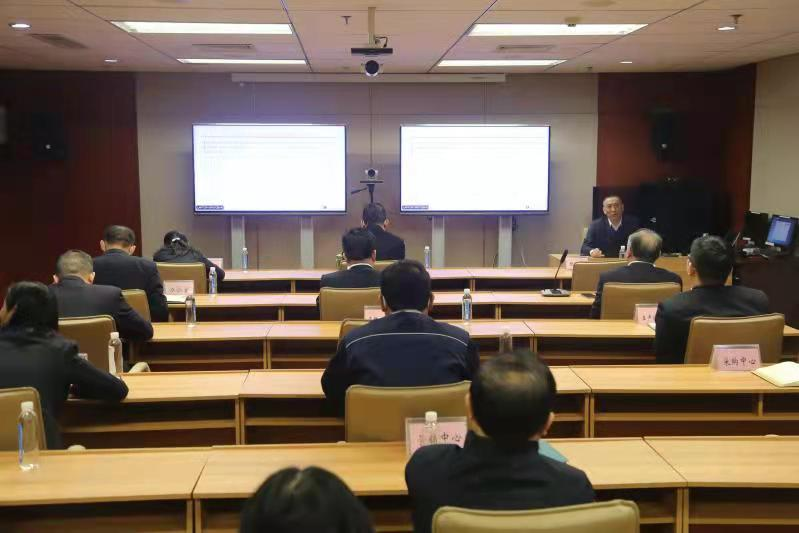
Recently, Li Ruzhi, deputy director, senior partner and first-class lawyer of Zhongcheng Qingtai Law firm, was invited to give a special lecture on "key issues of corporate personality denial system" for Shandong Energy heavy equipment Manufacturing Group Co., Ltd. and its subsidiaries. More than 20 people, including leaders of the group company and heads of various departments, attended the lecture on the spot, and 12 subsidiaries of the group participated online through video. shandong energy heavy equipment manufacturing group company is the world's top 500 enterprises shandong energy group ownership of secondary units. It has carried out extensive cooperation with advanced enterprises in Poland, Sweden, Germany and other countries, and its overall scale and comprehensive strength are in the forefront of China's coal machinery manufacturing industry. Due to the large number of investment enterprises, strong business relevance, enterprise development and risk control needs, lawyer Li Ruzhi is specially invited to carry out this special lecture. Based on the current situation of enterprise operation and management, lawyer Li Ruzhi takes the Company Law and the Enterprise Bankruptcy Law as the starting point, and combines years of experience in large-scale enterprise management and legal services to explain in detail the legal provisions and possible legal risks such as the independence of corporate personality and denial of personality; and combines the relevant cases of agency and typical judicial cases, professional legal analysis of hot issues such as the mixing of personality of related companies, the denial of legal personality of one-person companies, the transfer of benefits between parent and subsidiary companies, and the substantial mixing of large enterprises. For the group enterprise control, management level and structure, corporate governance, investment management, related relations and irregularities and misconduct and other possible legal and compliance risks to propose solutions, on the use of corporate personality denial system, internal legal control, prevention of risks, external legal rights protection, protection of rights and interests put forward ideas. This lecture received enthusiastic responses from the participants and was highly appraised by the participating leaders. It deepened the group's understanding of the company's legal management, risk prevention, and legal rights protection, and has a strong guiding significance for the company to maintain healthy development.
2021-12-08
07
2021-12
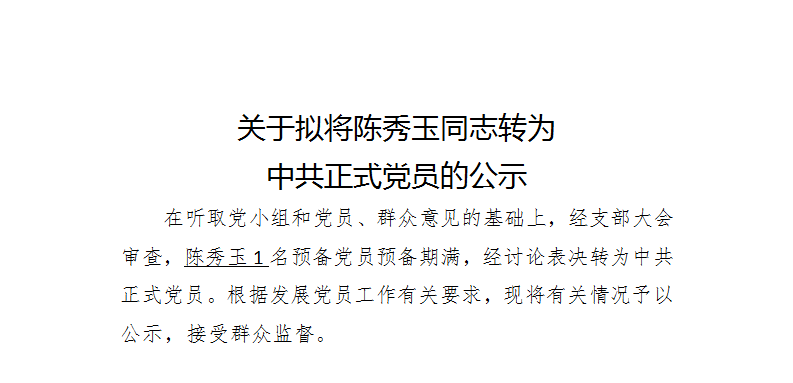
On the basis of listening to the opinions of the party group, party members, and the masses, after review by the branch meeting, Chen Xiuyu's probationary period expired and became a full member of the Communist Party of China after discussion and voting. According to the relevant requirements of the work of recruiting party members, the relevant information is now publicized and subject to the supervision of the masses.
2021-12-07
06
2021-12
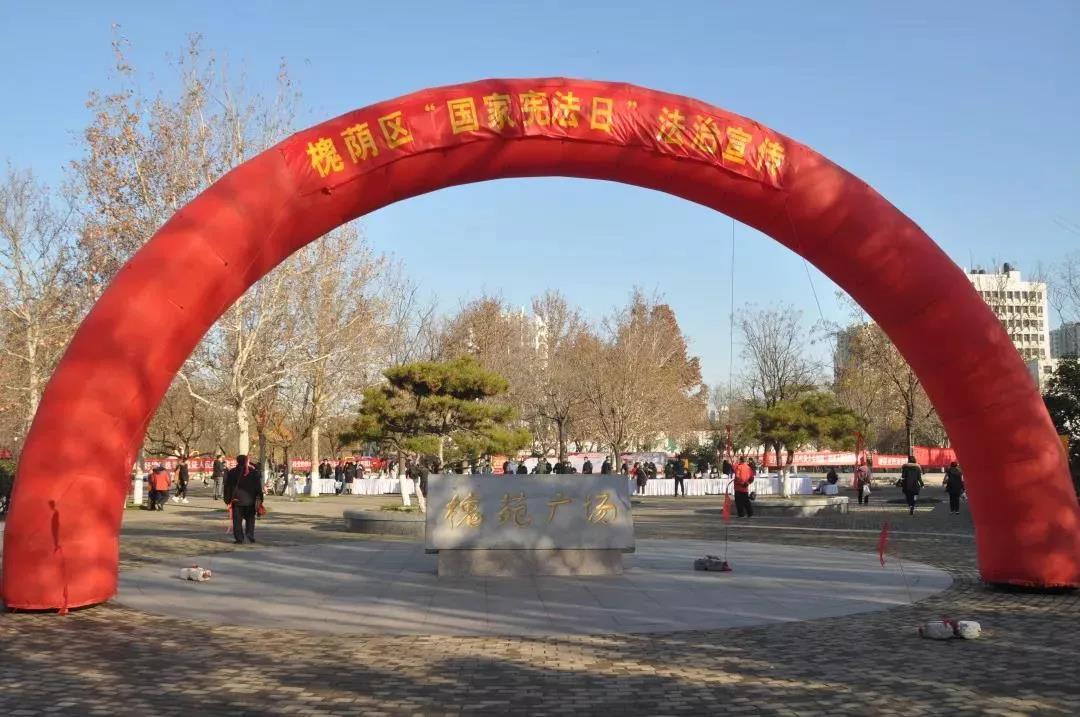
In order to welcome the eighth National Constitution Day, on the morning of December 4, a large-scale law popularization campaign for the 2021 National Constitution Day in Huaiyin District was solemnly held in Huaiyuan Square, Jingshi Road, Jinan City. At the invitation of the Justice Bureau of Huaiyin District, Jinan City, Zhongcheng Qingtai (Jinan Free Trade Zone) Law Firm appointed six young lawyers, Sun Zilu, Tao Jinhong, Jin Zhengchun, Yang Qinyue, Zhang Wenxin and Jiao Xingjia, to form a delegation to participate in the activity. This "12.4" on-site publicity activity was sponsored by the Huaiyin District Party Committee Propaganda Department, the Huaiyin District Party Committee Office, and the Huaiyin District Judicial Bureau. Huaiyin District Court and other political and legal units, Huaiyin District Market Supervision Bureau and other administrative law enforcement units, Civil Affairs Bureau and other government administrative departments, some sub-district offices, as well as Huaiyin District Legal Aid Center, Huaiyin Notary Office and other units. The theme of this activity is "guided by Xi Jinping's thought of rule of law and unswervingly follow the road of socialist rule of law with Chinese characteristics". At the event site, various legal knowledge display boards and free distribution of publicity materials were placed to preach the constitutional knowledge to the people present. At the same time, representatives of young lawyers provided free legal consultation services to the people present. More than 60 copies of various publicity materials were distributed on the spot, and more than 10 people were consulted by the masses. They were highly praised by the leaders at all levels of the organizers and the people present. Since its establishment, Zhongcheng Qingtai (Jinan Free Trade Zone) Law Firm has followed the process of comprehensively governing the country according to law, actively cooperated with the legal publicity and service work of party committees and governments at all levels, and has always been committed to public welfare legal services, which has been widely praised by all sectors of society. In the new era, we will, as always, adhere to the concept of political establishment, management according to law, and strong quality, have the courage to undertake new missions and tasks, carefully build a team of top lawyers, and do every legal work with heart. Contribute to the construction of the socialist rule of law with high-quality and efficient legal services!
2021-12-06
06
2021-12
In order to establish constitutional awareness, maintain constitutional authority, thoroughly study and implement Xi Jinping's thoughts on the rule of law, and accelerate the construction of the rule of law in the new era, on the morning of December 4, Zhao Kaiyong, a member of the "One Village, One Legal Advisor" service group of Zhongcheng Qingtai, and other lawyers came to the streets of Jiejia Village, Zhenglu Town, to carry out the "Promoting the Spirit of the Constitution and Building a Harmonious Society" Constitution. The Zhongcheng Qingtai Lawyer Service Group vigorously promoted the Constitution and the Civil Code and other laws and regulations related to the vital interests of the villagers by hanging banners, distributing publicity materials, and answering legal consultations, and deepened them through vivid and specific cases. The villagers' understanding of laws and regulations. The lawyer service team professionally and patiently answered questions for the masses, solved legal problems encountered in production and life, and demonstrated Zhongcheng Qingtai's good spirit of serving the society and serving the people's livelihood. In addition to the activity, the lawyer group also visited the association of farmers' professional cooperatives led by the first village level party organization in the city, Jinan Defeng modern agricultural farmers' professional cooperative association, to communicate and exchange the industrial development of the association, fully stimulate the vitality of the collective economy, and the legal risk prevention and control in the operation process, And put forward specific legal suggestions for the problems encountered at present. The work of "one village, one legal adviser" has always been one of the key tasks of the Provincial Department of Justice to serve rural revitalization. In order to better serve the village and help rural revitalization, Zhongcheng Qingtai lawyers will make full use of their professional advantages and combine the actual situation of the village to provide more high-quality and efficient legal services for the local government, enterprises, village committees and villagers.
2021-12-06

06
2021-12
In order to further enhance the constitutional awareness of the majority of cadres and employees, and vigorously promote the spirit of the constitution, on December 3, Wei Jinhui, a partner of the head office of Zhongcheng Qingtai Law Firm and Secretary of the Party branch of Dezhou Institute, was invited to the Dezhou Development and Reform Commission to carry out the ''Constitution As the outline, knowing the law and abiding by the law'' special lecture. Lawyer Wei Jinhui focused on the process of promulgation and revision of the Constitution, the structure and content of the Constitution, and the rule of law as the best business environment, and combined with the key tasks of development and reform, this paper discusses how to promote the city's business environment to a higher level from the perspective of the rule of law. The atmosphere at the scene was harmonious and active, and lawyer Wei Jinhui's lecture won warm applause from the participants from time to time, which further enhanced the participants' concept of the Constitution and their consciousness of conscientiously implementing the Constitution, and strengthened their awareness of administration according to law. As a perennial legal adviser to many governments and government agencies in Dezhou City, Lawyer Wei Jinhui actively assumes social responsibilities and continuously provides efficient and high-quality legal services to government agencies at all levels.
2021-12-06

06
2021-12
Viewpoint... A brief analysis of the rights and obligations of the parties in the family trust.
A trust, in short, is a special property management system and legal act in which the principal entrusts his property rights to the trustee based on his trust in the trustee, and the trustee manages and disposes of the property in his own name for the benefit of the beneficiary or for a specific purpose in accordance with the wishes of the principal. Trust should have been used as a specific legal structure to manage and pass on wealth, but in real life, due to the imperfection of the trust structure, a large number of disputes have been brought to court. How to make reasonable use of the trust structure to manage wealth and reduce the generation of disputes, this paper analyzes the rights and obligations of the three parties in the trust structure as the starting point. In a trust, three parties are generally involved, namely, the principal who invests the credit, the trustee who is trusted, and the beneficiary who benefits from the person. 1. the rights and obligations of the principal The settlor shall have the right to know the management, use, disposition and income and expenditure of his trust property, and shall have the right to request explanations from the trustee. At the same time, when the trustee disposes of the trust property in violation of the purpose of the trust, or is grossly negligent in managing the use or disposition of the trust property, the settlor shall have the right to remove the trustee in accordance with the provisions of the trust documents. 2. the rights and obligations of the trustee The trustee has more stringent obligations than the principal. The trustee shall abide by the provisions of the trust documents, handle the trust affairs with due diligence, manage the trust property, and perform the obligations of honesty, credibility, prudence and effective management. At the same time, the trustee shall not use the trust property for his own benefit, except to obtain remuneration in accordance with the provisions of the law or the agreement of the parties, nor shall the trust property under his management be confused with his own inherent property. Trustees play an extremely important role in family trusts. It can be said that the trustee is equivalent to the housekeeper of family wealth, and undertakes the important task of helping to maintain and increase the value of huge wealth. Therefore, the strength in asset management should not be underestimated. Under different legal circumstances, the trustee may have the ownership and disposal rights of the trust property at the same time or separately, and the security, increase or decrease and income of the trust property are directly related to it. Trustees in family trusts are broadly divided into natural persons and trusts. Choosing a natural person as a trustee is often not suitable for the design of a family trust. Because a family trust is a long-term wealth investment, a natural person may be unable to perform the duties of a trustee due to his physical condition, and a natural or accidental death may result in the absence of a trustee. It may also be unable to properly manage trust affairs due to limited ability, and may even cause moral risks of infringing trust property and harming the interests of beneficiaries due to lack of supervision, the occurrence of any of the above-mentioned situations will cause the management service of the family trust to a deadlock and affect the realization of its objectives; on the other hand, the trust company, as a statutory business trustee, is fully integrated into the country's financial supervision and has the advantage of institutional protection. At present, China implements a monopoly system for the operation of trust business, except for trust companies, banking, securities, insurance and other financial industries are not allowed to operate trust business, and other legal entities are not allowed to operate trust business unless they are licensed by law. Legal entities other than trust companies can only act as non-business trustees and cannot provide trustee services as their profit-making activities, which not only affects their overall understanding of trustee responsibilities, but also limits their professional investment in trustee capabilities, and cannot be included in the country's financial supervision like trust companies. 3. the rights and obligations of the beneficiaries The beneficiary is the person who has the right to benefit from the trust in the trust relationship. The rights of the beneficiaries mainly include the following aspects, such as: the various rights enjoyed by the trustee, the transfer and inheritance of the beneficial rights of the trust in accordance with the law, the use of the beneficial rights of the trust to pay off the debts that cannot be repaid at maturity, the trust documents do not provide for the attribution of the trust property, the priority of obtaining the trust property, etc. As far as the obligation of the beneficiary is concerned, it is generally accepted that when the trustee suffers a loss through no fault of his own in the course of handling the trust business, the beneficiary is obliged to accept the trustee's request for fees and deduct them from the trust income. When the legitimate rights and interests of the beneficiaries are infringed, the following remedies can be taken to circumvent the damage. First of all, when the trustee fails to hand over the trust property to the right owner in accordance with the provisions of the trust documents, the right owner has the right to claim the return of the trust property. The trust property here can be movable property, real estate, or marketable securities, debt, intellectual property, and equity. Secondly, after the termination of the trust, when the trust property is occupied by someone other than the trustee, the owner of the right has the right of recourse to that person, and Article 22 of China's Trust Law stipulates that if the trustee disposes of the trust property in violation of the purpose of the trust, and the transferee of the trust property knowingly accepts the property in violation of the purpose of the trust, it shall be returned. In addition, under section 49 of the Trust Act, after the termination of the trust, the beneficiary, if he is the owner of the trust rights, also has the right to claim damages and the right to remove the trustee. As the owner of the trust property, when the transferred trust property is lost due to the trustee's breach of the purpose of the trust, breach of management duties, improper handling of trust affairs, the right owner also has the right to claim compensation within a reasonable range for the portion of the loss caused by the trustee. Rights and obligations of 4. protectors In the general trust structure, in addition to the three basic trust subjects of the principal, trustee and beneficiary, it is often possible to establish a trust role called the protector (protector). In China's Trust Law, the duties of the supervisor focus on the protection of the interests of beneficiaries and the realization of public welfare purposes, while the main purpose of setting up a protector in a family trust is to implement the wishes of the principal and protect the beneficiaries. In general, common protectors' rights include:(1) appointment and removal of trustees;(2) request/consent of trustees to change the jurisdiction of the trust;(3) request/consent to increase or decrease beneficiaries;(4) request/consent to distribution of the trust;(5) request/consent to early termination of the trust; and (6) appointment of successor protectors. The above-mentioned rights are all important conditions for effective supervision of the trustee in the process of trust survival. The above-mentioned rights enjoyed by the trustworthy protector can better ensure that the trust survival and operation meet the wishes of the establishment, and the use and distribution of trust assets are more in line with the maximization of the interests of the beneficiaries, but at the same time, it must be noted that the rights of the protector should not be too large, otherwise it may lead to serious adverse consequences. Therefore, when setting up protectors, in addition to fully considering the general rules of the regular, the protectors, their scope of duties, and selection rules should also be designed in individual cases, such as "adapting measures to local conditions and varying from person to person", so that the "protectors" can be named and real, better perform their duties, and escort the inheritance of family wealth from generation to generation. George Soros once said, "There is no reproach for taking risks, but at the same time remember that you must not put all your eggs in one basket." This article analyzes the rights and obligations of the parties in the family trust, so that more people can understand this "slightly unfamiliar" field, and avoid the situation of losing both sides in the "Lunan Pharmaceutical Family Trust Equity Dispute.
2021-12-06
06
2021-12
Foreword In the past year since the implementation of the "three red lines" policy, the underlying logic of the real estate industry has undergone fundamental changes. Affected by the increase in control rules, coupled with the impact of the epidemic, the narrowing of loan policy and other reasons, some real estate enterprises in the face of financial pressure, commercial housing may be delayed delivery and other conditions, will take a variety of coping strategies, including "housing debt" way to finance or pay off the project and other debts. By studying the relevant judgments of "house-to-house debt" in recent years, the author found that the court has no uniform rules for determining the legal nature and validity of the "house-to-house debt" agreement, and the appeal rate of cases is high and there are often subversive judgments between different trial-level courts. Therefore, real estate companies need to further clarify its legal effect when signing the "house-to-debt" agreement, in order to better play the role of the "house-to-debt" agreement as a debt alternative performance plan or financing method, and help real estate companies solve the root cause. problem. problem focus The "house-to-house" agreement belongs to the category of debt-to-property, debt-to-property is an agreement between the parties on the debt and debt relationship that has been or will be established, when the agreed conditions are achieved or the agreed period expires, the creditor receives other kinds of payment to replace the original payment, and then the original debt and debt relationship is eliminated. This paper will explore the legal effect of the "house-to-house debt" agreement signed between the housing enterprise and other creditors such as the buyer or construction unit in different circumstances through case and legal analysis. Case Study A house-to-house debt-to-debt agreement signed after the expiration of the (I)'s debt performance period. 1. Case No.:(2019) Yuemin Zhong No. 2730 Case introduction: Guo Shengcui once bought room 3-Cx3 in Tao X residential area developed by Yihai Company at the price of 4.7 million yuan. For some reason, both parties reached a "check-out agreement" through negotiation. Both parties agreed to terminate the "commercial housing sales contract". Yihai Company returned Guo Shengcui's purchase price of 4.7 million yuan and compensated Guo Shengcui for the loss of 500000 yuan. Subsequently, both parties signed a loan contract, and the above-mentioned check-out payment of 5.2 million yuan was converted into a loan. Guo Shengcui lent RMB 1.8 million yuan to Yihai Company, with a total loan amount of RMB 7 million yuan for a period of one year until July 4, 2013. On October 1, 2013 after the expiration of the performance period, Guo Shengcui and Yihai Company signed two "Guangdong Province Commercial Housing Sales Contracts", agreeing that Guo Shengcui would purchase houses 5-Ax7 and 5-Bx7 in Tao X Community of Yihai Company for 3 million yuan and 4 million yuan respectively. Yihai Company should deliver the above two commercial houses to Guo Shengcui for use before December 31, 2014, and went through the real estate presale registration with the government department on May 15, 2014, however, Yihai Company has never been able to complete the delivery of the house, so Guo Shengcui filed a lawsuit with the court to confirm that the two "Guangdong Province Commercial Housing Sales Contracts" signed with Yihai Company were legal and valid, and ordered Yihai Company to continue to perform the commercial housing sales contract. The court held that there was a loan contract relationship between the plaintiff Guo Shengcui and Yihai Company. After the expiration of the loan period, the "Commercial Housing Sales Contract" was signed through negotiation, and the original loan principal of 7 million yuan was paid off as the purchase price of the commercial housing. After the two sides to the real estate management department for the presale registration procedures. With reference to the trial guidelines of the Supreme People's Court guiding case No. 72, the parties in this case transformed the loan contract relationship into a commercial housing sales contract relationship, and converted the principal and interest of the loan into the paid purchase price. The basic conditions of the commercial housing, the total price of the commercial housing, unit price, payment method and time, delivery conditions and date, etc. stipulated in the signed "Commercial Housing Sales Contract" have the necessary terms of the commercial housing sales contract. The "Commercial Housing Sales Contract" is the true intention of both parties. The content does not violate the mandatory provisions of laws and administrative regulations and should be deemed legal and effective. Therefore, the basic legal relationship between the parties in this case is the contract relationship for the sale of commercial housing. Yihai Company claims that the basic legal relationship in this case is the loan contract relationship, which is inconsistent with the facts. And the "loan contract" and "commercial housing sales contract" on the two sets of real estate mortgage guarantee, does not conform to the "the People's Republic of China Guarantee Law" on the "liquid contract prohibition" situation. Therefore, Yihai's above claims lack legal basis. The basic legal relationship between the plaintiff Guo Shengcui and Yihai Company is the relationship between the sale and purchase of commercial housing, which is based on sufficient evidence and is not improper. The Court supports the continued performance of the contract for the sale and purchase of commercial housing. 2. Case No.:(2021) Lu 02 Min Zhong No. 3021 The court held that this case involved three debt-for-property agreements reached after the expiration of the performance period, namely, the "Project Payment Agreement" signed between Boyang Real Estate Company and CCCC No. 1 Aviation Bureau No. 2 Company, the "Agreement" signed between CCCC No. 1 Aviation Bureau No. 2 Company Jian'an Branch and Zhonglian Concrete Company, and the "Housing Payment Agreement" signed between Zhonglian Concrete Company and Jiao Mingzhi. The three debt-for-property agreements were agreed by the parties, and the meaning was true. The content of the agreement did not violate the mandatory provisions of laws and administrative regulations, and was established and valid in accordance with the law. An agreement reached by the parties after the expiration of the debt settlement period may constitute a change of debt, I .e. the creation of a new debt and the elimination of the old debt, or it may be a new debt settlement, I .e. the creation of a new debt, which coexists with the old debt. Based on the concept of protecting claims, the change of debt generally requires the parties' clear agreement to eliminate the old debt, otherwise, the nature of the debt settlement agreement reached by the parties after the expiration of the debt settlement period should generally be the new debt settlement. In other words, after the expiration of the debt settlement period, the creditor and the debtor signed a debt-to-debt agreement, if not agreed to eliminate the original money payment debt, should be found to be the parties to add a separate way of performance of the debt, rather than the original money payment of the debt. In the new debt settlement, the new debt as a method of performance of the old debt, the creditor in principle should first request the performance of the new debt. If the debtor fails to perform the new debt, the creditor may either continue to perform and default on the basis of the new debt claim, or resume the performance of the old debt. In this case, although Boyang Real Estate Company signed the "Paris No.1 Subscription Agreement" with Jiao Mingzhi on the house involved in the case and delivered the house involved to Jiao Mingzhi, the law of debt repayment in property was taken as the promise contract. "Delivery of property" does not mean "transfer of ownership". As the house involved in the case is real estate, Boyang Real Estate Company only delivered the house involved to Jiao Mingzhi is not enough to realize the purpose of settlement, this purpose can only be achieved after the transfer of the house involved is registered in the name of Jiao Mingzhi. By the same token, Jiao Mingzhi is fundamentally different from the expectation right of property rights arising from the purchase and sale based on the agreement of debt in rem, and his enjoyment as a creditor is still essentially a debt of money and should not take precedence over another debt of money, so the trial court ruled in accordance with the law to reject his objection to enforcement. At present, the new debt arising from the debt-for-property agreement cannot be implemented due to the fact that Boyang Real Estate Company was enforced by the original court to enforce the house involved. Jiao Mingzhi is also unable to realize the purpose of the debt-for-property agreement. He requests to cancel the "debt-for-property agreement" signed with Zhonglian Concrete Company, which contains the payment for xx households in Unit xx, Building xx, Paris 1, Chengyang District, Qingdao City. The reason is justified and should be supported. Based on the relativity of the contract and the principle of settlement of the new debt, Jiao Mingzhi has the right to resume the performance of the old debt, which requires Zhonglian Concrete Company to return 1443978.9 yuan to support it, but it needs to be clear that the nature of the money is not the purchase of the house but the material money. The (II) debt settlement agreement signed before the expiration of the debt performance period. Case No.:(2021) Liao 01 min zong No. 2393 The court held that article 45 of the minutes of the national court's civil and commercial trial work conference stipulates that if the parties reach an agreement on debt relief before the expiration of the debt performance period, the debt relief has not yet been delivered to the creditor, and the creditor requests the debtor to deliver it, the people's court shall explain to it that it shall bring a lawsuit according to the original creditor's right and debt relationship. If the parties still refuse to change their claims after the interpretation, they shall reject their claims, but this shall not affect their filing of separate proceedings based on the original creditor's rights and debts. Liaoning construction group co., ltd. admitted in the second instance that as of August 3, 2013, Liaoning fulespu real estate development co., ltd. had not settled with Liaoning fulespu real estate development co., ltd. and the amount of project funds still owed by Liaoning fulespu real estate development co., ltd. was not clear. at this time, the debt performance period for Liaoning fulespu real estate development co., ltd. to pay Liaoning construction group co, therefore, there is only a credit and debt relationship between Liaoning Construction Engineering Group Co., Ltd. and Liaoning Fulespu Real Estate Development Co., Ltd., and Liaoning Construction Engineering Group Co., Ltd. has no right to require Liaoning Fulespu Real Estate Development Co., Ltd. to deliver the house involved in the case. The court of first instance confirmed that Liaoning Construction Engineering Group Co., Ltd. does not have ownership of the house involved in the case. (III) the nature of the mortgage agreement is a non-contract or a practical contract. 1. Practical Contract-(2021) Liao 01 Min Zhong No. 12130 The court held that: to the housing debt contract as a practical contract, so the housing debt must be completed to complete the housing change registration procedures. Thus, the original claim between the creditor and the debtor is not extinguished by the agreement to settle the debt with the house, and in the debt with the house only the property is registered and the debtor is extinguished. Only the consent of the house to pay the debt, but not the transfer of property rights to the debt-relief house, the original claim has not been eliminated, the purpose of the debt can not be achieved. After verification by our hospital, the two houses involved in the case are still registered in the name of the defendant Xinyijiang Company (construction unit). Although the plaintiff Li Dengfu signed an offset agreement with the partner of the defendant Metallurgical Company (construction unit) and issued a receipt, the plaintiff did not actually possess or transfer the house involved in the case to the plaintiff's name, so the creditor's rights enjoyed by the plaintiff have not been eliminated, the court does not support the defendant's metallurgical company's defense of 6074475 yuan in debt with housing. The court of second instance on the issue of whether the agreement to settle the debt with the house has actually been fulfilled. The appellant's 12th Metallurgical Company believed that the two houses had been priced at 6074475 yuan to cover the project price. However, the two houses involved in the case have now been sold to outsiders and occupied by outsiders. Li Dengfu has not actually received or controlled the houses, and the appellant has not provided evidence to prove that Li Dengfu had received the houses involved and occupied them. The appellant, as the party who used the house to offset the debt, has the obligation to track, understand and control the situation of the house to offset the top of the project, and ensure the implementation of the agreement on the top of the house. The current house has not been registered in Li Dengfu's name, nor has it actually delivered to Li Dengfu. The conditions for Li Dengfu to obtain the ownership of the house are not available now, so the agreement on the actual implementation, the appellant's 12th Metallurgical Company claimed that the two houses had been priced at 6074475 yuan to cover the project price, which had no factual basis and was not supported by the court. 2. Nuocheng Sex Contract-(2021) Yu 10 Min Zhong No. 787 The court held that after Wang Gaofeng, Wang Xiaoyan, Hao Shuai Bing and Volkswagen Company reached the "Liquidation Agreement for the Withdrawing of Fairview Jiayuan Commercial Building Project", Hao Shuai Bing failed to pay part of the project payment obligations as agreed. However, after negotiation, Hao Shuai Bing, Wang Gaofeng and Wang Xiaoyan reached a separate agreement to settle debts with houses. Wang Xiaoyan has signed a commercial housing sales contract with Kaixiang Company, the seller of real estate and parking space, and paid a housing maintenance fund. The agreement on the settlement of the house debt is a non-contract, except for the express agreement of the parties, the agreement on the settlement of the house debt signed by the parties after the expiration of the settlement period of the project does not take the creditor's realistic receipt of the debt, or the acquisition of property rights such as the ownership and use of the debt, as an element of establishment or entry into force. The contract is valid as long as the parties' intentions are true and the contents of the contract do not violate the mandatory provisions of laws and administrative regulations. Therefore, Hao Shuaibing and Wang Gaofeng and Wang Xiaoyan reached a valid agreement to repay debts with houses, and Wang Xiaoyan signed a commercial housing sales contract with Kaixiang Company and paid a residential maintenance fund. The purpose of the contract can basically be realized. Therefore, it is not improper for the court of first instance not to support 1133952 yuan in Wang Gaofeng and Wang Xiaoyan's litigation request. On the question of whether Hao Shuaibing should support the overdue payment liquidated damages, although the Liquidation Agreement for the Project of Jinxiu Jiayuan Commercial Building stipulates the overdue payment liquidated damages, Wang Gaofeng, Wang Xiaoyan and Hao Shuaibing later reached an agreement on the payment of unpaid project funds. The agreement on the payment of overdue payment did not clearly stipulate whether the liquidated damages agreed in the previous agreement still need to be paid. Therefore, the court of first instance determined that both parties had formed new debts, it is not improper not to support the late payment liquidated damages agreed upon in the performance of the new debt. For the remaining amount of 288648 yuan because Hao Shuaibing did not pay on time, so he should bear the liability for breach of contract, the court of first instance to the National Interbank Lending Center announced the same period four times the one-year loan market quotation rate as the calculation standard. legal analysis The effect of the above-mentioned illustration divides the court's rules for determining the validity of a home-to-home debt agreement in accordance with the conclusion of a home-to-home debt agreement before/after the expiration of the period of performance of the debt. The internal logic is that if the debtor is eager to repay the debt before the expiration of the debt performance period, there may be a certain cognitive deviation between the amount of house price and the actual amount of debt. Therefore, the court will consider the legal effect of the agreement in combination with laws and regulations and the actual situation when determining the agreement signed before the expiration of the performance period. After the expiration of the period of performance of the debt, the conclusion of the debt-to-debt agreement is the agreement reached by both parties in the case of the value of the debt and the amount of the debt to be determined, as long as there is no malicious harm to the interests of third parties and other reasons, the court will support the delivery of the debt. The following is a description of the common principles of "house-to-house debt" treatment under existing laws: A house-to-house debt-to-debt agreement signed after the expiration of the (I)'s debt performance period. Article 410 of the Civil Code stipulates the conditions, methods and procedures for the realization of the mortgage right, that is, if the debtor fails to perform the debt due or the realization of the mortgage right agreed by the parties, the mortgagee may agree with the mortgagor to pay the mortgaged property at a discount or at the price of the proceeds from the auction or sale of the mortgaged property. If the agreement harms the interests of other creditors, the other creditors may request the people's court to revoke the agreement. If the mortgagee and the mortgagor fail to reach an agreement on the manner in which the mortgage is realized, the mortgagee may request the people's court to auction or sell the mortgaged property. In addition, the "Minutes of the National Court Civil and Commercial Trial Work Conference" (Law [2019] No. 254, hereinafter referred to as the "Ninth People's Conference Minutes") 44 stipulates: "The parties reach an agreement to offset the debt with property after the expiration of the debt performance period. If the creditor has not yet delivered to the creditor, and the creditor requests the debtor to deliver it, the people's court should focus on examining whether the debt-in-property agreement maliciously damages the legitimate rights of the third party. After examination, if the above circumstances do not exist and there are no other invalid reasons, the people's court shall support it in accordance with the law." After the expiration of the debt term, the two parties carried out reconciliation, liquidation, and reached an agreement on the transformation of the loan contract relationship into a housing sales contract relationship, the parties signed a housing debt agreement to eliminate the original debt and debt relationship, the establishment of a new sales contract relationship,
2021-12-06

05
2021-12
Foreword At present, most of the cases of franchise contract disputes contacted by judicial practice are caused by dishonest franchise enterprises. In the agency activities, the author participated in several cases of franchise contract disputes, for franchising and franchise contract disputes, the author based on practical experience and reading related articles and books, organized as follows, with a view to enlightening readers. Text The Historical Development of 1. Franchising 1. On November 14, 1997, the former Ministry of Domestic Trade of China issued the Measures for the Administration of Commercial Franchising (for Trial Implementation), which stipulates that franchising refers to the franchisee's granting of his own trademarks (including service trademarks), trade names, products, patents, proprietary technologies and business models to the franchisee in the form of contracts, and the franchisee engages in business activities under the unified business model of the franchisor in accordance with the provisions of the contract, and pay the corresponding fees to the franchisor. 2. On December 31, 2004, the Ministry of Commerce issued the Measures for the Administration of Commercial Franchising, which was formally implemented on February 1, 2005. The Measures stipulate that commercial franchising means that through signing a contract, the franchisor will have the right to grant trademarks, trade names, business models and other business resources to others for use by the franchisee. The franchisee shall engage in business activities under a unified business system in accordance with the contract and pay franchise fees to the franchisee. 3. On January 31, 2007, the 167th executive meeting of the State Council passed the Regulations on the Administration of Commercial Franchising. Franchising refers to enterprises (hereinafter referred to as franchisees) that have registered trademarks, enterprise logos, patents, patents and other operating resources. The franchisees license their operating resources to other operators (hereinafter referred to as franchisees) in the form of contracts, and the franchisees operate under a unified operating model in accordance with the contract, and to the franchisor to pay franchise fees for business activities. In the same year, the Ministry of Commerce promulgated the Measures for the Administration of Information Disclosure of Commercial Franchises and the Measures for the Administration of the Filing of Commercial Franchises. 4. On November 7, 2011, the Ministry of Commerce revised the Administrative Measures for the Filing of Commercial Franchises. On January 18, 2012, the Ministry of Commerce revised the Measures for the Administration of Information Disclosure of Commercial Franchises. Characteristics of 2. franchising The basic characteristics of franchising are: (1) the franchisor owns the business resources such as registered trademarks, enterprise logos and patents; (II) the franchisee to use the franchisor's business resources under a specific business model according to the authorization of the franchisor; (III) the franchisee to pay the franchisor's franchise fees in accordance with the agreement. (I) academic perspective It is generally believed that franchising has five essential characteristics: (1) Franchising is a business model that uses one's own know-how to combine with the capital of others to expand the scale of operations. Thus, franchising is an expansion of technology and brand value, not capital. (2) Franchising is an organization in which the right of management controls ownership, in which the franchisee invests in the franchise and has the right to own and manage the store, but does not have the right to make management decisions. (3) Franchising is a win-win business model. The franchise relationship can only be effectively maintained if the franchisor is allowed to develop more efficiently than the direct business, and if the franchisee is allowed to gain more benefits than the business alone. (4) Franchising is a special kind of transaction. A special commodity is traded in a franchise, which includes a series of tangible or intangible commodities such as products, patents, business models, etc. Unlike a general transaction, the franchisor and the franchisee sign a franchise contract, which means the beginning of a longer-term transaction between the two parties. During the term of the contract, the franchisor and the franchisee shall maintain close and continuous mutual support and cooperation. (5) Franchising is an intelligent form of business organization. Franchising enables the franchisee to make the most of the combination, the use of their own advantages, and maximize the absorption of a wide range of social resources, the franchisee to reduce the risk of entrepreneurship and time, capital and other entrepreneurial costs. (Cite: See Hu Xiaosong, ed., Introduction to Franchising, Renmin University of China Press, 2011, p. 17. Chen Axing, Wu Yunliang, ed., Franchising, China Business Press, 2006, p. 6.) Views of (II) practitioners In practice, it has been argued that, starting from the definition of the Regulations, franchising consists of three basic elements: One is a resource, that is, the franchisor must have a registered trademark, corporate logo, patents, know-how and other operating resources; The second is a way, that is, a contractual relationship between the franchisor and the franchisee; the third is a model in which the franchisee operates under a unified business model. This unified model is reflected in all aspects, ranging from management, promotion, quality control, etc. to the decoration design of the store and even the setting of signs. In general, this model has the characteristics of unification, standardization and standardization. The core of franchising is the paid output of intangible assets. (Cited: Tu Zhi, Editor-in-Chief, Li Guangxing, and Yang Fan, Deputy Editor-in-Chief: "Application of Commercial Franchising Law", Kyushu Publishing House, 2010, p. 2.) The difference between (III) franchise and other business models. 1, the difference between franchising and chain management. Compared with franchising, chain management is a superior concept. The scope of chain management is far greater than franchising. The definition of chain operation by China Chain Management Association [35] is: "generally refers to a number of stores operating similar goods or services, combined into a consortium in a certain form, specialized division of labor under the overall planning, and centralized management is implemented on the basis of division of labor to simplify complex business activities in order to obtain economies of scale". According to the Opinions on the Operation and Management of Chain Stores issued by the former Ministry of Internal Trade on March 27, 1997, chain stores refer to a number of stores that operate similar commodities and use a unified trade name, and under the management of the same headquarters, adopt unified procurement or grant concessions, etc., to achieve economies of scale. Article 4 of the opinion stipulates that chain stores include the following three forms:(1) direct chain stores. The stores of the chain are all wholly owned or controlled by the headquarters and are operated under the direct leadership of the headquarters;(2) voluntary chain. The stores of the chain store are all independent legal persons, the ownership relationship of their respective assets remains unchanged, and they are jointly operated under the guidance of the headquarters;(3) franchise chain (or franchise chain). The stores of the chain store sign a contract with the headquarters to obtain the right to use the trademark, trade name, business technology and sales headquarters to develop goods, and the right to operate is concentrated in the headquarters. 2, the difference between franchising and direct sales. (IV) the "Regulations on the Administration of Direct Selling" promulgated by the State Council in 2005 stipulates: "The direct selling referred to in these regulations refers to the distribution method in which direct selling companies recruit direct sellers, and the direct sellers directly sell products to end consumers outside the fixed business premises". First, the legal relationship is different. Second, direct selling companies are different from franchisors. Third, direct sellers and franchisees are different. Fourth, the purpose of legislation is different. Fifth, the field of application is different. Direct selling is mainly applicable to the retail sector. Sixth, responsibility is different. (Source: Beijing Higher People's Court, Intellectual Property Division, "Interpretation of the Principles of Commercial Franchise Contracts and Trial Practice" Section 1) 3. franchise contract dispute A franchise contract is a continuous contract, and if the cooperation between the franchisor and the franchisee can develop smoothly as expected at the time of the original contract, then each franchise will become a successful franchise system. However, in reality, there are often dishonest franchisors and franchisees, and it is inevitable that the market will change and deviate from the original franchise forecast, and there will be matters that were not expected at the time of the establishment of cooperation and no agreement can be reached. Therefore, the root cause of franchise disputes is that the franchisor and the franchisee are different subjects of interest, and franchise contract disputes will inevitably occur based on conflicts of interest. Lawyer Case: The author helped the above-mentioned licensees to recover the franchise fee and interest in the franchise contract dispute case between Wang Moumou, Liu Moumou, Li Moumou, Lu Moumou and other 6 people and Bright Eyes Biological Company. The six parties signed the "Joining Agency Agreement (Prefecture-level Agency)" with Mingmou Company at different times. The contract respectively stipulated the joining method, expenses, agency period, rights and obligations, etc. The attached table after the contract was the "Equipment Configuration List of Mingmou Lifetime Vision Rehabilitation Project". Several parties remitted money to the franchisor company and its legal person respectively. The latter parties want to terminate the contract with Bright Eye and demand a refund of the franchise fee. The lawyer carefully consulted the "franchise agency agreement" and found the relevant industry norms and effectiveness. Finally, according to the documents issued by the general office of the National Health Commission and other six departments, it was determined that the franchisor's franchise behavior was an act of deceiving consumers and seeking illegitimate interests. It used the "health care cream" without quality inspection to carry out vision rehabilitation physiotherapy, and exaggerated and fabricated the treatment effect, it has disrupted the regulatory order of the myopia treatment and health care products market. After the court heard the judgment, it was found that the franchise agreement violated the public order and good customs of the society and harmed the public interest of the society. The franchise agency agreement was found to be invalid, and the franchise fees of several parties were returned, which achieved good results. Common Types of 4. Franchise Contract Disputes and the Concept of Court Judgment Common Types of (I) Franchise Contract Disputes 1, confirm the franchise contract invalid dispute. 2, the cancellation of the franchise contract dispute. 3, the franchise contract to terminate the dispute. 4, due to the performance of the franchise contract in breach of contract, the request to terminate the contract or bear the liability for breach of contract. The Judgment Idea of (II) Franchise Contract Disputes First, respect for contractual autonomy and appropriate protection of relatively vulnerable franchisees. Second, the reasonable allocation of the burden of proof, reasonable interpretation. When the franchisee proves that the franchisor constitutes fraud, false propaganda and fails to fulfill the obligation of information disclosure, taking into account the actual ability of the franchisee to prove, the burden of proof is reasonably allocated, and the litigation relationship between the two parties is balanced by the transfer of the burden of proof. Many franchisees sue is not clear whether the contract is invalid or cancel the contract or terminate the contract, at this time the judge needs to exercise the right of interpretation in a timely manner, according to the basic case to guide the parties to adjust the claim. For the legal consequences of the contract being confirmed invalid, revoked or terminated, the judge should also explain in time that, with the consent of the parties, it can be dealt with together in one case to reduce the burden of the parties. Third, deal with related cases, and strive to achieve the unity of legal and social effects. (Cited: Beijing Higher People's Court, Intellectual Property Division, "Interpretation of the Principles of Commercial Franchise Contracts and Trial Practice") Relevant laws and regulations 1. Regulations on the Administration of Commercial Franchising, issued by the State Council, 2007 "Competing laws and regulations: Trademark Law of the People's Republic of China (2019 Revision) the People's Republic of China Copyright Law Anti-Unfair Competition Law of the People's Republic of China (2019 Revision) 」 2. Measures for the Administration of Information Disclosure of Commercial Franchises, Ministry of Commerce, 2012 3. Guiding Opinions of Beijing Higher People's Court on Several Issues Concerning the Application of Laws in Hearing Disputes over Commercial Franchise Contracts, issued by: Beijing Higher People's Court, 2011; "The original guiding opinions and management regulations have not been revised, and will still refer to the provisions of the original the People's Republic of China Contract Law, the General Principles of the People's Republic of China Civil Law and other laws and regulations. For example, Article 13," If a party to a franchise contract fails to perform the contract as agreed, making it difficult to achieve the fundamental purpose of the contract, the other party may terminate the contract in accordance with Articles 94 and 96 of the the People's Republic of China Contract Law 」
2021-12-05

Zhongcheng Qingtai Jinan Region
Address: Floor 55-57, Jinan China Resources Center, 11111 Jingshi Road, Lixia District, Jinan City, Shandong Province
