


16
2021-12
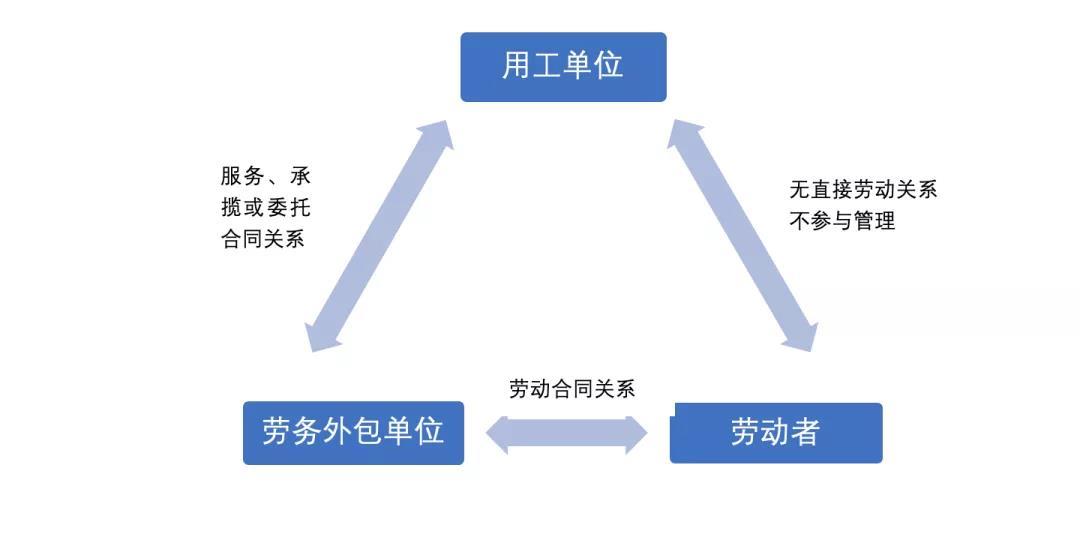
In practice, most of the proposed IPO enterprises have more or less labor problems, and with more and more enterprises adopting the labor outsourcing model, the CSRC is paying more and more attention to the labor outsourcing problem. This paper summarizes the difference between labor outsourcing and labor dispatch, and analyzes the focus of the audit of labor outsourcing and labor dispatch by the regulatory authorities in the IPO, with a view to learning and discussing with you. 1. what is labor outsourcing? Labor outsourcing refers to the business outsourcing mode in which an enterprise contracts part of its business or function to the relevant labor service organization, and the labor service organization arranges the labor service personnel to complete the corresponding business or work according to the specific needs of the enterprise. Under the labor outsourcing mode, there is no actual employment relationship between the enterprise and the worker, so there is no need to bear the obligations of the employer. To some extent, labor outsourcing can save the labor cost of the enterprise and reconfigure the various resources of the enterprise according to the business characteristics of the enterprise. Its basic legal relationship is shown in the following figure: In the June 2020 revision of the CSRC's "Questions and Answers to Certain Questions on Initial Business", question 47 answers the situation related to the outsourcing of labor services of the initial enterprise: "Question 47, the outsourcing of labor services of the initial enterprise, what aspects should the intermediary focus on? A: Some of the first-time enterprises have handed over more labor activities to specialized labor outsourcing companies for implementation. Intermediary agencies should pay full attention to the following aspects:(1) the legal compliance of the labor service companies, such as whether they are independent entities, whether they have the necessary professional qualifications, whether the business implementation and personnel management comply with relevant laws and regulations, the background of the business transactions between the issuer and the issuer and whether there are major risks;(2) whether the labor service company specializes or mainly serves the issuer, if there is a situation that mainly serves the issuer, attention should be paid to its reasonableness and necessity, and whether the identification and disclosure of related relationships are true, accurate and complete. Intermediary agencies shall check such situations according to the relevant requirements of related parties from the perspective of substance over form, and especially consider the impact of their operating results on the issuer's financial data and whether the issuer meets the issuance conditions;(3) The composition and changes of the labor service company, the main contents of the labor service outsourcing contract, whether the changes in the number of labor services and expenses match the issuer's operating performance, whether the pricing of labor costs is fair and whether there is an inter-period accounting situation. Intermediaries should make full arguments on the above aspects and express clear opinions." In recent years, when the CSRC approves the listing of enterprises, many enterprises are required to disclose or explain the outsourcing of labor services in their feedback. We are concerned that the main businesses of these enterprises that are required to give feedback on labor outsourcing are different, and the industries are distributed in the fields of construction, building materials and chemical industry, computer, logistics and transportation. In general, the outsourcing is mostly engineering construction work, and it is non-critical and auxiliary business. The primary concern of the CSRC is whether the intermediary agencies disclose the labor outsourcing truthfully, especially when the labor outsourcing costs account for a relatively high proportion or pose a significant risk to the issuer's business, the intermediary agencies are required to disclose the relevant information in detail according to the principle of "substance is more important than form", not only the specific situation of the labor outsourcing business and the reasons for outsourcing, the specific circumstances of the labor outsourcing unit should also be disclosed. 2. what is labor dispatch? According to the provisions of the the People's Republic of China Labor Contract Law (2012 Amendment) and the Interim Provisions on Labor Dispatch, labor dispatch refers to the labor dispatch unit with the qualification of labor dispatch business to conclude a labor contract with the laborer, and the labor dispatch unit then signs a labor dispatch agreement with the employing unit that needs the laborer. Finally, the labor dispatch unit sends the laborer to the employing unit to work. As a flexible way of employment, labor dispatch is usually used by enterprises to solve the problem of labor shortage, which can effectively save the labor cost of labor enterprises, especially in some labor-intensive enterprises. Its basic legal relationship is shown in the following figure: The Interim Provisions on Labor Dispatch stipulate that labor dispatch can only be implemented in temporary, auxiliary or alternative jobs: temporary jobs refer to jobs that last no more than 6 months; auxiliary jobs refer to non-main business jobs that provide services for main business jobs; alternative jobs refer to a certain period of time when the workers of the employing unit are unable to work due to off-duty study, vacation and other reasons, jobs that can be replaced by other workers. And the employing unit shall strictly control the number of dispatched workers, and the number of dispatched workers shall not exceed 10% of the total number of workers. In the practice of enterprise IPO, the employment method of labor dispatch is more common in labor-intensive enterprises. At the same time, in order to prevent the issuer from failing to sign labor dispatch contracts in accordance with the law and damage the legitimate rights and interests of dispatched employees during the reporting period, in the IPO declaration process, labor dispatch is often one of the issues that regulators focus on. 3. the difference between the two and audit points From the foregoing analysis, it follows that labor dispatch is a moderate separation of employment and use, and that labor outsourcing does not involve a separation of employment and use. That is, under the employment form of labor dispatch, the employing unit transfers the right to establish labor relations, but does not transfer the right to manage things and people. The labor of workers is completed under the supervision and management of the employing unit and is managed by the employing unit. In addition, in the actual operation process, we are concerned that the regulatory authorities in the filing process of the proposed IPO enterprises on the two audit points have the following differences: 1. The common audit concerns of regulatory agencies on labor outsourcing in the IPO declaration process are as follows:(1) whether the information disclosure is sufficient;(2) Independent judgment: comprehensively judge whether the enterprise has significant dependence on labor outsourcing suppliers and analyze the impact on the independence of the issuer;(3) Internal control: pay attention to the internal control and risk control measures related to the labor outsourcing link of the issuer;(4) The determination of labor outsourcing and labor dispatch: the situation of "false outsourcing, real dispatch" is more concerned. 2. The common audit concerns of regulatory agencies on labor dispatch issues during the IPO declaration process are as follows:(1) Whether the labor dispatch unit has an associated relationship with the issuer, and whether the related transactions are legal and compliant;(2) Whether all links of labor dispatch comply with The provisions of laws and regulations, whether there are circumstances that damage the legitimate rights and interests of workers;(3) Whether there are major violations or the risk of being punished. In summary, labor and employment compliance is an important part of corporate compliance operations and a basic requirement for companies to go public. Therefore, for the employment of enterprises, we should pay attention to the provisions of relevant laws and regulations, implement and arrange the corresponding production and operation plans in accordance with the relevant provisions of laws and regulations on labor dispatch and labor outsourcing, and not only ensure that the employment mode, number of people, posts, etc. meet the restrictions of relevant laws and regulations, but also examine the qualifications of the other party, it is not allowed to deliberately evade the obligations of the employer by means of labor dispatch or labor outsourcing. As for the intermediary agencies, they should judge the actual employment nature of the enterprise from the principle of "substance is more important than form", rather than simply judging according to the contract form signed by the enterprise. For the situation that the essence belongs to labor dispatch and there are violations, it should be regulated in time to avoid obstacles in the process of listing audit and affect the progress of listing.
2021-12-16
16
2021-12
On the morning of December 15, 2021, Zhang Hao, a lawyer from the Financial Investment Department of Zhongcheng Qingtai (Jinan) Law Firm, carried out the "Civil Code" for the Shandong Branch of China Three Gorges New Energy (Group) Co., Ltd. "Contract Signing and Risk Prevention" special lecture, related project companies participated in this lecture through a remote conference. As the main body of the strategic implementation of the new energy business of the Three Gorges Group, China Three Gorges New Energy (Group) Co., Ltd. carries the historical mission of developing new energy. Its legal compliance business has a strong professionalism and complexity, in order to help the company popularize The basic knowledge of the contract compilation of the Civil Code, prevent the risk of contract signing, and sort out the contract performance management process, lawyer Zhang Hao was invited to give this lecture. According to the existing litigation risks of Three Gorges New Energy Company, lawyer Zhang Hao took the case of Three Gorges New Energy Company as the starting point, and took the practical operation as the guide, and shared the legal knowledge of the change interpretation, contract design and risk prevention, contract signing and performance rules of the Civil Code. This lecture is rich in content, has a strong practical significance, and won the unanimous praise of the participants.
2021-12-16

16
2021-12
The Sixth Plenary Session of the 19th Central Committee of the Communist Party of China is a very important meeting held at the important historical moment of the centenary of the party and at the important historical juncture when the "two centenary" goals meet. The plenary session comprehensively summarized the party's major achievements and historical experience in a century of struggle, and has great practical significance and great practical significance for promoting the whole party to further unify its thinking, will, and action, and unite and lead the people of all ethnic groups across the country to win new great victories in socialism with Chinese characteristics in the new era. Far-reaching historical significance. In order to effectively do a good job in "learning the spirit of the sixth plenary session and practicing the original mission" and to educate and guide party members and lawyers to practice their internal skills, take strong responsibilities and work hard to promote development, on December 15, the party branch of Shandong zhongcheng Qingtai (Dezhou) law firm held a December theme party day activity in the party conference room on the 23rd floor. party branch secretary Wei jinhui and some party members attended the meeting, and party branch deputy secretary Li Jianhua presided over the meeting. In the first item of the meeting, Wei Jinhui, secretary of the party branch, led the study of the "Resolution of the Central Committee of the Communist Party of China on the Major Achievements and Historical Experience of the Party's Centennial Struggle." The second item of the meeting was that the Party branch studied and determined that Comrade Li Dezhi was an active member of the Party. In the third item of the meeting, the party branch studied and determined the confirmation of comrade Zhu min's probationary party member. Subsequently, the party branch will assign points to each party member according to the implementation plan of quantitative points for party members, and summarize the annual points of each party member. Li Jianhua, deputy secretary of the "rule of law for private practical" publicity activities to carry out a briefing. Zhongcheng Qingtai actively organized lawyers to enter communities, schools, and enterprises to carry out legal services and legal aid work, volunteered for more than a thousand times, subsidized a number of outstanding college students, and sent warmth to disabled children, which has won wide praise from all walks of life. Secretary Wei Jinhui finally emphasized that all lawyers must thoroughly study, publicize and implement the spirit of the Sixth Plenary Session of the 19th Central Committee of the Party, closely connect with the actual work, fully complete the annual tasks, and learn and implement the spirit of the Sixth Plenary Session of the 19th Central Committee of the Party. Effectively transform the spiritual achievements of the Sixth Plenary Session into serving the overall situation, serving the people, and doing every legal affairs well with heart, affection, welcome the 20th National Congress of the Communist Party of China with outstanding achievements, and use practical actions to provide assistance to promote the construction of the rule of law.
2021-12-16

16
2021-12
Recently, the Shandong Provincial National Intellectual Property Protection Center decided to award 50 units including Zhongcheng Qingtai Law Firm as the first batch of fast rights protection stations to provide fast rights protection services for the main body of the Shandong Provincial National Intellectual Property Protection Center. Zhongcheng Qingtai Law Firm has a large number of high-level expert teams in the field of intellectual property legal services such as patents, trademarks, copyrights, etc., providing satisfactory protection solutions and performance for the intellectual creativity and technological innovation of a wide range of client groups. Previously, many lawyers from Zhongcheng Qingtai have been selected into the talent expert pool of the provincial protection center. This time, Zhongcheng Qingtai has been approved as the first batch of rapid rights protection stations. It will continue to help relevant filing subjects realize all-round protection of technical barriers and brand advantages through its own professional and dedicated services, and help the rapid rights protection of intellectual property rights to achieve a new level.
2021-12-16

15
2021-12
[brief case]] In 2012, a Tianjin Beverage Co., Ltd. (hereinafter referred to as "Tianjin Beverage Company") signed a one-year house lease contract with a scientific research institute in Chengde (now "Chengde Academy of Sciences"), agreeing that the company would lease the warehouse of the institute to store products and equipment. In December of the same year, a beverage company in Tianjin insured all risks to the Beijing branch of an insurance company. On April 20, 2013, an electrician of a scientific research institute in Chengde illegally operated, causing a fire in the warehouse, and the items stored in the warehouse of a beverage company in Tianjin were burned. Later, the Higher People's Court of Hebei Province determined in a separate civil judgment that the electrician's behavior was an act of duty, and the institute was mainly liable for compensation for the accident. After the accident, a beverage company in Tianjin applied for a claim to the Beijing branch of an insurance company for the loss of the accident. Beijing Branch of an insurance company paid insurance compensation of 2.5 million yuan and more than 1.92 million yuan to a beverage company in Tianjin on June 9, 2013 and November 11, 2014 respectively according to the insurance contract. On November 9, 2016, the Beijing branch of an insurance company filed a subrogation lawsuit with the People's Court of Shuangqiao District, Chengde City, Hebei Province. The first-instance judgment found that the first insurance compensation of 2.5 million yuan had passed the statute of limitations for subrogation. The claim for the insurance money was not supported. Later, the company appealed to the Intermediate People's Court of Chengde City, Hebei Province, and the original judgment was upheld in the second instance. In 2018, the company applied for a retrial, and the Hebei Provincial higher people's Court made a retrial judgment on November 29, 2018, finding that the first insurance compensation of 2.5 million yuan did not exceed the statute of limitations, and decided to revoke the 1. judgment of second instance. A scientific research institute in Chengde should pay compensation for fire losses to the Beijing branch of an insurance company within the scope of full insurance compensation in accordance with the proportion of fire accident liability. focus of controversy] Whether the insurance compensation claimed by the insurance company exceeds the statute of limitations. The court of first instance held that] According to the first paragraph of Article 60 of the the People's Republic of China Insurance Law, the insurance company must meet the following conditions to exercise the right of recovery: first, the insurance company has compensated the insured for the insurance money; second, the loss of the subject matter of the insurance is caused by the damage of a third party. In this case, the insurance contract relationship between a Tianjin beverage co., ltd. and the plaintiff is legal and valid. the plaintiff has paid compensation for the actual losses of a Tianjin company caused by the accident according to the insurance contract between the two parties. therefore, the plaintiff has the right to claim subrogation from a certain academy of sciences in Chengde city for 60% of the insurance premium payable. According to the provisions of Article 16, paragraph 2, of the (II) of the Supreme People's Court on the Interpretation of Several Issues Concerning the Application of the the People's Republic of China Insurance Law, the limitation period for the insurer's right of subrogation shall be calculated from the date on which it obtains the right of subrogation. According to the first paragraph of Article 60 of the Insurance Law, the insurer shall, from the date of compensation to the insured, exercise the right of the insured to claim compensation from a third party within the scope of the amount of compensation. Therefore, the date on which the insurer obtains the subrogation claim is the date on which its insurance is paid. In this case, the plaintiff paid insurance compensation of RMB 2500000 yuan and RMB 1920296.79 yuan to a company in Tianjin on June 9, 2013 and November 11, 2014 respectively. On June 9, 2013, the plaintiff's first insurance compensation of RMB 2500000 yuan obtained the right of subrogation against an academy of sciences in Chengde City. On November 11, 2014, the plaintiff's second insurance compensation of RMB 1920296.79 yuan obtained the right of subrogation against an academy of sciences in Chengde City. This case is a dispute over damages between the plaintiff, a Beijing branch of an insurance company, acting on behalf of a company in Tianjin, and the defendant. It is a lawsuit based on the debt of infringement. The limitation period of action should be two years. The limitation period for the plaintiff's first insurance compensation is from June 10, 2013 to June 9, 2015. According to Article 140 of the General Principles of Civil Law, the limitation of action is interrupted by the initiation of a lawsuit, the request of one of the parties or the consent to perform the obligation. The limitation period is recalculated from the time of the interruption. Article 10 of the Provisions of the Supreme People's Court on Several Issues Concerning the Application of the Limitation of Action System in the Trial of Civil Cases stipulates that under any of the following circumstances, it shall be deemed as "a request by one of the parties" stipulated in Article 140 of the General Principles of Civil Law, which shall have the effect of interruption of the limitation of action: (2) One of the parties claims its rights by sending letters or data messages, and the letters or data messages arrive or data messages should arrive or reach the other parties. In this case, a law firm in Beijing sent a lawyer's letter EMS on claiming compensation to a scientific research institute in Chengde City on June 9, 2015. The lawyer's letter did not attach the plaintiff's authorization document. In combination with a law firm in Beijing as the agent of the insurer and the insured in the warehouse fire series case, it could not be determined that it claimed the right to a certain person in Chengde City based on the authorization act. In addition, the EMS did not arrive at the defendant on June 9, 2015, and could not interrupt the statute of limitations for the first insurance compensation. The statute of limitations for the first insurance compensation of 2500000 yuan has passed for the past two years. In this case, the limitation period of action for the second insurance compensation of 1920296.79 yuan was calculated from November 11, 2014 to November 9, 2016. The plaintiff filed a lawsuit with Chengde intermediate people's court, and the limitation period of action for the second insurance compensation of 1920296.79 yuan was not expired. According to the provisions of Article 60 of the Insurance Law, the scope of the insurer's exercise of the right of subrogation is limited to the insurance compensation paid, and the loss of interest after the insurer pays the compensation shall not be claimed to a third party. In accordance with Article 60 of the the People's Republic of China Insurance Law, Article 16 of the Interpretation (II) of the Supreme People's Court on Several Issues Concerning the Application of the the People's Republic of China Insurance Law, Article 140 of the General Principles of the Civil Law, Item (II) of Article 10 of the Provisions of the Supreme People's Court on Several Issues Concerning the Application of the Limitation of Action System in the Trial of Civil Cases, and Article 144 of the the People's Republic of China Civil Procedure Law, the judgment: the 1. defendant, a scientific academy of sciences in Chengde city, shall compensate the plaintiff for 1152178.07 yuan (1920296.79 X60%) of the Beijing branch of an insurance company within 15 days after the judgment comes into effect. The 2. defendant, a trading co., ltd. in Chengde city, shall not be liable for compensation; The 3. rejected other claims of the plaintiff's Beijing branch of an insurance company. The court of second instance held that] After the insurance accident occurred, the Beijing branch of an insurance company paid insurance compensation of RMB 2500000.00 yuan and RMB 1920296.79 yuan to a company in Tianjin on June 9, 2013 and November 11, 2014 respectively according to the insurance compensation request of the insured company in Tianjin and the relevant accident materials provided, indicating that the Beijing branch of an insurance company should know the infringer and infringement when paying the first insurance compensation, and an insurance company Beijing branch did not provide evidence to prove that the two insurance compensation payment methods are agreed by both parties or the legal provisions of the installment payment method, so the two insurance compensation statute of limitations should be calculated separately. The limitation period for the first insurance compensation is from June 10, 2013 to June 9, 2015. Although a law firm in Beijing sent a lawyer's letter claiming compensation to a scientific research institute in Chengde City through EMS on June 9, 2015, the lawyer's letter did not attach the authorization document of a Beijing branch of an insurance company, and it cannot be determined that it claimed rights from a certain company in Chengde City based on the authorization act, and the lawyer's letter did not arrive on June 9, 2015, there is no interruption of the statute of limitations for the first insurance compensation. The judgment of the original court that after the Beijing branch of an insurance company paid the first insurance compensation of 2500000 yuan to a Tianjin company, it claimed this right to a scientific research institute in Chengde city after two years of limitation of action was found to be not improper. The scope of the Beijing branch of an insurance company exercising the right of subrogation as an insurer is limited to the insurance compensation paid in accordance with the provisions of Article 60 of the Insurance Law. The judgment of the court of first instance against the claim of interest of an insurance company Beijing Branch was not supported, and there was nothing improper. In summary, the appellant's appeal request from the Beijing branch of an insurance company cannot be established and should be rejected. The first-instance judgment has clear facts and the applicable law is correct and should be maintained. The retrial court held that] On the question of whether an insurance company's Beijing branch claimed to a Chengde academy of sciences whether the 2500000 yuan insurance compensation exceeded the statute of limitations. The Supreme People's Court on the application
2021-12-15
15
2021-12
A private equity fund (Private Fund) is an investment fund that raises funds from specific investors in a non-public manner and invests in a specific target. Private equity funds are recruited by means other than mass communication, and the promoters pool the funds of non-public diversified subjects to set up investment funds to invest in securities. With the improvement of China's financial and economic system, private equity funds have become a financial investment method recognized and supported by the state. At the same time, in order to regulate private equity fund activities, protect the legitimate rights and interests of investors and related parties, and promote the healthy development of the private equity investment fund industry, the China Securities Regulatory Commission has successively formulated and implemented the Interim Measures for the Supervision and Administration of Private Equity Investment Funds, and Securities and Futures Laws and regulations such as the Interim Provisions on the Operation and Management of Private Equity Asset Management Business of Operating Institutions, and the Provisions on Strengthening the Supervision of Private Equity Investment Funds. From the definition of private equity funds can be seen, fund raising, investment, the pursuit of return is the core of the main line of private equity funds. Private equity funds can easily trigger legal risks in the process of product design, management and operation, and even exit, especially the criminal legal risks of illegal fund-raising. According to the statistics of judicial practice, illegal fund-raising crimes have become the top ten high-incidence crimes among the 483 crimes in the Criminal Law, and more than 70% of the crimes triggered by private equity activities are illegal fund-raising crimes. Therefore, practitioners and related personnel in the field of private equity funds should pay close attention to the criminal legal risks of illegal fund-raising, and prevent violations of criminal law due to improper operation and triggering criminal legal risks. Illegal fund-raising is an act of absorbing funds from the public (including units and individuals) in violation of national financial management laws. In view of the complexity of illegal fund-raising criminal activities, in order to facilitate practical grasp, the "Judicial Interpretation of Illegal Fund-raising" specifically refines the elements of illegal fund-raising behavior, and clarifies that the establishment of illegal fund-raising needs to be illegal, open, inducement, and social. Four characteristics:(1) Absorbing funds without the approval of relevant departments in accordance with the law or borrowing the form of legal operations;(2) Publicize to the public through the media, promotion conferences, leaflets, mobile phone text messages, etc.;(3) Promise to repay the principal and interest or pay returns in currency, in kind, equity, etc. within a certain period of time;(4) To absorb funds from the public, that is, non-specific objects of society. 1. to avoid violating the national financial management laws and regulations, to prevent the violation of "illegal" characteristics With regard to private equity funds, China adopts the registration and filing system of the China Securities Investment Fund Industry Association, that is, the fund manager needs to register with the fund industry association; after the private equity fund is raised, the private equity fund manager shall, in accordance with the provisions of the fund industry association, handle the fund filing procedures. The above registration and filing are mandatory provisions, and fund managers must strictly abide by them. Violation of the above provisions is "violation of national financial management laws and regulations" and "without the approval of relevant national competent departments". Article 1 of the "Opinions on Several Issues Concerning the Handling of Criminal Cases of Illegal Fund-raising" issued by the Supreme People's Court, the Supreme People's Procuratorate, and the Ministry of Public Security in January 2019 stipulates the basis for determining the "illegality" of illegal fund-raising. The people's courts, people's procuratorates, and public security organs shall determine the "illegality" of illegal fund-raising based on national financial management laws and regulations. If the national financial management laws and regulations are only stipulated in principle, they can be determined in accordance with the spirit of the law and with reference to the departmental rules formulated by the people's Bank of China, the China Banking and Insurance Regulatory Commission, the China Securities Regulatory Commission and other administrative departments in accordance with the national financial management laws and regulations or the provisions of the state's relevant financial management regulations, measures, implementation rules and other normative documents. Accordingly, the "Interim Measures for the Supervision and Administration of Private Investment Funds" and other provisions issued by the China Securities Regulatory Commission can be used as a legal basis for judging whether private equity behavior has the characteristics of "illegality. Because the "Interim Measures" have made relevant provisions on the qualifications of fund-raising entities, fund-raising methods, fund-raising objects, and sources of fund-raising, violating these provisions is also a violation of "violation of national financial management laws and regulations". Of course, it is not that private equity funds have full legitimacy as long as they have gone through the registration and filing procedures, but failure to carry out legal registration and filing directly violates the constitutive element of "without the approval of the relevant national authorities. 2. standardize the way funds are raised to prevent violations of the "openness" feature. Private placement, as the name implies, is limited to "non-public" in the way of raising funds ". Article 6 of the "Several Provisions on Strengthening the Supervision of Private Equity Investment Funds" of the China Securities Regulatory Commission clearly stipulates that "private equity fund managers, private equity fund sales agencies and their employees shall not directly or indirectly have the following behaviors in the process of private equity fund raising: through newspapers, radio, Television, Internet and other public communication media, lectures, reports, analysis meetings, etc, notices, leaflets, text messages, instant messaging tools, blogs and e-mails and other carriers to promote and promote to unspecified targets." Therefore, any form of public communication, direct, indirect or otherwise, is prohibited by regulation. Private equity fund managers, private equity fund sales institutions and their practitioners should strictly abide by this provision, otherwise they will violate the "openness" feature. 3. improve the examination measures of qualified investors, penetrate the examination of qualified investors, and prevent the violation of "social" characteristics. According to the Measures for the Administration of the Suitability of Securities and Futures Investors, the Measures for the Administration of Private Investment Fund Raising Behavior, and the Instructions for the Filing of Private Investment Funds, private equity fund managers, private equity fund sales agencies and their practitioners should conduct the following two aspects Review. First, the verification of investors' risk identification ability and affordability. The specific verification standards are clearly stipulated in the "Measures for the Supervision and Administration of Private Investment Funds": (1) The amount invested in a single private equity fund shall not be less than 1 million yuan;(2) The net assets of unit investors shall not be less than 10 million yuan;(3) Personal financial assets shall not be less than 3 million yuan or the average annual personal income in the last three years shall not be less than 500000 yuan." Second, the number of qualified investors is limited: the number of investors in a single private equity fund shall not exceed the number of restrictions stipulated in the Company Law, the Partnership Law, and the Securities Investment Fund Law. The maximum number of legal fundraisers for partnership and corporate private equity funds is 50. In terms of review measures, it is possible to verify whether the investor (legal person) meets the criteria for qualified investors by reviewing the year-end net assets, audited financial statements, financial asset supporting documents, personal annual income and other evidentiary materials. Where a private equity fund manager sells private equity funds on its own, it shall adopt questionnaires and other methods to evaluate the investor's risk identification ability and risk-bearing ability, and the investor shall make a written commitment to meet the conditions of qualified investors. Where a private equity fund manager entrusts a sales agency to sell a private equity fund, the private equity fund sales agency shall take the measures such as the evaluation and confirmation provided for in the preceding paragraph. The content and format guidelines of the questionnaire and risk disclosure letter of investors' risk identification ability and bearing ability are formulated by the fund industry association according to the characteristics of different types of private equity funds. In response to the phenomenon of "holding on behalf" to circumvent the restrictions on the number of private equity funds and investment limits, the "Instructions for the Filing of Private Equity Funds" stipulates: "For private equity funds invested in the form of partnerships and other illegal entities, the raising institution shall penetrate to verify whether the final investor is a qualified investor and calculate the number of investors in combination." In response to the issue of private equity fund share transfer, the "Private Investment Fund Filing Instructions" stipulates: "The fundraising institution shall ensure that the investor is aware of the private equity fund transfer conditions, and the investor shall promise in writing to purchase the private equity fund for himself, and complete the private equity fund risk disclosure After that, the fundraising institution shall require investors to provide necessary asset certification documents or income certification." At the specific operational level of private equity funds, the qualification verification of qualified investors is an important aspect to ensure the legitimacy of the object of raising funds, and also an important guarantee to ensure that private equity funds raise funds from "specific objects. 4. standardize propaganda behavior, grasp the distribution principle of benefit sharing, risk sharing, risk and income matching, and prevent the violation of "inducement" characteristics. Article 1 of the Supreme People's Court's Interpretation on Several Issues Concerning the Specific Application of Laws in the Trial of Criminal Cases of Illegal Fund-raising stipulates: "Violation of national financial management laws and regulations, the act of absorbing funds from the public (including units and individuals) meets the following four conditions. Unless otherwise provided in the Criminal Law, it shall be deemed as" illegal absorption of public deposits or absorption of public deposits in disguised form "as stipulated in Article 176 of the Criminal Law: promise to repay principal and interest or pay returns in money, in kind, equity, etc. within a certain period of time." This is the provision for the "inducement" feature, which is commonly referred to as "capital preservation". And private equity fund is a kind of investment behavior, income and risk go hand in hand. Private equity fund managers and private equity fund sales institutions shall not promise investors that the principal of the investment shall not be lost or that the minimum return shall be promised, the expected return shall not be promised, and the performance comparison shall not be publicized. The Interim Provisions on the operation and management of private equity asset management business of securities and futures operating institutions issued by China Securities Regulatory Commission clearly states that "securities and futures operating institutions and relevant sales institutions shall not sell asset management plans in violation of regulations, and shall not have improper publicity, mislead and cheat investors, or promise to investors in any way without loss of principal or minimum income, Including but not limited to the following situations: there are expressions in asset management contracts and sales materials that contain the connotation of capital preservation, such as zero risk, guaranteed income, and worry-free principal; The name of the asset management plan contains the word "capital preservation"; sign repurchase agreements or commitment letters and other documents with investors in private, and directly or indirectly promise capital preservation and income protection; promise capital preservation and income protection to investors orally or through various methods such as SMS and WeChat; Promote the expected rate of return of the asset management plan to investors; Exaggerate or one-sided promote products, exaggerated or one-sided publicity of the past performance of the asset management plan manager and the products under his management, investment managers, etc., did not fully disclose the product risks, and investors did not sign risk disclosure letters and asset management contracts when subscribing to the asset management plan. For structured funds that are more likely to violate the characteristics of "inducement" in judicial practice, the "Interim Regulations" specifically clarify: "The establishment of structured asset management plans by securities and futures operating institutions shall not violate benefit sharing, risk sharing, and matching of risks and returns. The following situations shall not exist: (1) Directly or indirectly provide capital protection and income arrangements to subscribers of priority shares, including but not limited to the provision of priority share income, early termination penalty interest, inferior or third-party institutions to make up the difference of priority income, provision of risk margin to make up the priority income, etc. agreed in the contract of structured asset management plan; (II) fail to conduct sufficient and appropriate due diligence on the identity and risk bearing capacity of inferior share subscribers of structured asset management plan; the (III) fails to fully disclose and disclose the structured design and corresponding risk situation, income distribution, wind control measures and other information in the asset management contract; The leverage ratio of (IV) stock and hybrid structured asset management plans exceeds 1 times, the leverage ratio of fixed income structured asset management plans exceeds 3 times, and the leverage ratio of other types of structured asset management plans exceeds 2 times. It is (V) to check the investment target of structured asset management plans through penetration, the structured asset management plan nests and invests in the inferior share of other structured financial products; the name of the (VI) structured asset management plan does not contain the words" structured "or" graded "; the total assets of the (VII) structured asset management plan account for more than 140 per cent of net assets, and the total assets of the unstructured collective asset management plan (I. e." one-to-many ") account for more than 200 per cent of net assets." On the issue of credit enhancement measures such as guarantees provided by third parties. First of all, the credit enhancement measures can not be simply identified as "capital preservation and income protection"; second, it is not prohibited to take relevant credit enhancement measures in the asset management plan from the level of laws and regulations; third, it should be legal, true and effective in the implementation of third-party credit enhancement measures, so as to prevent the occurrence of credit enhancement measures as a means of "capital preservation and income protection" in disguise. With respect to premium repurchase and gambling agreements, attention should be paid to the design of the trigger clause in the Equity or Fund Share Repurchase Agreement to prevent the occurrence of an agreement on the contingency of the achievement of the condition as inevitable. With regard to the dividend mechanism, the issue of the source of dividend funds should be strictly grasped. Dividend funds should be derived from the investment income of the fund, not the fund itself, otherwise it may be found to be in line with the characteristics of "inducement" in judicial practice.
2021-12-15
15
2021-12
Viewpoint | From an intentional injury case to see "intentional injury"
1. brief Sun is an employee of a certain industrial and commercial bureau. He found Shen, the director of the bureau, because of work problems and asked Shen to solve the problem for him. Shen mou has arranged to go out to receive guests, so he asked sun mou to come back in the afternoon and prepare to go out by bus. Sun did not agree, insisted on letting Shen solve the problem for him now, and grabbed the rearview mirror of Shen's vehicle to prevent him from leaving. Several colleagues from the same unit came to persuade Sun to let go of the rearview mirror and let Shen receive the guests first, but Sun did not let go and insisted that Shen solve the problem. Seeing this situation, Shen decided to let others go out to receive guests instead of himself, and invited Sun to go to the unit canteen for lunch with himself. Sun still disagreed, and Shen went to Sun to pull Sun to the canteen for dinner. Sun disagreed and pushed Shen's chest. Later, Shen and Sun both fell to the ground. When Shen fell, his right wrist landed first. The hospital film showed that Shen had a comminuted fracture of his right wrist. After injury identification, Shen's right wrist comminuted fracture constitutes minor injury grade II. 2. jurisprudence analysis The crime involved in this case is the crime of intentional injury, and its basic meaning is: the perpetrator's illegal injury to others causes the consequences of minor injury or more, and the perpetrator has a hopeful or laissez-faire attitude towards the consequences of the injury, which constitutes the crime. In this case, according to Sun's confession, he broke off the mirror of the car, and Shen pulled him to eat. His hand couldn't hold on to let go, causing both of them to fall. According to the testimony of the victim Shen and other witnesses, when Shen pulled Sun, Sun was between Shen's feet and pushed Shen with his hand, causing Shen to fall. Whether it is Sun's confession, the victim's statement or the witness's testimony, it can be seen that the result of the victim Shen's right wrist injury has a causal relationship with Sun's behavior. In this case, it is necessary to further examine whether Sun's subjective aspect has intentionally hurt Shen. In the view of some judicial officers, any misconduct (such as minor violence or general assault) may cause harm, and the perpetrator is aware that his or her actions will result in harm. That being the case, the perpetrator nevertheless committed misconduct, indicating that the perpetrator wished or allowed the outcome to occur. Thus, as long as a certain act causes minor injury, the perpetrator bears criminal responsibility for the crime of intentional injury. However, from a conceptual point of view, this approach is a remnant of the responsibility for the result, that is, as long as the victim is slightly injured, even if the perpetrator is not intentional or even negligent, the perpetrator must be held criminally responsible for the crime of intentional injury. From the theory of criminal law, this kind of practice adopts the abstract conformity theory in the intentional judgment. Article 14 of my country's "Criminal Law" stipulates: "Those who know that their actions will result in harm to society, and hope or allow such results to occur, thus constituting a crime, are intentional crimes." The "own behavior" refers to the concrete behavior that causes harmful results, rather than the behavior in the abstract general sense. Even in the abstract sense, minor violence or general assault may cause minor injuries, but the behavior is always performed in a specific time and space. Moreover, from the general social experience, the vast majority of minor violence or general beatings are difficult to cause minor injuries. When the perpetrator carries out minor violence or general beating on a specific object, especially when the behavior is not continuous and continuous, and only pushes or hits, even if minor injuries are caused, the perpetrator should not be deemed to have intentional injury. The Supreme People's Procuratorate's evaluation of the Fuzhou Zhao Yu case believes that "although there is a serious injury result, the intention of injury cannot be introduced", and this serious injury result is not deliberately pursued by Zhao Yu subjectively, but the result of negligence. Specific to the case of sun suspected of intentional injury, we can see whether sun has "criminal intention to hurt Shen" subjectively from the following two aspects ". On the one hand, Sun's purpose of looking for Shen that day was to let him solve his work problems, not to hurt Shen. The result of Shen's injury is not only not what he subjectively pursues, but also what Sun subjectively rejects; on the other hand, even if Sun stumbles Shen with his foot and pushes him with his hand, it will not cause harm to others under normal circumstances. It is difficult for Sun to foresee that Shen's comminuted fracture of his right wrist after falling to the ground constitutes a minor injury. Moreover, the physical condition of the victim Shen in this case is not special. In this case, it is difficult to determine that Sun has the intention of "knowing that his behavior will result in bodily harm to others, and hoping that others will be physically harmed. In other words, Sun is only negligent in the minor injury to the victim, but the act of causing minor injury through negligence does not establish a crime. Therefore, Sun's behavior should not be treated as a crime. Summary Compared with the Zhao Yu case, Zhao Yu's behavior of stepping on and kicking others in the abdomen was found not to have the intention of injury, and in this case, Sun's tripping or pushing was even more not found to have the intention of injury. In addition, when the cause of the victim Shen's injury is unknown and Sun does not plead guilty, it is not appropriate to determine that Sun's behavior is suspected of intentional injury.
2021-12-15
15
2021-12
On December 14, the plenary meeting of the Eighth Committee of Dezhou Youth Federation and the Sixth Congress of Dezhou Student Federation opened. Founded in 1980, Dezhou Youth Federation is a patriotic united front organization for young people of all ethnic groups in Dezhou. Zhai Xiujuan, a lawyer from Shandong Zhongcheng Qingtai (Dezhou) Law Firm, was invited to attend the conference as a member of the 7th Youth Federation and Zhou Peng as a specially invited member. The conference summarized the work of the Municipal Youth Federation and the Federation in recent years, and studied and determined the work tasks for the next five years. Liu Shaohua, deputy secretary of the Provincial Youth League Committee and chairman of the Shandong Youth Federation, attended the opening ceremony of the conference and delivered a speech. The provincial party committee and the Provincial Youth Federation of the delegation expressed warm congratulations on the convening of the conference, and extended cordial greetings and best wishes to the young people of all ethnic groups and all walks of life in Dezhou. Yuan Yangang, deputy secretary of the municipal party committee, attended the opening ceremony of the conference and made an important speech. Secretary Yuan hoped that the vast number of young people and young students in the city would strengthen their ideals and beliefs and strive to be an example of fulfilling their original mission. We should study and practice diligently and strive to be an example of heavy responsibility and courage. We should make good use of the opportunity platform and strive to be an example of innovation and entrepreneurship. Chen Puping, deputy director of the Standing Committee of the Municipal People's Congress, Li Jiarui, deputy mayor, and Cai Yupu, vice chairman of the CPPCC attended the opening ceremony of the conference. The conference reviewed and approved the work report of the seventh members of the Dezhou Youth Federation, and elected Zhang Fangrui as the chairman of the eighth Youth Federation by voting. At the same time, the vice chairman, secretary-general, and standing committee of the eighth Youth Federation were elected and elected. Lawyer Zhai Xiujuan of Dezhou Institute was elected as a member of the new Youth Federation Presidium. The conference made it clear that the youth federations at all levels in the city should follow the spirit of the 19th National Congress of the Communist Party of China and the 2nd, 3rd, 4th, 5th, and 6th Plenary Sessions of the 19th National Congress of the Communist Party of China as a guide, and thoroughly implement the socialist ideology with Chinese characteristics in the new era. The Federation aims to serve the youth and give full play to its role as a bridge, and create a new situation in the work of the youth federation.
2021-12-15

15
2021-12
In 2021, a total of 143 outstanding award-winning papers were selected by the professional committee of the provincial lawyers association, including the preliminary evaluation of the professional committee of the provincial lawyers association, the examination of the repetition rate of the papers and the evaluation of the expert group. a total of 12 law firms in the province won the excellent organization award. Among them, Zhongcheng Qingtai (Jinan) Law firm and Zhongcheng Qingtai (Qingdao) Law firm both won the Outstanding Organization Award, and 19 papers written by Zhongcheng Qingtai lawyers won the award, including 2 first prizes, 7 second prizes and 10 third prizes. Zhongcheng Qingtai has always attached great importance to the construction of the professional ability of lawyers, actively guiding lawyers to improve their professional ability and guiding business practice with theoretical research. It has made good achievements in the selection of lawyer papers for many years. The achievement of these honors is a full affirmation of the professional level and professional ability of Zhongcheng Qingtai lawyers. The list of winning papers is as follows: ● Tang Xiangdong and Chen Xiuyu (Jinan Institute): First prize in criminal category of "Preliminary Study on Remote Video Testimony System in Criminal Proceedings; Yuan Jian, Guan Xin (Jinan Institute): "Legal and Economic Analysis of the Principle of No-Fault Liability-Taking the Damage caused by Raising Animals as an Example" First Prize in Civil Affairs; ● Li Jiaheng (Jinan Institute): "Research on the Identification and Processing Path of" Consulting "Government Information Disclosure Applications" Second Prize in Administrative Category; Ren Guanghui (Weifang Institute): "On the Civil Code Mortgage Registration System" second prize in the civil category; ● Wang Yang Bai Xue (Jinan Institute): Second Prize in Litigation Category of "Analysis of Applicable Procedures for Changing and Adding Executing Subjects; Zhou Qiong and Zhang Kangle (Dezhou Institute): Second prize in the litigation category of "Practice and Reflection on the Application of Selective Litigation Claims in Civil Litigation; ●Gao Rongrong and Zhang Qi (Qingdao Institute): Second prize in the category of "Research on my country's Genetically Modified Food Traceability System" serving economic and social development; ● Li Chen and Song Yunfeng (Qingdao Institute): Second prize in the category of "Research on the Compensation Mechanism of the Forbidden Grazing Policy" serving economic and social development; ● Gong Lixin, Ning Hancheng, and Li Jiahe (Qingdao Institute): "A Comparative Study of Domestic and Foreign Statutory Institutional Governance Models-Also on the Optimization Path of the Statutory Institutional System of Qingdao Blue Valley Administration" Second Prize in the category of comprehensively promoting the rule of law. ● Ma Cong (Jinan Institute): "On the Determination of Subjective Knowledge of Drug Crimes" Third Prize in Criminal Category; He Zefeng and Wang Mei (Jinan Institute): Third Prize in the Civil Group of the Trial Practice Research on the Validity of Commercial Factoring Contracts in China under the Framework of the Civil Code; Li Jianqiao (Jinan Institute): Third prize in the civil category of "Research on Electronic Contract Fraud in International Trade; ● Li Haocheng (Jinan Institute): Third Prize in Civil Affairs for "Personal Information Protection in Big Data Era; ● Cheng Fa-shou (Jinan Institute): "Can" Audiovisual Works "under the New" Copyright "End the Dispute between Live Broadcasting Works and Products" Third Prize in Intellectual Property Category; Shi Guangbo and Wang Wei (Jinan Institute): Third prize in the category of financial securities and insurance, "The dilemma of the reform of state-owned financial capital management and the path of the rule of law; ● Li Heng and Han Ning (Jinan Institute): Third prize in real estate construction engineering category of "Empirical Research on Rules of Borrowing Qualification Construction Contract Judgment; ● Xiong Shuanghui and Zhang Ge (Qingdao Institute): Third Prize in Real Estate Construction Engineering Class in "Analysis of the Rights of Actual Constructors under the Situation of Borrowing Construction Qualification and subcontracting; :: Wang Lanxu and Zhu Xiaojun (Qingdao Institute): Third Prize in the Company Class, "The Premise of Trust and Protection of the Principle of Publicity-The Choice and Balance between the Term Interests of Shareholders and the Realization of the Rights and Interests of the Company's Creditors under the Model of the Company's Registered Capital Subscription System; ● Chen Yuzhong (Jinan Institute): Third Prize in Family Category of "Research on the Framework of Informed Guardianship Agreement.
2021-12-15

14
2021-12
(I) of Vision of Administrative Litigation | Scope of Administrative Litigation
Foreword The scope of administrative litigation is an important theoretical and practical issue in administrative litigation. In short, it refers to which cases the people's court can accept as administrative cases. It determines which administrative actions citizens, legal persons and other organizations in administrative legal relations can bring administrative litigation relief, and also determines the scope of administrative power restricted by judicial power. The Concept and Nature of the Scope of Accepting Cases in 1. Administrative Litigation The scope of accepting cases in administrative litigation refers to the scope of accepting administrative cases by the court, that is, the jurisdiction of the court to accept and try administrative cases. From the point of view of the judicial power of the court, it refers to the judicial review power of the court over which administrative acts of the administrative organ; from the point of view of the administrative organ, it refers to which acts of the administrative organ will be supervised by the people's court; from the point of view of the administrative counterpart, it means that the counterpart can sue the people's court when he is not satisfied with which administrative acts. Not all administrative disputes can bring administrative litigation to the court. Only when the administrative dispute is within the scope of accepting cases stipulated by law, the administrative relative can bring administrative litigation. The scope of accepting cases is an important issue in administrative litigation and an important symbol that distinguishes administrative litigation from other litigation. The scope of administrative litigation cases accepted by the people's courts determines the scope of supervision by judicial organs over the actions of administrative subjects, the scope of administrative litigation brought by citizens, legal persons and other organizations infringed by administrative subjects, and the scope of the power of final administrative adjudication. 2. Legal Provisions on the Scope of Accepting Cases in Administrative Litigation On the whole, China's current legislation uses a combination of generalization, positive and negative enumeration to provide for the scope of administrative litigation. (I) General Provisions The first paragraph of Article 1 of the Interpretation of the Supreme People's Court on the Application of the Administrative Litigation Law of the People's the People's Republic of China of China (Law Interpretation No. 1 [2018], hereinafter referred to as the "Interpretation of the Administrative Litigation Law") stipulates in a general manner the scope of administrative litigation, that is, "Citizens, legal persons or other organizations that are dissatisfied with the administrative actions of administrative agencies and their staff and file lawsuits in accordance with the law shall fall within the scope of the people's courts". (II) the positive list and cover the bottom. Article 12 of the the People's Republic of China Administrative Procedure Law (amended in 2017, hereinafter referred to as the "Administrative Procedure Law") stipulates the scope of administrative litigation accepted by the people's court in two paragraphs by specifically enumerating and covering the bottom, that is, "the people's court shall accept the following lawsuits brought by citizens, legal persons or other organizations: (1) those who are not satisfied with administrative penalties such as administrative detention, temporary suspension or revocation of permits and licenses, order to suspend production or business, confiscation of illegal gains, confiscation of illegal property, fines, warnings, etc.; (II) those who are not satisfied with administrative compulsory measures such as restriction of personal freedom or the seizure, seizure or freezing of property; (III) the administrative organ refuses or fails to reply within the statutory time limit for the application for administrative license, or refuses to accept other decisions made by the administrative organ on administrative license; (IV) refuses to accept the decision made by the administrative organ on confirming the ownership or right to use of natural resources such as land, mineral deposits, water flows, forests, mountains, grasslands, wastelands, beaches, sea areas, etc.; (V) refuses to accept the decision on expropriation, requisition and compensation; (VI) the administrative organ refuses to perform or fails to reply to the application for the administrative organ to perform its legal duties of protecting personal rights, property rights and other legitimate rights and interests; (VII) believes that the administrative organ infringes on its management autonomy or rural land contractual management right or rural land management right; (VIII) believes that the administrative organ abuses its administrative power to exclude or restrict competition; (IX) believes that the administrative organ illegally raises funds, apportions expenses or illegally requests to perform other obligations; the (X) believes that the administrative agency has not paid pensions, minimum living security benefits, or social insurance benefits in accordance with the law; (11) It believes that the administrative agency has not performed in accordance with the law, failed to perform in accordance with the agreement, or illegally changed, or terminated the government franchise agreement, and the land and house expropriation compensation agreement And other agreements; (12) It is believed that the administrative agency infringes other legal rights and interests such as personal rights and property rights. In addition to the provisions of the preceding paragraph, the people's court shall accept other administrative cases that may be brought by law and regulations." (III) negative provisions Article 13 of the Administrative Litigation Law lists in a negative way the matters that are not accepted in administrative litigation, that is, "the people's court shall not accept lawsuits brought by citizens, legal persons or other organizations on the following matters: (1) national defense, foreign affairs and other state acts; (II) administrative regulations, rules or decisions and orders with general binding force formulated and issued by administrative organs; (III) administrative organs' decisions on rewards and punishments, appointment and removal of staff of administrative organs; an administrative act that is finally decided by an administrative organ as prescribed by (IV) law." The second paragraph of Article 1 of the Judicial Interpretation of the Administrative Procedure Law also lists in a negative way the acts that do not fall within the scope of administrative litigation, that is, the following acts do not fall within the scope of administrative litigation of the people's courts: (1) acts carried out by public security, national security and other organs in accordance with the explicit authorization of the Criminal Procedure Law; acts of (II) mediation and arbitration as prescribed by law; (III) acts of administrative guidance; (IV) the repeated handling acts of rejecting the party's complaint against the administrative act; the act of (V) the administrative organ that does not produce external legal effect; the preparation, demonstration, research, layer reporting, consultation and other procedural acts carried out by the (VI) administrative organ for the purpose of making the administrative act; the execution act made by the (VII) administrative organ in accordance with the effective judgment of the people's court and the notice of assistance in execution, however, except for administrative agencies that expand the scope of enforcement or adopt illegal methods; (VIII) higher-level administrative agencies to listen to reports, law enforcement inspections, and supervise the performance of responsibilities to lower-level administrative agencies based on internal hierarchical supervision relationships; (IX) administrative agencies to register for letters and visits, Acceptance, assignment, transfer, review, review opinions, etc; (X) acts that do not actually affect the rights and obligations of citizens, legal persons or other organizations." Types and Characteristics of 3. Administrative Acts According to the above provisions, the actionable administrative acts can be summarized as: specific administrative acts; administrative factual acts; administrative agreements; other administrative cases that can be sued by laws and regulations. (I) specific administrative acts A specific administrative act is an act of administrative law that is unilaterally made by an administrative agency in response to a specific event, has external effects, and contains administrative inaction. Specific administrative acts have the characteristics of unilateral, individual and legal effect. 1. Unitarity. Refers to the fact that the legal effect is based on the unilateral meaning of the administrative organ. The production of legal effect is determined by the administrative organ unilaterally, which is the embodiment of administrative coercive force and reflects the inequality between the two sides of the administration. This is different from the administrative agreement in which the relative person participates in the meaning. 2. Individuality. Refers to the administrative action is made for a specific person, specific events. Generally binding administrative acts that are not directed at specific persons or specific matters are not specific administrative acts, but abstract administrative acts, which are not actionable. 3. legal effect. Refers to the direct external legal effects of the act. Contains the following points: direct, means that the legal effect must occur directly to the relative, once the administrative act is done, it will lead to the creation, change and elimination of the rights and obligations of the relative. Externally, it refers to the legal effect of administrative acts on persons other than the administrative subject, the exchange of views between administrative organs or within administrative organs, internal supervision and guidance and other administrative internal acts are not justiciable due to lack of external nature (see (2017) Administrative Judgment No. 295 of the Supreme Law). In addition, the act produces a legal effect, is legally binding, and aims to generate, change, and eliminate the rights and obligations of the counterpart (including substantive law and procedural law), such as the rejection of the application of the recipient, and only produce The administrative fact that the result is different. Legal validity also includes the characteristics of binding force and compulsion. Administrative acts that do not have legal binding force on the rights and obligations of the relative person do not have legal validity, such as administrative guidance and administrative mediation. (II) administrative factual acts Administrative factual acts can directly produce factual effects. This kind of behavior objectively has no legal effect, subjectively does not produce legal effect. The act itself cannot produce the creation, change and elimination of legal relations in administrative law, nor does its purpose be to produce, change or terminate the rights and obligations of the relative, but only the actual profit and loss in the result. Such as the act of forced demolition, although the result of the demolition caused losses to the relative person, but the purpose of the demolition act is not to create an obligation to the relative person, but in the case of the relative person does not perform the demolition obligation to make a factual act of the pursuit of the result of the fact. The reason why administrative factual acts are included in the scope of litigation is that the administrative factual acts are only uncertain of the rights and obligations of the parties in terms of content, not that they do not affect the rights and interests of the parties in terms of consequences, and their inclusion in the scope of administrative litigation is conducive to protecting the legitimate rights and interests of administrative counterparts and standardizing the law enforcement behavior of administrative personnel. (III) administrative agreement Article 12, paragraph 1, item 11 of the Administrative procedure Law brings administrative agreements into the scope of accepting cases in the Administrative procedure Law. Article 1 of the Provisions of the Supreme People's Court on Several Issues Concerning the Trial of Administrative Agreement Cases (Fa Shi [2019] No. 17) stipulates the definition of an administrative agreement, and Article 4 includes all disputes arising from the conclusion, performance, modification and termination of an administrative agreement into the scope of accepting cases. Whether an agreement is an administrative agreement or a civil agreement, from the perspective of court judgments in practice, there are three main criteria for judging: first, one of the parties to the agreement is an administrative agency; second, the content of the agreement involves rights and obligations in administrative law; Third, the purpose of the agreement is to achieve public interest or administrative management goals. Other administrative cases that may be instituted in (IV) with the provisions of laws and regulations 1. The administrative acts stipulated in the Administrative Procedure Law include administrative acts made by organizations authorized by laws, regulations and rules. Therefore, even if the subject of the act is not an administrative agency, as long as the act is authorized by laws, regulations and rules, the act is regarded as an administrative act and is actionable. 2. Government information disclosure behavior. Article 51 of the regulations on the Disclosure of Government Information of the the People's Republic of China gives citizens, legal persons or other organizations the right to bring administrative proceedings against the disclosure of government information by administrative organs. 3. Administrative reconsideration cases. Article 5 of the "the People's Republic of China Administrative Reconsideration Law" stipulates the right of citizens, legal persons or other organizations to initiate administrative litigation against administrative reconsideration decisions, except where the law stipulates that administrative reconsideration decisions are final. 4. Administrative compensation. Administrative compensation refers to the legal exercise of administrative power by the administrative subject, which damages the legitimate rights and interests of the administrative counterpart, or when the administrative counterpart damages his legitimate rights and interests for the public interest, the state makes up for the loss of the administrative counterpart. The "Reply of the Supreme People's Court on Accepting Housing Demolition, Compensation, Resettlement and Other Cases" once stipulated: "Citizens, legal persons, or other organizations are related to housing demolition, compensation, resettlement and other issues made by the people's government or the urban housing administrative agency in accordance with their powers. If the ruling is not satisfied, the people's court shall accept a lawsuit as an administrative case." 5. Administrative compensation. Article 2 of the "the People's Republic of China State Compensation Law" stipulates: "If a state agency or a staff member of a state agency violates the lawful rights and interests of citizens, legal persons, and other organizations in the illegal exercise of powers and causes damage, the victim has the right to obtain state compensation in accordance with this law." Article 2 of the "Provisions of the Supreme People's Court on Several Issues Concerning the Trial of Administrative Compensation Cases" stipulates: "If the compensation claimant confirms that the specific administrative act is illegal but decides not to compensate, or has objections to the determined amount of compensation, the people's court shall accept the administrative compensation lawsuit." 6. Administrative public interest litigation. In the course of performing its duties, the people's Procuratorate finds that administrative organs responsible for supervision and management in the fields of ecological environment and resource protection, food and drug safety, state-owned property protection, transfer of state-owned land use rights, and protection of heroic memorial facilities have illegally exercised their functions and powers or failed to act, resulting in infringement of national interests or social public interests, Procuratorial recommendations shall be made to the administrative organs to urge them to perform their duties in accordance with the law. If the administrative organ still fails to perform its duties in accordance with the law after being urged by the procuratorial organ, and the national interests or social public interests are in a state of infringement, the people's procuratorate shall file an administrative public interest lawsuit in accordance with the law. Characteristics of non-actionable administrative acts in 4. Not all administrative acts are actionable. Combined with the provisions of laws and judicial interpretations and court decisions, non-actionable administrative acts have the following characteristics: (I) administrative act is not directed at a specific person or event and is not actionable. If an administrative act is aimed at an unspecified person, it cannot be sued, but attention should be paid to the judgment of the administrative act of a specific and determined group of people with a large number of people. This type of administrative act is an actionable administrative act. For example, in the case of Huang Shaohua v. Huixian municipal government to raise the pension standard, the pension standard for more than 1700 migrant workers belongs to this group of specific personnel, which should be a specific administrative act and can be sued. Internal acts of (II) administrative organs are generally not actionable. Behaviors such as listening to reports, law enforcement inspections, supervision and performance of responsibilities between administrative agencies, internal meeting minutes, rewards and punishments, appointments and dismissals, and mediation and guidance that are not legally binding and coercive do not directly have legal effect to the outside world. It is actionable. However, when the revocation or change of the original administrative act by the higher administrative organ has a substantial impact on the rights and obligations of the parties, this kind of internal supervision is external and can be sued. For administrative acts that require the approval of a higher authority and are made by a lower authority in the joint name of a higher authority and a lower authority, the approval of the higher authority has been externalized and is justiciable. (III) administrative acts that do not actually affect the rights and obligations of the administrative counterpart shall not be sued. Such acts include the repeated handling of complaints filed by the parties to the administrative act, the execution of the administrative organ in accordance with the effective judgment of the people's court, the notice of assistance in execution, etc., except for the administrative organ's expansion of the scope of execution or the act of assistance in execution in an illegal manner. If the people's government identifies the community as a shantytown, it does not have a substantial impact on the rights of the administrative counterpart and cannot be sued. The act of the government changing the property right of the relative person's house according to the court's notice of assistance is not actionable. However, at the request of other departments, the administrative organ exercises its administrative functions and powers in accordance with its own will, and makes specific administrative acts independently on specific matters, which have a substantial impact on the rights of the administrative counterpart and are actionable. At this time, the requirements of other departments are only the cause of initiating specific administrative acts and are not actionable. (IV) procedural administrative line, not actionable For example, non-performance of procedural obligations such as the service of notice, non-litigation. However, if a procedural administrative act does have an impact on the legitimate rights and interests of the counterparty, and because the final substantive decision cannot be made, the process cannot be made.
2021-12-14

Zhongcheng Qingtai Jinan Region
Address: Floor 55-57, Jinan China Resources Center, 11111 Jingshi Road, Lixia District, Jinan City, Shandong Province
