


17
2023-02
CCTV's "Ingenuity and Wisdom" Program Strong File Broadcast Zhong Cheng Qingtai Documentary "Zhong Cheng Qingtai, Yong Li Chao Head Building Ingenuity (Part II)"
2023-02-17
14
2023-02
The delivery of commercial housing has a very important legal significance in the contract of sale of commercial housing, and it is also one of the main obligations of real estate developers to fulfill the contract of sale of commercial housing. For the delivery requirements of commercial housing, many laws and regulations or local normative documents in China have corresponding provisions or guiding requirements. However, up to now, there are still many disputes about the delivery of commercial housing, which lead to endless disputes about the delivery of commercial housing. Among them, there are not only the reasons of substantive delivery conditions, such as unqualified quality of commercial housing, infrastructure not meeting the needs of basic living functions, but also the reasons of formal delivery conditions, such as the real estate developer did not make a written delivery notice, did not provide housing mapping reports and other delivery accompanying information. From the perspective of real estate developers, how to understand and meet the accompanying information requirements of commercial housing delivery, this paper will discuss and analyze related issues. Common types of accompanying materials According to the legal provisions of our country and the common agreements in commercial housing sales contracts, real estate developers usually need to show or provide the following accompanying materials when delivering houses: 1. Completion acceptance filing documents; 2. "Residential quality Guarantee" and "Residential use Manual" (commonly referred to as "two books");3. Housing surveying and mapping report; 4. Written delivery notice. The above-mentioned accompanying materials have certain independent value, which is not only based on legal provisions and contractual agreements, but also as important evidence for real estate developers to meet the substantive delivery conditions. Completion acceptance filing documents with data Article 61 of the "Construction Law" stipulates: "A construction project can only be delivered for use after it has been completed and accepted; if it has not been accepted or failed, it shall not be delivered for use." Article 16 of the Regulations on the Quality Management of Construction Projects stipulates: "Construction projects can only be delivered for use after they have been completed and accepted." Article 27 of the "Urban Real Estate Management Law" stipulates: "Real estate development projects can only be delivered for use after they have been completed and passed the acceptance." Article 17 of the regulations on the Management of Urban Real Estate Development and Operation stipulates: "after the completion of a real estate development project, it can be delivered for use only after it has passed the acceptance in accordance with the regulations on the quality Management of Construction projects." According to the above provisions, it can be seen that the completion acceptance is the basic delivery condition clearly stipulated by law. The quality of commercial housing and the construction of supporting facilities are related to the safety of people's lives and property and living and working in peace and contentment, so the government needs to manage them effectively. The completion acceptance filing document is the result of the construction administrative department's decision to approve the filing after reviewing the application materials and project status of real estate developers, which has high credibility, therefore, the filing documents for the completion and acceptance of commercial housing issued by it are an important basis for proving that the commercial housing has passed the acceptance. In judicial practice, many courts will obtain the completion acceptance filing documents as the legal minimum delivery conditions for the delivery of construction projects. Residential Quality Guarantee with Data and "residential use instructions" Article 30 of the "Regulations on the Management of Urban Real Estate Development and Operation": "Real estate development enterprises shall provide the purchaser with a residential quality guarantee and a residential instruction manual when the commercial housing is delivered for use." Article 3 of the provisions on the system of residential quality guarantee and residential use instructions for commercial residential buildings: "when real estate development enterprises deliver new commercial residential buildings for sale to users, they must provide residential quality guarantee and residential use instructions." Article 10 of the provisions on the implementation of the residential quality guarantee and residential instruction manual system for commercial housing: "the residential quality guarantee and the residential instruction manual shall be provided to the user at the same time when the residence is delivered to the user." "Shandong Province New Commercial Housing Sales Contract (presale) Model Text" Article 9 Commercial Housing Delivery Conditions: "If the commercial housing is residential, the seller must also provide the" Residential Use Manual "and" Residential Quality Guarantee ". Based on the above provisions, it can be seen that the "Residential Quality Assurance" and "Residential User Manual" provided by real estate developers are mandatory provisions of administrative regulations and rules, and there are usually similar clear agreements in commercial housing sales contracts, and real estate developers should strictly abide by them. In judicial practice, some local courts believe that if real estate developers cannot provide both the "Residential Quality Guarantee" and the "Residential User Manual" at the time of delivery, they should bear the responsibility for overdue delivery. For example, the "Anhui Higher People's Court" Article 1, paragraph 6 of the Guiding Opinions on the Application of Legal Issues in the Trial of Disputes over Housing Sales Contracts states: "The house purchase and sale contract stipulates that the seller must provide documents such as the" Residential Quality Guarantee "and" Residential Use Manual "when delivering the house. If the seller fails to provide the above documents when actually delivering the house, the buyer has the right to refuse to accept the house". Housing Surveying and Mapping Report with Data Article 34, paragraph 1, of the "Measures for the Administration of Commercial Housing Sales" stipulates: "Real estate development enterprises shall entrust units with real estate surveying and mapping qualifications to carry out surveying and mapping according to the project before the commercial housing is delivered for use. The surveying and mapping results are reported to the real estate administrative department for review and used for housing ownership registration." Article 9 of the Model Text of Sales Contract (presale) for Newly-built Commercial Housing in Shandong Province: "Conditions for the delivery of commercial housing: the commercial housing shall meet the following conditions when it is delivered:... 2. The commercial housing has obtained the housing surveying and mapping report". Based on the above provisions and agreements, it can be seen that there is no mandatory law to stipulate that the housing surveying and mapping report is one of the delivery conditions, but the provision of housing surveying and mapping report is usually one of the delivery conditions clearly agreed in the commercial housing sales contract. Based on the principle of agreement priority, if the real estate developer fails to provide the housing surveying and mapping report as agreed upon when the commercial housing is delivered, some local courts will tend to think that the agreed delivery conditions are not met, the buyer has the right to require the real estate developer to bear the liability for breach of contract on the grounds that it does not meet the delivery conditions stipulated in the contract. Notice of written delivery of accompanying information Article 8, paragraph 2, of the "Judicial Interpretation of Commercial Housing Sales Contracts" stipulates: "If the buyer receives the seller's written delivery notice and refuses to accept it without proper reasons, the risk of damage or loss of the house shall be determined from the written delivery notice. The buyer shall bear the date of use, unless otherwise provided by law or otherwise agreed by the parties." The (II) paragraph of Article 9 of the "Model Text of the Sales Contract (presale) for Newly Built Commercial Housing in Shandong Province": "After the commercial housing meets the delivery conditions agreed in Articles 9 and 10, the seller shall, before the expiration of the delivery date (not less than 10 days), deliver the notice of the time of inspection of the house, the time and place of handling the delivery formalities and the documents and materials that should be carried to the buyer (postal express, registered mail, SMS, e-mail, etc.)." In judicial practice, many local courts believe that the real estate developer, as the owner of the commercial housing, is the first responsible subject of whether the housing has been completed, whether the completion acceptance is qualified and the delivery conditions are met. The buyer can only confirm the specific handover time of the commercial housing after receiving the written notice from the real estate developer. Therefore, the "written delivery notice" is the obligation of the real estate developer, it will lead to the buyers not knowing the specific time of house collection and unable to collect the house in time. This inaction damages the interests of the buyers and should bear the corresponding liability for breach of contract according to law. The author thinks that the above point of view is questionable, commercial housing sales contract usually has a clear agreement on the delivery time of the house, and the delivery location, based on the characteristics of real estate can be judged to be the location of the commercial housing, so whether the buyer receives a written notice of delivery will not substantially damage the rights and interests of buyers. However, as one of the important evidences for real estate developers to fulfill their delivery obligations on time, and written notice also marks the milestone significance of starting to fulfill their delivery obligations, the author still suggests that real estate developers attach great importance to the performance management of written delivery notice. Proposals for delivery of accompanying materials by real estate developers After the commercial housing has met the substantive delivery conditions stipulated in the law and the contract, the accompanying materials mentioned in this article should not be taken lightly. It is suggested that real estate developers should do a good job in relevant delivery management in the following aspects: 1. Apply to the construction administrative department in time for completion acceptance filing and obtain relevant filing documents before delivery; 2. Send written delivery notice to the buyer according to the address agreed in the commercial housing contract in time, and properly retain relevant delivery documents; 3. When handing over the house to the buyer, the real estate developer shall show the completion acceptance filing documents to the buyer, provide the "Residential Quality Assurance", "Residential Use Manual" and the housing surveying and mapping report, and show and hand over the above documents one by one Confirm and record.
2023-02-14

10
2023-02
On January 5, 2023, the National Development and Reform Commission issued Order No. 56, officially promulgating the "Administrative Measures for the Examination and Registration of Medium and Long-term Foreign Debt of Enterprises" (hereinafter referred to as the "Measures"). The "Measures" will come into effect on February 10, 2023. Since its implementation in 2015, the "Notice of the National Development and Reform Commission on Promoting the Reform of the Registration System for the Registration of Foreign Debt Issued by Enterprises" (hereinafter referred to as "Document No. 2044") will be invalidated and abolished at the same time, marking a new era in the supervision of corporate foreign debt issuance. The Measures have six chapters and 37 articles. Compared with Document No. 2044, it reflects the policy guidance of improving the management system, improving the quality and level of management, and effectively preventing foreign debt risks, improving the management of overseas bond issuance, and strengthening monitoring and risk early warning. While strongly supporting enterprises to use global resource elements to expand domestic and foreign business, it has also played a positive role in optimizing the maturity structure of full-caliber foreign debt and effectively preventing foreign debt risks. This paper compares some of the highlights of the Measures with Document 2044 and attempts to make a brief analysis. 1. "notice" becomes "method" The nature of document No. 2044 is a "notice" and a normative document, while the National Development and Reform Commission clearly defined the "measures" as departmental regulations in answering reporters' questions on the "measures for the examination and Registration of medium-and long-term Foreign debts of Enterprises," and its effectiveness has been improved. 2. "record registration" adjusted to "audit registration" Document No. 2044 adopts the "record registration system management" for the issuance of foreign debt of enterprises, while the "measures" implement the "examination and registration management" for the foreign debt of enterprises that meet the conditions ". The difference between the term and the legal nature is different: "record registration" is not an administrative license, but only an act of administrative organ registration for reference; while the "examination and registration" in the "measures" is an administrative license (the annex to the notice of the General Office of the State Council on the comprehensive implementation of the list of administrative license items issued by the State Council No. 2 [2022] clearly lists "examination and approval of medium-and long-term foreign debt borrowing by enterprises" as an administrative license items). Nevertheless, both the "filing" of document No. 2044 and the "examination and registration" of the "measures" have set conditions for substantive examination. The audit criteria for "examination and registration" in the measures have become stricter, coupled with the impact of the rising cost of overseas financing caused by the continuous interest rate hike of the Federal Reserve, on August 26, 2022, after the National Development and Reform Commission issued the measures for the examination and Registration of medium-and long-term Foreign debts of Enterprises (draft for soliciting opinions), the number of overseas debt issuance and the scale of financing decreased significantly in the second half of 2022. 3. audit principles put more emphasis on "risk prevention" Document No. 2044 proposes to implement scale control of foreign debt issued by enterprises in accordance with the principle of "controlling total amount, optimizing structure, and serving entities", strengthen supervision during and after the event, and effectively prevent risks; the "Measures" increase the principle of corporate foreign debt review and registration management to "Control total amount, optimize structure, serve entities, and prevent risks", and delete the expression "expand the scale of corporate foreign debt" in Document 2044. In 2022, a total of 43 entities and $57.6 billion of bonds defaulted, up 95 per cent and 61 per cent respectively from the same period last year; 97 per cent of these were material defaults, 2.5 per cent were technical defaults and 98 per cent were concentrated in the real estate sector. With the country's vigorous rectification of the property market, real estate enterprises limited financing channels, superimposed on the epidemic caused by the property market downturn, the industry is facing severe debt pressure. Rongchuang, Greenland, Shimao, Baolong, Yuzhou, Rongxin, Zhengrong, Xuhui, Zhongliang, Fuli, Longguang, Aoyuan, Hejing Taifu, Jingrui, Hongyang, Sino-Ocean Capital, Jiayuan, Jinke and many other leading real estate enterprises in the US dollar debt default, have taken debt extensions, exchange offers and other ways to save themselves. It is foreseeable that the principle of "risk prevention" will become an important guiding principle for the examination and registration of foreign debt in the future. At present, the main issuers of foreign bonds are concentrated in financial institutions, urban investment and real estate enterprises, unlike real estate enterprises, so far, the credit situation of urban investment dollar bonds is still good, and showing a trend of regional differentiation. In 2022, Zhejiang, Jiangsu and Shandong, the three eastern coastal developed provinces, are the three major urban investment overseas bond issuing provinces, accounting for about 16%, 15% and 14% respectively, accounting for more than 45% in total. The net financing amount has reached more than 100 billion yuan, and the overseas bond issuance market shows a certain concentration trend; while the regions with the largest net repayment scale are Gansu, Guizhou and Yunnan. Substantial change in 4. review conditions: bonds can also be issued in the event of a default. According to Article 3 of Document No. 2044, the issuance of foreign debt by an enterprise shall meet the following basic conditions: a good credit record and no default on the bonds or other debts issued. It has good corporate governance and foreign debt risk prevention and control mechanism. Good credit standing and strong solvency. The "Measures" added the requirement of "having a reasonable demand for foreign debt funds", which reflects the guiding principle that corporate foreign debt should focus on the main business and service entities; deleted the requirement that "issued bonds or other debts are not in default". "With strong solvency" was changed to "with solvency", giving enterprises more room to borrow foreign debt to save themselves, it reflects the important positioning of the National Development and Reform Commission that "corporate borrowing of foreign debt, especially medium and long-term foreign debt, is an important part of my country's effective use of foreign capital and expansion of two-way opening up. However, it is foreseeable that for companies that have defaulted, the National Development and Reform Commission will conduct a more stringent review of the company's creditworthiness and use of funds. In addition, the "Measures" also added that "the enterprise and its controlling shareholders, and actual controllers have not committed criminal crimes of corruption, bribery, embezzlement of property, misappropriation of property, or disrupting the order of the socialist market economy in the past three years, or are suspected of crimes or major violations of laws According to the requirements of" violations ", the follow-up due diligence of foreign debt issuance intermediaries should increase the relevant scope, relevant sections shall be added to relevant transaction documents and legal documents. 5. scientific delineation of the scope of management, reduce regulatory blind spots 1, clear "indirect borrowing of foreign debt abroad" audit registration. The Measures clarify that these Measures apply to domestic enterprises' indirect borrowing of foreign debt abroad, and also clarify the definition of indirect debt issuance: domestic enterprises' indirect borrowing of foreign debt abroad refers to enterprises whose main business activities are in the country, in the name of enterprises registered overseas, based on the equity, assets, income or other similar rights and interests of domestic enterprises, issuing bonds or borrowing commercial loans abroad. It can be seen that the Measures adopt a more general expression for the supervision of the structure of "indirect bond issuance", which not only brings the indirect bond issuance of red chips and VIE structure into the supervision, but also expands the scope of indirect borrowing of foreign debt that needs to be reviewed and registered to a certain extent, and the transaction structure that meets the characteristics of "indirect bond issuance" is included in the supervision. As for the understanding of "the main business activities are in China" and "based on the equity, assets, income or other similar rights and interests of domestic enterprises", it is necessary to further explain through the government service platform of the national development and Reform Commission to issue the "work guide" and frequently asked questions matching the "management measures". We will also pay close attention to it. 2. Clarify the audit and registration of the issuance structure of overseas SPV and other subsidiaries as issuers. In practice, it is very common for domestic parent companies to set up SPV and other subsidiaries abroad as the issuance structure of overseas bond issuers, and there is no doubt about the filing and examination of this structure. However, the Measures further clarify this: Article 2 of the Measures defines the foreign debts that need to be examined and registered as debt instruments of more than one year borrowed by "domestic enterprises and their controlled overseas enterprises or branches, and the definition of" control ":" the control referred to in these measures refers to the direct or indirect ownership of more than half of the voting rights of the enterprise, or although it does not have more than half of the voting rights, but can control the operation, finance, personnel, technology and other important matters of the enterprise." 6. Application Procedure Optimization 1. Application subject optimization: no longer distinguish between group headquarters and local enterprises According to Article 11 of the Measures, the "headquarters of domestic holding enterprises" shall apply to the examination and registration authority. The distinction between group headquarters and local enterprises is no longer made in accordance with article 2044. To a certain extent, the new regulations are conducive to the unified management of enterprise groups and promote the further optimization of the foreign debt management of the NDRC. 2. The audit time limit was extended from 7 working days to 3 months The "Measures" extend the time limit for issuing a registration certificate from 7 working days after acceptance to 3 months from the date of acceptance (the time taken to complete the review and registration materials is not counted in the time limit for review and registration). It should be noted that at present, there are two time points for foreign debt registration of safe. First, as required on page 8 of the operational guidelines for the administration of foreign debt registration, foreign debt registration procedures shall be handled at the local foreign exchange bureau within 15 working days after the signing of the foreign debt contract; second, as stipulated in Article 10 of the notice of the people's Bank of China on matters related to macro Prudential Management of full caliber cross-border financing, the enterprise shall, after the signing of the cross-border financing contract but no later than 3 working days before the withdrawal, file the signing of the cross-border financing with the capital project information system of the State Administration of Foreign Exchange. Under the condition that the "Measures" clearly require the "Audit Registration Certificate" for foreign exchange registration, the three-month audit period may have problems with the handling of SAFE procedures. The timing of the issuance is worthy of the attention of relevant entities, and the timetable should be planned in advance. 7. strengthens the management of the use of foreign debt funds, and makes the use of foreign debt funds more flexible. The new regulations put forward a positive orientation and negative list of the use of foreign debt, and focus on guiding enterprises to use foreign debt funds from both positive and negative aspects. As an answer to the old regulation, item 47 points out that the use of foreign debt funds should meet the following conditions:(1) do not violate China's laws and regulations;(2) do not threaten or harm China's national interests and economic security;(3) do not violate China's macroeconomic control objectives;(4) do not violate China's relevant development plans and industrial policies;(5) shall not be used to make up for losses and non-productive expenditures;(6) Except for banking financial enterprises, they may not lend to others ". In this regard, the "Notice" has made many adjustments:(1) For the requirement that financial enterprises other than banks are not allowed to lend to others, if "the relevant information has been stated in the application materials for foreign debt review and registration and approval", they can lend. However, the extent to which enterprises need to explain whether such lending constitutes a major change in the use of raised funds and triggers the change application obligation stipulated in Item (II) of Article 18 of the measures still needs to be explored in practice;(2) delete the requirement of "not to be used to make up for losses and non-productive expenditures" and add the requirement of "not to be used for speculation, speculation and other acts". On the whole, the new regulations not only allow to make up for losses, the scope of "speculation and speculation" is also smaller than that of "non-productive expenditure", and the use of enterprise funds is more flexible;(3) the provision of "no new hidden debts of local governments" is added, once again, it is clearly stated that the state has repeatedly emphasized in many documents, such as Guofa [2014] No. 43, Guobanfa [2015] No. 40, FGFFEI [2018] No. 706, FGFEI [2019] No. 666, FGFEI [2018] No. 27, and FBC [2021] No. 15, who borrows and pays back the debts of state-owned enterprises, the local finance is not guaranteed, and the local government is only limited. Guiding Principles of Responsibility. Compared with document No. 2044, on the basis of repeatedly emphasizing the encouragement of foreign debt funds to flow to national key strategies and key projects, the new regulations emphasize that "enterprises can make independent decisions to apply foreign debt funds at home and abroad according to their own credit situation and actual needs." it defines the basic attitude of regulators on the free use of foreign debt funds within the legal scope, which can be mutually confirmed with the content of the new regulations mentioned in this article to expand the scope of capital lending. The 8. clearly states that foreign exchange registration requires a Certificate of Audit and Registration. Document No. 2044 only requires enterprises to go through relevant procedures such as inflow and outflow of foreign debt according to regulations on the basis of the filing registration certificate, but does not clearly specify the registration of foreign debt. Article 17 of the Measures specifies that foreign exchange registration must be handled by means of the Examination and Registration Certificate: enterprises shall go through relevant procedures such as foreign exchange registration, account opening, fund receipt and exchange, and fund use according to regulations on the basis of the Examination and Registration Certificate. For enterprises that fall within the scope of management of these Measures but have not obtained the "Examination and Registration Certificate", the relevant departments will not handle the relevant procedures, and financial institutions will not handle the relevant business. 9. takes information disclosure as the core and compacts the main responsibility of all parties. Document No. 2044 stipulates that "within 10 working days after the end of each issue, the issuance information shall be submitted to the National Development and Reform Commission", and the "Measures" greatly enriched the requirements for information disclosure: First of all, the time and content of the post-event submission are clarified. The enterprise shall, within 10 working days after borrowing each foreign debt, submit the information of borrowing foreign debt to the examination and registration authority through the network system, including the main business indicators of the enterprise and the situation of foreign debt borrowing, etc.; within 10 working days after the expiration of the validity period of the examination and registration certificate, the corresponding foreign debt borrowing situation shall be submitted. The term "after borrowing foreign debt" refers to the exercise of the right of the enterprise to withdraw foreign debt funds (the completion of the delivery of foreign bonds or each withdrawal of commercial loans); Secondly, a reporting system for major events has been added, and for major situations that may affect the normal performance of debts, such as domestic and foreign debt repayment risks or major asset restructuring, enterprises should promptly report relevant information and take risk isolation measures to prevent spillover and cross-default risks of domestic bond default risks; Third, a new periodic reporting system has been added. Enterprises should report to the examination and registration authority through the network system the use of foreign debt funds, the payment of principal and interest, the planned arrangement, and the main business indicators within five working days before the end of January and July each year; Fourth, the obligation of overseas investigation and reporting has been increased. If enterprises or relevant intermediary agencies need to cooperate with overseas regulatory agencies for inspection or investigation due to borrowing foreign debts, and involve national security or public interests, they should report to the relevant domestic authorities in advance. 10. Enhance Change Regulation According to the "Measures", after the completion of the foreign debt review and registration, if the currency of the foreign debt to be borrowed or the type of debt instrument changes, the use of the raised funds changes significantly, or other circumstances that require major adjustments to the relevant content of the "Review and Registration Certificate" occur, the enterprise shall apply to the review and registration authority for changes before the relevant circumstances occur; and Document 2044 only stipulates, "When there is a large difference between the actual situation of the issuance of foreign debt by an enterprise and the registration of the record, it shall be explained when the information is submitted". 11. Other changes in the Measures In addition to the above changes, the Measures have also made many changes to the external debt audit and registration process, such as the addition of a mechanism for the completion of audit materials, the parallel submission of network systems and paper materials, the refinement of the content of debt instruments, the enhancement of the responsibilities of enterprises and intermediaries, etc., which we will discuss in subsequent articles. Conclusion: winter and spring, looking ahead to the bond market in 2023 In 2022, a total of about $104.8 billion million of Chinese dollar-denominated debt will be issued, down 57% from 2021; Bloomberg Chinese Dollar-denominated Debt Investment Grade Index, Bloomberg Chinese Dollar-denominated Debt High Yield Index
2023-02-10
10
2023-02
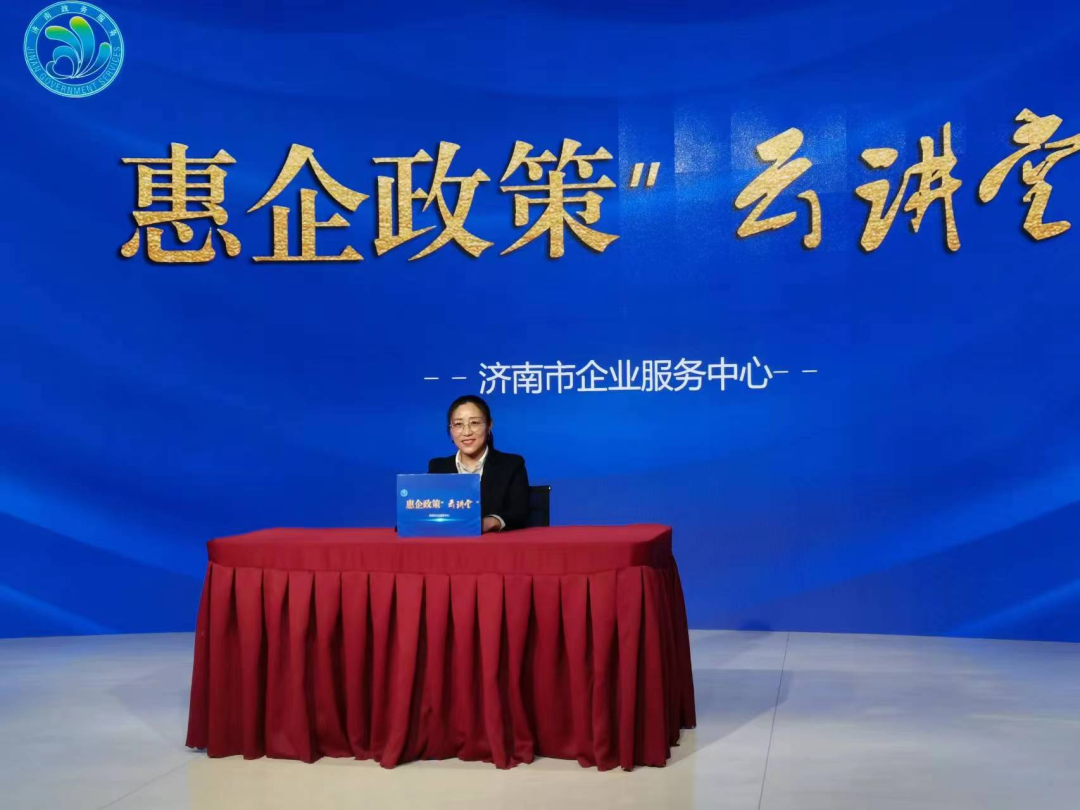
On February 9, 2023, lawyer Tian Qingsong of Shandong Zhongcheng Qingtai (Jinan) Law Firm was invited to participate in the recording of "Quanhui Enterprise" Jinan Enterprise Service Comprehensive Wisdom Platform Huiqi Enterprise Policy Cloud Lecture Hall. Lawyer Tian took "Post-epidemic Era and Construction of Enterprise Diversified Employment System" as the theme, starting from the characteristics, types, advantages and risks of diversified employment, and described the diversified employment system of enterprises, standardizing enterprise employment, reducing employment risks, etc, it provides suggestions for enterprises to reduce the total cost of labor and increase corporate profits. "Quanhui Enterprise" Jinan Enterprise Service Comprehensive Wisdom Platform is the main position for Jinan Municipal Party Committee and Municipal Government to push enterprise-friendly policy affairs to the vast market players. With the goal of creating a "central kitchen" for enterprise-friendly policy, it has realized the "one-network integration" and "one-stop access" for enterprise-friendly policy. The video recorded this time will be released on the "Quanhui Enterprise" Jinan Enterprise Service Integrated Intelligence Platform, which will cover more enterprises.
2023-02-10
09
2023-02
Basic case Mr. Wang and Ms. Zhang registered for marriage in August 2006 and had a daughter after marriage. In April 2019, Mr. Wang and Ms. Zhang signed a "property division agreement" under the witness of witnesses, which made arrangements for the division of common property and debts in the future divorce. At the same time, it was agreed that "in the future, whether it is a divorce by agreement or a divorce by litigation, the division of property and debts shall be carried out in accordance with this agreement". Mr. Wang filed a lawsuit for divorce in July 2019, and the court ruled that divorce was not allowed. In March 2020, Mr. Wang again sued the court for divorce, demanding the division of joint property and debts after marriage. Ms. Zhang believes that it should be handled in accordance with the "Property Division Agreement" signed by both parties. Judgment of first instance The court of first instance held that the property division agreement signed by both parties based on the principle of voluntariness and based on the true intention was legal and valid. Both parties clearly agreed that both parties should divide property and debts according to the contents of the agreement, and both parties should perform their respective obligations according to the contents of the agreement. Therefore, the court of first instance decided to divide the common property and debts of both parties in accordance with the contents of the Property Division Agreement. Appeal Opinion Mr. Wang believes that the "Property Division Agreement" is not an expression of its true intention, but was signed after making compromises and concessions to Ms. Zhang in order to end the marriage as soon as possible. According to the Supreme People's Court on the application<中华人民共和国婚姻法>The Interpretation of Certain Issues (III) the provisions of Article 14, "If the parties reach a property division agreement conditional on registering a divorce or going to the people's court to agree on a divorce, if the two parties fail to agree on a divorce, and one party repents in the divorce proceedings, the people The court shall determine that the property division agreement has not taken effect, and divide the joint property of the husband and wife according to the actual situation", the court of second instance shall determine that the Property Division Agreement has not entered into force. judgment of second instance The court of second instance held that the property division agreement was reached by both parties on the basis of equality and voluntariness, which was the true intention of both parties; the content of the agreement did not involve the identity relationship, but only made an agreement on the division of the common property and common debts of husband and wife, and the content did not violate the mandatory provisions of laws and administrative regulations, did not infringe upon the interests of the state, the collective and the third party, and did not violate public order and good customs, the property division agreement shall be confirmed to be legal and valid. Mr. Wang's proposal should be in accordance with the Supreme People's Court on the application of<中华人民共和国婚姻法>Article 14 of the Interpretation of Certain Issues (III) that the "Property Division Agreement" is invalid. This court believes that the premise of applying the above judicial interpretation is that the parties reach a "property division agreement conditional on divorce by agreement". In this case, the "Property Division Agreement" is not conditional on divorce by agreement, but stipulates that no matter "divorce by agreement" or "divorce by litigation", both parties should comply with the agreement on the implementation of the property division agreement, and both parties did not choose to divorce by agreement, but filed a lawsuit for divorce. Therefore, the above judicial interpretation is not applicable to this case. Mr. Wang's appeal reason cannot be established, and this court will not support it. The appeal was rejected and the original sentence was upheld. Lawyer's statement The original Supreme People's Court on the application.<中华人民共和国婚姻法>The "Interpretation of Certain Issues" (III) has been repealed, and the "Supreme People's Court on the Application<中华人民共和国民法典>Article 69 of the (I) of Interpretation of Marriage and Family: "If the parties reach an agreement on the disposal of property and debts on the condition of divorce by agreement or divorce mediation in the people's court, if the divorce between the two parties fails and one party goes back on his word in the divorce proceedings, the people's court shall determine that the agreement on the disposal of property and debts has not taken effect, according to the actual situation, in accordance with the provisions of articles 1087 and 1089 of the civil code, the judgment" took over the original article 14 and made relevant amendments. Lawyers suggest that the parties should pay special attention when signing such divorce agreements. First, they should carefully consider the terms of the agreement involving their own rights and obligations, and then sign them. Secondly, for property agreements that are beneficial to one's own party, one can sign an internal property agreement without the word divorce and the meaning of divorce. Third, in this case, if the divorce property division agreement is also applicable to litigation divorce, it can be clearly agreed in the agreement, even if the agreement fails to divorce, the content of the agreement is still valid, and both parties shall not go back on their word, and the divorce agreement is also applicable in the litigation divorce; finally, the divorce dispute case seems simple, but actually involves all aspects, involving the identity of the husband and wife, the custody of the child, the determination and division of common property, the distribution of claims and debts and other legal professional issues, the parties had better draft the relevant divorce agreement after consulting a lawyer, ensure that their legitimate rights and interests are maximized.</中华人民共和国民法典></中华人民共和国婚姻法></中华人民共和国婚姻法></中华人民共和国婚姻法>
2023-02-09
08
2023-02
1. What is the commercial housing presale permit system? What is the commercial housing purchase and sale subscription contract? The commercial housing presale permit system is commonly known as "selling off-plan houses" and "selling uncompleted houses". It refers to the real estate development company that has been built or is about to be built but has not yet been completed. A real estate transaction in which the owner has the ownership of the purchased house in a certain period of time. In order to reach the above transaction, real estate development enterprises will generally reach a relevant subscription agreement with the buyer, that is, the "commercial housing purchase and sale subscription agreement", which refers to the contract concluded by the parties before signing the commercial housing presale or the on-the-spot sale contract, which is signed by the parties at a certain time in the future and confirmed by the commercial housing transaction, It is generally embodied in the form of commercial housing order, appointment, reservation and other forms. China has also made clear provisions and restrictions on the presale of commercial housing. For example, Article 45 of the the People's Republic of China Urban Real Estate Management Law stipulates that the presale of commercial housing shall meet the following conditions: 1. All the land use right transfer fees have been paid and the land use right certificate has been obtained; 2. Hold the construction project planning permit; 3. According to the commercial housing provided for presale, the funds invested in development and construction shall reach more than 25% of the total investment in the project construction, and has determined the construction progress and completion and delivery date; 4. Register the presale with the real estate management department of the people's government at or above the county level and obtain the commercial housing presale license. The commercial housing presale shall, in accordance with the relevant provisions of the State, report the presale contract to the real estate administration department and the land administration department of the people's government at or above the county level for registration and filing. Article 6 of the Measures for the Administration of the presale of Urban Commercial Housing stipulates that the presale of commercial housing shall be subject to a licensing system. To presale commercial housing, a development enterprise shall apply to the real estate management department for a presale permit and obtain a Commercial Housing presale Permit. No commercial housing presale may be carried out without the Commercial Housing presale Permit. Article 2 of the interpretation of the Supreme People's Court on Several Issues concerning the application of law in the trial of commercial housing sales contract disputes stipulates that if the seller fails to obtain the commercial housing presale license certificate, the commercial housing presale contract concluded with the buyer shall be deemed invalid, but if the commercial housing presale license certificate is obtained before the lawsuit, it can be deemed valid. The above provisions also raise a practical question: if the real estate development enterprise does not obtain the presale license, is the commercial housing subscription agreement signed with the buyer necessarily invalid? Analysis of the effectiveness of a Subscription Agreement with a home buyer 2. the developer has not obtained a presale permit (I) is a view that the subscription agreement is invalid Case 1:(2021) Yu 0108 Minchu 3444 The plaintiff Wang mou signed an "internal customization agreement" with the defendant Rui mou company in January 2018, agreeing to sell a set of houses developed by Rui mou company to the plaintiff. The plaintiff paid the defendant the corresponding purchase price as required, and the defendant promised to sign the "Commercial Housing Sales Contract" online as soon as possible, but the project has not started construction, and the online signing time promised by the defendant has repeatedly expired. After inquiry, the plaintiff learned that the project did not obtain the "commercial housing presale license", the defendant belonged to the illegal sale of real estate, and the house sold did not meet the legal sales conditions. The court held that the commercial housing presale shall implement the license system, and the development and operation enterprises shall go through the presale registration and obtain the "commercial housing presale license" when carrying out the commercial housing presale. The commercial housing presale contract concluded without meeting the conditions for the sale of the house shall be deemed invalid. In this case, the real estate involved in the case has not yet obtained the commercial housing presale license certificate, so the "internal customization agreement" signed by the plaintiff and Rui mou company is an invalid contract due to violation of legal provisions, and the invalid contract relationship of the contract has not been established since the beginning, so the court confirms that the contract signed by the plaintiff and Rui yue company is invalid; After the contract is invalid or revoked, the property acquired due to the contract shall be returned, the party at fault shall compensate the other party for the losses suffered as a result. The above view holds that the subscription agreement is invalid. Those who hold this view believe that the above-mentioned legal provisions are mandatory provisions of the law. Without obtaining a commercial housing presale license, the subscription agreement signed by both parties is invalid due to violation of the mandatory provisions of the law, and the deposit collected after the invalidity shall be in accordance with The contract is invalid and returned to the buyer. Some judges also believe that in some cases, the buyers also have faults in the middle, especially when some buyers later obtained the presale license from the developer, they also said that they could not sign a formal purchase contract because of the reasons of the buyers. Or the developer clearly informs in the subscription agreement that there is a fault in signing the subscription agreement with the developer even though the presale license has not been obtained. In this case, both parties are at fault when signing the subscription agreement. When the buyer claims to confirm that the subscription agreement is invalid, in order to safeguard the interests of both the developer and the buyer and ensure the fairness and justice of the judgment, the subscription letter should be ruled invalid. The developer returns the deposit. (II) is a view that the subscription agreement is valid Case 2:(2021) No. 166 at the beginning of the Republic of 0702, Jin Dynasty On April 17, 2018, the plaintiff Chen Mou and the defendant Jiu Real Estate Company signed an "Internal Subscription Letter", which stated the plaintiff's subscription house number, construction area, subscription unit price, subscription total price, deposit, etc. It was agreed that the subscriber should bring the internal subscription letter before June 17, 2018 unless otherwise notified by the seller, the down payment (including the paid deposit) of not less than 50% of the total contract amount of the house, the certificate and other relevant materials required for the purchase of the house, the signing of the "commercial housing sales contract" with the seller and the payment of the down payment payable, the subscriber's breach of contract, the seller has the right to dispose of the above-mentioned house separately, and the deposit paid by the subscriber will not be refunded; For the seller's breach of contract, the deposit shall be doubled. On the same day, the plaintiff paid a deposit of 20000 yuan to the defendant, the real estate company. On June 17, 2018, when the plaintiff delivered 50% of the down payment in accordance with the "Internal Subscription Letter", the defendant stated that "the house has not started construction and the down payment will not be paid", and the defendant did not sign the "Commercial Housing Sales Contract" with the plaintiff. At present, due to changes in the project, the use of the house has been changed and the purpose of the contract cannot be realized. The plaintiff requires the defendant to double the deposit of 40000 yuan. The defendant argued that the project has not yet obtained a commercial housing presale license, the validity of the subscription agreement is invalid, and the agreement on the deposit is also invalid. The court held that: according to the provisions of Article 2 of the interpretation of the Supreme People's Court on Several Issues concerning the application of law in the trial of commercial housing sales contract disputes, the seller has not obtained the commercial housing presale license certificate, and the commercial housing presale contract concluded with the buyer shall be deemed invalid. However, the "Internal Subscription Letter" signed by the plaintiff and the defendant only stipulates the house number, purchase amount, deposit, etc. subscribed by the plaintiff, and does not contain the main content of the commercial housing sales contract stipulated in Article 16 of the "Commercial Housing Sales Management Measures". Therefore, the nature of the subscription letter is a commercial housing subscription contract of an appointment nature, not a commercial housing sales contract of this nature. The subscription letter is the true intention of both the original and the defendant, and there is no statutory invalidity and should be deemed valid. Now due to the defendant's breach of contract, the purpose of the contract can not be achieved, the plaintiff asked him to double the return of the deposit, in line with the law, the court to support. The above view that the subscription agreement is valid. In this view, according to Article 495 of the the People's Republic of China Civil Code, the parties agree to conclude a contract within a certain period of time in the future, such as the subscription, order, reservation, etc., constitute an appointment contract. If one of the parties fails to perform the obligation to conclude the contract under the appointment contract, the other party may request it to bear the liability for breach of the appointment contract. Therefore, the view is that the nature of the subscription agreement for the nature of the reservation of the commercial housing subscription contract, should be valid. The author's point of view: from the point of view of the purpose and content of the subscription agreement, it is an agreement on matters such as the signing of a formal commercial housing sales contract in the future, and a commitment reached by both parties to enter into a formal commercial housing sales contract in the future. it is the true intention of both parties, creating conditions for the subsequent conclusion of this contract, and binding both parties to undertake future obligations when entering into a commercial housing sales contract. The nature of the subscription agreement is an appointment contract, which is significantly different from the contract for the sale of commercial housing in the nature of the contract, so its signing is not a formal act of commercial housing presale, so it should not be bound by whether or not to obtain a presale license. The distinction between the reservation contract for the sale of commercial housing and the contract of this contract. Of course, there are also exceptions, such as the supreme law guidance case:(2018) shan 01 min zong no 8145. in this case, the court held that although the subscription contract was essentially a commercial housing presale contract, wentian company did not actively perform its due contractual obligations under the condition that its own contractual purpose had been realized, and should be aware of the illegality of its failure to apply for a commercial housing presale license, now it filed a lawsuit in this case on the grounds of illegal facts caused by its own reasons, the real purpose is to obtain greater benefits beyond the contract expectations, and its behavior is obviously contrary to the social value orientation and public perception. In order to promote the core values of socialism and demonstrate judicial justice, such behavior should not be supported. It was finally determined that the subscription contract involved in the case was valid, and a valid legal relationship between the two parties was formed in the commercial housing presale contract. From the above, it is not difficult to see that if the developer signs an appointment contract with the buyer before obtaining a presale license, it indicates that a new contract will be determined in the future to finally clarify the specific content of a certain legal relationship between the two parties. At this time, the contract may not be valid. During the trial, the court will generally measure the interests of both parties based on the specific circumstances of the case. It must not only abide by laws and regulations, ensure the legality of the judgment, but also ensure the fairness and justice of the judgment, and make a comprehensive judgment. The purpose is not to allow offenders who try to exploit legal loopholes. Those who profit, demonstrate judicial justice, and promote the core values of socialism. 3. risk analysis For home buyers, before the presale license is obtained, the buyer signs a subscription agreement and pays the subscription fee. If the project does not progress smoothly, this will transfer the greater capital risk to the home buyer, which may cause the home buyer to lose all his money. For real estate development enterprises, although funds can be obtained for project construction by signing a commercial housing subscription agreement, they cannot sell off-plan housing before obtaining a commercial housing presale license, and their behavior is illegal. And when real estate development companies obtain presale permits, they have to face selling houses at lower housing prices, which is what real estate development companies are unwilling to face. In terms of national supervision, under the current commercial housing presale management system, the determination that the subscription agreement is valid will cause some real estate development companies to evade supervision. According to relevant regulations, the housing presale must enter the account designated by the real estate management department, and the money can only be used for project construction, but there are no corresponding regulatory measures for the funds paid according to the subscription agreement. After the real estate development company obtains the subscription funds, It may be used for other projects, which increases the risk of home buyers, is not conducive to social stability, and is not conducive to the state's supervision and regulation of the real estate industry. Therefore, when buying commercial houses and signing relevant sales contracts, buyers should raise their awareness of risk prevention. In order to protect the safety of transaction funds and their own legitimate rights and interests, buyers should carefully review the main body of commercial housing sales before signing the contract. Sales conditions, etc, whether the "five certificates" (land use right certificate, construction land planning permit, construction project planning permit, construction project construction permit, and commercial housing presale permit) of the project real estate are complete and fully examined and paid attention to, real estate development enterprises are required to show themselves the relevant certificates of legal housing transactions. When signing the subscription agreement, real estate development enterprises and buyers should pay attention to whether the agreement has the main contents and substantive requirements of the commercial housing sales contract stipulated in Article 16 of the Measures for the Administration of Commercial Housing Sales (including but not limited to the basic information of both parties, the basic information of the commercial housing, the determination method and total price of the disputed commercial housing price, the delivery date and other main contents of the commercial housing sales contract), avoid the subscription agreement is recognized as a commercial housing sales contract. If the buyer wants to leave room for himself and sign the reservation contract in advance before signing the formal contract, the buyer should carefully examine the contract and avoid the actual performance, and prevent himself from performing or accepting the other party's performance in advance, so as not to be deemed as the contract has been established.
2023-02-08
02
2023-02
Before and after the Spring Festival, consultants have been continuously consulting on the suspected infringement of their own publicity channels. In recent years, similar consultations have been continuous. Although they are commonplace, they are still emerging. Therefore, this article is written to sort out the relevant matters that should be paid attention to in the publicity of their own channels in the multimedia/self-media era, and to list the relevant risk points in the law and cases in simple language as far as possible for the reference of legal and publicity personnel. Classification and Development of 1. Propaganda Channels The external publicity channels of enterprises and institutions are mainly divided into two types, one is the traditional paper material publicity, and the other is through the official website, webpage, WeChat public number, today's headline number, Douyin or Kuaishou and other software or platform registration Account for publicity. Most of the content is self-collected or forwarded. Compared with the previous paper media propaganda, today's multimedia/self-media era has higher requirements for content. Not only must it be time-sensitive, but also graphics, text, sound, video, and design to catch people's attention and gain more More attention. Therefore, when all enterprises and institutions carry out publicity through multimedia/self-media, they should make more efforts in content management. Since the media era, many personal videos and published graphic works use a large number of fashion elements, posters, video clips of movies and TV plays, which appear to be high-end and fashionable. However, as commercial enterprises and institutions, they must be careful when using relevant materials and do a good job in reviewing relevant contents. From the perspective of avoiding infringement, the published contents should be original, authorized or legal sources. Content Review from the Perspective of 2. Copyright Law The content in the publicity materials is the core, and the review of the content is the most important thing. Even if it cannot reach the third review and third review of the traditional paper media publishing industry, a review mechanism should be designed that can be issued only after the author/editor's self-review and the relevant reviewer's confirmation. In addition to the prohibition of publication of illegal content listed in the Copyright Law, the following review points should be noted. 1. About written works The first is to advocate originality; the second is to obtain the consent of the right holder or have a legal source, that is, to obtain the authorization of the right holder/starter, and to retain written evidence. For example, if you need to reprint a provincial newspaper public article, you should consult on its website or WeChat background, obtain permission before reprinting, and keep the certificate of permission. 2. About art works (pictures, pictures, art words, etc.) To promote their own creation, other works of art and pictures that must be used can be purchased from a professional company or authorized by the right holder. At present, the cartoon pictures or expression packs widely used by the public number are likely to be the original works of the right holder and should be authorized to be used again. The art fonts circulated on the Internet also need to have a legal source, and cannot be downloaded and used without permission. You can avoid the risk of infringement by contacting the right holder to obtain authorization, create by yourself or entrust a qualified third-party design. The machines used for writing, editing and publishing shall use genuine software, and the edited and published contents shall use the font library and authorized resource library of the genuine software, and those from unknown sources shall be prohibited. 3. About audio works The soundtrack in the promotional material needs to be from a legitimate source and is recommended to be selected from a professional paid music library. Self-created can be used with confidence, or you can choose classical music that has exceeded the copyright protection period, and hire professionals to play/sing/synthesize it for use (an agreement should be signed with professionals). Some self-media platforms have their own background music libraries, and attention should be paid to the scope of their use. The external publicity of enterprises and institutions is generally recognized as commercial use in judicial practice. The music libraries brought by the platforms are generally licensed for personal use and cannot be used for commercial use. Therefore, the use of the platform's own resource library should be implemented whether it can be applied to business. 4. About video works The videos in the promotional materials need to have legal sources, and it is recommended to shoot, purchase or obtain authorization from the right holder. If the selected video does not have a legal source, in addition to the copyright owner, it may also be suspected of infringing the rights of the performer or the legal rights of other rights holders. Therefore, the selection of video works must especially implement the legal source. 5. About other works/rights In addition to the above-mentioned text, pictures, audio and video, the published content may also contain other works/rights, such as layout design, trademarks, etc., which cannot be used without legal sources to avoid the risk of infringement. Content Review from the Perspective of 3. Anti-Unfair Competition Law The the People's Republic of China Anti-Unfair Competition Law is a law enacted to promote the healthy development of the socialist market economy, encourage and protect fair competition, stop unfair competition, and protect the legitimate rights and interests of operators and consumers. For enterprises and institutions, foreign publicity should also pay attention to avoiding unfair competition, which is mainly reflected in the following points: 1. The published content shall not have the following confusing behaviors, causing people to mistake it for other people's products or have specific connections with others, including: it is not allowed to use the same or similar product name, packaging, decoration, etc. that have certain influence with others without authorization. Logo; it is not allowed to use enterprise names (including abbreviations, font names, etc.), social organization names (including abbreviations, etc.), and names (including pen names, stage names, translated names, etc.) that others have certain influence on without authorization; It is not allowed to use the main part of the domain name, website name, web page, etc. that others have certain influence without authorization; there must be no other confusing behavior that can cause people to mistake it for other people's goods or have a specific connection with others. 2. The published content shall not make false or misleading commercial publicity on the performance, function, quality, sales status, user evaluation, honor, etc. of the product, so as to deceive or mislead consumers. It is not allowed to help other operators to carry out false or misleading commercial publicity. 3. The published content shall not fabricate or disseminate false or misleading information to damage the business reputation and commodity reputation of competitors. 4. The published content shall not disclose the trade secrets of others. In addition to the above four points, in terms of protecting the legitimate rights and interests of enterprises and institutions, enterprises and institutions shall not disclose their own business secrets. It sounds strange, but it is not uncommon in practice. In order to publicize, enterprises and institutions often preemptively release their technological breakthroughs, new research and development results or new products. With the release of content, it may result in the inability to apply for patents or related research and development results/commercial information. Can not be protected as trade secrets. Content Review from the Perspective of 4. Advertising Law In many cases, the publicity documents of enterprises and institutions involve the publicity and promotion of enterprises and products. At this time, the publicity documents are subject to the regulation of the Advertising Law. In order to avoid risks, combined with the common situation of external publicity, the following points should be paid attention: 1. The published content shall be true and objective, and shall not contain false or misleading content. 2. In the process of promoting enterprises or products, terms such as "national level", "highest level" and "best" shall not be used. 3. In the process of promoting enterprises or products, there shall be no direct or disguised content that belittles peers. 5. Summary In order to avoid infringement, all legal or minor editors must pay attention when publicizing: first, the contents of pictures, texts, audio and video should be determined to be original or have legal sources; Secondly, the relevant content does not infringe other legitimate rights and interests of others, such as portrait rights; Third, the content that is not authorized but needs to be displayed can be quoted in a reasonable and small amount and the source can be indicated. For the relevant content that cannot be quoted in a reasonable and small amount, you can jump directly to the original web page/website of the right holder by making links; fourth, the content is true and objective, avoiding terms such as "national", "highest", and "best. For the published content, after the above review can avoid the vast majority of illegal or infringement risk. Since the vast majority of the publicity does not involve special laws such as patent law, this article will not be expanded on and may be detailed in a subsequent series of articles if necessary. This article can be used as a reference for enterprises and institutions to publish self-examination publicity materials through their own publicity channels.
2023-02-02
02
2023-02
In accordance with the Ministry of Finance and the former Ministry of Land and Resources "on the issuance of the Interim Measures for the Collection and Administration of Mining Rights Transfer Income" (Caizong [2017] No. 35) requirements, the Provincial Department of Natural Resources organized the formulation (adjustment) of the mining rights in Shandong Province Market benchmark price (including provincial and municipal), with the consent of the provincial government, is now announced. This base price shall be effective from February 1, 2023 and shall be valid until January 31, 2026. The original benchmark price of mining rights market in Shandong Province (including provincial and municipal levels) shall be abolished at the same time. 1. background and process The market benchmark price of mining rights (hereinafter referred to as the "benchmark price") is an important reference basis for the state, as the owner of mineral resources, to reasonably collect the proceeds from the transfer of mining rights from mining rights holders. Ministry of Land and Resources of the Ministry of Finance on the issuance<矿业权出让收益征收管理暂行办法>The notice (Caizong [2017] No. 35) stipulates that the benchmark price shall be regularly set by the local competent department of mineral resources with reference to similar market conditions, and shall be promulgated and implemented with the consent of the provincial people's government. The opinions of the former Shandong Provincial Department of Land and Resources on further strengthening the evaluation and management of the proceeds from the transfer of mining rights (No. 1, 2017) clearly: the Provincial Department of Natural Resources is responsible for the benchmark price of 13 minerals, such as deposit, iron and coal, and the municipal departments in charge of natural resources are responsible for formulating the benchmark price of other minerals in their administrative areas and reporting it to the provincial departments for examination and approval. In October 2018 and March 2019, with the consent of the provincial government, the Provincial Department of Natural Resources successively issued the mining rights of 14 minerals (increased ilmenite) at the provincial level, the benchmark prices of prospecting rights for 13 minerals, and the municipal level. The mining rights of 71 minerals and the benchmark prices of prospecting rights for 45 minerals. In July 2020, with the consent of the provincial government, the Provincial Department of Natural Resources issued a notice on the adjustment of the benchmark price of Yantai City. The benchmark price is dynamically adjusted according to the market situation, and the Provincial Department of Natural Resources has organized and carried out the adjustment of the benchmark price at the provincial and municipal levels, forming the "benchmark price of mining rights market in Shandong Province" (including provincial and municipal levels), which has been studied and approved by the executive meeting of the provincial government. 2. formulation basis The formulation of the benchmark price is mainly based on the guiding requirements for the formulation of the market benchmark price of mining rights in the Opinions of Shandong Provincial Department of Land and Resources on Further Strengthening the Evaluation and Management of the Income from the Transfer of Mining Rights (No. 1, 2017), taking into account the influencing factors such as resource reserves, mineral product prices, mining difficulty, mining technical conditions, transportation conditions, and regional differences, adjust or re-determine the benchmark price standard for the proceeds from the transfer of mining rights in different regions and different minerals on the basis of the current benchmark price. Main contents of 3. In accordance with the registration authority for the transfer of mining rights, combined with the actual development of mineral resources in our province, the provincial benchmark prices of 20 minerals, the mining rights of 78 minerals, and the municipal benchmark prices of prospecting rights of 43 minerals are formulated (adjusted) this time. 1. New benchmark prices at the provincial level. According to the notice of Shandong Provincial Department of natural resources on promoting the reform of mineral resources management (Lu natural resources regulation [2020] No. 2), the provincial level has newly formulated the benchmark prices of six minerals, including coalbed methane, shale gas, oil shale, fluorite, sea sand and carbon dioxide gas, and the benchmark rates of coal, iron, gold and rock salt. 2. There are benchmark price adjustments at the provincial level. First, the new benchmark price of most minerals is slightly higher than the current benchmark price. The second is to increase the adjustment coefficient of associated minerals. The third is to increase the adjustment coefficient of geothermal recharge. The fourth is to adjust the adjustment coefficient of rock salt burial depth. The fifth is to adjust the adjustment coefficient of prospecting right resources according to the Classification Standard for Solid Mineral Resources Reserves (GB/T17766-2020). 3. The new benchmark price at the municipal level. The five cities of Jinan, Qingdao, Weifang, Tai'an, and Heze have newly formulated the benchmark prices of mining rights for 15 minerals; the three cities of Zibo, Weifang, and Jining have newly formulated the benchmark prices of prospecting rights for 13 minerals. 4. There are already benchmark price adjustments at the municipal level. 11 cities including Jinan and Qingdao raised the benchmark price of mining rights for 65 minerals; 4 cities including Qingdao and Yantai lowered the benchmark price of mining rights for 15 minerals; the benchmark price of mining rights for 15 minerals in Yantai, Weihai and Rizhao remained unchanged; 7 cities including Qingdao and Dongying adjusted the benchmark price of prospecting rights for 36 minerals; and the benchmark price of prospecting rights for one mineral in Weihai remained unchanged. 4. noun interpretation 1. Market benchmark price of mining rights: refers to the benchmark price standard for the proceeds from the transfer of mining rights in different regions and different types of minerals determined within a certain period of time according to the influencing factors such as resource reserves, mineral product prices, mining difficulty, mining technical conditions, transportation conditions, regional differences, etc. In the process of the transfer of mining rights, the mining rights assessment agency shall assess the proceeds of the transfer and determine the proceeds of the agreement transfer shall not be lower than the market benchmark price of the mining rights. 2. The benchmark rate of mining right transfer income: refers to the benchmark rate of mining right transfer income levied according to the transfer rate of return (the ratio of mining right transfer income to the sales income of mineral products), which is determined by the provincial mineral resources department and the financial department, and According to the price changes of mineral products and the needs of economic development, timely adjustments shall be made, and announced and implemented after being approved by the provincial people's government. Competitive transfer of mining rights, with the transfer rate of return as the subject, the transfer proceeds floor price is determined by the mining rights transfer benchmark rate. In view of the fact that the Ministry of Natural Resources is studying and issuing relevant policy documents for the collection of proceeds from the sale of some minerals at the benchmark rate, the proceeds from the sale of relevant minerals are temporarily levied at the benchmark price announced this time, and the benchmark rate will be implemented in accordance with relevant regulations after the relevant documents of the Ministry of Natural Resources are issued. 5. Attachment Content Annex: 1. Benchmark Price of Mining Right Market in Shandong Province (Provincial Level) 2. Shandong mining rights market benchmark price (municipal level)</矿业权出让收益征收管理暂行办法>
2023-02-02


Zhongcheng Qingtai Jinan Region
Address: Floor 55-57, Jinan China Resources Center, 11111 Jingshi Road, Lixia District, Jinan City, Shandong Province
